
Mediterranean Baked Pollock with Tomatoes and Olives
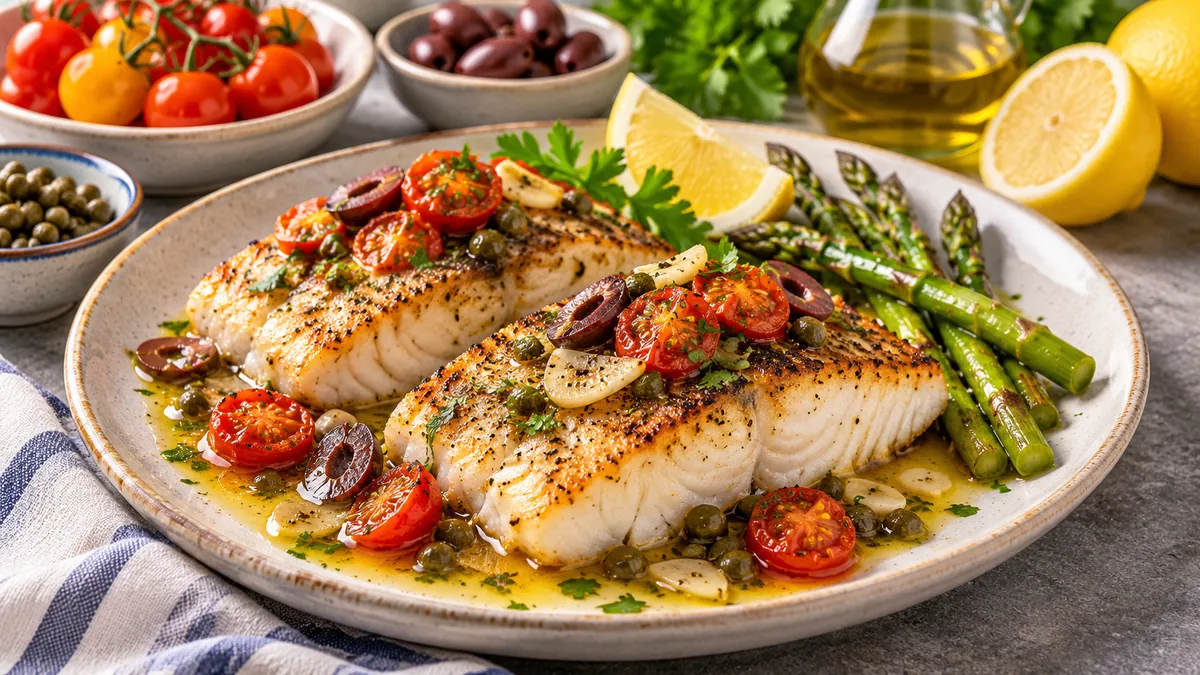
Mediterranean baked pollock with tomatoes and olives turns mild white fish into a bright, vegetable-rich dinner. The tomatoes roast first, then the fish bakes gently in their juices with garlic, lemon, oregano, capers and herbs. This two-stage technique helps keep thin pollock fillets from drying out while the vegetables soften. You will find a measured recipe, advice for frozen fillets, simple swaps, safe doneness guidance and answers to the most common questions.
Why Mediterranean flavors suit mild pollock
Pollock is a mild, lean white fish that can taste understated next to strongly seasoned ingredients. Cherry tomatoes give it sweetness and moisture; garlic supplies depth; lemon lifts the flavor; and a modest amount of olive oil gives the surface an appealing sheen. Kalamata olives and capers add briny contrast, so you can taste the dish before deciding whether any extra salt is necessary. Parsley goes in near the end, keeping the finished tray colorful.
Instead of covering the fish with a heavy sauce, this method creates a quick tomato base in the baking pan. The tomatoes begin to soften first, releasing juices that mingle with the oil and garlic. The fillets are then nestled into that mixture and baked until the thickest portion is safely cooked. This staging prevents a familiar problem: thin pollock drying out while vegetables are still hard.
The recipe is different from our air fryer pollock fillets, which focuses on dry circulating heat and a paprika coating. This oven version uses a spoonable tomato-olive mixture as part of the finished dish. If you enjoy seafood with vegetables in a single pan, you can build a complete meal around it without a long list of ingredients.
Fresh or frozen pollock: what to buy
Both fresh and properly frozen pollock work well here. Choose fillets with a firm shape, a clean smell and no dried or discolored patches. If a package is frozen, it should be intact and solid, without signs of thawing and refreezing. Avoid pieces with a thick layer of ice glazing that obscures the actual weight. Most supermarket Alaska pollock fillets are thinner than cod loins, so select pieces of similar thickness whenever possible.
Thaw frozen fillets safely in the refrigerator, preferably in a covered tray that collects drips. If the package specifies another approved method, follow it. The FDA seafood selection guide advises keeping seafood cold and avoiding countertop thawing. Pat the fillets thoroughly dry before seasoning, even though they will sit in a juicy tomato base. Drying removes excess thawing liquid that can make the pan watery.
Inspect the fillets for pin bones and remove any with clean tweezers. If a tail section is very thin, fold it underneath for a more even shape. Keep raw fish refrigerated while the oven heats and the vegetables are prepared. You do not need to marinate pollock for an hour; its mild flesh takes surface seasonings readily.
What goes in the tomato and olive topping
Cherry tomatoes are convenient because they roast quickly and release juice without needing peeling. Red tomatoes generally give a brighter sauce, while a mix of red and yellow adds color. Slice them in half so they soften evenly. Choose pitted Kalamata olives and drain them well. Capers can be rinsed when particularly salty; their sharpness is useful, but the dish should not taste like a jar of brine.
For four servings, you will use approximately 1½ pounds of pollock, about two cups of cherry tomatoes, olive oil, garlic, lemon, oregano and parsley. A small sliced shallot or red onion adds sweetness. Use black pepper and a restrained amount of salt, adjusting after tasting the tomatoes and olives. A pinch of red pepper flakes is optional, not essential.
Olive oil distributes the garlic and herb flavors throughout the tray. Fresh lemon zest gives more aromatic brightness than adding a large amount of juice before cooking. Save the juice for the finish, so the fish does not sit in an acidic bath while you prepare dinner. A shallow metal baking dish gives better heat transfer than a very deep casserole.
Mediterranean baked pollock recipe card
The WP Recipe Maker card gives the exact ingredients and a reliable order of steps for four servings. Cooking time is a starting estimate; thickness and oven calibration vary. Check the fish at the thickest portion rather than assuming an exact number of minutes proves doneness.
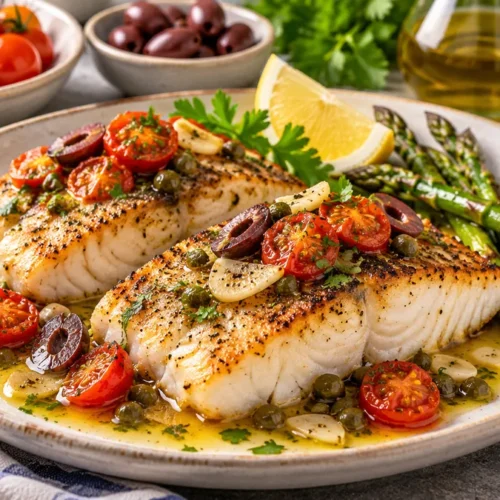
Mediterranean Baked Pollock with Tomatoes and Olives
Equipment
- Shallow oven-safe baking dish
- Wide fish spatula
- Instant-Read Thermometer
Ingredients
- 1 1/2 lb pollock fillets thawed safely, patted dry
- 2 cups cherry tomatoes halved
- 1/3 cup pitted Kalamata olives sliced
- 1 tbsp capers drained and rinsed if salty
- 3 tbsp extra-virgin olive oil divided
- 3 garlic cloves thinly sliced
- 1 small shallot thinly sliced
- 1/2 tsp dried oregano
- 1 lemon zest and juice, divided
- 2 tbsp fresh parsley chopped
- 1/4 tsp ground black pepper
- to taste fine salt adjust after olives and capers
Instructions
- Preheat oven to 400°F (205°C). Pat thawed pollock dry, remove any pin bones and tuck thin tails under for even thickness.
- In a shallow baking dish combine cherry tomatoes, shallot, garlic, 2 tbsp olive oil, oregano and black pepper. Roast 8–10 minutes until tomatoes start to soften.
- Remove the hot dish carefully, move tomatoes aside and arrange pollock in one layer. Brush fish with remaining 1 tbsp olive oil and add lemon zest.
- Scatter sliced olives and capers around the fish, spooning a little warm tomato juice over each fillet. Season lightly after checking the olives’ saltiness.
- Return the dish to the oven and begin checking the fish after approximately 8 minutes. Continue until the thickest fish section reaches 145°F (63°C), or the flesh is opaque and separates easily with a fork when thermometer use is impractical.
- Remove fish promptly, squeeze lemon juice over the pan and add fresh parsley. Lift the fish carefully onto plates with tomatoes and a spoonful of juices.
Notes
The two-stage baking method
Preheat the oven to 400°F (205°C). Toss tomatoes, sliced shallot, garlic, olive oil, dried oregano and black pepper in a shallow baking dish. Let them roast briefly until the tomatoes soften and some skins blister. This first stage is important: the vegetables have time to develop flavor before the thin fish enters the oven.
While the tomatoes roast, pat pollock dry and season lightly. Remove the pan carefully, move the tomato mixture aside to create four spaces, and place the fish on the tray. Spoon a little tomato juice and olive oil over each fillet. Add the sliced olives and capers around rather than piling all the briny ingredients on top. Return the pan to the oven and begin checking after a short baking interval.
Pollock can go from translucent to dry quickly. A thermometer inserted sideways into the thickest part is the best way to check a piece thick enough to measure. Finfish should reach 145°F (63°C), according to FoodSafety.gov. When a thermometer reading cannot be obtained, the flesh should be opaque and separate easily with a fork. Remove the fish as soon as it meets the endpoint; add lemon juice and parsley after baking.
How to keep lean pollock moist
The main enemy is excess oven time. Because pollock is lean, it does not have a large fat reserve to cushion repeated heating. Using evenly thick fillets and adding them after the tomatoes have partially roasted reduces that risk. A spoon of warm pan juices can be added when you serve, but avoid drowning the fish before it has cooked, which may prevent any surface color.
A shallow baking dish also helps. In a deep casserole, steam accumulates and the vegetables may turn into a watery soup. A wider tray promotes some evaporation while preserving enough tomato liquid for a light sauce. If the tomato base starts to dry before the fish is done, add a tablespoon or two of hot water or unsalted stock to the pan rather than pouring cold liquid directly over the fillets.
Remember that an especially thin tail cooks sooner. Tuck it underneath or move a small piece out of the oven when it reaches a safe endpoint. The method is more important than following a rigid clock. For additional guidance on delicate fillets, see how to cook thin fish fillets without breaking them.
Variations for pantry ingredients and different fish
For an herb-forward version, use fresh basil instead of parsley, adding it after the pan comes out of the oven. For a slightly sweeter vegetable base, include a few thin strips of red bell pepper in the initial tomato roasting stage. A scattering of chopped artichoke hearts adds texture, but choose plain artichokes without strongly seasoned oil when you want to control the overall saltiness.
Cod, hake and haddock can also work in this oven method, although thicker pieces often require a longer check window. Do not simply copy the pollock timing for a thick cod loin. For a brighter flavor profile, use a teaspoon of lemon zest and finish with chopped dill. If you prefer fewer briny ingredients, omit the capers and add more tomatoes, then taste for salt after baking.
To keep the dish dairy-free, the standard recipe needs no butter or cheese. If serving to guests with allergies, remember that fish itself is a major allergen and that olives or packaged seasonings may share processing facilities with other foods. Read product labels when necessary.
What to serve with baked pollock
Serve the fillets over steamed rice, quinoa, couscous or boiled potatoes so the tomato juices have something to soak into. A simple green salad with lemon dressing brings contrast. For a one-pan vegetable meal, roast asparagus or zucchini separately or add vegetables that have similar cooking requirements in the first stage. Do not crowd the fish tray with raw potatoes; they need much longer than pollock.
Plate the fish with a wide spatula, making sure each portion receives some warm tomatoes, olives and a spoonful of juices. Add fresh parsley and lemon just before serving. This keeps the fish visible and prevents the herbs from turning dark. For a different baked white-fish meal with tomatoes, compare our baked hake with cherry tomatoes, which uses a different fish and seasoning balance.
If you want a slightly more filling dinner, pair it with white beans cooked separately with garlic and lemon. The beans provide a creamy texture that works with the tomato sauce without requiring a heavy cream-based topping.
Troubleshooting the most common problems
Watery sauce: thawed fish may have released excess liquid. Pat it dry and use a shallow tray; roast the tomatoes before adding the fish. Olives overpower the dish: measure rather than pour, and rinse particularly salty capers. Fish breaks when moved: use a wide spatula, lift each portion as a whole, and avoid turning it repeatedly during baking.
Tomatoes look pale: the first roasting stage may have been too short. Allow them to soften and blister before adding the fish. Fish looks brown outside but translucent in the center: check the thickest part and return it to the oven if necessary. The tail is dry: tuck narrow ends under and check thinner portions early next time.
Never use appearance alone as a substitute for safe cooking when a reliable thermometer can be used. And if the fish smells sour, rancid or ammonia-like before cooking, discard it rather than hoping tomatoes and garlic will cover the problem.
Leftovers and make-ahead options
Cooked fish and vegetables should be transferred promptly to shallow covered containers and refrigerated at 40°F (4°C) or below. Do this within two hours after cooking, or within one hour in hot conditions above 90°F (32°C). Properly handled cooked seafood leftovers are generally best eaten within three to four days. Reheat leftovers thoroughly to 165°F (74°C); the fish may flake more easily than when it was freshly cooked.
You can prepare the tomato, garlic and olive mixture ahead and keep it refrigerated, but bake the fish close to serving time for better texture. If the fish is already frozen, allow adequate refrigerator-thawing time rather than leaving it out on the counter. Keep raw fish in a separate covered container below ready-to-eat vegetables.
The most repeatable version of this meal is simple: roast the vegetables first, add cold, dry fillets, check the fish safely, and finish with lemon and herbs. That combination turns an inexpensive, mild seafood ingredient into a fresh Mediterranean-style dinner.
Frequently Asked Questions
Can I bake pollock directly from frozen?
This specific recipe uses thawed fillets. If your product provides a cook-from-frozen method, follow that label instead of the thawed-fish timing here.
How long should pollock bake at 400°F?
It varies with thickness and the oven. Start checking after the initial short baking period and cook until finfish reaches 145°F (63°C) or the official opaque-and-flaky endpoint.
Are capers and olives necessary?
No. They add briny contrast; omit one or both if desired and adjust the tomato-herb mixture to taste.
How do I keep baked pollock from falling apart?
Use evenly thick fillets, tuck thin tails under, avoid stirring the fish, and transfer with a wide spatula.
Can I use another white fish?
Yes. Cod, hake and haddock work, but thicker pieces need different cooking times and the same safe doneness checks.