
Baked Hake with Cherry Tomatoes, Garlic and Olives
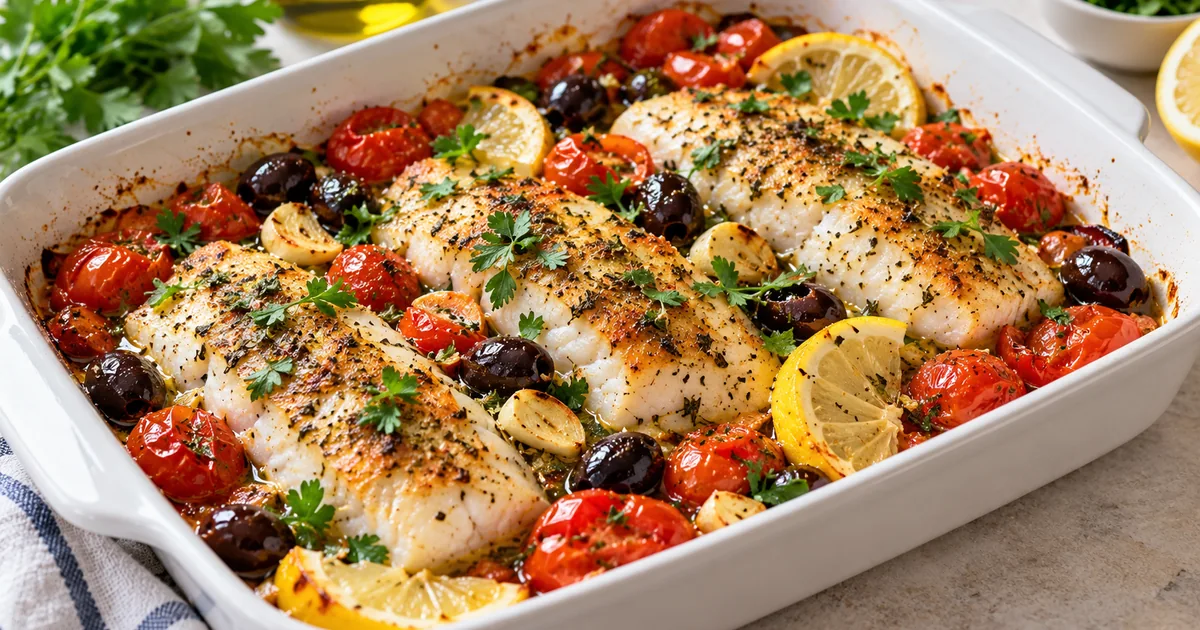
Baked hake is a particularly good choice when you want a proper fish dinner without standing over a skillet. Hake has a delicate, mildly sweet flesh, and this recipe lets its flavor stay noticeable beneath warm tomatoes, sliced garlic, briny olives and a little lemon. Instead of covering the fillets with a thick sauce, the vegetables form a light, spoonable pan dressing as they roast.
This is a two-stage oven recipe. The tomatoes go in first, because they need more time to soften than the fish needs to cook. Adding the hake later protects its lean flesh from drying out. The result is fish that flakes gently and vegetables that taste roasted rather than simply warmed. Use the thickness of your fillets as the final timing guide, not the clock alone.
Table of Contents
Why the two-stage bake matters
Hake is a lean white fish, and it does not have the same fat reserve as salmon or mackerel. If you put everything in a cold dish and bake for a long time, the fish often turns chalky before the tomatoes release their juices. Giving tomatoes and garlic an eight-minute head start solves the mismatch in cooking times while keeping the method straightforward.
The brief initial roast also softens the acidity of cherry tomatoes. Whole olives contribute a savory bite, and lemon zest supplies fragrance without flooding the fish with liquid. The measured lemon juice is reserved for the end, when its bright taste remains easy to notice. This is a light baked hake recipe rather than a heavy casserole.
Choosing hake at the fish counter
Ask for boneless hake fillets of similar thickness, approximately six ounces per person. Frozen hake is entirely suitable when it was stored properly and thawed safely. If the flesh is very thin at the tail end, fold that tip underneath before baking or remove it a little earlier. Large thickness differences make even cooking harder than changing the oven temperature does.
Fresh hake should have a clean, mild smell and moist but firm flesh. Reject portions with an ammonia-like odor or a dried, discolored edge. For frozen fish, avoid torn packaging and heavy ice buildup. Thaw overnight in the refrigerator, or use a sealed bag in cold water and cook promptly. Blot away moisture before seasoning.
Ingredients that give the sauce its balance
The tomatoes should be ripe but not collapsing on the cutting board. Cherry or grape tomatoes are convenient because they roast quickly; larger tomatoes can work if you seed and dice them first. Kalamata olives bring a strong savory accent, so choose pitted ones and check their saltiness before seasoning the fish. Black ripe olives are milder if that is what your family prefers.
Use thin slices of fresh garlic instead of finely crushed garlic paste. The slices soften among the tomatoes without scorching as easily on exposed edges. Extra virgin olive oil enriches the pan juices, oregano gives a simple Mediterranean direction and parsley freshens the finished plate. A little lemon zest is more effective here than repeatedly squeezing juice over raw fish.
What you need before starting
Choose a shallow ceramic or metal oven dish large enough for four pieces without stacking. A crowded deep casserole traps steam and can produce watery fish, while a shallow dish allows the tomatoes to blister gently. Keep a fish spatula, a spoon and an instant-read thermometer close to the oven so the fillets can be checked without prolonged handling.
Prepare the vegetables first, then season the fish while the oven does its initial roasting. This short overlap is enough to organize the cooking without letting seafood sit out. If you use a glass baking dish, follow the manufacturer’s temperature and thermal-shock guidance; a metal pan offers a reliable alternative.
How to bake hake without drying it
Heat the oven fully to 425°F before the fish goes in. Start the tomatoes, olives, garlic and oregano for about eight minutes, then place the seasoned hake into the hot mixture. The fish should touch the dish but should not disappear beneath a mound of vegetables. Some of its top surface needs direct oven heat to cook evenly.
Bake the combined dish for roughly 10 to 14 more minutes for standard fillets. There is no universal perfect time, because fillets from two different fish can have very different center thicknesses. Start testing early. The thickest portion should reach 145°F (63°C), or turn opaque and separate readily. A few more minutes may be needed for substantial loin pieces, but avoid waiting for a deeply browned fish surface.
Controlling extra liquid in the dish
Tomatoes release moisture naturally, and frozen fish can contribute even more if it was not dried well. There should be a spoonable amount of juices, not a deep pool covering the fillets. If the vegetables are unusually wet after their first roast, lift out a little liquid before adding the hake; do not solve the problem by baking the fish much longer.
Too many olives can also overwhelm a mild fish, especially when their brine has not been drained. Taste the vegetables after cooking and adjust the seasoning with lemon or parsley rather than more salt. If your family enjoys a thicker dressing, lightly mash a few cooked tomato halves with the back of a spoon after the fish has been removed.
Variations that keep the recipe recognizable
A few thin slices of red onion may roast with the tomatoes, or you can exchange dried oregano for a smaller amount of dried thyme. Capers offer extra brightness, but use them in place of some olives instead of adding another large salty ingredient. For mild heat, add a pinch of crushed red pepper to the vegetables before roasting.
For an herb-forward finish, stir chopped basil and parsley together at serving time. Avoid loading the dish with large chunks of potato, because they need a far longer oven time and would disrupt the two-stage method. If you want potatoes, cook them separately and serve them beneath the tomato juices.
Serving suggestions and useful comparisons
Spoon the tomatoes and olives over rice, couscous or warm crusty bread to catch the pan dressing. A crisp cucumber salad or steamed green beans offers a fresh contrast. The fish is delicate, so transfer it with a wide spatula rather than pulling it apart with tongs. Finish each plate with parsley and a lemon wedge.
If you prefer another mild white fish cooked with straightforward seasoning, compare the oven-baked cod with garlic and olive oil. For a different baked technique with a tangy glaze, the Dijon baked fish fillets offer another approach. These pages serve different species and flavor profiles rather than repeating this hake recipe.
Leftovers, reheating and food safety
Refrigerate cooked hake promptly in a shallow sealed container. For best texture, eat leftovers the next day, although properly refrigerated cooked fish may be kept for three to four days following standard food-safety guidance. Cool the fish before covering it tightly, and keep raw and cooked utensils separate.
Reheat gently in a covered shallow dish just until hot; high heat can make lean hake crumbly. Leftover tomatoes and olives can be stirred through rice even if you prefer eating the fish cold in a salad. For handling and doneness advice, see the FDA seafood safety guide and the FoodSafety.gov temperature chart.
Step-by-Step Recipe
Measure the ingredients before heating the appliance or pot. The quantities below correspond to four servings and the cooking guidance in the recipe card. Follow each step in order, but use a thermometer and the actual fish thickness to decide when cooking is complete.
Ingredients for four servings
- 1 1/2 lb skinless hake fillets, four evenly sized portions, fully thawed
- 12 oz cherry tomatoes, about 2 cups, halved if large
- 1/2 cup pitted Kalamata olives, drained
- 4 garlic cloves, thinly sliced
- 2 1/2 tbsp extra virgin olive oil, divided
- 1 tsp finely grated lemon zest, from one washed lemon
- 1 tbsp fresh lemon juice, plus wedges for serving
- 1/2 tsp dried oregano
- 1/2 tsp kosher salt, less if olives are very salty
- 1/4 tsp freshly ground black pepper
- 2 tbsp chopped fresh parsley, for finishing
Method
- Preheat and start the vegetables. Heat oven to 425°F (220°C). Toss tomatoes, olives, sliced garlic, 1 1/2 tablespoons olive oil and oregano in a shallow oven-safe dish. Roast for 8 minutes until the tomatoes soften and release a little juice.
- Dry and season the hake. Meanwhile, blot thawed hake fillets dry and remove any remaining pin bones. Rub with 1 tablespoon olive oil, lemon zest, salt and pepper. Keep fillets of uneven thickness in separate areas of the dish.
- Add fish to the dish. Push some tomatoes aside and nestle fish portions in a single layer, leaving part of each fillet exposed to oven heat. Spoon a little warm tomato juice around, not over, the tops.
- Bake and check. Return dish to the oven for 10 to 14 minutes for typical 3/4 to 1-inch fillets; very thick pieces may require longer. Check the thickest center for 145°F (63°C), or opaque fish that separates easily with a fork.
- Finish with lemon and parsley. Rest 2 minutes. Squeeze the measured fresh lemon juice over the fish, scatter parsley and spoon the tomatoes and olives beside each portion. Serve immediately with lemon wedges.
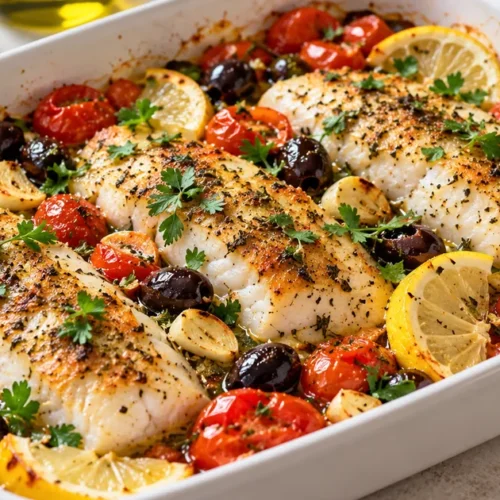
Baked Hake with Cherry Tomatoes, Garlic and Olives
Ingredients
- 1 1/2 lb skinless hake fillets four evenly sized portions, fully thawed
- 12 oz cherry tomatoes about 2 cups, halved if large
- 1/2 cup pitted Kalamata olives drained
- 4 garlic cloves thinly sliced
- 2 1/2 tbsp extra virgin olive oil divided
- 1 tsp finely grated lemon zest from one washed lemon
- 1 tbsp fresh lemon juice plus wedges for serving
- 1/2 tsp dried oregano
- 1/2 tsp kosher salt less if olives are very salty
- 1/4 tsp freshly ground black pepper
- 2 tbsp chopped fresh parsley for finishing
Instructions
- Heat oven to 425°F (220°C). Toss tomatoes, olives, sliced garlic, 1 1/2 tablespoons olive oil and oregano in a shallow oven-safe dish. Roast for 8 minutes until the tomatoes soften and release a little juice.
- Meanwhile, blot thawed hake fillets dry and remove any remaining pin bones. Rub with 1 tablespoon olive oil, lemon zest, salt and pepper. Keep fillets of uneven thickness in separate areas of the dish.
- Push some tomatoes aside and nestle fish portions in a single layer, leaving part of each fillet exposed to oven heat. Spoon a little warm tomato juice around, not over, the tops.
- Return dish to the oven for 10 to 14 minutes for typical 3/4 to 1-inch fillets; very thick pieces may require longer. Check the thickest center for 145°F (63°C), or opaque fish that separates easily with a fork.
- Rest 2 minutes. Squeeze the measured fresh lemon juice over the fish, scatter parsley and spoon the tomatoes and olives beside each portion. Serve immediately with lemon wedges.
Notes
Frequently Asked Questions
Can I bake hake directly from frozen?
For the timing in this recipe, thaw the fillets first. Frozen hake releases more moisture and has a different cooking schedule. Thaw in the refrigerator or sealed in cold water, pat dry and check the center carefully.
How long does hake take in the oven?
After the vegetables get their head start, typical 3/4 to 1-inch fillets take about 10 to 14 minutes at 425°F. Thick pieces may need longer. Use the fish temperature and texture to decide when to remove them.
What is the safe temperature for baked hake?
The standard U.S. guidance for finfish is 145°F (63°C) in the thickest portion, or opaque flesh that separates easily with a fork.
Can I leave out the olives?
Yes. Omit them or substitute a smaller spoonful of rinsed capers. Taste the tomato juices before adding salt because the briny ingredient changes the seasoning balance.
What is the difference between hake and cod in this recipe?
Both are mild white fish, but hake often has a softer, more delicate flake. Use the same temperature guidance and check according to the thickness of the specific fillets, not the species name alone.
For more ideas using different seafood or cooking techniques, explore the related SABSEA recipes linked above. Each recipe has its own method and ingredients, so choose the one that matches the fish or shellfish available to you.