
How to Cook Frozen Mussels Safely: Raw vs Precooked
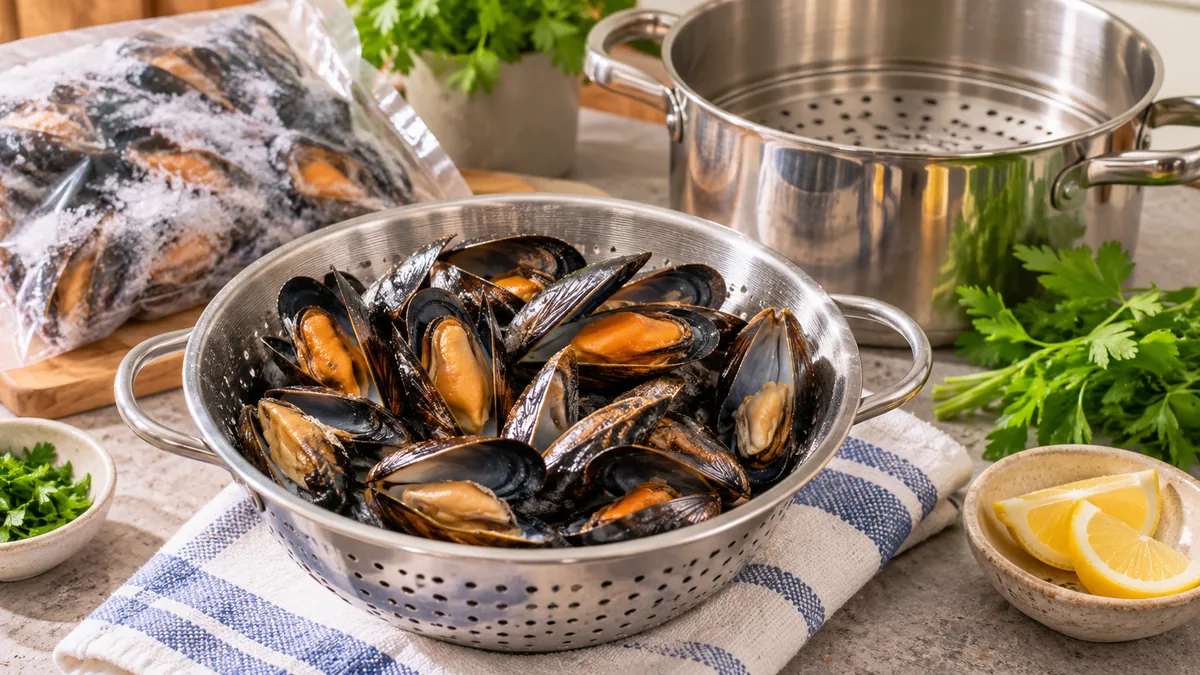
Frozen mussels can be a convenient seafood dinner, but the package may contain raw shell-on mussels, fully cooked mussels, half-shell pieces or cooked meat. Those products require different preparation. This guide explains how to identify what you bought, when to thaw it, how to steam or heat it correctly and what safety checks matter. It also covers why shell-opening rules do not tell the whole story for commercially precooked mussels.
First, identify what is actually in the frozen package
The word “frozen” tells you how the product is stored, not whether it was cooked before packaging. Some supermarket bags contain raw, cleaned mussels in their shells; others contain fully cooked mussels in shells, half-shell mussels, or plain cooked mussel meat. Your first step is to read the product name, ingredient list, preparation directions and storage instructions. Look for words such as raw, precooked, fully cooked, ready to heat, and cook from frozen. These phrases change the method and the safety checks. Never assume that open shells in a frozen packet mean the mussels were already cooked.
Shell-on raw mussels behave differently from frozen, cooked meat. A raw shell-on product generally needs full cooking; cooked mussel meat usually needs thorough heating according to the manufacturer’s directions. Half-shell products may be sold raw and are frequently intended for baking or grilling. A vacuum package can have a different preparation method than a loose bag. When the manufacturer’s label contradicts general internet advice, follow the verified preparation instructions for that specific product.
Choose sealed, undamaged packaging with frozen contents that still feel solid. Large frost crystals and water stains can indicate poor storage or previous partial thawing. Buy frozen seafood last, travel home promptly and put it in the freezer immediately. A bag marked “keep frozen” should not spend an afternoon thawing on the kitchen counter.
Raw frozen mussels versus precooked frozen mussels
For raw frozen mussels, the purpose of cooking is to bring the shellfish to a safe endpoint while protecting the meat from drying out. Steaming in a covered pan can work for some products, but check the pack for whether it must be thawed first. Use a broad pan with a small amount of simmering liquid and avoid crowding it. For mussels that were alive when packed and cooked from raw in the shell, shells opening can help signal cooking; discard any that remain closed after cooking in accordance with established shellfish guidance. However, commercially precooked and frozen mussels may already have open shells, so that visual rule cannot be used to judge whether reheating was sufficient.
Precooked frozen mussels usually need a shorter heating step because prolonged boiling makes their meat shrink and turn chewy. That does not make them automatically ready to eat straight from a thawed package. Read the ready-to-eat statement and reheating instructions carefully, particularly if they are served to people at greater risk from foodborne illness. The objective is to serve the product hot and safe without needless additional simmering.
Plain frozen mussel meat is useful for soup, rice and pasta, where the sauce can help prevent drying. Add it when the surrounding ingredients are nearly ready, then cook or reheat it as the package directs. For a complete fresh-shell cooking recipe, see our steamed mussels with garlic and lemon. This guide focuses instead on choosing the correct method for commercially frozen products.
Should you thaw frozen mussels before cooking?
There is no universal answer: some frozen mussels are specifically formulated to cook directly from frozen, while others should be thawed first. When a manufacturer instructs you to cook directly from frozen, do that. Otherwise, the FDA’s general method for thawing seafood is to move it to the refrigerator overnight, inside a covered container that captures drips. Keep the refrigerator at or below 40°F (4°C). Do not thaw mussels in hot water or on a warm kitchen counter.
If quick thawing is allowed and appropriate for the product, a leakproof bag submerged in cold water can be used, with cooking immediately afterward. Frozen shell-on products may have packaging that is not leakproof, so do not simply put an opened bag into a sink full of water. Microwave thawing can heat some pieces unevenly; use it only when the product instructions allow it and you will cook immediately. As with all frozen seafood, thawed mussels should not be left on a countertop while the rest of dinner is prepared.
Once thawed, inspect the product for obvious damage or off odors and follow the package’s use window. Freezing does not restore spoiled seafood to safety. The FDA’s seafood guidance explains cold-chain and safe-thaw principles applicable to fish and shellfish.
How to steam raw shell-on frozen mussels
Use this as a general method only when the package permits steaming and specifies whether thawing is necessary. Place a wide saucepan over medium heat and add approximately half an inch of water or unsalted broth, enough to generate steam without submerging all the shells. Add sliced garlic, a strip of lemon zest or parsley stems if you want a mild aroma. Bring the liquid to a steady simmer before adding the product. Arrange mussels in a relatively even layer and cover the pan.
Steam according to the package instructions, checking carefully for full doneness rather than depending on a single minute count. Raw shell-on mussels should open during cooking; discard shells that remain closed after the cooking process. Be aware that this is a rule for raw shell-on mussels, not an appropriate reheating test for precooked frozen mussels that were opened during processing. Use clean tongs and a separate serving bowl for finished seafood.
Take the lid off away from your face to avoid a steam burn. Pour off excess cooking liquid if the package does not advise using it; never use liquid from a questionable or improperly stored product. A little lemon juice, parsley and olive oil after cooking provide flavor without needing a thick sauce. If the mussels are going into a pasta dish, prepare the pasta first so you can move the cooked shellfish into it promptly instead of keeping them boiling.
How to heat precooked frozen mussels without rubbery meat
For precooked mussels, a gentle covered saucepan or a moist reheating step often gives a better texture than prolonged boiling. Heat a small amount of water, stock or tomato sauce until steaming, add the mussels, cover and follow the packaging’s reheating guidance until the product is thoroughly hot. If the manufacturer gives a specific temperature or time, follow it. For stored cooked leftovers, general food-safety guidance recommends reheating to 165°F (74°C).
Use a spoon to fold cooked mussel meat into a sauce rather than stirring forcefully. Detached meat can tear easily; shell-on pieces can scratch nonstick surfaces if stirred with metal utensils. Because some commercial products are fully cooked and merely require heating, exact cook times vary substantially. A generic “three minutes for all frozen mussels” rule would be misleading.
For a quick dinner, heat a tomato-garlic sauce and add approved cooked mussel meat during the final warming phase, then spoon over rice or pasta. Our spaghetti allo scoglio guide offers ideas for combining cooked shellfish with other seafood. Keep seafood portions covered and refrigerated until you are ready to heat them.
Five mistakes that spoil frozen mussel dinners
Ignoring the cooking-status label: raw and precooked products do not share one cooking plan. Thawing at room temperature: the outside warms long before the center thaws. Using shell opening as the only test for precooked products: the shells may have opened in the factory. Boiling precooked mussels for a long time: this can shrink and toughen the meat. Overcrowding the pan: uneven steaming and temperature differences can result.
Another mistake is adding salt before tasting the cooking liquid. Frozen shellfish and prepared broth can bring salt to the dish, and strong seasoning may mask delicate briny flavor. Choose plain herbs, lemon, garlic, tomato and a modest amount of oil. If you use a packaged sauce, read its sodium information, especially when building a meal intended to use less salt.
Never taste a questionable mussel to decide whether it is safe. A strong sour, rancid or ammonia-like smell is a reason to discard seafood, but the absence of an unpleasant odor does not guarantee safety if storage has been improper. Use a trusted supplier, keep products cold and follow the food-safety steps printed on the pack.
Food-safety checklist before serving
Buy shellfish only from regulated suppliers with traceable sourcing. The FDA advises using appropriate shellfish identification labels and rejecting damaged products. For raw bivalves, fully cooking is essential; do not treat a quick warm-up as adequate when the package says “raw.” The FDA’s general seafood guidance and FoodSafety.gov temperature chart provide official safety endpoints: finfish generally reaches 145°F (63°C), while clams, oysters and mussels are assessed in part by opening during cooking. Different rules apply to previously cooked leftovers, which should be reheated to 165°F (74°C).
Keep raw shellfish, equipment and liquids away from ready-to-eat salad ingredients. Use separate boards or thoroughly wash them between tasks, and do not place cooked mussels on a plate that previously held raw seafood. Refrigerate leftovers in shallow, covered containers within two hours, or within one hour in temperatures above 90°F (32°C). Reheat cooked leftovers thoroughly, and avoid repeated warming and cooling cycles.
Those checks matter more than visual presentation. Cooking times vary by product, initial temperature, shell size, cooking appliance and batch size. When a package is unclear about whether the mussels are raw or cooked, contact the manufacturer or choose a product with clearer instructions instead of guessing.
Three easy ways to serve the finished mussels
Lemon-garlic bowl: finish properly heated mussels with parsley, lemon juice and a small drizzle of olive oil. Serve with warm rice or crusty bread. Tomato and white-bean skillet: warm plain cooked beans in a lightly seasoned tomato base, then fold in precooked mussel meat as directed on the package until hot. This is especially useful when you want the shellfish to remain tender. Herb rice: prepare rice and vegetables ahead, then add cooked mussel meat at the end rather than leaving it on the heat through the entire rice-cooking period.
For shell-on products, provide an empty bowl for shells and check each portion before serving. A kitchen towel and a stable dish help diners handle the shells. If some pieces were heated unevenly, return them to the heat in accordance with the manufacturer’s instructions before serving. Do not use leftover cooking liquid from an improperly handled product in a sauce.
Once you know whether your mussels are raw or precooked, cooking them becomes much more straightforward. The label determines the method; safe handling and gentle timing determine whether the finished seafood is both appetizing and appropriate to serve.
Frequently Asked Questions
Can I cook frozen mussels without thawing?
Yes, when the manufacturer’s package explicitly allows cooking from frozen. Other products require refrigerator thawing first.
Are frozen mussels already cooked?
Some are precooked and others are raw. Read the label; frozen does not mean cooked.
Do frozen mussels have to open when cooked?
Raw mussels in their shells normally open during cooking, but precooked frozen products may already have open shells and cannot be judged by the same visual cue.
How do I stop frozen mussels becoming chewy?
Use the package-specific method, avoid prolonged boiling of precooked meat and add it to a finished sauce near the end.
How long can cooked mussels sit out after heating?
Refrigerate cooked shellfish promptly, within two hours, or one hour when surroundings exceed 90°F (32°C).