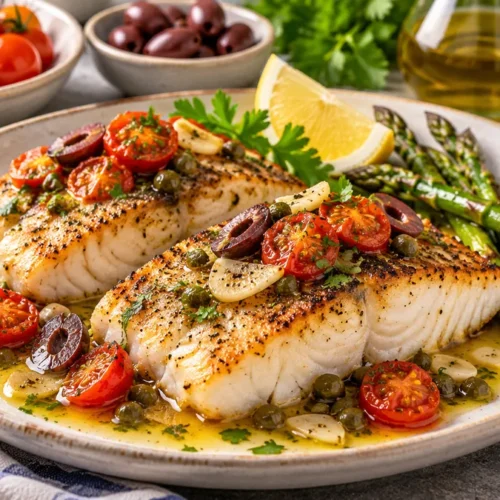
Mediterranean Baked Pollock with Tomatoes and Olives
Tender oven-baked pollock nestled in cherry tomatoes, garlic, lemon, Kalamata olives and capers, finished with parsley.
Equipment
- Shallow oven-safe baking dish
- Wide fish spatula
- Instant-Read Thermometer
Ingredients
- 1 1/2 lb pollock fillets thawed safely, patted dry
- 2 cups cherry tomatoes halved
- 1/3 cup pitted Kalamata olives sliced
- 1 tbsp capers drained and rinsed if salty
- 3 tbsp extra-virgin olive oil divided
- 3 garlic cloves thinly sliced
- 1 small shallot thinly sliced
- 1/2 tsp dried oregano
- 1 lemon zest and juice, divided
- 2 tbsp fresh parsley chopped
- 1/4 tsp ground black pepper
- to taste fine salt adjust after olives and capers
Instructions
- Preheat oven to 400°F (205°C). Pat thawed pollock dry, remove any pin bones and tuck thin tails under for even thickness.
- In a shallow baking dish combine cherry tomatoes, shallot, garlic, 2 tbsp olive oil, oregano and black pepper. Roast 8–10 minutes until tomatoes start to soften.
- Remove the hot dish carefully, move tomatoes aside and arrange pollock in one layer. Brush fish with remaining 1 tbsp olive oil and add lemon zest.
- Scatter sliced olives and capers around the fish, spooning a little warm tomato juice over each fillet. Season lightly after checking the olives' saltiness.
- Return the dish to the oven and begin checking the fish after approximately 8 minutes. Continue until the thickest fish section reaches 145°F (63°C), or the flesh is opaque and separates easily with a fork when thermometer use is impractical.
- Remove fish promptly, squeeze lemon juice over the pan and add fresh parsley. Lift the fish carefully onto plates with tomatoes and a spoonful of juices.
Notes
Timing is approximate for thawed fillets. Roast the vegetables first and check the thickest fish section; finfish should reach 145°F (63°C) or the official opaque-and-flaky endpoint. Do not publish a calculated nutrient profile unless verified.