
Air Fryer Pollock Fillets with Paprika and Lemon
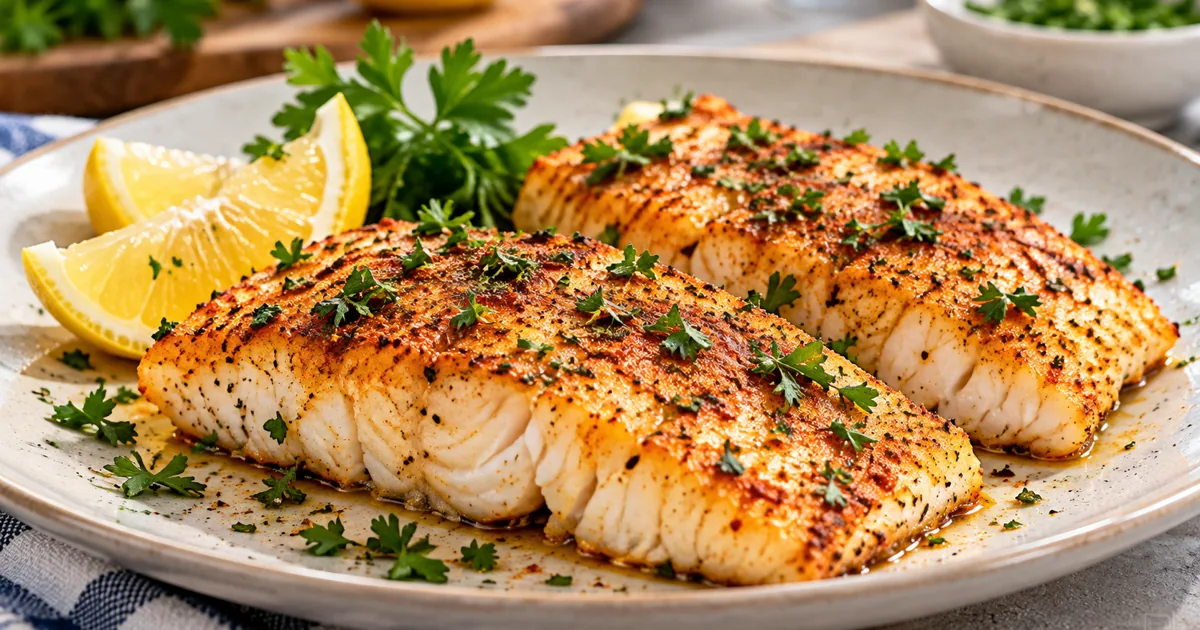
Pollock is a practical fish for an air fryer because its mild flavor takes seasoning readily and the fillets cook fast. That speed is useful on busy evenings, but it is also the reason pollock can go from juicy to dry in only a couple of minutes. This method uses a thin coat of oil, sweet paprika and lemon zest rather than a wet marinade or thick breading.
The central trick is to work with thawed, dry, similarly sized fillets and begin checking before the longest suggested time. The spice blend gives a warm color without pretending the fish will have the crunchy shell of deep-fried batter. What you want is a lightly seasoned surface with moist, distinct flakes inside.
Table of Contents
Why pollock needs a gentle approach
Pollock is a lean, flaky white fish with a restrained flavor. Its fillets may be thinner at the edges than cod loins, so simply borrowing a cod recipe and its minute setting is unreliable. Rapid air circulation dries the surface efficiently, while the fish interior heats quickly. A little oil and sensible timing are enough to make that combination work.
This is not a breaded fish stick recipe. There is no flour or heavy crumb layer to mask the flesh or slow the heat. The paprika provides a toasted color and the lemon zest releases oils during cooking. Fresh juice is added afterward because acidic liquid on the raw surface can interfere with even browning in a small air-fryer basket.
Choosing pollock fillets and thawing them safely
Select boneless fillets that are firm, evenly packaged and relatively similar in thickness. Many pollock portions are sold frozen, which is convenient and perfectly workable. Avoid packages that have thawed and refrozen or show excessive ice crystals. For this recipe, thaw the fish under refrigeration so seasoning sticks rather than sliding off with melting ice.
If you need quicker thawing, place a sealed bag in cold water and cook the fish promptly afterward. Dry carefully with paper towels and inspect for stray bones. Do not cut all fillets into tiny pieces just to achieve identical size; keeping moderate portions helps them stay intact during lifting.
The measured paprika and lemon seasoning
Sweet paprika gives color without strong heat. Garlic powder spreads evenly and does not burn as easily as bits of fresh minced garlic in intense circulating air. Lemon zest offers citrus aroma without adding moisture. Dill is optional but pairs naturally with mild white fish. If your paprika is smoked or hot, use less at first so it does not dominate the delicate pollock.
Rub the oil over the fish in a thin layer and distribute the dry seasoning across the two broad sides. Excess oil collects below the basket and does nothing to help the fish; heavy piles of spices can become bitter on exposed edges. Keep most fresh lemon juice for after cooking.
Setting up the air fryer basket
A standard 390°F setting works as a starting point for many basket-style air fryers. Equipment varies in fan strength and temperature accuracy, so follow the manufacturer’s preheating guidance and begin inspecting early. Leave a small gap between fillets for proper airflow. A cramped basket traps steam and produces patches that stay pale and wet.
Use a flexible fish spatula when moving cooked pollock. Some baskets benefit from a very light coat of oil on the cooking surface. If you use a paper liner, make sure it is approved for your device and does not blow into the heating element. Never preheat with unsecured loose paper.
How long to air fry pollock
For a preheated 390°F (199°C) basket, a fillet around 3/4 inch thick often takes approximately 8 to 11 minutes. Thin tail pieces may be ready around 6 to 8 minutes, while dense pieces can take a little longer. Those are checkpoints rather than promises. The fillet center should reach 145°F (63°C) or appear opaque and separate readily when gently tested.
Use an instant-read thermometer from the side of a thicker fillet when possible. Avoid pressing a probe down into the basket, which can give a misleading reading. The fish should lift in moist flakes; it does not need a dark, hard exterior. If one piece finishes before the others, remove it and continue checking the remaining portions.
Whether to flip pollock
Turning is sometimes useful when the appliance heats strongly from one direction, but many small pollock fillets cook well without it. Check the appliance manual and inspect the underside rather than flipping by habit. Fish that is moved several times can tear, especially after it begins to flake.
If a turn is needed, wait until the bottom has firmed, slide a broad spatula under the entire fillet and turn only once. You can also arrange the thicker portions toward the hotter area if your air fryer has a known uneven spot, then verify doneness individually.
Avoiding dry edges and sticking
Chalky edges usually mean the thinner sections cooked faster than the center. Reduce the time or use a slightly lower setting for especially thin fillets. A damp, pale top suggests too much surface water or a basket that was crowded. Dry the next batch thoroughly and leave adequate space around each piece.
If the fish sticks, do not scrape with a sharp tool. Allow it to release for a few seconds, slide a flexible spatula beneath it and use only a manufacturer-approved oil or liner next time. Pollock is naturally tender, so a small flake breaking off is not evidence of undercooking.
Side dishes and other air-fryer ideas
Pair the fillets with steamed green beans, fluffy rice, cucumber salad or roasted sweet potatoes. Add fresh lemon at the table so each person can adjust the brightness. Yogurt with dill and a little garlic makes a good cool sauce; serve it alongside rather than covering the hot surface.
For seafood prepared with the same appliance but a different texture, try air fryer shrimp with garlic and lemon or air fryer salmon bites. If you would rather bake a larger white-fish fillet, our oven-baked cod provides another method.
Storing and reheating leftover pollock
Refrigerate any cooked fish promptly in a sealed, shallow container. Its texture is best within a day; properly refrigerated fish is generally used within three to four days. Keep a separate container for sauce or wet vegetables so the seasoned surface does not become soggy.
Reheat slowly at a moderate oven temperature or flake the fish into warm rice near the end of cooking. A high-temperature second air-fry can leave very lean pollock tough. For general handling and doneness details, consult FDA seafood safety guidance and the seafood temperature chart.
Step-by-Step Recipe
Measure the ingredients before heating the appliance or pot. The quantities below correspond to four servings and the cooking guidance in the recipe card. Follow each step in order, but use a thermometer and the actual fish thickness to decide when cooking is complete.
Ingredients for four servings
- 1 1/2 lb boneless pollock fillets, four thawed portions, 5 to 6 ounces each
- 1 1/2 tbsp olive oil, for lightly coating fish
- 3/4 tsp sweet paprika
- 1/2 tsp garlic powder
- 1/2 tsp lemon zest
- 1/2 tsp kosher salt, adjust to taste
- 1/4 tsp black pepper
- 1/4 tsp dried dill, optional
- 1 tbsp fresh lemon juice, add after cooking
- 2 tbsp chopped parsley, for serving
- lemon wedges, for serving
Method
- Prepare the fillets. Thaw pollock completely, check for bones and blot both sides dry. Separate thin and thick portions so they can be tested at different times.
- Preheat and season. Preheat air fryer to 390°F (199°C) if the appliance instructions recommend preheating. Stir paprika, garlic powder, zest, salt, pepper and dill together. Brush fillets with olive oil, then dust evenly with the mixture.
- Arrange without crowding. Place the fillets in the basket in one layer with space for circulating air. Work in batches rather than overlapping pieces. Use a lightly oiled basket or manufacturer-approved perforated liner if sticking is a concern.
- Cook and check doneness. Air-fry roughly 8 to 11 minutes for typical 3/4-inch portions, checking earlier for thin pieces. Carefully turn once only if needed. The thickest center should reach 145°F (63°C), or be opaque and flake easily.
- Finish off the heat. Remove gently using a broad spatula. Drizzle lemon juice over the cooked fish, sprinkle parsley and serve immediately with wedges and warm vegetables.
Air Fryer Pollock Fillets with Paprika and Lemon
Ingredients
- 1 1/2 lb boneless pollock fillets four thawed portions, 5 to 6 ounces each
- 1 1/2 tbsp olive oil for lightly coating fish
- 3/4 tsp sweet paprika
- 1/2 tsp garlic powder
- 1/2 tsp lemon zest
- 1/2 tsp kosher salt adjust to taste
- 1/4 tsp black pepper
- 1/4 tsp dried dill optional
- 1 tbsp fresh lemon juice add after cooking
- 2 tbsp chopped parsley for serving
- lemon wedges for serving
Instructions
- Thaw pollock completely, check for bones and blot both sides dry. Separate thin and thick portions so they can be tested at different times.
- Preheat air fryer to 390°F (199°C) if the appliance instructions recommend preheating. Stir paprika, garlic powder, zest, salt, pepper and dill together. Brush fillets with olive oil, then dust evenly with the mixture.
- Place the fillets in the basket in one layer with space for circulating air. Work in batches rather than overlapping pieces. Use a lightly oiled basket or manufacturer-approved perforated liner if sticking is a concern.
- Air-fry roughly 8 to 11 minutes for typical 3/4-inch portions, checking earlier for thin pieces. Carefully turn once only if needed. The thickest center should reach 145°F (63°C), or be opaque and flake easily.
- Remove gently using a broad spatula. Drizzle lemon juice over the cooked fish, sprinkle parsley and serve immediately with wedges and warm vegetables.
Notes
Frequently Asked Questions
Can I air fry pollock from frozen?
The specified timing assumes thawed fillets. Frozen pollock requires a different cooking schedule and tends to shed moisture; follow the appliance guidance or thaw safely first.
What temperature works for air fryer pollock?
This version starts at 390°F (199°C). Air fryers vary, so verify the fish center reaches 145°F (63°C) rather than trusting a fixed minute setting.
How long do thin pollock fillets take?
Some thin pieces can finish in roughly 6 to 8 minutes, while 3/4-inch portions often take 8 to 11 minutes. Start testing early and remove pieces as they finish.
Should I flip the fillets halfway through?
Flip only if your basket or appliance needs it. Use a broad spatula and turn gently once; thin pollock is prone to breaking.
How do I keep pollock from falling apart?
Thaw it completely, pat it dry, handle it as little as possible and lift it with a flexible, wide spatula once cooked.
For more ideas using different seafood or cooking techniques, explore the related SABSEA recipes linked above. Each recipe has its own method and ingredients, so choose the one that matches the fish or shellfish available to you.