
Lebanese Sayadieh: Fish and Rice with Caramelized Onions
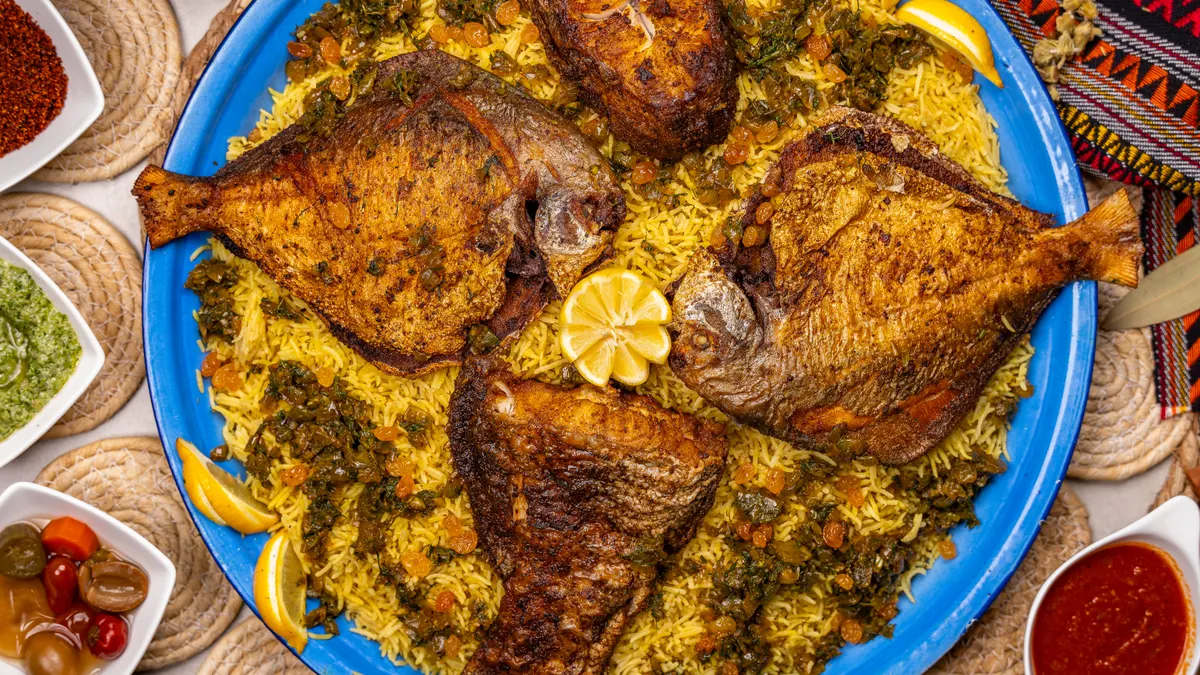
Lebanese sayadieh combines gently spiced white fish with a deep, fragrant rice pilaf colored by caramelized onions. The essential technique is to brown the onions patiently, cook rice in their savory broth, and place freshly cooked fish on top with herbs and optional toasted nuts. This practical version explains the traditional flavor logic, gives a measured recipe for four, and shows how to preserve separate rice grains and tender fish without an unnecessarily complicated kitchen process.
What makes Lebanese sayadieh distinctive?
Sayadieh is a coastal fish-and-rice preparation in which deeply browned onions give the rice its defining color and savory depth. Different home versions exist throughout the Levant: some simmer fish in an onion-based broth before cooking the rice, while others cook the rice separately and serve fried or baked fish over it. Both styles share the essential pairing of seasoned fish with aromatic onion rice. Here the rice takes on a brown-gold color from caramelized onions, cumin, coriander and a little cinnamon, while the fish is cooked separately so its surface can remain intact.
The dish is sometimes associated with celebrations and family gatherings, but it also works as a weekend dinner when you prepare the ingredients in order. Traditional variations often use locally available white fish such as sea bass or grouper, with toasted pine nuts or almonds for garnish. This recipe uses firm white-fish fillets for convenience. The fish should remain identifiable on the platter, rather than being broken into the rice.
Readers familiar with our Korean braised mackerel will recognize that both dishes build flavor from aromatic cooking liquid. The seasoning and preparation are very different: sayadieh relies on browned onions and rice, while the Korean dish simmers fish with radish and red pepper. Keeping those culinary identities distinct helps the recipe remain useful to readers looking for one particular dish.
Why onions matter more than adding extra spices
Rushed onions produce pale, sweet rice; carefully browned onions give sayadieh its characteristic savory depth. Slice two large yellow onions thinly, then cook them over medium heat in olive oil, stirring as the edges darken. They should become deeply golden brown, not black or burnt. This can take twenty minutes or more depending on the pan, moisture and burner. You cannot accelerate the flavor simply by adding extra cumin.
Some cooks blend a portion of the caramelized onions with stock to make a darker broth for the rice, then keep the remainder as a garnish. That technique is used here because it distributes onion flavor evenly. Reserve the crispiest golden pieces for the top of the platter. The blended onion liquid gives the rice an earthy color without artificial coloring.
Rinse basmati rice until the water runs mostly clear. This removes loose surface starch and helps the grains remain separate. After rinsing, drain thoroughly so the water-to-rice ratio stays predictable. Long-grain rice is a suitable substitute, though its liquid requirement can differ. Use the package guidance as a starting point and adjust for the stock used in the recipe.
Choosing fish for sayadieh
A firm, boneless white fish such as sea bass, snapper, grouper or thick cod is suitable. Fish steaks with bones can also be used in traditional preparations, but they need careful serving to avoid leaving small bones in the rice. This home-friendly recipe calls for four similarly sized fillets. If the fish is frozen, thaw it safely in the refrigerator, pat dry and inspect for pin bones.
Keep the seasoning on the fish simple: cumin, coriander, black pepper, lemon zest and a pinch of salt. A light coating of flour is optional for a crisp surface; the default version uses a thin dusting of plain flour. Use enough oil to brown the fish in a skillet without deep-frying. A heavy pan helps keep the heat stable when the fish goes in.
For safe doneness, the FoodSafety.gov seafood chart recommends finfish reach 145°F (63°C), or be opaque and easily separated by a fork when a thermometer is not practical. If the fillets are thin, check them early. A long, thick sea bass portion will need a different cooking window than a thin hake fillet. Never assume the rice’s cooking time also cooks fish placed on top at the end.
The spices that give onion rice its aroma
Ground cumin is the most recognizable seasoning in many sayadieh recipes. Coriander and a small amount of cinnamon add warmth, and black pepper provides mild heat. Some families use seven-spice blend or allspice; if you use a premixed blend, check the ingredient list and add it sparingly. This is not meant to be a hot curry. The caramelized onion broth, rather than a large spice quantity, should dominate.
Use plain unsalted fish stock or vegetable stock, adjusting salt at the end. Prepared stock can vary widely in sodium, so taste the liquid before pouring it over rice. If the stock contains little flavor, a bay leaf and a few onion trimmings can be warmed briefly in it before use. Remove the leaf before blending or serving. Do not add acidic lemon juice to the rice at the start; save it for serving so the grain flavor remains balanced.
Toasted pine nuts or slivered almonds are traditional-style garnishes, but nuts are optional. Toast them separately in a dry skillet until fragrant and lightly golden, then cool on a clean plate. If serving anyone with nut allergies, omit them and do not use utensils that have contacted nuts.
Measured Lebanese sayadieh recipe
Use the WP Recipe Maker card for exact measurements, timing and the cooking order. The dish is prepared in components: caramelized onion broth, fluffy rice, safely cooked fish and garnish. Keep the fish and rice warm without continuing to cook the fish unnecessarily.
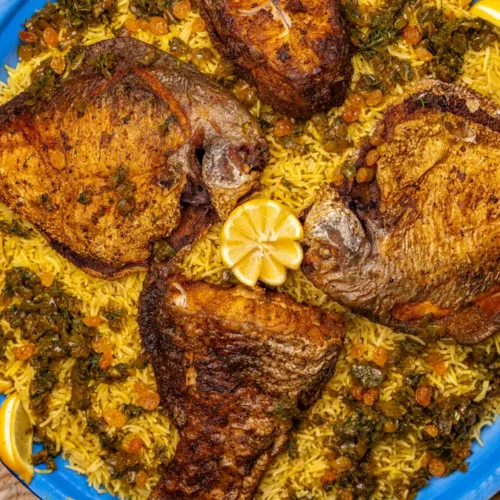
Lebanese Sayadieh Fish and Rice with Caramelized Onions
Equipment
- Heavy saucepan with lid
- Wide frying pan
- Blender or potato masher
- Instant-Read Thermometer
Ingredients
- 1 1/2 lb firm white fish fillets sea bass, snapper, grouper or thick cod, cut into four
- 1 1/2 cups basmati rice rinsed and drained
- 2 large yellow onions thinly sliced
- 2 1/4 cups unsalted fish or vegetable stock adjust to rice pack and absorbed onion moisture
- 4 tbsp olive oil divided, plus a little for fish if required
- 1 tsp ground cumin divided between rice and fish
- 1/2 tsp ground coriander
- 1/4 tsp ground cinnamon
- 1/4 tsp black pepper
- 2 tbsp plain flour optional, light coating for fish
- 1 lemon cut into wedges for serving
- 2 tbsp flat-leaf parsley chopped
- 1/4 cup pine nuts or slivered almonds optional, toasted separately
- to taste fine salt
Instructions
- Heat 2 tbsp olive oil in a wide pan over medium. Add thinly sliced onions and cook, stirring, until deeply golden and caramelized, about 20–25 minutes, without burning. Reserve about one-third for garnish.
- Blend or mash the remaining browned onions with warm unsalted stock until the liquid is deep golden-brown. Add ground coriander, cinnamon and half the cumin.
- Warm 1 tbsp olive oil in a saucepan; add rinsed, drained basmati and stir briefly. Pour in the onion broth, adjust to package liquid guidance and bring to a simmer. Cover, cook on low until rice is tender, then rest covered 10 minutes.
- Pat white fish dry, remove pin bones and season lightly with remaining cumin, pepper and salt. Dust with a thin layer of flour if using.
- Heat remaining olive oil in a wide skillet. Cook fish over medium heat until the first side releases and browns lightly; turn once. Continue until the thickest center reaches 145°F (63°C) or official opaque-and-flaky endpoint.
- Fluff rice with a fork onto a wide serving platter. Arrange fish on top, scatter reserved onions, parsley and optional toasted nuts, and serve with lemon wedges.
Notes
How to cook the onion rice without making it sticky
After reserving some onions for garnish, combine the remaining onions with warm unsalted stock and briefly blend or mash until the liquid is dark and flavorful. Bring the liquid to a simmer. In a separate pot, toast the rinsed and well-drained rice in a small spoon of olive oil for a minute, then add the spiced onion liquid. Bring it just to a boil, cover and reduce to very low heat.
Avoid lifting the lid repeatedly. Steam inside the pot finishes the grains evenly. After the rice has absorbed the liquid, turn off the heat and let it rest covered for approximately ten minutes before fluffing with a fork. If the rice seems wet, give it more covered rest rather than stirring vigorously and breaking the grains. If the bottom is scorching, the heat was too high; use a heavy-bottomed pan and a low simmer next time.
Do not force a fixed cooking time when using a different rice variety. Some rice brands absorb more water than others, and a concentrated onion stock behaves differently than plain water. The measured amounts in the recipe are a tested-style starting formula, not a substitute for reading rice-pack instructions and observing whether the grains are tender.
Pan-cook the fish while the rice rests
Start the fish only when the rice is nearly finished. Dry the seasoned fillets thoroughly, then dust lightly with flour if using. Heat olive oil in a wide skillet over medium heat and lay the fish down away from you. Cook without disturbing it until the underside forms a light crust and releases. Turn once with a wide fish spatula. Reduce the heat if the surface becomes dark before the center is cooked.
Check the center of the thickest piece. Finfish should reach 145°F (63°C), according to official guidance. If the fillets are particularly thick, move them to a moderate oven to finish after searing, or reduce the skillet heat and continue carefully. Do not keep turning them every minute; the flesh becomes fragile as it cooks.
Serve the fish as distinct pieces on top of rice. If you have a little clean cooking oil in the pan, a spoon of it can be drizzled over the fish for shine, but avoid dumping the entire skillet into the rice. Fresh lemon wedges should be served on the side so diners can adjust the acidity.
How to assemble an attractive sayadieh platter
Transfer the fluffed rice onto a warmed wide platter and shape it into a shallow mound. Set the cooked fish fillets over the top, leaving some rice visible around the edges. Scatter reserved browned onions, chopped parsley and toasted almonds or pine nuts if using. The arrangement gives each person a little of every component without burying the fish under a thick sauce.
A lemon-tahini sauce can be offered separately: whisk plain tahini with lemon juice, a small amount of water and a pinch of salt until pourable. Make sure the sauce is smooth and adjust thickness with water rather than oil. This is optional; the onion rice and fish are flavorful enough without it. Serve with cucumber salad, sliced tomatoes or lightly dressed greens.
For a different rice-and-seafood dinner, explore our garlic lemon butter shrimp scampi, which can be paired with rice but does not use caramelized onion broth. The two dishes have different techniques, flavor expectations and search intent.
Common sayadieh mistakes and how to avoid them
Burnt onions: lower the heat and stir more frequently as they darken. Deep brown is desirable; black and bitter is not. Pale rice: too few browned onions or stock with little onion flavor can lead to a bland result. Sticky grains: rinse and drain rice, avoid excess liquid and let it rest covered before fluffing. Broken fish: lift with a broad spatula and keep the cooking process separate from the rice.
Overly salty rice: prepared stock and seasoned fish can already contribute salt. Use unsalted stock and adjust after tasting. Dry fish: begin cooking it near the end of the rice process and check the center rather than holding it over heat. Soggy nut garnish: toast nuts separately and add only at serving time.
If a large family dish is not ready at the same moment, keep the rice covered off heat and cook the fish last. That sequencing protects both textures. It is also easier to correct a slightly damp batch of rice than to reverse overcooked fish.
Traditional variation and practical home substitutions
There are many regional and household interpretations of sayadieh. Some versions use whole fish and simmer its bones for stock; others use boneless fillets and purchased stock for convenience. Some cook the fish in the broth before using that liquid for rice. This recipe deliberately chooses the more accessible separate-pan approach, using browned onions for color and a clear fish-and-rice presentation.
If you use whole fish, remove bones meticulously before serving, especially for children. If you cannot find pine nuts, lightly toasted almond slivers provide crunch, or omit nuts entirely. If using brown rice, follow its longer cooking time and different liquid requirements, and do not claim it follows the same recipe clock.
Sayadieh is most enjoyable when the flavor of browned onions remains central. Changing the fish species is flexible, but replacing the onion broth with a highly seasoned tomato sauce turns it into a substantially different dish.
Storage, reheating and food safety
Rice and seafood both require prompt cooling. Move leftovers from the large platter into shallow containers and refrigerate within two hours, or one hour in temperatures above 90°F (32°C). Keep the refrigerator at or below 40°F (4°C) and reheat leftovers thoroughly to 165°F (74°C). Do not leave a large pot of warm rice at room temperature for hours; rice can support harmful bacteria if mishandled.
Store the fish and rice separately if possible, so they can be reheated without repeatedly stirring and breaking the fish. Use properly handled leftovers within three to four days and discard any with uncertain storage. Do not reheat the same batch repeatedly.
The main secret of an appealing sayadieh is not an elaborate spice mix: it is patient onion browning, separate rice grains and safely cooked fish added at the end. Once you organize the cooking in that sequence, the dish becomes a dependable family-style seafood meal.
Frequently Asked Questions
What type of fish is best for Lebanese sayadieh?
Firm white fish such as sea bass, snapper, grouper or thick cod works well. Adjust cooking time and check safe doneness for each cut.
Why is sayadieh rice brown?
Deeply caramelized onions color the cooking broth and rice, while cumin and other warm spices add aroma.
Can I make sayadieh without pine nuts?
Yes. The nuts are an optional garnish; omit them or use another suitable topping if preferred.
Can I prepare the rice ahead?
You can prepare the browned-onion base ahead, but cooked rice must be cooled promptly and refrigerated safely, then reheated thoroughly.
How do I keep the fish from breaking on the rice?
Cook it separately, turn it gently with a wide spatula and transfer it only after it has reached a safe endpoint.