
How to Cook Thin Fish Fillets Without Breaking Them
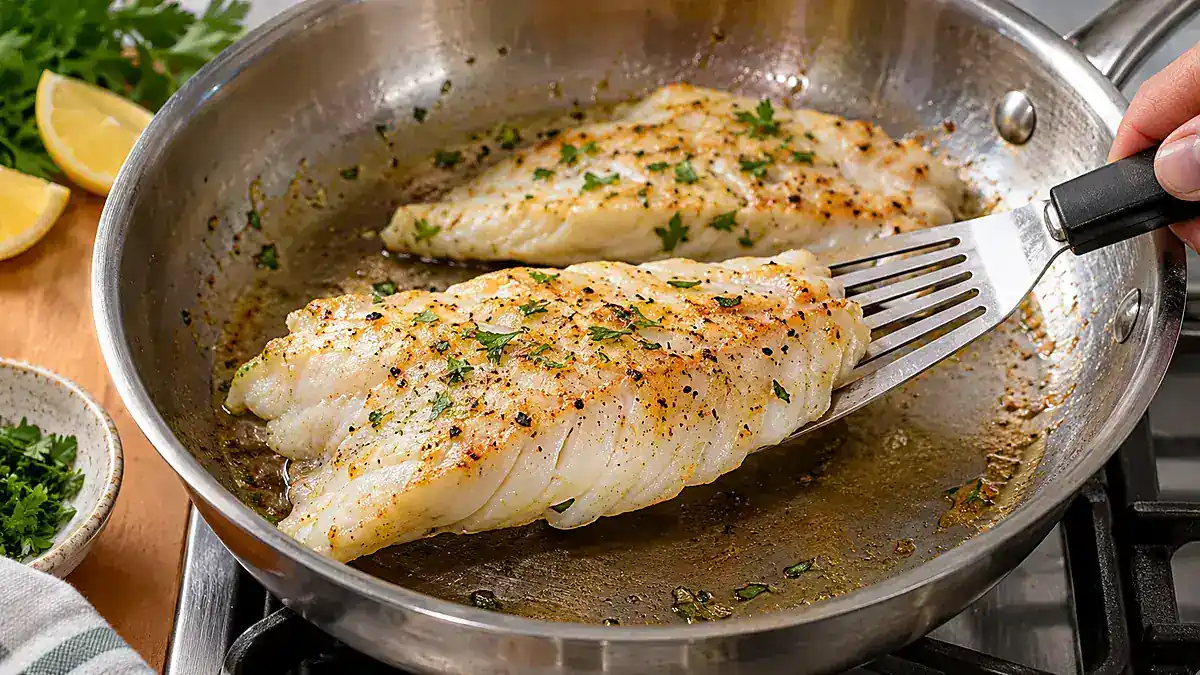
Learning how to cook thin fish fillets without breaking them makes quick seafood dinners easier, but delicate fillets can still stick, curl, split or fall apart just when you try to serve them. The solution is less about a secret coating and more about choosing the right equipment, preparing the surface and moving the fish only when it releases. This guide explains reliable skillet, oven and air-fryer methods for sole, flounder, whiting, plaice and other delicate fish, plus how to check that dinner is safely cooked.
Why thin fish fillets break
Fish muscle is organized into short segments that separate readily as they cook. A lean, thin fillet has little connective tissue to help it hold together, and its surface can bond to a dry or poorly heated pan. If you lift one corner before the center is ready, the fillet tears along those natural seams. Thin tail ends cook faster than the thick center, too, so the same piece can be fragile at one end and still underdone at the other.
Moisture is a second problem. Water left on the fillet must evaporate before browning begins. If it sits in a crowded pan, steam accumulates and the fish may glue itself to the cooking surface. Rather than repeatedly scraping it loose, remove excess surface moisture and give the fish room. Pat dry with clean paper towels, then season just before cooking. Never leave raw seafood on the counter while preparing the rest of dinner.
Freshness matters, but even good-quality fish can fracture when handled roughly. If fillets are especially thin, consider folding the narrow tail underneath before baking or gently using a parchment-lined tray instead of a skillet. This changes the handling problem rather than asking you to perform a difficult flip.
Choose a fillet and check for bones
Look for fillets with an even outline, flesh that springs back when pressed, and a clean, mild aroma. Avoid pieces with dried, dark or ragged edges. For skillet cooking, a fillet around 1/2 inch thick is often easier to maneuver than paper-thin sole; use the oven for exceptionally fragile fish. Skin-on fillets may be sturdier, especially if the skin remains in one piece and the pan is prepared properly.
Run clean fingertips gently along the center line to detect pin bones. Remove any that remain using fish tweezers, pulling in the direction the bone points. Cutting the fish into two shorter pieces can make a long fillet easier to flip without snapping it across the middle. If a piece has a thin taper, tuck that taper under for baking, or cook it over lower heat and check it earlier.
Cook from a refrigerated, safely thawed state. The FDA’s seafood safety guidance recommends thawing frozen seafood in the refrigerator; a sealed bag in cold water is a faster alternative when the fish will be cooked promptly.
The simple equipment setup that helps most
A large, thin fish spatula is probably the single most useful piece of equipment. Its blade can slide under most of a fillet at once, and the slots let pan juices drain away. A flexible, heat-safe turner is a good substitute. Have a second spatula or spoon nearby if you need to support a very long piece as you turn it.
Choose a clean, flat-bottomed skillet that gives each fillet a little space. A well-maintained nonstick pan is forgiving for beginners; well-heated stainless steel can also work once the fish forms a crust and releases naturally. Keep a paper-towel-lined plate nearby for drying, and a clean serving plate ready before the fish reaches temperature. A fine-tipped instant-read thermometer reduces guesswork when the fillet is thick enough to measure.
Use a small amount of olive oil or another suitable cooking oil to coat the pan evenly. Butter may be added near the end for flavor, but starting with all butter at high heat can scorch the milk solids before the fish is ready. Avoid shaking the pan every few seconds. Controlled, minimal handling usually produces a neater result.
Pan-fry delicate fish with one careful turn
- Pat the fish thoroughly dry. Season lightly with salt, pepper and, if desired, a little paprika or lemon zest. Save most lemon juice until serving, because acidic liquid on the surface adds moisture.
- Warm the skillet over medium heat and add enough oil for a thin film. Wait until the oil shimmers lightly rather than smoking.
- Lower the fillet into the pan away from you. Leave it alone while the underside cooks and begins to release. For many thin fillets this happens within a few minutes, but thickness and pan heat vary.
- Slip a wide spatula under the fillet. If it resists, allow a little more time instead of prying. Lift the entire piece and turn once, supporting it if necessary.
- Finish gently, then check that the center is cooked safely. The FDA recommends 145°F (63°C) for finfish, or flesh that is opaque and separates easily with a fork when a thermometer cannot be used.
For a species-specific version, see our crispy pan-fried whiting fillets. For a thicker, sturdier fillet, compare the handling and heat control used in our pan-seared trout.
Two no-flip alternatives: oven and air fryer
If the fillet is too delicate to turn, bake it on parchment. Lightly oil a shallow baking tray, position each piece with space around it, and brush with a little oil or softened butter. A moderate oven, around 400°F (205°C), provides even heat; start checking early because thin fish cooks quickly. Slide a wide spatula beneath the whole portion when lifting it from the tray. Parchment reduces contact and makes the transfer easier, though fish can still stick if left to cool completely on the hot surface.
For the air fryer, brush the basket lightly with oil or use an approved perforated liner that does not obstruct airflow. Arrange one layer only. Cooking without turning is possible for very thin fillets if the top browns well and the center reaches a safe temperature. Check early; fan-forced heat can dry out the tail end fast. Do not place loose parchment in an empty preheating basket, where it might lift toward the heating element.
Neither method produces exactly the same crust as direct skillet contact, but both drastically reduce the chance of tearing. Our air-fryer pollock demonstrates a separate, fully specified air-fryer recipe.
What to do when the fish sticks or starts to crack
It sticks immediately: the pan may be too cool or the surface too wet. Leave the fish undisturbed until it forms a cooked layer and loosens. Do not force it from the metal. The tail is overdone: move the fillet toward a cooler area, or tuck the narrow end beneath itself when baking. The crust falls off: a thick flour coating can detach if wet or flipped too early; use a whisper-thin dusting and shake off excess.
The fillet splits on the spatula: use a wider turner and support the unsupported edge. You can also serve the fillet in two natural sections rather than trying to join the flakes back together. The fish looks cooked outside but not inside: reduce heat and finish gently, checking temperature; more heat is not the answer.
Do not be discouraged by a broken piece. Flaked fish is perfectly useful in a rice bowl or warm salad when it has been cooked safely, and flavor is unchanged. The technique becomes noticeably easier when you make only one change at a time and observe when the fish naturally releases.
Finishing, serving and safe leftovers
Move cooked fillets onto warmed plates, then squeeze lemon over them rather than into the skillet during initial browning. Chopped parsley, a little melted butter or a spoonful of the pan’s clean cooking juices give a polished finish. Serve alongside roasted vegetables, steamed rice or crisp potatoes. Delicate fish is best presented immediately while the crust and surface remain intact.
Refrigerate leftovers promptly in shallow containers; do not allow cooked seafood to sit at room temperature for more than two hours, or one hour in very hot conditions. Reheat gently to 165°F (74°C) when serving leftovers. For more on firm-fleshed fish and timing, our crispy pan-seared fish guide offers additional context. The most repeatable result always comes from dry fish, a controlled pan, a broad spatula and a measured doneness check.
Frequently Asked Questions
Should I flip a very thin fish fillet?
Only if necessary. A gentle single turn with a wide fish spatula works for many fillets, but parchment baking removes the need to flip.
Why does fish stick even when I use oil?
A wet fillet, insufficient preheating or moving it before a crust forms can cause sticking. Let it release naturally rather than scraping.
Is flour essential to keep fish intact?
No. A very light dusting can improve browning, but correct heat and handling matter more than a thick coating.
What temperature should delicate fish reach?
FDA guidance recommends 145°F (63°C) for finfish; use an instant-read thermometer in the thickest accessible area when possible.
What fish is easiest to cook without breaking?
Slightly thicker, evenly cut fillets are easier for beginners than extremely thin sole or flounder. Skin-on portions may also be sturdier.
Sources and further reading
Food safety information is based on current official guidance; practical cooking tips are intended as home-kitchen guidance.