
Pan-Seared Monkfish with Tomato Fondue and Fresh Basil
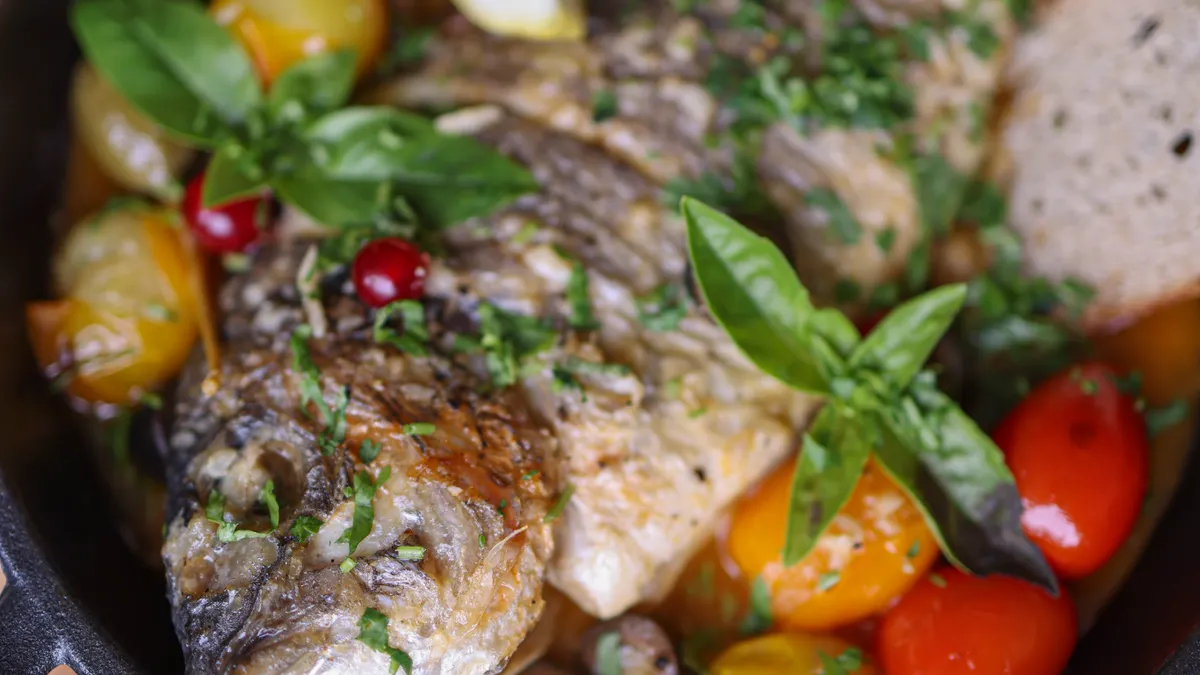
Pan-seared monkfish with tomato fondue is an elegant seafood dinner built from two simple elements: thick, firm monkfish fillets with a golden exterior and a softly cooked tomato, shallot, garlic and basil sauce. The key skills are removing the tough monkfish membrane, drying the fish, controlling the skillet heat and allowing the tomatoes to soften without scorching. The measured recipe below explains how to assemble the plate and confirm safe doneness without a complicated sauce.
What is tomato fondue in a seafood recipe?
In this context, tomato fondue is not melted cheese and does not require a special fondue pot. It is a soft, gently cooked mixture of tomatoes, shallot, garlic and olive oil, simmered until the pieces break down and their liquid becomes a light, spoonable sauce. The French word describes a melting or softening technique. It is especially useful with meaty fish because the tomato provides moisture and acidity without masking the fish’s natural flavor.
Monkfish has a firm, dense texture that is sometimes compared with lobster tail, though it has a flavor and anatomy of its own. Its thick tail portions can be seared on the outside and finished gently to a safe center temperature. A soft tomato fondue is a contrasting accompaniment: warm and juicy against a lightly browned surface. Fresh basil and lemon zest give the plate a clean finish, while capers can add briny contrast if desired.
The result should feel composed but manageable for a home cook. You do not need a restaurant kitchen or complicated equipment. A heavy skillet, a second small pan for the tomatoes, a wide spatula and a thermometer are enough. For another firm-fish pan method, compare our pan-seared grouper with tomato and olive relish, which uses an uncooked topping rather than gently melted tomatoes.
How to buy and prepare monkfish tail
Ask for skinless monkfish tail fillets, or have the fishmonger remove the outer skin. Monkfish is usually sold as thick tail pieces with a central bone in some cuts. The white flesh should be firm and smell fresh and mild. Avoid cuts with dried edges, discoloration or a strong ammonia-like odor. If you purchase frozen monkfish, thaw it in the refrigerator rather than on the counter and keep it chilled until cooking.
A thin grayish membrane can remain on the surface of monkfish after the skin is removed. This membrane contracts during heating and can make the fish curl or become chewy. Slip a thin, sharp knife under the membrane and peel it away carefully, keeping as much white flesh as possible. If you are unsure, ask your fishmonger to trim it when buying. Pat the cleaned fillets dry with paper towels before seasoning.
Cut thick pieces into similar portions rather than leaving a massive tail in one skillet. Even sizing makes doneness checks easier and reduces the likelihood that one portion is dry while another is undercooked. A firm fish can feel deceptively done on the outside, so plan to check the center with an instant-read thermometer. The FDA recommends 145°F (63°C) for finfish, or flesh that is opaque and separates easily with a fork when a thermometer is not practical.
Choosing tomatoes for a fondue that is not watery
Ripe plum tomatoes work particularly well because they have dense flesh and relatively little water. Cherry tomatoes also work, but they create a slightly sweeter, chunkier sauce. If fresh tomatoes are bland or unavailable, good-quality plain canned tomatoes can produce a more consistent fondue. Avoid canned products with already concentrated strong seasonings when you want to control the result.
To reduce excess water, chop the tomatoes into small pieces and remove some seeds if they are unusually juicy. Fine shallot and garlic melt into the sauce as they cook. Cook slowly with olive oil; a hard boil can make the mixture scorch and turn sour before it has time to thicken. A spoonful of plain unsalted stock or water is useful if the pan begins to stick, but add it sparingly.
Tomato fondue should remain spoonable, not become a thick paste. When you drag a wooden spoon through the pan, a brief trail should appear before the mixture flows together. Stir in shredded basil only at the end; prolonged heat darkens the herb and can make it taste flat. This is the sauce component that can be prepared ahead while the fish stays chilled.
A restrained seasoning list for the monkfish
Use extra-virgin olive oil, fresh garlic, black pepper, lemon zest and a small amount of dried thyme or fresh parsley for the fish. Monkfish benefits from a well-heated pan, but it does not need a heavy flour coating. A little salt goes a long way, especially if your tomato fondue includes capers. If you want a deeper color, a pinch of smoked paprika may be used, but avoid overwhelming the pale fish with an aggressive spice blend.
Fresh basil is a natural choice in the fondue. If you use fresh thyme in the tomato base instead, remove any woody stems before serving. Lemon juice should be added gradually to the finished sauce because the tomatoes already provide acidity. A small amount of unsalted butter can be swirled into the fondue for extra shine, but it is optional; the version below remains light and dairy-free.
Prepare every seasoning before you start searing. Once the fish reaches a hot pan, timing becomes important, and searching for a lemon or knife can lead to overcooking. Keep a clean serving platter nearby so you are not placing cooked fish on the board used to trim raw fillets.
Measured pan-seared monkfish recipe
The WP Recipe Maker card gives the full quantities and sequence. Read it once before starting; the tomato fondue begins first, and the monkfish is seared when the sauce is nearly ready. Cooking windows are approximate and depend on thickness. Check the internal temperature of the thickest piece.
Pan-Seared Monkfish with Tomato Fondue and Fresh Basil
Equipment
- Heavy skillet
- Small saucepan
- Instant-Read Thermometer
- Wide fish spatula
Ingredients
- 1 1/2 lb monkfish tail fillets skin and tough membrane removed; cut into 4 pieces
- 2 cups ripe plum tomatoes finely chopped, excess seeds removed if needed
- 1 small shallot finely minced
- 3 garlic cloves minced, divided
- 3 tbsp extra-virgin olive oil 2 tbsp for tomatoes, 1 tbsp for fish
- 1 tbsp unsalted vegetable stock or water only if tomato pan becomes dry
- 1 tsp fresh lemon zest
- 2 tsp fresh lemon juice added at finish, adjust to taste
- 1/4 tsp dried thyme
- 2 tbsp fresh basil leaves torn
- 1/4 tsp ground black pepper
- 1 tbsp capers optional, drained
- to taste fine salt
Instructions
- Trim tough gray membrane from the monkfish, cut into 4 even portions, pat completely dry and keep chilled while making sauce.
- Warm 2 tbsp olive oil in a small saucepan over medium-low heat; add minced shallot and two-thirds of the garlic. Cook until soft without browning.
- Stir in chopped tomatoes and thyme. Simmer gently about 15–20 minutes, stirring until soft and spoonable, adding a little water if the pan dries. Keep warm.
- Season monkfish with pepper, lemon zest and a modest amount of salt. Heat 1 tbsp olive oil in a heavy skillet over medium-high heat.
- Sear monkfish pieces until lightly golden on first side, turn once and lower heat as needed. Continue cooking gently until the thickest center reaches 145°F (63°C), adjusting time to thickness.
- Remove tomato fondue from heat; add torn basil, lemon juice and optional drained capers. Taste and season.
- Spoon warm tomato fondue onto 4 plates, place fully cooked monkfish over it and serve immediately.
Notes
How to sear monkfish without sticking
Use a heavy skillet and let it preheat over medium-high heat before adding the oil. Pat the monkfish completely dry; surface moisture steams rather than browns. Set each portion down gently and leave a little space between pieces. A pan full of fish lowers the temperature and traps moisture, giving pale, wet surfaces instead of a caramelized crust.
Let the first side develop color before moving it. If a piece clings to the pan, wait briefly rather than scraping or tearing it away. Turn the fish with a broad spatula or tongs that do not squeeze the meat. A firm monkfish piece often tolerates one careful turn better than frequent flipping. After searing the second side, lower the heat and finish gently as needed; a thick piece may require several more minutes.
Measure the thickest part, avoiding any central bone. The FDA’s finfish recommendation is 145°F (63°C). If the surface is already deeply colored but the center is not done, lower the heat or transfer the skillet to a moderate oven if it is oven-safe, checking again after a short interval. Never rely on a browned crust alone as proof that the center is ready.
How to plate monkfish over tomato fondue
Warm shallow plates while the fish finishes cooking. Spoon a wide circle of tomato fondue into the center of each plate, then lay one cooked monkfish portion on top. This keeps the seared surface visible rather than soaking it completely. Add torn basil and a little lemon zest. A few capers can be sprinkled over the plate, but keep them modest so their brininess does not overshadow the tomato.
If the fondue is watery, simmer it briefly before plating while the fish rests on a clean plate. Do not keep the fully cooked monkfish on direct heat waiting for the sauce to reduce. A small drizzle of olive oil is enough to add shine. For texture, serve with lightly roasted potatoes, a simple rice pilaf or warm green beans. The dish already includes a flavorful sauce, so a complicated side is unnecessary.
For a dinner party, you can make the fondue earlier and gently rewarm it while the fish sears. This sequencing makes the final assembly quick. The dish is best served promptly after cooking because monkfish, although relatively firm, will become tougher with excessive heat.
Can you use another fish?
Halibut, thick cod loin and grouper can work with a similar tomato fondue, although each has a different texture and thickness profile. Thick cod may flake apart more easily than monkfish, and halibut can become dry when overcooked. Adapt the searing and finishing time to the actual thickness rather than copying a clock. Do not substitute raw scallops without rewriting the cooking method; they have a different shape and the relevant visual doneness cues are different.
If you cannot find fresh monkfish, a properly frozen product is acceptable. Thaw in the refrigerator and dry thoroughly before cooking. For a less expensive meal, a firm pollock or hake fillet can be paired with the same tomato fondue, but use a gentler skillet method because thinner pieces are fragile.
For another approach to a thick fish steak, our baked mahi mahi with lemon and garlic uses a more forgiving oven-first method. Those pages should remain separate because the reader’s intent differs: this article is about a monkfish pan sear paired with slowly softened tomato sauce.
Five common monkfish and tomato fondue problems
The fish curls as it cooks: silver membrane may not have been fully removed. Trim it more thoroughly next time. The surface is pale: the fillet was wet or the skillet too cool. Pat dry and preheat. The middle seems firm but is undercooked: use a thermometer, not touch alone. The fondue tastes watery: cook the tomatoes gently a little longer before plating. The sauce tastes too sharp: add a small amount of olive oil and check the tomatoes rather than dumping in sugar.
If the fish sticks, give it time to release instead of forcing it. If the tomato base begins to brown aggressively around the edges, lower the heat and add a little water or unsalted broth. Avoid long holding times after the sauce is finished; the best flavor comes from warm, gently softened vegetables.
With experience, you will see how the two components support each other: a crisp fish surface and a tender, juicy tomato topping. The goal is a clean presentation and safe, accurate doneness, not extra steps for the sake of complexity.
Storage, leftovers and food safety
Keep raw monkfish refrigerated at or below 40°F (4°C) and separate from ready-to-eat produce, according to FDA seafood handling guidance. Once cooked, serve promptly or move leftovers into shallow containers and refrigerate within two hours, or one hour in very hot conditions above 90°F (32°C). Cooked leftovers should generally be used within three to four days when properly stored and reheated thoroughly to 165°F (74°C).
Keep the tomato fondue and cooked fish in separate containers when convenient. That allows you to warm the sauce without repeatedly exposing the fish to heat. Reheated monkfish may be firmer than freshly cooked, so handle gently and stop heating once safely hot. If seafood has an unpleasant smell or an uncertain storage history, discard it.
The simplest success formula is to trim the membrane, dry the fish, build a controlled sear, check the thickest center, and spoon on the fondue just before serving. Those details matter more than an elaborate garnish.
Frequently Asked Questions
Why is monkfish sometimes called poor man’s lobster?
Its dense, firm texture can remind some diners of lobster tail, but monkfish is a different fish with its own flavor.
Do I need to remove the membrane from monkfish?
Yes, trim the tough outer membrane when present. It contracts when heated and can make the fish curl or feel chewy.
What does tomato fondue mean?
It means tomatoes gently softened in oil with aromatics into a spoonable sauce; it is not a cheese dip.
How can I tell if pan-seared monkfish is cooked?
Check the center of the thickest portion. FDA guidance recommends cooking finfish to 145°F (63°C).
Can I make tomato fondue ahead of time?
Yes. Cook and refrigerate the tomato base separately, then rewarm gently while preparing the fish.