
Pan-Seared Cuttlefish with Garlic and Parsley
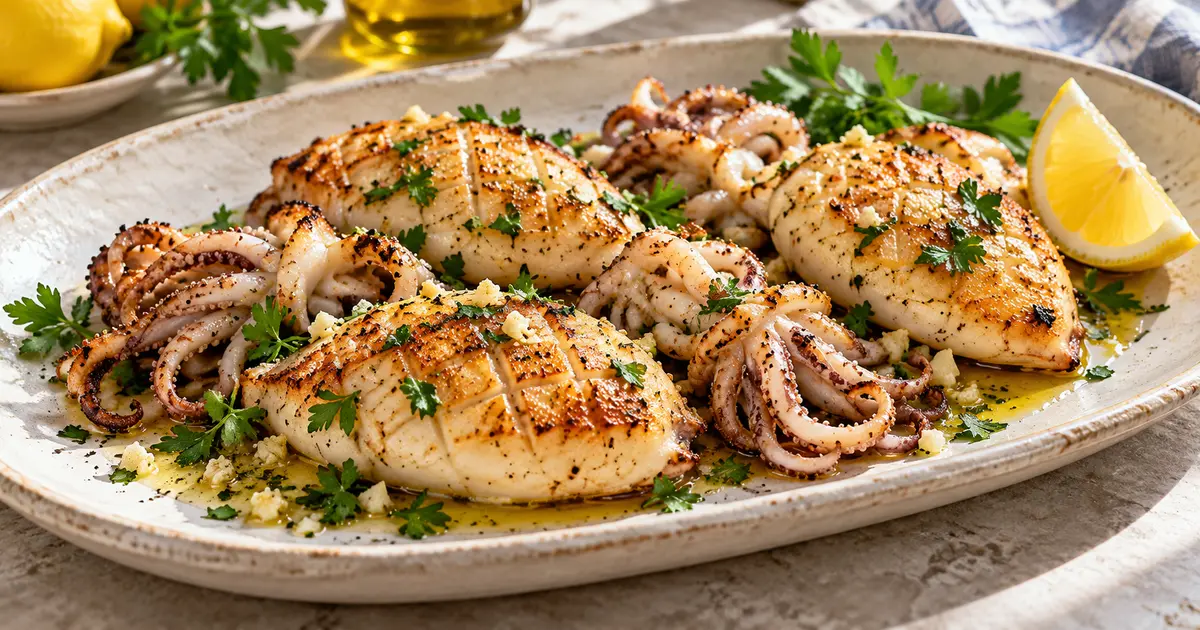
A good cuttlefish recipe should taste of the sea without feeling heavy or rubbery. This pan-seared version uses a hot skillet, well-dried seafood, just enough olive oil, and a quick garlic-parsley finish. The result is a simple Mediterranean-style plate with lightly browned edges, a tender center, and a bright squeeze of lemon.
Cuttlefish is often confused with squid, but the body is generally broader and flatter. The method here works best with cleaned, small cuttlefish of fairly even thickness. If your seafood counter sells larger pieces, cut them into manageable portions and adjust cooking by thickness rather than trusting the clock alone.
Table of Contents
What Makes This Cuttlefish Recipe Different
Cuttlefish has a distinctly pleasant, lightly sweet marine flavor and a firm but yielding bite when properly prepared. It does not need a crowded marinade or a thick sauce. Instead, the ingredients have distinct jobs: olive oil transfers heat, garlic adds aroma, parsley refreshes the finish, and lemon cuts through the richness. The small amount of smoked paprika is optional, not the main flavor.
The key choice is to sear first and season with delicate aromatics afterward. Garlic scorches quickly in a fiercely hot skillet; if it goes into the pan with the raw cuttlefish, it may become bitter before the seafood takes on color. Finishing the cooked pieces in a cooler pan gives you the fragrance you want while keeping the browning controlled.
Buying the Right Cuttlefish
Ask a trusted fishmonger for cleaned cuttlefish, ideally similar-size small pieces with the internal cuttlebone, beak, and innards removed. If buying whole cuttlefish, request cleaning at the counter unless you are familiar with the process. A clean, mildly ocean-like aroma and firm flesh are better signs than any dramatic color claim; avoid seafood with an ammonia smell or a sticky surface.
Frozen cuttlefish can be a practical choice because it is available consistently and often already cleaned. Thaw it overnight in the refrigerator in a covered tray, then pour away the thawing liquid. Do not leave it on the counter to thaw. You can find broader selection and handling principles in the FDA seafood safety guidance.
How to Clean, Score and Dry the Pieces
Even precleaned seafood deserves a careful check. Look for any remaining rigid cuttlebone, membrane, or tough mouthparts. Rinse briefly only when needed; a long soak adds water without improving flavor. Use paper towels to dry the bodies and tentacles as thoroughly as you can. Surface moisture creates steam and makes the golden exterior much harder to achieve.
Lay each body flat and use a sharp knife to make shallow diagonal cuts, then turn it and repeat in the opposite direction. The crosshatch helps the thicker surface open slightly and hold the garlicky dressing. Do not slice all the way through. If a body is very thick, divide it into large, even pieces so everything in the pan cooks at a similar rate.
Ingredients and Their Roles
Choose a fruity but not aggressively bitter extra-virgin olive oil, fresh flat-leaf parsley, firm garlic cloves, and a lemon with clean skin because you will use the zest as well as the juice. Salt and pepper are enough to season the pan-seared seafood. A small pinch of paprika adds warmth if you enjoy it, but the dish is equally good without it.
The recipe card gives a measured starting point for four servings. Ingredient quantities can be adjusted after cooking, especially the lemon juice. Cuttlefish size varies so widely that a single universal amount of acid is not ideal. Taste one piece before adding more lemon or salt; the goal is to make the seafood brighter, not to hide its own flavor.
How to Pan-Sear Cuttlefish Step by Step
Heat a large, heavy skillet first. A cast-iron pan or thick stainless-steel pan is useful because it recovers heat quickly after cold seafood is added. Add part of the olive oil, then lay the bodies and tentacles in a single loose layer. Cook in two batches if necessary. Crowding traps moisture, turning a sear into a simmer and leaving the pieces pale.
Turn the pieces when the contact surface begins to brown and release more easily. Smaller bodies often need only a few minutes on each side, but cooking time changes with thickness. Cuttlefish must be cooked completely, with opaque flesh; check that the thickest part reaches 145°F (63°C) where a thermometer can be used reliably. Move the cooked seafood to a warm plate while you finish the remaining batch.
The Garlic, Parsley and Lemon Finish
Once the seafood is cooked, lower the pan temperature so the garlic can become fragrant without burning. Add the remaining olive oil and minced garlic for about half a minute. If the pan is smoking hard, briefly move it off the heat. Return the cuttlefish and any clean plate juices, then switch off the heat before adding parsley and lemon zest.
Finish with fresh lemon juice a little at a time. This sequence keeps the parsley green and preserves its fresh taste. A squeeze at the table gives each person control over acidity. The warm oil carries the garlic through the scores in the bodies, while the tentacles pick up the chopped herbs. Serve promptly for the best contrast between the seared exterior and tender flesh.
Timing and Texture: Avoiding Rubberiness
Two mistakes account for most tough skillet cuttlefish: inconsistent piece size and a lukewarm pan that makes the seafood release water for several minutes. For the quick-cooking method, choose smaller pieces and keep the heat high enough to brown the surface. Do not assume that a particular number of minutes fits every animal; inspect the thickest body and cook it fully.
Very large or especially thick cuttlefish may be better suited to longer, moist cooking rather than this fast sear. If what you have is giant, dense pieces, ask the fishmonger how they recommend preparing that size. Unlike an overcooked vegetable, tough seafood cannot simply be fixed with extra lemon juice. Ingredient selection and heat control matter much more.
What to Serve with Pan-Seared Cuttlefish
Use the garlicky pan juices as the beginning of the plate. A spoonful over warm potatoes, white beans, roasted vegetables, or crusty bread makes a satisfying side without obscuring the cuttlefish. A crisp cucumber-and-tomato salad adds coolness, while grilled zucchini keeps the meal entirely in the same Mediterranean flavor family.
If you are planning a seafood spread, our grilled squid with lemon and olive oil shares the citrus profile but uses a different cephalopod and cooking setup. A lighter companion is the Mediterranean octopus salad. These make useful comparisons for deciding between a warm skillet main and a chilled seafood starter. For a mixed shellfish alternative, our Italian seafood salad is another useful warm-weather choice.
Useful Variations Without Losing the Main Flavor
For a slightly spicy finish, add a pinch of crushed red pepper to the warm garlic oil. For a greener sauce, chop a little additional parsley with a few capers and add it at the end. A small amount of finely grated lemon zest adds aroma without increasing acidity. Avoid adding too many strong ingredients at once; cuttlefish has a more delicate flavor than heavily smoked fish.
You can also grill the cleaned, lightly oiled pieces on a hot grate if you prefer smoky edges, though smaller tentacles may require a grill basket. A quick stovetop version remains easier when cooking for two or four people because you can manage heat and capture the flavored oil. The core technique, dry seafood first and aromatics last, stays useful across the variations.
Common Mistakes and Simple Fixes
If the seafood is gray and surrounded by liquid, the pan was probably overcrowded or the cuttlefish was not dry enough. Carefully move pieces to a plate, pour away excess liquid, bring the skillet back to temperature, and finish them in smaller batches. Do not keep boiling the seafood in its released water hoping it will eventually become crisp.
If the garlic tastes bitter, it was heated too strongly or for too long. Prepare a fresh spoonful of oil with new minced garlic in a cooler pan; adding more parsley will not erase burnt garlic. If the plate tastes flat, add lemon and salt in small increments. If it tastes overly sharp, a few drops of olive oil can restore balance without adding sweetness.
Storing and Reheating Leftovers
Cool leftovers promptly and refrigerate them in a shallow airtight container. Seafood is best eaten soon after cooking; as a practical quality target, use refrigerated leftovers within one to two days. Avoid leaving a platter at room temperature through a long gathering. If it has sat out too long, discard rather than refrigerate for later.
For a gentle reheat, put a little olive oil in a skillet over medium-low heat and warm only until heated through. Do not subject the already cooked pieces to another aggressive high-heat sear. Leftover cuttlefish can also be sliced into a warm potato-and-herb salad after thorough reheating. Keep the next-day preparation simple, since the lemon and garlic already provide plenty of flavor.
Recipe Card and Ingredient Measurements
Use the recipe card below for the measured ingredient list, preparation time, cooking sequence, and serving size. Read the cleaning and texture notes above before heating your skillet if you are working with cuttlefish for the first time. The recipe assumes that the fishmonger has removed the cuttlebone, beak, and innards; whole uncleaned cuttlefish requires additional preparation.
Because the exact thickness of the seafood varies, visual doneness and a safe internal temperature should take priority over a fixed minute count. A slightly wider pan and two relaxed batches give more reliable results than forcing every piece into one skillet. Once everything is cooked, the herb and lemon finish comes together in less than a minute.

Pan-Seared Cuttlefish with Garlic and Parsley
Ingredients
- 1.5 lb cleaned small cuttlefish bodies and tentacles
- 3 tbsp extra-virgin olive oil divided
- 3 cloves garlic finely minced
- 0.25 cup flat-leaf parsley finely chopped
- 1 whole lemon zest and juice
- 0.75 tsp fine sea salt or to taste
- 0.25 tsp freshly ground black pepper
- 0.25 tsp smoked paprika optional
Instructions
- Rinse cleaned cuttlefish briefly if needed and pat thoroughly dry. Score the broad bodies in a shallow crosshatch without cutting through.
- Preheat a heavy skillet over medium-high to high heat until very hot, then add 2 tablespoons olive oil.
- Place cuttlefish in a single layer and sear for 2 to 3 minutes per side, turning tentacles as needed; avoid crowding. Cook until opaque and fully cooked, checking for a safe internal temperature of 145°F (63°C) where measurable.
- Reduce the heat, add remaining oil and garlic, and stir 20 to 30 seconds without browning the garlic.
- Remove from heat. Toss with parsley, lemon zest, lemon juice, salt and pepper. Serve immediately with lemon wedges.
Notes
Frequently Asked Questions
Is cuttlefish the same as squid?
No. Both are cephalopods, but cuttlefish typically has a wider, flatter body and an internal cuttlebone. They share some preparation techniques but do not have identical thickness or cooking time.
Can I use frozen cuttlefish?
Yes. Thaw it in the refrigerator, drain well, check that it has been cleaned, and pat it exceptionally dry before it reaches the hot pan.
Should I remove the skin before searing?
Ask your fishmonger to clean the animal first. The thin outer skin is often removed for a more even presentation, but preparation depends on the particular cuttlefish supplied.
Why does my cuttlefish release so much water?
Excess moisture after thawing, low skillet heat, and overcrowding are common causes. Dry the pieces thoroughly and sear them in batches.
How do I know cuttlefish is cooked?
The flesh should be opaque and fully cooked, not translucent or raw in the thickest areas. When possible, confirm a seafood-safe internal temperature of 145°F (63°C).