
Grilled Razor Clams with Lemon Garlic Butter

An excellent razor clams recipe starts before the grill is lit. These slender bivalves need careful sourcing and thorough cleaning so the finished plate tastes sweet and ocean-fresh instead of sandy. Once prepared, they need only a brief grill and a spoonful of lemon garlic butter to become an impressive seafood starter.
This guide is for commercially sourced, properly cleaned razor clams from an approved seafood supplier, not for an unscreened recreational harvest. Local shellfish advisories matter: some marine biotoxins cannot be made safe by washing or cooking. Follow local public-health notices and do not use clams from a closed or restricted harvesting area.
Table of Contents
What Are Razor Clams?
Razor clams are elongated shellfish with narrow, often rectangular shells and a comparatively long, tender body. They are quite different in shape from common round hard-shell clams, which explains the distinctive look of the finished platter. Their texture can be delicate when cooked correctly, but toughens if the meat stays over high heat longer than necessary.
Several species are sold under the razor clam name. Size, shell form and cleaning technique can vary by region, so follow your supplier’s instructions first. This recipe is designed for individual clams served in cleaned half shells or heat-safe shells, with garlic butter spooned over the exposed cooked meat. If you receive fully shucked meat, use a grill-safe pan instead of trying to balance it directly on a grate.
The Most Important Step: Safe Sourcing
Buy live or properly handled razor clams from a licensed commercial seafood counter that can confirm their source and storage conditions. Avoid shellfish with damaged shells, an off smell, unclear origin or evidence of poor refrigeration. Never assume that a clam dug from a beach is safe simply because the water looks clean or the animal is moving.
Marine biotoxins such as domoic acid can occasionally cause harvest restrictions, and cooking does not remove these toxins. The California Department of Public Health advisory issued in October 2026 illustrates why current local alerts should be checked before any recreational harvest. For this recipe, the most reliable shortcut is a reputable commercial supplier using approved harvest areas. A buttery sauce can improve flavor, but it cannot correct an unsafe source.
Cleaning Razor Clams and Removing Sand
Razor clams frequently carry grit because they live buried in sand. A fishmonger can often supply them already cleaned and ready for cooking, which is the easiest option. Otherwise, follow species-specific cleaning instructions for opening the shell, removing the digestive tract and rinsing away sand. Work over a bowl so you can see whether grit remains in the rinsing water.
Some species are briefly blanched or treated in a particular way to release the shells before cleaning. That step is not universally identical for all razor clams, so do not apply a single online technique blindly. After cleaning, drain and dry the meat and shells. Discard any parts your supplier instructs you to remove, and keep the cleaned seafood chilled until the grill is ready.
Ingredients That Respect Their Sweet Flavor
Butter, lemon and garlic are familiar partners for shellfish because they add richness and aroma without needing a heavy sauce. Here, a little olive oil keeps the butter fluid, lemon zest adds fragrance and fresh juice creates balance. Chopped parsley supplies color at the end. Salt is optional because shellfish already has its own natural savoriness.
Use fresh garlic rather than an oversized amount of powder, and mince it finely so it disperses evenly. The butter should taste bright and aromatic rather than aggressively garlicky. You can replace some butter with olive oil for a lighter coating, but retain enough fat to carry the lemon zest. Keep the sauce simple to preserve the natural sweet flavor of the shellfish.
Grilling Setup for Narrow Shells
Preheat a clean grill to medium-high. Because razor clam shells are narrow and can tip over, arrange the prepared half shells on a grill-safe tray or stable metal grate. This prevents garlic butter and juices from spilling into the fire. If the meat has been shucked completely, use a small cast-iron pan or grill basket approved for the cooking surface.
Keep a clean platter ready and separate it from anything that held raw clams. The goal is steady heat that cooks the flesh quickly, not a flare-up that blackens the butter before the seafood becomes opaque. If your grill has strong hot spots, rotate the tray rather than repeatedly moving each delicate clam. Simple equipment and careful positioning are enough.
How to Cook Grilled Razor Clams
Brush the cleaned exposed meat lightly with the prepared garlic butter. Place the stable tray or shells over medium-high heat and grill until the flesh is opaque, firm and fully cooked. Around four to eight minutes may be sufficient for some sizes, but the actual time varies with species, shell size and grill heat. Do not serve translucent or partly raw clam meat.
Once cooked, move the shells to the clean serving platter and add a little of the remaining warm butter. Scatter parsley and squeeze a touch of lemon over the top. Carry the platter to the table while hot. Razor clams are small enough that they can overcook during a long holding period, so finish accompanying sides before starting the final grill.
How to Tell When the Clams Are Done
The exposed razor clam meat should have lost its raw translucence and become firm and opaque. A meat thermometer may be awkward for very narrow pieces, so follow the best available shellfish handling guidance from your supplier and relevant food-safety authorities. If cooking shellfish that arrives closed, check species-specific guidance for opening and cleaning before grilling.
Do not treat an open shell as proof that the meat is safe or that local biotoxin warnings can be ignored. Those are separate issues: cooking deals with raw seafood hazards, whereas the harvest area determines exposure to certain toxins. In case of doubt about sourcing, do not serve the clams. Reliable ingredients matter more than a perfectly timed grill.
What to Serve with Razor Clams
Offer the clams as a warm starter with lemon wedges and bread to capture the garlic butter. Crisp green vegetables, a modest salad or steamed potatoes work well alongside them. Try to avoid sides with heavy cream or a strongly spiced sauce; the delicate briny flavor of the razor clams should be the most interesting part of the plate.
For a seafood spread, our grilled oysters with garlic butter provide a related garlic-and-grill idea using very different shells. The steamed mussels with garlic and lemon show a moist-heat approach. Neither technique should be applied to razor clams without adjusting for their narrower shape and particular cleaning needs. Our steamed garlic clams are another option when you prefer round clams.
Simple Variations for Different Palates
For a mild spicy finish, add a small pinch of red pepper flakes to the garlic butter. Finely chopped chives can replace some parsley, and extra lemon zest produces aroma without making the butter too acidic. You can also choose olive oil as the main fat with just a teaspoon of butter to finish. Make one change at a time so the razor clam flavor remains recognizable.
To turn the dish into a small main course, serve the cooked clams over warm herb rice or simple vegetables. Add the garlic butter just before eating. If you prefer to cook indoors, a hot broiler-safe tray may work, with careful attention to doneness and shell stability. That is a variation of the heat source, not a reason to skip cleaning or sourcing precautions.
Avoiding Tough, Dry or Sandy Clams
Sandy clams nearly always reflect incomplete cleaning, not a seasoning problem. More lemon cannot remove grit. If you notice sand while preparing the meat, rinse and inspect again before cooking. If the clams turn rubbery, the heat may have been too strong for too long or the pieces may have been especially small. Monitor the first tray and shorten subsequent batches when appropriate.
Butter that separates or burns is another common issue. Keep the garlic briefly warm rather than frying it dark brown, and apply most lemon juice after the butter comes off direct heat. If the grill flares, move the tray to indirect heat. Discard any clam that smells sour, rancid or unusual rather than trying to disguise the odor with parsley.
Storage and Serving Safety
Shellfish should remain cold before cooking, and the finished razor clams are best served immediately. If some remain, cool them promptly in a shallow container and refrigerate. For quality, plan to eat leftovers within a day or two after thorough reheating. Never leave cooked shellfish at room temperature for an extended gathering.
The safest leftovers come from a clean original cooking process: approved supply, correct storage, proper cleaning, complete cooking and prompt refrigeration. If you cannot establish the origin of the shellfish or a local advisory warns against it, discard the idea of cooking that batch. No amount of grilling, freezing, lemon, butter or spice makes biotoxin-contaminated shellfish safe.
Recipe Card and Measured Garlic Butter
The card below provides a practical starting quantity for twelve cleaned razor clams, serving four as a starter. The stated preparation time assumes the clams have been sourced appropriately and can be cleaned without a complex species-specific process. If yours require detailed processing, allow additional time and follow reliable supplier instructions before you start.
The cooking directions prioritize completely cooked meat and shell stability over a single magic number of minutes. Move prepared clams to the grill only when the sauce, platter and side dishes are ready. A small amount of warm lemon garlic butter is all these sweet clams need. Safe sourcing, however, remains the most important ingredient in this recipe.
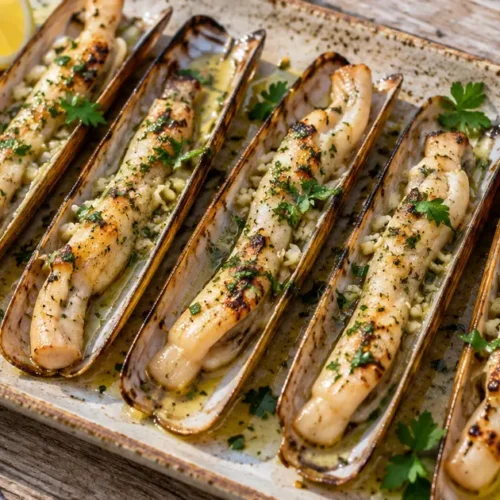
Grilled Razor Clams with Lemon Garlic Butter
Ingredients
- 12 whole cleaned razor clams from an approved seafood supplier, shells retained
- 3 tbsp unsalted butter
- 2 cloves garlic finely minced
- 1 tbsp extra-virgin olive oil
- 1 whole lemon zest and 2 tablespoons juice
- 2 tbsp flat-leaf parsley chopped
- 0.25 tsp freshly ground black pepper
- 0.25 tsp fine salt optional
Instructions
- Use razor clams from an approved, reputable commercial source; check current local shellfish advisories. Discard damaged or suspect shellfish. Clean thoroughly, removing sand and digestive tract following supplier guidance.
- Heat a clean grill to medium-high. Arrange cleaned opened shells meat-side up on a grill-safe tray or grate so their juices do not spill.
- Melt butter with olive oil; add garlic for 30 seconds, then take off heat and stir in lemon zest, lemon juice and black pepper.
- Brush clams lightly and grill until the meat turns opaque and firm and is fully cooked, about 4 to 8 minutes depending on size and grill heat. Do not serve undercooked.
- Transfer to a platter, spoon over remaining warm garlic butter and sprinkle with parsley. Serve straight away.
Notes
Frequently Asked Questions
Can I use razor clams I dug myself?
Only when harvesting is legal, the exact area is open and current local shellfish toxin advisories confirm it is safe. Cooking does not remove some marine biotoxins.
Do razor clams need cleaning before grilling?
Yes. Sand and the digestive tract must be handled appropriately for the species. Ask your fishmonger for cleaned clams or follow the supplier’s species-specific instructions.
Can I cook razor clams without shells?
Yes, but use a grill-safe pan or tray and adjust time for the thickness of the shucked meat. Cook until opaque and fully done.
Why are my grilled razor clams chewy?
They may have been overcooked or cooked unevenly. Smaller clams need less time, so judge the flesh rather than relying only on a fixed minute count.
Does lemon juice make unsafe shellfish safe?
No. Lemon juice, freezing and heat are not substitutes for approved sourcing, proper handling or compliance with biotoxin-related harvest advisories.