
Steamed Cockles with Garlic, Parsley and Lemon
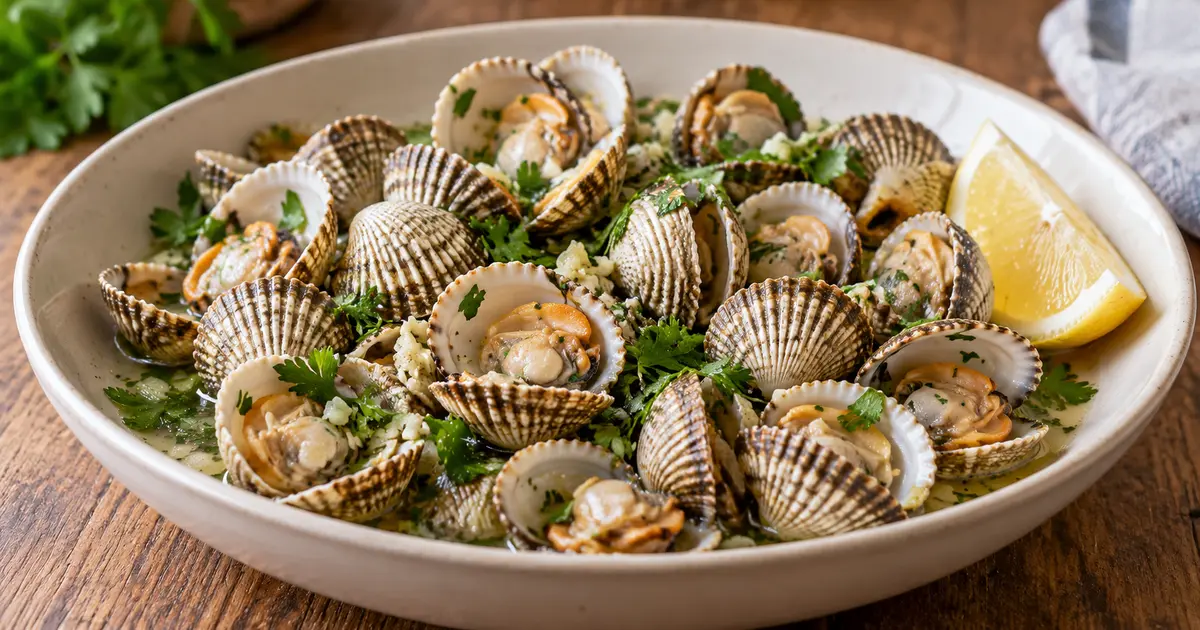
Steamed cockles need very little decoration. Their small, ridged shells protect a sweet, briny mouthful of seafood, and a covered pot can turn a fresh batch into a light starter in minutes. This version uses sliced garlic, a little shallot, olive oil, water, fresh parsley and lemon. The fragrant liquid is meant to taste of the cockles themselves, rather than cover them with a thick sauce.
The important work comes before the pot reaches the stove: buying shellfish from a reliable source, keeping them cold, checking that they are alive and rinsing away grit. Once those steps are complete, the cooking is brief. A wide pot helps the shells heat evenly, and finishing the lemon off the heat keeps the broth bright.
This recipe serves four as a starter. It is written for whole, live cockles in their shells, not canned cockles, shelled frozen meat or large hard-shell clams. If your fishmonger sells a different shellfish, check the cleaning instructions and cooking time for that species rather than silently treating it as interchangeable.
Table of Contents
What makes cockles different from clams and mussels
Cockles are small bivalves with rounded, strongly ribbed shells. Their meat is tender and their shells can hold sand, so the cleaning step deserves attention even though the cooking step is short. Many recipes for clams rely on larger shells and longer pot time; a small cockle can become rubbery if it spends too long boiling after opening.
Do not substitute mussels by weight and assume the same yield or texture. A serving of cockles includes more shell than flesh, which is why two pounds makes a generous shared starter rather than four large main courses. If you want a bigger shellfish dinner, serve this alongside a vegetable side, potatoes or crusty bread to catch the juices. For a related but distinct preparation, see our steamed mussels with garlic and lemon.
How to buy live cockles safely
Buy live cockles from a seafood seller who can identify their harvest or approved supply. Shellfish can concentrate hazards from the waters where they grow, so sourcing is a food-safety decision, not simply a question of whether a shell looks clean. Avoid collecting unknown cockles from an unmonitored beach, even if the water appears clear.
At the counter, look for shells that are intact and kept properly chilled. Reject broken shells and any strong sour or ammonia-like odor. An open live cockle should close when gently tapped or handled; if it stays unresponsive, discard it. Keep the remaining cockles cold on the trip home and cook them promptly. The FDA seafood safety guidance explains why shellfish source labels, cold storage and careful handling matter.
Cleaning cockles without damaging them
Put the cockles in a colander over a bowl and rinse under cold running water, lifting and gently rubbing the shells so trapped grit falls away. Remove bits of seaweed or shell debris. Repeat until the water coming off them looks clear. Do not use a long warm-water soak; warming live shellfish in the kitchen increases food-safety risk.
Some sellers supply depurated cockles and others recommend a specific chilled saltwater purge for sand. Follow reliable supplier instructions if a purge is needed. A home soak may loosen grit, but it cannot make shellfish from unsafe water safe to eat. Keep the cockles refrigerated while doing any supplier-approved holding or purging. Drain thoroughly before cooking so the measured broth does not become diluted.
Why a little water and olive oil are enough
Two tablespoons of olive oil carry the fragrance of garlic and shallot without making the finished broth greasy. A third of a cup of water gives the covered pot enough initial steam, while the cockles release their own savory liquid as they open. The goal is a shallow pool of cooking juices, not a soup in which the shellfish are submerged.
Salt is deliberately optional in the recipe card. Cockles vary in natural salinity, and the cooking liquor can taste notably saltier after steaming. Taste at the end, once the juices have mingled with lemon and herbs. A little freshly ground black pepper and a restrained pinch of red pepper flakes add warmth without hiding the seafood.
Building garlic flavor without burning it
Use a broad saucepan or Dutch oven with a snug-fitting lid. Set it over medium heat, add the oil, and soften the finely chopped shallot for about two minutes. The shallot should turn translucent rather than brown. Add the thin garlic slices only for the final 30 seconds or so before the water goes in; garlic becomes bitter when it sits in very hot oil for too long.
Once the pan smells fragrant, add the measured water and bring it to a lively simmer. The liquid should hiss when it meets the warm pot. This short aromatic base is enough for the entire recipe. Heavy cream, thick tomato sauce and a pile of mixed spices would change the character of the dish and make it harder to appreciate the cockles.
The best pot size and steaming schedule
Spread the rinsed cockles in a reasonably even layer. A 10- to 12-inch wide pot will generally give two pounds room to move, but pot shape matters more than a specific measurement. If the shellfish are heaped deeply, divide them into batches and portion the garlic broth between the batches so the lower layer does not overcook before the top one opens.
Cover promptly and keep the heat at medium-high. Start checking at about four minutes, giving the lidded pot a gentle shake once or twice to redistribute the shells. Many small cockles open around four to six minutes, but timing varies with size, starting temperature and how full the pot is. Use the opening shells as a guide, not a promise that every batch will finish at an exact minute.
How to know when the cockles are done
Lift the lid carefully, directing the steam away from your face. The cooked cockles should have opened. Discard any that remain closed after the cooking period rather than trying to pry them open for serving. If there is a strong unusual odor or other sign of spoilage, discard the affected food instead of covering the smell with lemon.
The FDA’s guidance for shellfish such as clams and mussels uses opening shells during cooking as a doneness cue. Treat cockles with the same conservative care. Do not nibble raw cockle meat while cooking. Once the open shellfish are done, remove the pot from direct heat promptly to avoid toughening the small pieces of meat.
Finish with lemon and fresh parsley
Stir the lemon zest, measured lemon juice and parsley into the hot pot after taking it off the heat. Adding them at the end helps keep the parsley green and the citrus recognizable. Move the opened cockles into warm shallow bowls and spoon over a little of the hot garlic liquid. Leave any sandy sediment at the bottom of the pot rather than scraping every last spoonful into the serving bowls.
Serve additional lemon wedges on the side so each person can adjust the brightness. If the broth tastes unusually sharp, add a small spoonful of hot cooking liquid from the pot rather than more oil. If it tastes flat, check for a little salt only after taking into account the shellfish’s own brininess.
What to serve with steamed cockles
Good accompaniments let the shellfish remain the focus. Warm toasted bread, simple boiled potatoes, plain rice or a cucumber salad all work because they do not compete with garlic and citrus. For a larger seafood spread, pair a small portion of cockles with pan-seared scallops or a separate plate of grilled oysters with garlic butter. Those dishes use different cooking methods and textures.
A shallow bowl makes it easy to catch the flavorful liquid. Provide an empty bowl for shells and plenty of napkins. Avoid letting a big serving platter sit at room temperature through a long meal; portion and eat the cockles soon after they leave the pot.
Storage, leftovers and common mistakes
Steamed cockles are best eaten immediately, but promptly chilled leftovers can be removed from their shells and stored in a covered shallow container in the refrigerator. Follow standard seafood storage guidance and use leftovers quickly, within one to two days. Reheat gently until thoroughly hot; repeated long simmering can make the small meat tough. Do not store cooked cockles in the pot on the stove while waiting to clear the table.
The most common failures are sandy shells, garlic browned before steaming, overcrowding and cooking past the point of opening. The fixes are practical: buy properly handled shellfish, rinse thoroughly, use a wider pot or smaller batches, and add garlic near the end of the aromatic step. None of these techniques can compensate for shellfish that were unsafe at purchase.
Steamed cockles recipe card
The measured ingredients, timing and cooking sequence are in the WP Recipe Maker card below. The short active cooking time assumes you have purchased properly handled live cockles and have already completed any cleaning recommended by your supplier. Read the safety checks before turning on the heat.
Steamed Cockles with Garlic, Parsley and Lemon
Ingredients
- 2 lb live cockles in the shell about 900 g; buy from a reputable seafood seller
- 2 tbsp extra virgin olive oil
- 4 garlic cloves finely sliced
- 1 small shallot finely minced
- 1/3 cup water about 80 ml, for steaming
- 1 tsp finely grated lemon zest from a washed lemon
- 2 tbsp fresh lemon juice plus lemon wedges for serving
- 1/4 cup finely chopped flat-leaf parsley plus a little for garnish
- 1/4 tsp crushed red pepper flakes optional
- 1/4 tsp freshly ground black pepper
- 1/4 tsp kosher salt optional, taste the cooking liquid first
Instructions
- Keep the cockles refrigerated until ready to cook. Discard broken shells and any open live cockles that do not close after a gentle tap. Rinse thoroughly under cold running water to remove visible grit. Use only commercially sourced shellfish from an approved supplier.
- Heat olive oil in a wide heavy pot over medium heat. Add shallot and cook for 2 minutes until softened, then add sliced garlic and red pepper flakes, if using. Stir for about 30 seconds without browning the garlic.
- Add 1/3 cup water and bring to a lively simmer. Add the cleaned cockles in an even layer, cover immediately and steam over medium-high heat for about 4 to 6 minutes. Shake the covered pot once or twice and check that shells open.
- Remove the lid and discard any cockles that remain closed. Take the pot off the heat, then add lemon zest, lemon juice, parsley and black pepper. Taste the broth before deciding whether the optional salt is needed.
- Divide opened cockles and their hot garlicky juices among warm bowls. Serve immediately with lemon wedges, and keep the shells out of the eating portion. Refrigerate leftovers promptly in a shallow sealed container.
Notes
Frequently asked questions
Can I use frozen or canned cockles?
This method is designed for live cockles in their shells, whose opening is part of the cooking check. Shelled frozen or canned cockles have a different texture and cannot be assessed by the same shell-opening cue. Follow the package instructions and use a different, shorter warming method rather than substituting directly.
How long should I steam small cockles?
For a moderately full wide pot, begin checking after about four minutes and expect many small cockles to open within four to six minutes. The exact time depends on size, pot volume and starting temperature. Discard any shells that stay closed after cooking.
Do cockles need soaking to remove sand?
They always need a thorough cold rinse. Whether a separate purge is appropriate depends on how the supplier handled them. Follow the fishmonger’s chilled saltwater guidance if supplied. Soaking does not eliminate contamination from an unsafe harvest area.
Can I prepare cockles a day ahead?
Keep purchased live cockles refrigerated and follow the seller’s use-by instructions. For the best texture, cook just before serving. If cooking in advance is unavoidable, chill the cooked meat quickly and reheat thoroughly, accepting that the texture will be less delicate.
Why is my cockle broth salty or gritty?
The cockles release naturally seasoned liquid during cooking, so add salt only after tasting. Grit usually comes from sand left in the shells or sediment poured from the bottom of the pot. Rinse more carefully next time and ladle the clear upper broth gently.