
Mediterranean Octopus Salad with Lemon and Parsley
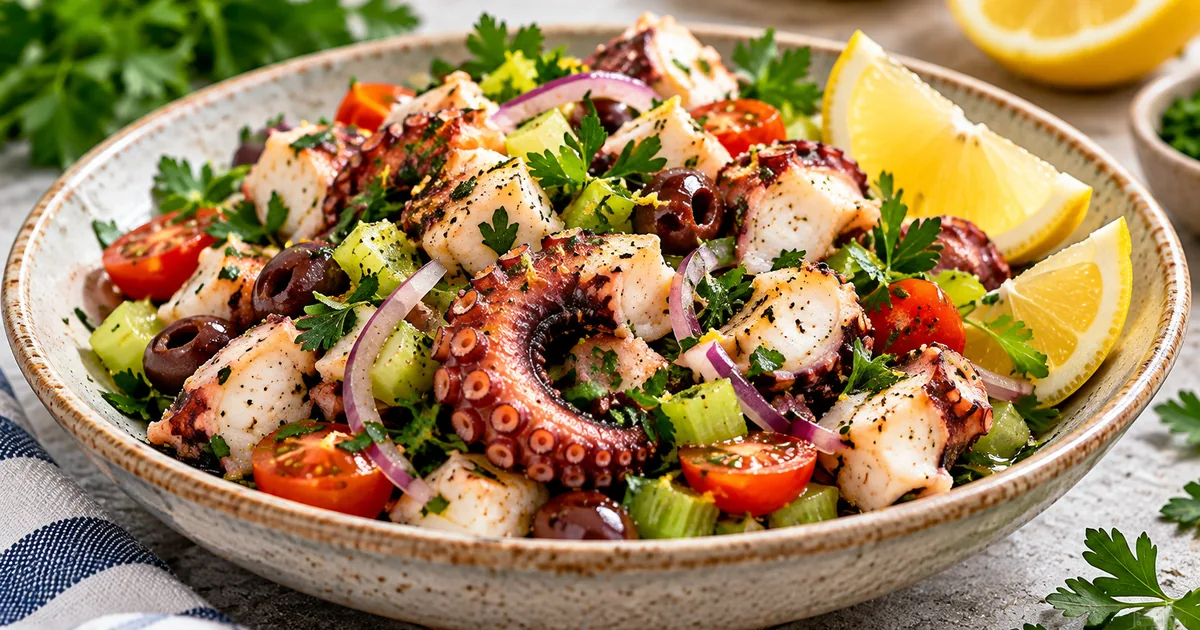
Mediterranean octopus salad is a study in contrasts. Tender slices of cooked octopus are paired with crisp celery, sweet tomatoes, parsley, red onion and a lemony olive-oil dressing. The dish can look elaborate, but the ingredients are straightforward. The step that deserves your attention is cooking and cooling the octopus properly; the salad itself comes together quickly once the seafood is ready.
Raw octopus should not be treated like shrimp that cooks in minutes. Its texture changes slowly during gentle simmering, and an aggressive boil will not reliably speed up tenderness. This recipe gives a flexible timing range for a two-pound octopus, explains what tenderness feels like, and builds in a chilled assembly stage so you are not mixing hot seafood into raw salad vegetables.
Table of Contents
The key to tender octopus salad
Octopus contains connective tissue that softens during sustained moist cooking. That is why a gentle simmer matters more than adding complicated ingredients to the pot. A fork or thin knife should slide into the thickest section of a tentacle without rubbery resistance. Cooking time varies substantially with the size of the animal, previous freezing and the starting water temperature.
The best salad begins with properly cooked octopus that has been cooled promptly. If you slice it while very hot, it is harder to judge the final firmness, and the hot surface wilts parsley and celery. Cooling also gives you time to prepare the dressing and organize the vegetables without rushing.
Shopping for octopus and choosing a size
Look for cleaned octopus at a reputable seafood counter, either fresh or frozen. Frozen octopus is a useful choice because freezing can help loosen tissue before cooking, but it is not a replacement for sufficient simmering. A two-pound octopus usually provides around four salad servings once it is cleaned and cooked, depending on how much it shrinks.
Ask whether the beak and viscera have been removed. If you are unfamiliar with cleaning whole octopus, buying a pre-cleaned product simplifies the method and lowers the chance of overlooking parts that should not be eaten. Avoid seafood with sour or ammonia-like odors and keep it chilled during transport.
How to clean and thaw safely
Thaw octopus in the refrigerator in a covered container that catches drips. The skin can feel slippery, so use a dedicated clean board and wash hands and utensils carefully afterward. The beak is a hard mouthpart at the center where tentacles meet; it must be removed. The internal organs inside the head are also removed before cooking.
Give the cleaned seafood a brief cool-water rinse, then place it in the pot. Do not soak raw octopus for hours on the counter. Separate raw seafood equipment from the chopping board used for the celery, tomatoes and parsley that will be served without further cooking. Use the FDA seafood handling guide for general safe-thawing principles.
Gentle simmering and the tenderness test
A wide pot and enough water to cover the octopus are more useful than a highly seasoned broth. Onion, bay leaves and peppercorns add a gentle background aroma. Bring the liquid just to a simmer, then reduce the heat so only small bubbles break the surface. Hard boiling can agitate the tentacles and reduce control over the texture.
Begin testing around 45 minutes for a small octopus, but expect up to 75 minutes or sometimes longer for thicker arms. A skewer inserted where a tentacle is widest should meet little resistance. If it still feels rubbery, simmer longer and test again. Floating or a change in color alone is not a dependable tenderness test. Food safety requires fully cooked seafood; the simmering period here is for texture as well.
Cooling, slicing and using the cooking liquid
Move the cooked octopus to a clean shallow tray and let steam escape briefly, then refrigerate promptly rather than leaving a large hot pot on the counter. Cooling in smaller portions speeds chilling. Once the tentacles are comfortable to handle and sufficiently chilled, cut them across the grain into small rounds; thicker pieces can be split lengthwise first.
You may strain and chill a small amount of the cooking liquid for another seafood soup, but it is not needed in this salad. The dressing should be bright and light, not a diluted pot broth. Some cooks peel off the loose outer skin; leaving a little on is a matter of preference provided everything is clean and cooked.
Building a balanced lemon dressing
Whisk three tablespoons fresh lemon juice into a third cup of good olive oil and add a little lemon zest. This creates a tangy dressing that coats the seafood without pooling excessively beneath it. Add salt only after accounting for the olives. The parsley should be fresh and finely chopped so it clings to the octopus slices.
If the finished bowl tastes harsh, add a little more oil instead of sugar. If it tastes flat, add small amounts of lemon juice or pepper rather than overwhelming it with garlic. This recipe deliberately avoids a sweet glaze because the octopus has a clean seafood taste that suits citrus, parsley and vegetables.
Crunch, color and simple variations
Sliced celery contributes crunch that holds up better than lettuce in a dressed seafood salad. Cherry tomatoes give sweetness and color, while red onion provides a light bite. Pitted black olives are optional and best used moderately. If the red onion is very sharp, rinse the diced pieces briefly in cold water and dry them before adding.
Cucumber can replace some celery for a softer texture, or chopped roasted red peppers can add sweetness without changing the basic lemon and parsley character. Avoid piling on too many wet vegetables; their liquid can dilute the dressing and conceal the octopus pieces.
When to dress and serve the salad
Combine the octopus and vegetables with dressing shortly before serving. A short rest in the refrigerator allows flavors to come together, but leave a little fresh parsley to scatter at the table. Serve the salad cool or lightly chilled, not on a warm buffet for hours. A shallow bowl lets the lemon oil coat each piece evenly.
Pair with grilled vegetables, warm bread or a simple white bean salad. For a related seafood salad with several species, see our insalata di mare. If you prefer direct grill heat and a different texture, compare grilled squid with lemon. For a citrus-forward but cooked shrimp dish, try cooked shrimp ceviche.
Storage and preparing a day ahead
You can simmer and chill the octopus the day before, keeping it covered in the refrigerator. Chop the vegetables shortly before assembling for the freshest texture. The salad itself is nicest on the day it is dressed, because tomato juices and lemon gradually soften the celery and parsley.
Refrigerate leftovers promptly below 40°F (4°C), and use them within the recommended three to four days for cooked seafood; for best quality, eat the mixed salad sooner. Discard salad left at room temperature too long and never add raw seafood marinade to the ready-to-eat bowl. The FoodSafety.gov chart gives reference temperatures for finfish and other seafood, while this octopus method focuses on thoroughly simmering until tender.
Step-by-Step Recipe
Measure the ingredients before heating the appliance or pot. The quantities below correspond to four servings and the cooking guidance in the recipe card. Follow each step in order, but use a thermometer and the actual fish thickness to decide when cooking is complete.
Ingredients for four servings
- 2 lb cleaned raw octopus, thawed, beak and internal organs removed
- 1 small onion, quartered, for simmering
- 2 bay leaves, for simmering
- 1 tsp black peppercorns, for simmering
- 1/3 cup extra virgin olive oil, for dressing
- 3 tbsp fresh lemon juice, plus more to taste
- 1 tsp lemon zest
- 2 celery stalks, thinly sliced
- 1/4 cup red onion, finely diced
- 1 cup cherry tomatoes, halved
- 1/2 cup flat-leaf parsley, chopped
- 1/3 cup pitted black olives, sliced, optional
- 1/2 tsp kosher salt, adjust after tasting
- 1/4 tsp freshly ground black pepper
Method
- Prepare the octopus. Thaw fully in the refrigerator. Confirm the octopus has been cleaned, with the beak and internal organs removed; rinse briefly under cool running water and handle on a dedicated board.
- Simmer until tender. Put octopus into a large pot, add enough water to cover and include the onion, bay leaves and peppercorns. Bring gently to a simmer, not a violent boil. Cook about 45 to 75 minutes depending on size, until a knife easily pierces the thickest tentacle.
- Cool safely. Lift cooked octopus to a clean tray. Cool it promptly, then refrigerate covered until sufficiently chilled to slice, approximately 30 minutes in a shallow container. Do not leave cooked seafood at room temperature for extended periods.
- Slice and prepare vegetables. Cut tentacles into bite-size pieces and slice the thicker body parts. Combine celery, red onion, cherry tomatoes, olives and parsley in a chilled serving bowl.
- Dress and serve. Whisk olive oil, lemon juice, lemon zest, salt and pepper. Toss gently with octopus and vegetables; taste and adjust lemon. Serve cool or lightly chilled, refrigerating until service.
Mediterranean Octopus Salad with Lemon and Parsley
Ingredients
- 2 lb cleaned raw octopus thawed, beak and internal organs removed
- 1 small onion quartered, for simmering
- 2 bay leaves for simmering
- 1 tsp black peppercorns for simmering
- 1/3 cup extra virgin olive oil for dressing
- 3 tbsp fresh lemon juice plus more to taste
- 1 tsp lemon zest
- 2 celery stalks thinly sliced
- 1/4 cup red onion finely diced
- 1 cup cherry tomatoes halved
- 1/2 cup flat-leaf parsley chopped
- 1/3 cup pitted black olives sliced, optional
- 1/2 tsp kosher salt adjust after tasting
- 1/4 tsp freshly ground black pepper
Instructions
- Thaw fully in the refrigerator. Confirm the octopus has been cleaned, with the beak and internal organs removed; rinse briefly under cool running water and handle on a dedicated board.
- Put octopus into a large pot, add enough water to cover and include the onion, bay leaves and peppercorns. Bring gently to a simmer, not a violent boil. Cook about 45 to 75 minutes depending on size, until a knife easily pierces the thickest tentacle.
- Lift cooked octopus to a clean tray. Cool it promptly, then refrigerate covered until sufficiently chilled to slice, approximately 30 minutes in a shallow container. Do not leave cooked seafood at room temperature for extended periods.
- Cut tentacles into bite-size pieces and slice the thicker body parts. Combine celery, red onion, cherry tomatoes, olives and parsley in a chilled serving bowl.
- Whisk olive oil, lemon juice, lemon zest, salt and pepper. Toss gently with octopus and vegetables; taste and adjust lemon. Serve cool or lightly chilled, refrigerating until service.
Notes
Frequently Asked Questions
Can I use frozen octopus for salad?
Yes. Thaw it overnight in the refrigerator and clean it if necessary. Freezing can help texture, but simmer until tender rather than relying on thawing alone.
How can I tell when octopus is tender?
A thin knife or skewer should slide through the thickest tentacle with little resistance. If the flesh remains springy and resistant, keep simmering and test again.
Can I make octopus salad the day before?
Cook and refrigerate the octopus ahead. For the best crunch and appearance, combine it with fresh vegetables and lemon dressing closer to serving.
How long should octopus simmer?
A roughly two-pound cleaned octopus often needs 45 to 75 minutes at a gentle simmer, but the actual time varies. The knife tenderness test matters more than a strict deadline.
Which vegetables work best with octopus?
Celery, tomatoes, red onion and parsley are reliable choices. Keep vegetables crisp, avoid excess watery additions and add lemon dressing shortly before serving.
For more ideas using different seafood or cooking techniques, explore the related SABSEA recipes linked above. Each recipe has its own method and ingredients, so choose the one that matches the fish or shellfish available to you.