
Grilled Whole Grey Mullet with Lemon and Herbs

Grilled whole grey mullet with lemon and herbs is a straightforward way to cook a flavorful, firm-fleshed fish without hiding it under a heavy marinade. The fish is cleaned and scored, lightly oiled, filled with fresh herbs and thin lemon slices, then grilled until the skin is browned and the thickest part is safely cooked. The result is a practical whole-fish meal that can be divided at the table.
This recipe is specifically for grey mullet, the silver-scaled fish commonly sold whole, not the smaller red mullet that belongs to a different fish family. The distinction matters for flavor, size and timing. Grey mullet has a more assertive, sometimes earthy taste, so lemon, parsley, thyme and good grilling heat provide balance without masking the fish.
The directions below use two fish weighing roughly one to one and a quarter pounds each, enough for four moderate servings once the heads and bones are removed. A fish basket makes turning easier, but two wide spatulas also work. The time ranges are estimates; use a thermometer in the thickest flesh to check doneness rather than trusting the clock alone.
Table of Contents
Grey mullet versus red mullet: know which fish you have
Grey mullet usually has a streamlined, silver-grey body, a blunt head and substantial scales. Its firmer, somewhat richer flesh holds together well when the fish is grilled whole. Red mullet is a separate fish group, often much smaller and reddish, with a notably different appearance and cooking rate. If a market label only says “mullet,” ask whether it is grey mullet and what the whole fish weighs before planning the grill time.
The lemon-and-herb approach suits grey mullet because it offers acidity and aromatic lift for a fish with a distinctive natural flavor. It should not be treated as a generic template for every fish called mullet. If you have a delicate red mullet, use a species-specific preparation and shorter timing instead. For a different, milder whole-fish option, our grilled sea bream with lemon and herbs covers a separate species.
How to choose fresh whole grey mullet
Look for a fish kept properly chilled on ice, with firm flesh, bright-looking eyes when freshly caught, and a mild sea smell. Avoid fish with a sour, ammonia-like or unusually strong odor. An intact fish lets you judge the skin and shape, but freshness is not guaranteed by color alone. The seller should be able to tell you how the fish has been stored and whether it was previously frozen.
Ask the fishmonger to scale and gut the mullet and remove the gills. This keeps the at-home preparation manageable and makes room for the lemon and herbs. Two fish close in weight are easier to cook together than one large fish and one much smaller one. If the fish were frozen, thaw them in the refrigerator before grilling; allow extra time for the thickest part to thaw completely.
Clean and dry the fish before seasoning
Once the mullet is prepared, check inside each cavity for any remaining gill material or loose scales. Use clean paper towels to pat both the outside and cavity dry. Water on the skin makes the fish steam, and moisture may also encourage sticking when you place it on a hot grate. Keep the raw fish on a separate board and wash your hands and utensils before touching serving dishes.
Drying does not mean removing all the natural moisture from the flesh. You only want to remove surface water. If you discover scales near the belly or fins, ask the fishmonger to finish the job or scrape them off carefully over a protected surface, away from ready-to-eat ingredients. Dispose of any trimmings promptly, and return the fish to refrigeration if the grill is not yet nearly ready.
Score the sides without cutting apart the mullet
Make two or three shallow diagonal cuts across the thick part of each flank. The cuts let seasoning reach the flesh and make it easier to see the center as it cooks. Aim through the skin and into the flesh, not all the way through the backbone. Very deep slashes can cause the fillets to separate and make the fish harder to turn as a single piece.
A sharp knife and a stable cutting board are more useful than force. If the fish is small, two modest cuts may be enough. Space the cuts evenly and do not score the thin tail end as heavily as the thicker shoulder. Coat the outside with a thin film of olive oil, salt and pepper after scoring, including the edges of the cuts, so the exposed surfaces do not dry prematurely.
Stuff the cavity lightly with lemon and herbs
Thin lemon slices, flat-leaf parsley, a little thyme and crushed garlic go inside the cleaned cavity. Keep the aromatics in a loose layer instead of packing the fish tightly. The objective is gentle fragrance as the fish heats, not a thick stuffing that delays heat reaching the central flesh. A tablespoon or two of fresh parsley per fish is plenty alongside the thyme.
Most of the acid should come from fresh lemon wedges at the table. Leaving the skin and flesh swimming in lemon juice for a long period can change the surface texture before it reaches the grill. A light olive-oil coating is easier to control, and the fresh lemon squeezed after cooking tastes brighter. If you enjoy citrus with stronger oily fish, compare our separate baked mackerel with lemon and herbs.
Use medium grill heat and a clean basket
Preheat the grill to a steady medium zone, approximately 375 to 425°F (190 to 220°C) with the lid closed. Scrub away old residue from the grate. A lightly oiled fish basket is useful for a whole mullet because it supports the head, belly and tail while turning. If cooking directly on the grate, lightly oil the fish and have two large, thin spatulas ready.
An extremely hot grate can blacken the slashed skin before heat reaches the backbone, especially when the fish are thick. If charcoal is your heat source, spread the embers into a more even bed and keep a cooler area available. Avoid pressing the fish down or moving it repeatedly. Heat and patience give the skin a chance to release cleanly when it is ready to turn.
How long to grill whole grey mullet safely
For two fish around 1 to 1¼ pounds each, plan on roughly seven to nine minutes per side at medium grill heat. Begin checking earlier when the fish are smaller or opened more widely; larger fish and a cooler grill need longer. Turn only once if possible, supporting the belly and head together. If the exterior is coloring too quickly, move the fish to a cooler portion of the grill and close the lid.
The critical measurement is the center of the thickest flesh, away from the backbone. The FDA recommends cooking finfish to 145°F (63°C). Insert a clean thermometer through a thick portion near the shoulder, without touching bone. Properly cooked flesh looks opaque and begins separating into flakes. The FDA seafood safety guidance also explains why careful chilling and handling matter before fish reaches the grill.
Prevent sticking, tearing and flare-ups
If the skin clings stubbornly to the grate, pause briefly before trying to lift it again. Fish often releases more readily once the contact surface has browned. A flexible spatula can slide under the thick part while a second supports the tail. Pulling hard at one point usually tears the skin, while repeated turning can break the body around deep score marks.
Flare-ups may happen when olive oil drips onto coals. Use just enough oil for a thin coating, not an overflowing marinade. Shift the fish to indirect heat if flames reach the skin, then return to steady medium heat when the flare subsides. For another grilling style, grilled sardines with chermoula uses smaller fish and different seasoning, so its timing should not replace the grey mullet instructions.
Portion a whole grilled fish without losing bones
Let the fish rest for a couple of minutes on the serving platter, then remove the hot lemon slices and herb stems from the cavity. Run a fork or serving spoon along the top flesh, lifting it gently from the central bones. Once the upper side is served, lift away the backbone to reach the lower fillet. Watch for fine rib and pin bones, especially near the belly.
Serve children and anyone who prefers boneless fish a carefully checked portion rather than handing them a whole fish to separate themselves. Spoon any clean platter juices over the flesh and offer lemon wedges separately. The fish is flavorful enough to work without a heavy sauce, although a small bowl of fresh parsley and lemon oil can be offered at the side.
Sides that balance the strong grey mullet flavor
Simple sides keep the whole-fish presentation manageable. Try boiled new potatoes with parsley, a tomato and cucumber salad, grilled zucchini or a plate of herbed rice. Fresh acidity is particularly useful with grey mullet’s robust taste. Place lemon wedges around the platter so each person can add as much as they like instead of soaking the cooked skin in juice.
For a meal with several seafood dishes, grilled squid with lemon and olive oil uses a much shorter cooking method, while our pan-fried mackerel offers a skillet alternative for another distinctly flavored fish. These are supporting ideas, not substitutes for the temperatures and bone-handling instructions specific to whole grey mullet.
Leftovers and a realistic make-ahead plan
Whole grilled mullet is best eaten soon after cooking, while the flesh is juicy and the skin still has a little bite. You can clean the fish, mix the seasoning and prepare the lemon and herbs earlier in the day, but keep the seafood chilled until you are ready to grill. Do not leave raw fish sitting outside while a charcoal fire slowly develops.
Refrigerate leftover cooked fish promptly in a shallow covered container. Remove the bones carefully before using leftovers in a cold salad or reheating. Reheat gently until thoroughly hot, understanding that the skin will soften and the flesh will lose some of its freshly grilled texture. Avoid leaving seafood at room temperature longer than recommended for perishable food.
Grilled whole grey mullet recipe card
The recipe card below gives the measured ingredients and five-step sequence for two whole grey mullet. Check that the fish are cleaned and scaled, keep the cavity seasoning loose and adjust the grilling time to the fish you actually bought. Use a thermometer for the thickest portion; the time estimate is a planning tool, not a guarantee of doneness.
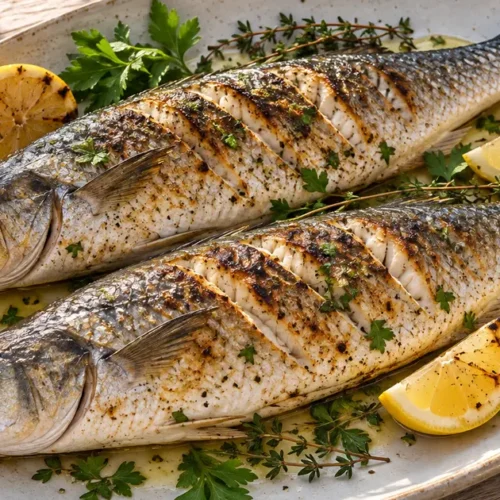
Grilled Whole Grey Mullet with Lemon and Herbs
Ingredients
- 2 whole grey mullet about 1 to 1 1/4 lb (450 to 570 g) each; scaled, gutted and gills removed
- 2 tbsp extra-virgin olive oil plus a little for a clean grill basket
- 1 lemon thinly sliced for the cavities
- 1 lemon cut into wedges for serving
- 4 sprigs fresh thyme or 1 tsp loosely packed thyme leaves
- 1/4 cup flat-leaf parsley loosely packed, plus extra to finish
- 2 cloves garlic peeled and lightly crushed
- 1 tsp kosher salt adjust to fish size and preference
- 1/2 tsp freshly ground black pepper
Instructions
- Have the fishmonger scale, gut and remove the gills from two grey mullet. Check the cavity is clean, then pat the skin and cavity dry. Make 2 or 3 shallow diagonal cuts on each side, avoiding cutting all the way through the backbone.
- Rub the fish all over and inside with olive oil, salt and pepper. Put a few thin lemon slices, parsley, thyme and a crushed garlic clove in each cavity. Keep the stuffing loose so heat can circulate.
- Heat a clean grill or grill basket to medium, about 375 to 425°F (190 to 220°C). Lightly oil the basket or cooking grate and make sure the fish fit without crowding.
- Set the fish over medium heat and cook about 7 to 9 minutes on the first side. When the skin releases easily, turn once with a fish basket or two wide spatulas. Cook another 7 to 9 minutes, adjusting for thickness, until the thickest flesh reaches 145°F (63°C).
- Move the whole fish to a platter and rest for about 2 minutes. Remove the cavity aromatics before portioning, lift the cooked flesh from the bones carefully, and serve with parsley and fresh lemon wedges.
Notes
Frequently asked questions
Is grey mullet the same as red mullet?
No. Grey mullet and red mullet are different fish groups. This recipe’s timings and preparation are intended for cleaned, whole grey mullet weighing about 1 to 1¼ pounds each.
Can I grill whole grey mullet without a fish basket?
Yes. Use a clean, well-preheated grate, a lightly oiled fish and two wide spatulas to support the body as it turns. A basket simply makes it easier to keep the head and tail together.
Should I remove the skin before grilling?
Leave the skin on for this whole-fish method. Scale it thoroughly and pat it dry. The skin helps protect the flesh, and diners can remove it after cooking if they prefer.
How do I know the whole mullet is cooked near the bone?
Check the thickest flesh with a food thermometer away from bone. It should reach 145°F (63°C). The flesh will also appear opaque and separate from the frame more readily.
Can I use frozen whole grey mullet?
Yes, if it was properly stored and thawed safely in the refrigerator. Check that the cavity and thick flesh have thawed, pat the outside dry, and follow the same temperature-based cooking check.