
Grilled Squid with Lemon and Olive Oil
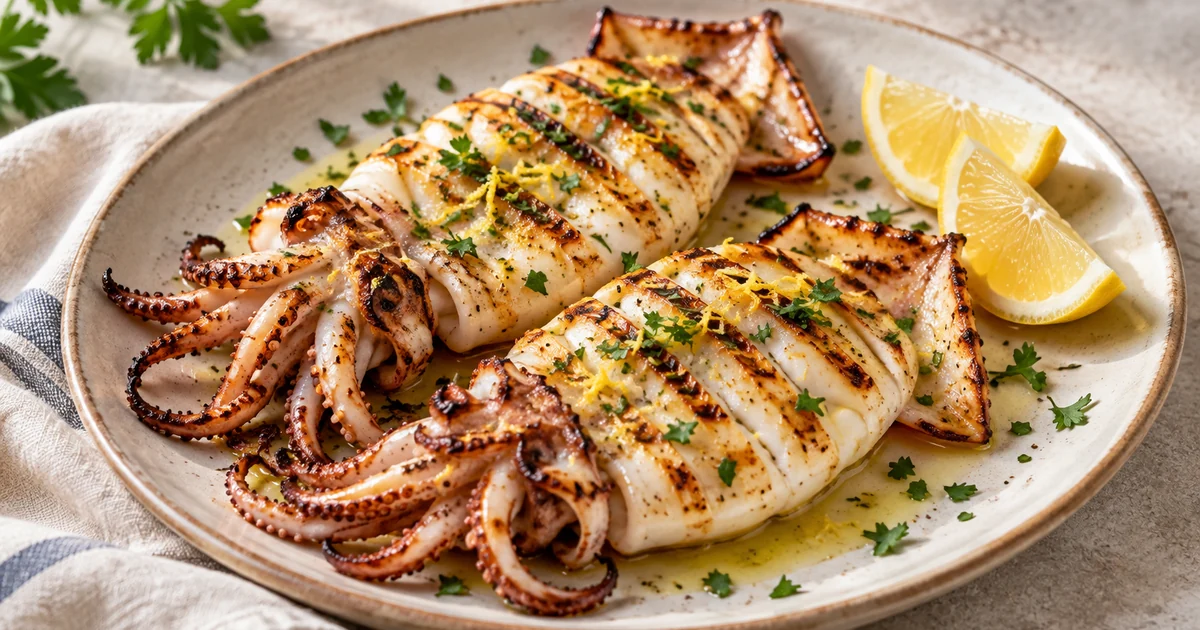
Grilled squid with lemon and olive oil is a short-ingredient seafood dish, but the preparation deserves more attention than the clock. This version uses one pound of already-cleaned, opened squid mantles and tentacles, a measured garlic-and-lemon-zest coating, and a separate lemon-parsley dressing added after grilling. Starting with cleaned squid keeps the recipe focused on seasoning, heat, safe handling and serving rather than seafood cleaning. The squid needs to be fully thawed before you begin if it was bought frozen.
A grill or ridged grill pan can create dark sear marks on the surface while the lemon dressing brings a bright finish. The central challenge is the difference between browning and doneness: the outside may color before a thick piece has heated through. The cooking time below is an estimate for small to medium prepared pieces, not a guarantee. Seafood should be cooked thoroughly; where the thickness allows a reliable thermometer reading, follow the U.S. government’s general fish-and-shellfish guidance of 145°F (63°C). Check the supplier’s directions for your particular squid product as well.
This makes two main-course portions with a simple salad and bread, or smaller appetizer portions for sharing. A few lemon wedges on the plate are optional. There is no wine, cooking alcohol, or alcohol-based sauce in either the coating or the dressing.
Table of Contents
Grilled Squid with Lemon and Olive Oil
Ingredients
- 1 lb pre-cleaned, opened squid mantle pieces and prepared tentacles about 450 g; fully thawed if previously frozen
- 3 tbsp extra-virgin olive oil divided: 2 tbsp raw coating; 1 tbsp clean finish
- 2 cloves garlic finely grated
- 1 tsp freshly grated lemon zest raw coating
- ½ tsp kosher salt raw coating
- ¼ tsp freshly ground black pepper raw coating
- 1 tbsp fresh lemon juice separate clean finishing dressing
- 2 tbsp chopped flat-leaf parsley separate clean finishing dressing
- 1 lemon cut into wedges; optional serving garnish
Instructions
- In a clean bowl, mix 1 tbsp olive oil with the fresh lemon juice and chopped parsley. Set aside, covered, without allowing the dressing or its utensils to touch raw seafood.
- In a separate container, mix 2 tbsp olive oil, garlic, lemon zest, kosher salt and black pepper. Coat the already-cleaned and fully thawed squid lightly. Cover and refrigerate for approximately 10 minutes while the grill heats.
- Preheat a clean grill or grill pan to medium-high. Arrange squid in a single layer and work in batches rather than crowding. Keep raw seafood separate from the clean platter and finishing dressing.
- Grill the opened mantle pieces and tentacles, checking small pieces after approximately 2–3 minutes on the first side and checking the second side as needed. Actual time depends on thickness, equipment and batch size. Cook all pieces thoroughly, following supplier directions and checking 145°F (63°C) in the thickest measurable area where practical. Remove finished pieces to a clean platter.
- Drizzle the cooked squid with the separate clean lemon-parsley dressing. Serve immediately, with optional lemon wedges. Discard the raw coating and never use it as a finishing sauce.
Notes
The ingredient plan and why it is measured
Buy 1 lb (450 g) cleaned squid, preferably with the body pieces already opened into flat mantles and the tentacles prepared by your fishmonger. Small and medium pieces are easier to cook in relatively even batches than a mixed collection of very thick and very thin pieces. Frozen squid is also suitable once thawed safely in the refrigerator. Do not assume that previously frozen squid is automatically worse: quality depends on handling, storage and the individual product.
The coating contains 2 tbsp extra-virgin olive oil, 2 finely grated garlic cloves, 1 tsp freshly grated lemon zest, ½ tsp kosher salt and ¼ tsp freshly ground black pepper. Using zest at this stage gives the lemon aroma without soaking the squid in a large quantity of juice. The oil helps distribute the seasonings; a very heavy coating, however, can drip excessively on a hot grill. Keep the finished dressing separate from everything that touches raw squid.
For the fresh finish, set aside 1 additional tbsp olive oil, 1 tbsp freshly squeezed lemon juice and 2 tbsp chopped flat-leaf parsley in a clean bowl before touching the squid. One additional lemon cut into wedges can be offered at the table if you want a stronger citrus finish, but the measured dressing is sufficient for the recipe. These quantities are a starting formula, not a claim of repeated kitchen testing; if you change the size or weight of the squid, scale the seasoning deliberately.
There is no need for wine or an alcoholic marinade. The small amount of zest in the raw coating and the measured lemon juice in the clean finishing dressing give the recipe two complementary citrus notes. The finishing oil must be kept away from raw seafood, its plate and any utensils used for the raw coating.
Choose cleaned squid and manage the cold chain
For predictable preparation, ask for squid that is already cleaned, with its mantle opened and its tentacles ready to cook. If your fishmonger supplies whole uncleaned squid, have it cleaned before starting; the stated preparation time does not cover that service. Keep raw squid in the refrigerator until the coating and grill are ready. For frozen squid, FDA guidance on safe seafood handling recommends thawing overnight in the refrigerator; a sealed-bag cold-water thaw is another accepted method when followed by immediate cooking. Do not leave frozen squid on a kitchen counter to thaw.
Use a dedicated container for the raw seafood, and place the finished squid on a clean serving platter. Keep the chopped parsley and lemon dressing in their own clean bowl. If you coat the squid ahead of time, keep it refrigerated during the short wait; the oil and seasoning are not a preservation treatment. Wash hands and work surfaces after they have been in contact with raw squid before arranging ready-to-eat sides.
You can keep the preparation simple by using body pieces of similar thickness. Tentacles can require different attention from the flat mantles, particularly at their thicker ends, so do not promise that every piece will finish at the same second. If you only have thin tubes or particularly large pieces, adjust the handling and cooking time to the supplier’s product rather than relying on the estimate printed here.
Make a clean lemon-parsley finish first
Mix 1 tbsp olive oil, 1 tbsp fresh lemon juice and 2 tbsp chopped parsley in a small bowl and set it aside, covered, for the finished dish. This is the only dressing applied after grilling. It is intentionally made before the raw seafood coating so you do not accidentally transfer an uncooked marinade to a cooked serving platter.
In a different bowl, stir together the remaining 2 tbsp olive oil, garlic, lemon zest, kosher salt and black pepper. Coat the prepared squid evenly but lightly. If convenient, cover and refrigerate for approximately ten minutes while the grill heats. This is a short seasoning rest, not a claim that lemon acid tenderizes squid; the lemon juice is reserved for after cooking. Do not top the cooked squid with any oil or seasoning left over in the raw seafood bowl.
If your grill grates are not ready, keep the squid chilled until they are. A rushed start with a barely warm surface can make the pieces release liquid instead of developing distinct grill marks. Equally, the method should not encourage charring food for the sake of a photograph. Cook it through and avoid extended exposure that makes the squid unnecessarily firm.
Grill the mantle pieces and tentacles
Preheat a clean grill or grill pan to medium-high. Arrange the prepared squid in a single layer, allowing enough space so pieces do not sit in a pool of moisture. Grill in batches if the pan is crowded. Start checking small, opened mantle pieces after approximately 2–3 minutes on the first side, then turn and check the second side. This timing is only a planning range; thickness, equipment and starting temperature change the result.
Tentacles may need a little longer at their thickest sections. Remove finished pieces to a clean plate as each batch cooks thoroughly instead of leaving the smallest pieces on the heat while waiting for the largest. The pieces should be cooked throughout, not merely marked on the surface. Use a suitable food thermometer at the thickest measurable part where practical, observing the general 145°F (63°C) fish-and-shellfish benchmark, and follow any more specific supplier instructions. If the piece is too thin for a reliable thermometer reading, take care to cook it fully rather than treating the suggested minutes or grill marks as proof of safety.
Transfer the cooked squid straight to a separate clean platter. Drizzle over the prepared lemon-parsley dressing and serve promptly. If you have additional lemon wedges, put them alongside rather than soaking every serving. The fresh dressing is not a way of finishing partially cooked squid: it belongs only on food that is already fully cooked.
Serving ideas that fit a seafood meal
The simplest plate combines grilled squid with a green salad, roasted peppers and plain bread. Choose sides that are ready before the squid is cooked so the seafood can be eaten soon after it leaves the grill. A cucumber-and-tomato salad works as a cool contrast, while prepared vegetables make an uncomplicated main-course plate. If you serve the squid as an appetizer, divide the cooked portions across a clean platter and offer the dressing in a separate bowl.
For a second grilled seafood idea on SABSEA, see our Grilled Sardines with Chermoula. The sardines use a different fish and herb mixture, so that article is a related grilling option rather than a replacement for this squid recipe. We are not assigning this page as a new species pillar: a broader squid hub can be planned later after reviewing the published archive and search data.
Take particular care with buffet service. If the platter will sit out, use the FDA’s holding guidance rather than trusting the outdoor temperature or the appearance of the squid. If the dish is not eaten promptly, cool and refrigerate the leftovers within the applicable time limits. A hot summer barbecue needs a more cautious schedule than a short family meal served immediately.
Variations without changing the safety essentials
For a herb change, use chopped cilantro in place of parsley in the clean finishing dressing. For a milder dish, keep the original parsley and omit any optional hot seasoning. For extra lemon aroma, add a small amount of zest to the clean dressing, but keep the added lemon juice measured so the seafood does not become excessively sharp. These options alter the finish rather than the basic cooking method.
A grill pan on the stove is a practical alternative when an outdoor grill is unavailable. Its heat response and capacity may differ, so cook in smaller batches as needed. If the pan has shallow ridges and the squid releases liquid, wait until the surface is properly hot before adding the next batch. A close-up picture cannot establish that the seafood is fully cooked, and no photograph should imply that a barely seared center is the intended result.
For diners who avoid specific ingredients, this formula has no wine or alcoholic sauce. Squid is a mollusk, so the dish contains molluscan shellfish; check local dietary requirements and any commercially prepared product labels rather than making universal certification claims. Olive oil, garlic, lemon and parsley are the seasoning basis here; packaged seasoning blends are unnecessary.
Storage, reheating and useful limits
Grilled squid is intended to be served shortly after cooking. If you have leftovers, refrigerate promptly in a shallow sealed container. FDA safe food-handling guidance says to refrigerate perishable foods within two hours, reduced to one hour when surrounding temperatures exceed 90°F (32°C). The general refrigerator window for cooked seafood is three to four days, but quality can decline sooner; follow more restrictive product instructions where applicable. For reheating, bring leftovers to 165°F (74°C) as recommended in U.S. guidance, and understand that the texture may become firmer.
Do not leave the cooked seafood in a warm grill pan while preparing an unrelated side. Do not reuse the raw coating as a dressing, and do not place finished food back on the unwashed plate that held raw squid. Frozen squid thawed by the cold-water method should be cooked promptly. These practical controls matter more than promises that all squid will be tender in exactly the same number of minutes.
The time given in the recipe card covers working with already-cleaned, fully thawed squid, a short refrigerated seasoning rest and cooking in modest batches. It does not cover a long freezer thaw, cleaning whole squid, or preparing a large spread of side dishes. If your equipment or squid size changes, the total time will change too. No calculated nutrition panel or reader rating is included because neither has been validated.
Frequently asked questions
Can I use frozen squid for this recipe?
Yes, as long as it is a suitable pre-cleaned product and has been thawed safely. The FDA recommends refrigerator thawing; a properly sealed cold-water thaw is another option when followed by prompt cooking. The stated preparation time assumes thawing has already happened, and you should follow the package directions.
Should lemon juice go into the raw squid coating?
Not in this version. The raw coating uses measured lemon zest, olive oil and seasonings. The lemon juice is mixed with fresh olive oil and parsley in a separate clean bowl and added only after the squid is fully cooked. Keeping the finish separate also removes the temptation to reuse a marinade that has touched raw seafood.
How can I tell when grilled squid is cooked safely?
Do not treat blackened grill lines or an exact number of minutes as proof of doneness. Thickness and grill heat vary. Cook seafood thoroughly, follow supplier directions and use a food thermometer in the thickest suitable section where a reliable reading can be taken; general U.S. fish-and-shellfish guidance uses 145°F (63°C). Thin pieces may be hard to probe accurately, so use particular care rather than promising a universal shortcut.
Can I make the dish ahead for a party?
You can measure the clean dressing, organize sides and have your fishmonger prepare the squid in advance. Keep the raw squid chilled and grill close to serving time. If the finished seafood will not be eaten promptly, apply safe hot/cold holding or refrigerate within the FDA time limits; do not leave it on a table for the entire gathering.
What is the best way to store and reheat leftovers?
Chill leftovers in a shallow container within two hours, or one hour when it is hotter than 90°F (32°C). General U.S. guidance allows three to four days for cooked seafood in the refrigerator, subject to more restrictive package directions. Reheat leftovers thoroughly to 165°F (74°C); a freshly grilled serving will usually have a more pleasant texture.
The finishing plate
This recipe keeps the method specific: one measured amount of cleaned squid, an oil-garlic-zest coating and a fresh lemon-parsley finish. Serve it as soon as it is cooked, keep every ready-to-eat component apart from raw seafood, and adjust the grilling estimate to your actual pieces and equipment. The strongest version of a simple grilled seafood dish is the one whose ingredient quantities, preparation conditions and safety advice agree from beginning to end.