
Crispy Pan-Fried Whiting Fillets

To make crispy pan-fried whiting fillets, dry the fish thoroughly, dust it with a thin layer of seasoned flour and fry in a hot skillet until the surface is golden and the center is cooked through. Thin whiting cooks quickly, often in two to three minutes per side, so the best result depends on pan temperature and fillet thickness more than a long list of ingredients.
Whiting has a mild flavor and fine, delicate flakes. It is especially well suited to a quick shallow pan-fry, where a light coating protects the surface without turning the fish into a thickly battered fillet. This recipe adds just a little paprika and garlic powder to the flour, then finishes the fish with fresh lemon and parsley. The lemon goes on the plate, not into the hot oil where it could soften the crust.
The measurements below make four portions from about one and a half pounds of boneless fillets. The method works with skinless or skin-on whiting, but the fillets should be similar in thickness so that a single batch finishes together. The cook time is a guide; use the thickest piece and the standard safe fish temperature to confirm doneness.
Table of Contents
Why whiting is a good fish for pan-frying
Whiting is a lean white fish with a gentle, slightly sweet flavor. Compared with thick cod or haddock portions, many whiting fillets are narrow and fairly thin. That means they can acquire color quickly without a lengthy stay in the pan, but they also dry out if you keep frying after the center is done. A simple coating and one careful turn are usually all they need.
The name whiting can describe more than one market species, depending on region. Buy clearly labeled fish from a trusted counter and look at the size and thickness of the actual fillets rather than assuming every package will cook identically. For another quick technique on a different fish, our pan-fried mackerel guide focuses on skin and oil-rich flesh; the technique here deliberately handles leaner, more fragile whiting.
Choosing the right whiting fillets
Choose fillets that are moist but not slippery, with an even light color, firm texture and a fresh, mild smell. Avoid pronounced sour or ammonia-like odors or patches that appear dry or badly discolored. Ask the fishmonger to remove pin bones if you are unsure how to do so. A few remaining fine bones can still be present in small fish, so run clean fingertips gently along each fillet before seasoning.
Fresh and properly thawed frozen whiting both work. If using frozen fillets, thaw them in the refrigerator in a covered container and drain away the liquid before cooking. Rapid thawing in a sealed bag in cold water is possible when cooking immediately afterward, but do not leave seafood on the counter to thaw. Keeping the fish cold until the pan is ready is as important as obtaining an attractive crust.
Dry fish makes a better crust
Water is the enemy of a shallow pan-fry. Pat both sides of each fillet with paper towels and set the fish on a dry plate. If the fillets are very thin, use a light touch rather than pressing them into fragments. Season with part of the salt and let the fish stand briefly while you mix the flour. This short pause is not a long marinade; the goal is to organize your coating station and skillet.
If you put wet fish straight into flour, a paste can form on the surface. That paste may stick to the skillet or shed in the oil instead of setting into a fine crisp layer. If the fillets begin to release more moisture while you work, blot them once more immediately before dredging. Keep a clean plate ready for coated fish so the raw and cooked portions never touch.
The light paprika flour coating
Mix a half cup of all-purpose flour with sweet paprika, garlic powder, black pepper and the remaining salt. Use a shallow dish wide enough for each fillet. Lay the fish in the mixture, turn once, then lift it and tap away surplus flour. You should still be able to see the basic contours of the fillet through the coating. A thick white blanket of flour will take longer to brown and can taste powdery.
Paprika brings a little color without making the dish especially hot. Garlic powder spreads more evenly than minced fresh garlic, which tends to burn in a fast, high-heat fry. If you prefer a plainer fish flavor, omit the paprika and garlic powder but keep the modest salt and pepper. Do not add wet lemon juice to the flour: squeeze the lemon over the cooked fish at the table.
Choosing a pan and the right oil
A heavy skillet gives the cook a more stable temperature when cold fish goes in. Cast iron, stainless steel and a well-made nonstick pan all work, although fragile fillets are easier to handle in a pan with a reliable release surface. Use enough neutral oil to make a thin continuous film over the base, not enough to submerge the fish. For a 10- to 12-inch skillet, start with about two tablespoons and add a little more between batches.
Heat over medium-high until the oil shimmers, then lower the heat slightly if it begins to smoke. The first piece should sizzle immediately on contact, but the coating should not turn dark brown within seconds. Do not add the optional butter at the beginning: its milk solids can burn while several batches are still cooking. The butter is reserved for a brief finishing step, after the fish comes out.
Pan-frying whiting without breaking it
Place the first few fillets in the hot oil with some space between them. Leave them undisturbed while the flour sets and the underside turns golden, usually around two to three minutes for thin pieces. A thin flexible fish spatula is helpful: slide it completely beneath the fillet, support the fragile tip and turn once. Resist lifting an edge every few seconds, which can tear away the crust before it releases.
Cook the second side until lightly browned and the thickest part reaches 145°F (63°C). A thermometer is the best confirmation when the fillet is thick enough to measure; otherwise the flesh should be opaque and separate easily with a fork. Move cooked pieces to a rack or paper towel and repeat with the remaining fish. Adjust the heat between batches, because browned flour left in the oil can make later pieces darken faster.
How to handle different fillet thicknesses
Some packages contain a mix of small tail pieces and thicker shoulder portions. Sort the fillets by thickness before frying. Thin tail pieces may finish in less time, while thicker cuts need lower heat after the crust colors so their centers can catch up without scorching. Cooking two similarly sized fillets together is easier to manage than stacking a crowded pan.
Time charts can be useful, but a single number is not a safety guarantee. The U.S. FDA recommends cooking finfish to 145°F (63°C), or to a visibly opaque texture that flakes easily when a thermometer is impractical. Review its seafood selection and cooking guidance for handling and temperature details. The objective is a just-cooked interior and a light golden crust, not a long hard fry.
Fixing common pan-fried fish problems
If the flour coating falls off, the fish was probably too wet or was moved before the crust set. Dry the fillets carefully and allow the first side to form a stable surface before turning. If the crust looks pale and greasy, the pan may have cooled too much when the fish went in. Fry fewer portions per batch and give the oil time to recover between additions.
If the exterior browns before the center cooks, reduce the heat and use a slightly longer second side. If the fish breaks, support the whole fillet with a wide spatula and avoid pressing down on it. A faint fish aroma is normal, but a strong sour or ammonia smell is a reason not to eat the seafood. For a method that skips the pan entirely, see our oven-baked cod with garlic.
Simple sides and sauces that work with whiting
Whiting benefits from sides that do not overwhelm its delicate flesh. Crisp green beans, a cucumber salad, herbed rice or roasted potatoes turn a few small fillets into a complete meal. A squeeze of fresh lemon at serving time adds brightness; put the wedges on the plate so diners can decide how much citrus to use. Chopped parsley is enough of a finishing herb, though a little dill also works.
Keep sauces light if you want the crust to stay crisp. A small spoonful of yogurt with lemon zest can sit beside the fish rather than on top. For a different casual meal, the cooked fillets can fill soft tortillas with crunchy cabbage, but assemble them at the last moment. Our Baja fish taco recipe uses a separate format with its own texture and toppings.
Leftovers and reheating crisp fillets
Serve fried whiting soon after cooking. Stacking hot pieces on a plate traps steam and softens the coating, so a small rack is useful if you need to finish several batches. If there are leftovers, refrigerate them promptly in a shallow covered container. Use them within one to two days and reheat until thoroughly hot. The crust will never be quite the same as when first fried, but a brief reheating in a lightly oiled skillet can restore some texture.
A microwave is convenient but tends to make the flour layer soft. Do not leave cooked fish sitting at room temperature through a long gathering. Keep raw fish, used flour and raw-contact utensils separate from serving dishes, and discard leftover dredging flour that touched raw fish. If you need a recipe designed specifically around a different crisp seafood presentation, try the homemade fish fingers.
Crispy pan-fried whiting recipe card
The card below contains the exact amounts and the five-step cooking order. Its timing assumes the whiting has already thawed and that the pan can hold each batch without crowding. Keep your thermometer, spatula and serving plate within reach before coating the first fillet.
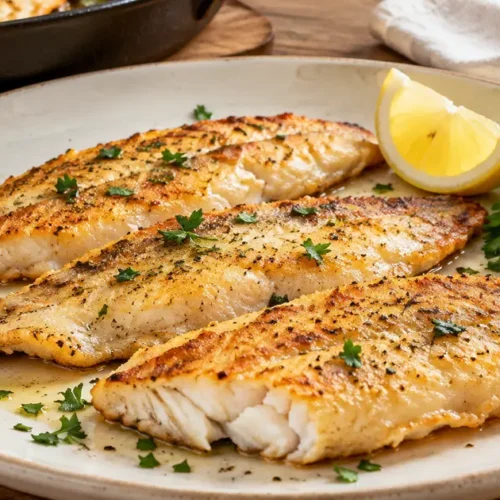
Crispy Pan-Fried Whiting Fillets
Ingredients
- 1 1/2 lb boneless whiting fillets about 680 g; fully thawed and patted dry
- 1/2 cup all-purpose flour for a thin dusting
- 3/4 tsp kosher salt divided
- 1/2 tsp sweet paprika
- 1/4 tsp garlic powder
- 1/4 tsp freshly ground black pepper
- 3 tbsp neutral oil such as canola or sunflower; add as needed between batches
- 1 tbsp unsalted butter optional, for finishing after frying
- 1 lemon cut into wedges
- 2 tbsp chopped fresh parsley for serving
Instructions
- Check whiting fillets for pin bones and pat them very dry. Sprinkle lightly with half the salt and let stand for 5 minutes while preparing the flour coating.
- Combine flour, remaining salt, paprika, garlic powder and pepper in a shallow dish. Dredge each fillet lightly on both sides and tap off all excess flour so the coating stays thin.
- Heat 2 tablespoons neutral oil in a large heavy skillet over medium-high heat until shimmering but not smoking. Add only as many fillets as fit without overlapping.
- Cook thin fillets about 2 to 3 minutes per side, turning gently once, until golden and the thickest part reaches 145°F (63°C). For thicker pieces, lower heat slightly and cook longer. Transfer to a rack or paper towel and repeat with remaining oil and fish.
- If using butter, melt it briefly in the warm skillet after the fish is removed and spoon a little over the cooked fillets. Scatter parsley, add lemon wedges and serve immediately while the coating is crisp.
Notes
Frequently asked questions
Do I need to leave the skin on whiting?
Either skin-on or skinless fillets can work. If the skin is on, dry it especially well and start skin-side down so it has time to set. Thin fillets may curl slightly; use a spatula to support them rather than pressing hard.
Can I fry whiting without flour?
Yes. Skip the dredging step and season the dry fillets directly. The surface will be less uniformly crisp, but the mild fish flavor will be more exposed. Use a reliable pan surface and a little oil, then judge doneness in the same way.
How long do thin whiting fillets take in a skillet?
Often two to three minutes per side in a properly heated pan, but a thick fillet or a crowded pan needs longer. Check the thickest part for 145°F (63°C) or opaque flesh that separates easily with a fork.
Why does my fish stick when I turn it?
A wet fillet, insufficient oil or turning before the coating has set are common causes. Let the underside brown, then slide a thin flexible spatula under the entire fillet. If it resists, wait a short moment and try again gently.
Can I use frozen whiting fillets?
Yes, after thawing safely in the refrigerator or in a sealed bag under cold water when you plan to cook immediately. Dry the thawed fillets thoroughly. Do not put ice-coated fillets into hot oil because spattering and uneven cooking become more likely.