
Garlic Butter Razor Clam Pasta with Lemon and Parsley
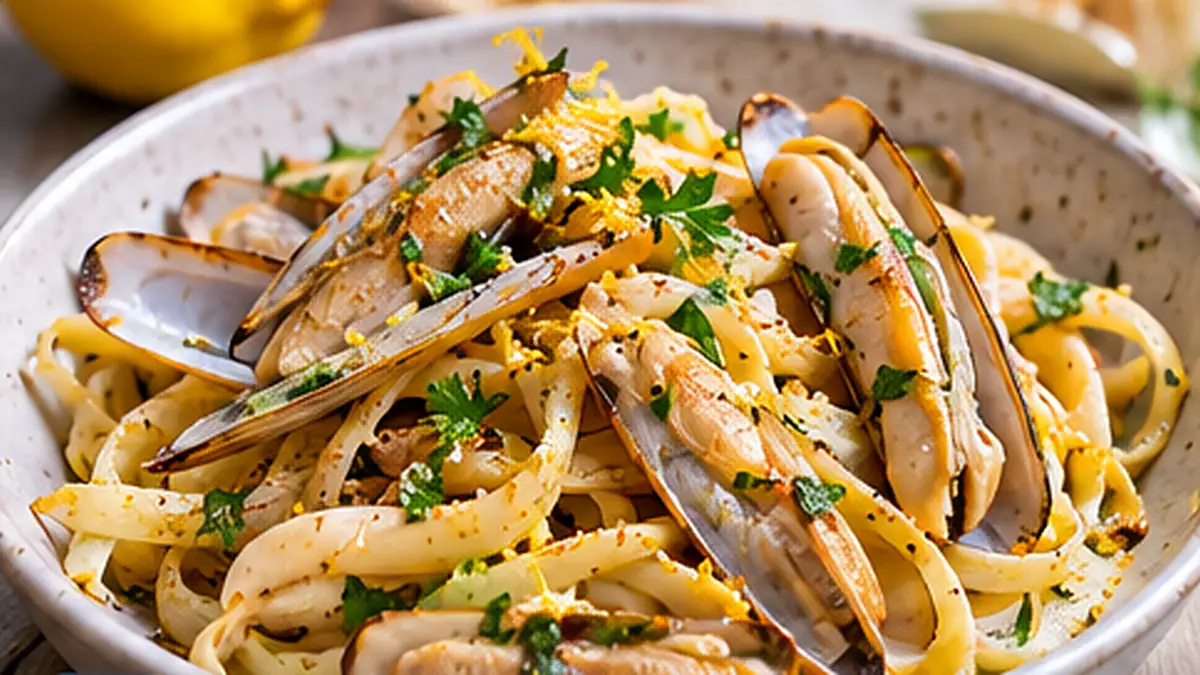
Garlic butter razor clam pasta makes a memorable seafood dinner because their sweet, briny flesh pairs naturally with garlic, parsley and a glossy lemon-butter sauce. The key is to prepare the clams carefully, build a light sauce with seafood broth and pasta water, and add the delicate meat near the end so it cooks through without turning tough. This version uses linguine and a handful of familiar pantry ingredients to let the shellfish remain the star.
Why this simple razor clam pasta works
Razor clams are long, narrow bivalves with a distinctive texture, unlike the small round clams often served whole in their shells. The cleaned meat can be cut into bite-size pieces, which distribute through the pasta and are easier to eat. The sauce for this dish is not a heavy cream base. It is made by combining olive oil, unsalted butter, garlic, a measured amount of seafood or vegetable broth, lemon zest, and starchy cooking water. That mixture coats each strand of linguine without masking the taste of the clams.
The timing matters more than a complicated technique. Pasta water provides body; gentle heat prevents the butter from separating; lemon is added near the finish so its flavor stays bright. The clams should be cooked through, but not left to boil long after they are done. A small pinch of red pepper flakes is optional. Chopped parsley brings color, while fresh lemon wedges allow each diner to adjust acidity at the table.
This is a different meal from our grilled razor clams with lemon garlic butter, which focuses on shell-on presentation. Here, the cleaned meat is folded into pasta with an emulsified pan sauce.
Buying and cleaning razor clams correctly
Purchase razor clams from a reputable, regulated supplier, never from an unverified harvesting area. Shellfish safety depends on water quality and proper handling as well as cooking. If you buy live, shell-on razor clams, follow local food-safety guidance for inspecting the shells and removing sand; preparation varies by species and by whether the meat has already been processed. For this recipe, the most consistent starting point is raw razor clam meat that has been professionally cleaned and shucked, or a trusted frozen product thawed safely.
Rinse only as needed to remove visible grit, then drain and pat dry. If any dark digestive material or membrane remains, follow the seafood seller’s cleaning instructions. Cut large, clean pieces into strips about 1/2 inch wide. Do not place raw shellfish on the same board used for the finished meal. Keep the cleaned meat refrigerated until its turn in the pan, and work with clean utensils.
The FDA advises storing seafood at 40°F (4°C) or below and using it within a short window after purchase. If you detect a sour, ammonia-like or strongly unpleasant odor, discard the seafood rather than trying to disguise it with garlic or citrus.
Ingredients that build flavor without hiding the clams
For four servings, use 12 ounces of linguine and roughly 12 to 16 ounces of cleaned razor clam meat. You will also need olive oil, unsalted butter, four garlic cloves, lemon zest and juice, flat-leaf parsley, and about half a cup of unsalted seafood broth or vegetable broth. Ground black pepper and a pinch of red pepper flakes are enough to season the sauce. Salt the pasta water modestly and adjust the final sauce after tasting, since shellfish and stock can already be salty.
Choose unsalted butter so the seasoning stays in your control. Use fresh garlic rather than browning powdered garlic, which can give a rough, bitter flavor when cooked in hot fat. A wide skillet is more useful than a narrow saucepan because it provides space to toss the pasta and keeps the clams in an even layer. Keep a mug of pasta water close by, because the starch makes the sauce cling to the noodles.
Although a thick cream sauce may sound appealing, the lemon-butter version works better when you want the sweetness of the razor clams to remain recognizable. A spoonful of extra parsley just before serving adds freshness without changing the core recipe.
Full recipe and cooking directions
The WP Recipe Maker card below contains the full, measured ingredient list and cooking steps. Read through the method before turning on the heat so the clams can be added as soon as the sauce is ready.
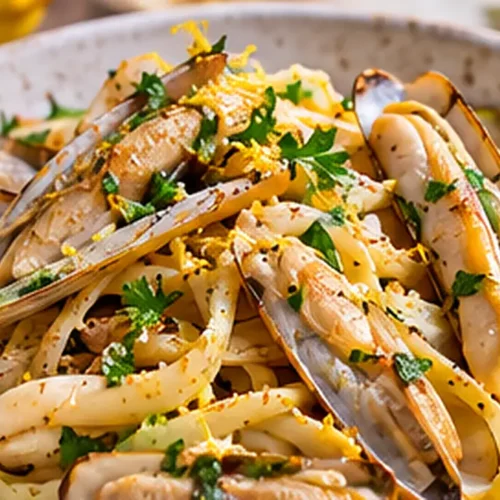
Garlic Butter Razor Clam Pasta with Lemon and Parsley
Equipment
- Large pot
- Wide skillet
- Fish or shellfish thermometer
- Colander
Ingredients
- 12 oz linguine or spaghetti
- 14 oz raw razor clam meat cleaned and shucked; thawed safely if frozen
- 2 tbsp extra-virgin olive oil
- 3 tbsp unsalted butter cut into small pieces
- 4 garlic cloves finely minced
- 1/2 cup unsalted vegetable or seafood broth
- 1 lemon zest and juice; serve wedges separately
- 1/2 cup flat-leaf parsley chopped; divided
- 1/4 tsp red pepper flakes optional
- 1/4 tsp black pepper freshly ground
- to taste fine salt add only after tasting sauce
- 3/4 cup reserved pasta cooking water use as needed for sauce texture
Instructions
- Keep the shucked razor clam meat cold while you prepare ingredients. Check for grit, follow the seller’s cleaning directions, drain, pat dry and cut large pieces into bite-size strips.
- Bring a large pot of water to a boil. Cook linguine until just shy of al dente according to the packet. Reserve at least 3/4 cup starchy pasta water, then drain.
- Heat olive oil in a wide skillet over medium-low heat. Add minced garlic and optional red pepper flakes; cook 30 to 45 seconds until fragrant but not brown.
- Add unsalted broth and lemon zest. Simmer briefly, then swirl in butter in small pieces. Add several tablespoons of pasta water until the liquid looks glossy and lightly emulsified.
- Add cleaned raw razor clam meat to the simmering liquid and cook until opaque, firm and fully cooked through, using a suitable thermometer to verify a safe center temperature when possible. Timing depends on cut size; do not rely solely on a minute count.
- Add drained linguine and black pepper. Toss over low heat until coated; loosen the sauce with a little reserved pasta water as needed. Avoid prolonged boiling after clams are cooked.
- Remove from the heat. Fold in lemon juice and chopped parsley, taste and adjust seasoning. Divide among warm bowls and serve promptly with lemon wedges.
Notes
How to keep the lemon-butter sauce silky
Cook the linguine until just short of the package’s al dente time. The noodles will finish in the skillet. Do not discard all the pasta water. Start the sauce over medium-low heat: warm olive oil, soften the garlic briefly and add broth. Do not allow the garlic to turn dark brown. Add butter in pieces and swirl until it melts into the liquid. If the pan looks dry, stir in a little reserved pasta water before adding the noodles.
Tossing is more important than adding a large amount of fat. Each turn of the linguine helps mix the butter, broth and starch into a glossy coating. Add clam meat near the end of cooking and heat until it is fully cooked, opaque and firm. If using an instant-read thermometer, follow the FDA’s general seafood safety benchmark of 145°F (63°C) where a reliable reading is possible. Exact time depends on the size and cut of the meat, so never use a fixed minute count as a substitute for doneness.
Turn off the heat before folding in the lemon juice and parsley. The sauce should look moist rather than pooled at the bottom of the pan. Add warm pasta water one spoonful at a time if it tightens while you plate.
Fixes for chewy clams, broken sauce and watery pasta
Clam meat is chewy: it may have been left at a vigorous boil for too long after cooking through. Next time, prepare everything else first and add the clams only when the sauce is ready. The butter sauce looks oily: lower the heat, add one or two tablespoons of warm pasta water and toss vigorously. Emulsification works better with the starch released by the pasta.
The linguine tastes flat: brighten with fresh lemon zest and a small pinch of salt, rather than pouring in more broth. The plate is watery: drain pasta well and reduce the broth slightly before tossing. There is grit: the clams were not cleaned adequately; the next batch needs additional prep before cooking. Do not try to hide sediment with sauce.
The garlic tastes bitter: the pan was too hot. Warm garlic gently until fragrant and pale, never deep brown. Once the fish or shellfish components are fully cooked, serve promptly so the texture stays pleasant.
Serving ideas, variations and leftovers
Warm shallow bowls help the linguine stay supple long enough to eat. Place the pasta in loose nests, add any remaining clam pieces from the pan, spoon over a little sauce and finish with chopped parsley. Serve lemon wedges alongside a crisp cucumber salad or simply dressed greens. A small amount of roasted fennel makes a good side without competing with the shellfish.
For a milder version, omit red pepper flakes and increase parsley. For extra vegetables, fold in a handful of quickly wilted spinach just before serving. Avoid crowding the sauce with many strong additions; this is a recipe in which restraint produces a cleaner flavor.
Refrigerate leftovers promptly in a covered, shallow container. As with other cooked seafood dishes, use within three to four days and reheat thoroughly to 165°F (74°C), understanding that a second heating may make the clam meat firmer. The dish tastes best fresh. For another pasta idea, compare the sauce structure in our linguine with white clam sauce.
Frequently Asked Questions
Can I use frozen razor clam meat for this pasta?
Yes, if it comes from a reputable supplier. Thaw it safely in the refrigerator, drain it well and cook it through before serving.
What pasta shape works besides linguine?
Spaghetti and thin fettuccine are good alternatives. Short pasta also works, though the silky sauce clings especially well to long noodles.
Why do razor clams turn chewy?
They can become firm when heated excessively. Prepare the sauce first, add cleaned clam meat near the end and cook until safely done.
Can I make the butter sauce ahead?
The garlic and broth base can be prepared first, but finish the butter emulsion, clams and pasta together just before serving for the best texture.
How do I know the clams are safely cooked?
Cook the meat fully until it is opaque and firm. Follow current FDA guidance for seafood safety; when feasible, verify a reliable internal temperature.