
Korean Braised Mackerel with Radish and Ginger
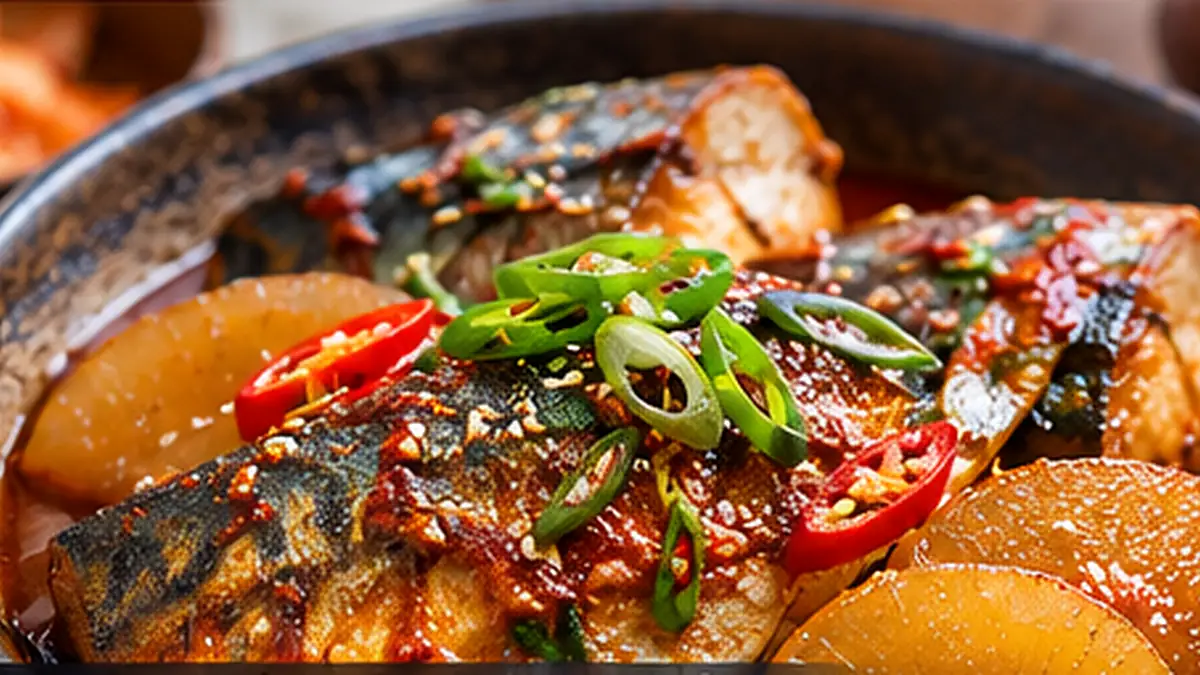
Korean braised mackerel with radish, often called godeungeo jorim, is a comforting way to cook rich, flavorful fish with slices of radish that absorb a savory pepper broth. The fish simmers over the vegetables, while ginger, garlic, scallions and Korean red pepper flakes create a fragrant sauce. This approachable home-kitchen version focuses on careful layering and a gentle simmer, producing fully cooked mackerel and tender radish without drying the fish.
What makes Korean braised mackerel different
Unlike quickly pan-fried or broiled mackerel, braised mackerel spends most of its cooking time partially submerged in a seasoned liquid. The radish forms a soft base beneath the fish and takes on the flavor of the broth. Soy sauce provides savory depth, gochugaru contributes color and spice, while ginger and garlic balance the naturally assertive taste of oily fish. As the sauce reduces, the vegetables become tender and the surface of the mackerel takes on a glossy red coating.
This is a widely recognized Korean home-cooking preparation rather than a new invention. The Korean Traditional Knowledge Portal documents braised mackerel with radish, soy sauce, chili seasoning, garlic and ginger. Our version uses gochugaru, scallions and a measured amount of water for a clear, pourable sauce. It does not depend on specialty equipment or a complicated marinade. The most important decisions are the thickness of the radish slices, how the fish is arranged, and when to lower the heat.
If your family already enjoys our baked mackerel with lemon and herbs, this dish offers a completely different flavor profile and cooking technique.
Choosing mackerel, radish and seasonings
Choose approximately 1 1/2 pounds of cleaned mackerel cut into four or five thick portions. Whole fish cut across the bone is common, but boneless fillets can also work with a shorter cooking time. Inspect the fish for a clean, mild smell and avoid pieces with dried edges. If using frozen mackerel, thaw it in the refrigerator before cooking and pat away excess moisture. Keep it cold while you prepare the vegetables.
Use Korean mu radish or another mild, firm daikon. Cut it into even rounds or half-moons around 1/2 inch thick so it softens as the fish cooks. A small onion adds sweetness; a generous amount of fresh ginger gives the broth balance. Gochugaru, Korean red pepper flakes, creates the characteristic color, but adjust the quantity to your household’s preferred heat. Scallions go in near the finish to preserve their fresh aroma.
For the liquid, use water or unsalted fish stock plus naturally brewed soy sauce with an ingredient list suited to your kitchen. Choose products carefully and avoid sauces with unnecessary flavoring additives. A little brown sugar balances the saltiness and spice; the recipe is not meant to taste sweet.
The two preparations that determine texture
First, build a radish layer on the bottom of a wide heavy pot. This protects the fish from direct heat, creates room for the liquid to circulate and lets the radish absorb the sauce slowly. Overlapping the radish slightly is fine, but try not to pile the slices into a tall mound. Add sliced onion and arrange mackerel pieces over the vegetables in one layer wherever possible.
Second, mix the seasoning liquid separately. Stir soy sauce, gochugaru, minced garlic, grated ginger, a little brown sugar and water until combined. Pour the liquid over the fish, rather than adding dry chili directly to one spot. This produces more even seasoning. Set aside a little sliced scallion for the finish. If you like milder heat, use less gochugaru at first; you can adjust the broth later, but removing spice is difficult.
Use a broad spoon or ladle to baste the exposed fish surface during cooking. Avoid stirring with a utensil between the pieces once the mackerel softens, since repeated turning can break it apart.
Measured recipe and cooking steps
Use the WP Recipe Maker card for exact amounts, a consistent sequence and serving yield. The cooking time is a guide; always confirm fish doneness rather than relying on the clock alone.
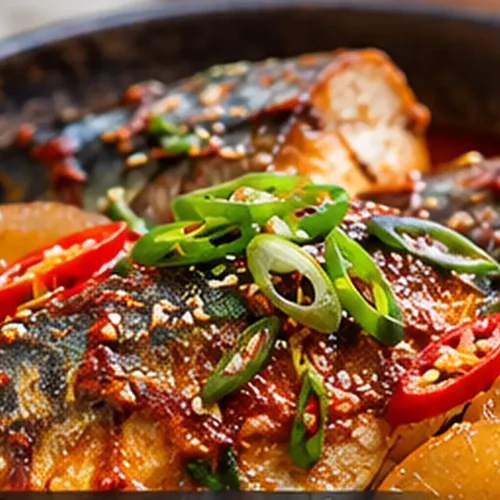
Korean Braised Mackerel with Radish and Ginger
Equipment
- Wide heavy saucepan or shallow pot with lid
- Ladle
- Instant-Read Thermometer
Ingredients
- 1 1/2 lb mackerel cleaned and cut into 4 to 5 thick pieces, or boneless fillets
- 1 lb Korean radish or daikon sliced into 1/2-inch thick half-moons
- 1 medium onion thinly sliced
- 3 tbsp soy sauce check product ingredients
- 1 1/2 tbsp gochugaru Korean red pepper flakes; adjust heat
- 4 garlic cloves minced
- 1 tbsp fresh ginger finely grated
- 2 tsp brown sugar
- 1 1/2 cups water or unsalted fish stock
- 3 scallions sliced; divided
- 1 tsp sesame oil to finish
- 1/4 tsp black pepper freshly ground
Instructions
- Thaw fish safely in the refrigerator if needed. Pat dry and cut into even portions. Slice radish into 1/2-inch pieces and onion thinly.
- In a bowl whisk soy sauce, gochugaru, minced garlic, grated ginger, brown sugar, black pepper and water until combined.
- Arrange radish across the bottom of a wide pot, scatter onion on top, then lay mackerel pieces over the vegetables in one layer.
- Pour the seasoning liquid evenly over the fish and vegetables. Bring just to a gentle boil over medium-high heat.
- Partially cover, reduce to medium-low, and simmer gently until radish is softening and fish is cooking through, approximately 20 to 30 minutes for substantial bone-in pieces. Add small splashes of hot water if liquid evaporates too quickly.
- Spoon cooking liquid over the exposed fish several times. Avoid turning the fish or stirring roughly, since cooked mackerel can split.
- Confirm fish is fully cooked: FDA guidance recommends 145°F (63°C) for finfish, measured in the thickest flesh away from bone when possible. Continue cooking if needed until radish is tender and fish is done.
- Add sliced scallions during the last few minutes, remove from heat, and finish with sesame oil. Serve in bowls with rice, taking care to remove bones for diners.
Notes
How to simmer without drying out the fish
Bring the pot to a gentle boil with the lid slightly ajar, then lower to a steady simmer. The liquid should move quietly around the radish rather than splash aggressively over the fish. Cooking the radish first for several minutes before adding delicate boneless fillets is an option; when using bone-in mackerel pieces, the fish and radish can start together and cook longer. A properly sized pot keeps enough liquid beneath the fish to avoid scorching.
Baste exposed surfaces occasionally using a spoon. If the liquid reduces too quickly, add a little hot water from the side of the pot. Resist the temptation to add lots of stock at once; the sauce should gradually concentrate as the radish softens. When the radish is tender and fish is fully cooked, remove the lid for a brief final reduction if a thicker sauce is desired.
The FDA recommends cooking finfish to 145°F (63°C), or until the flesh is opaque and separates easily with a fork when a thermometer cannot be used. Bone-in mackerel is awkward to probe; measure in the thickest fleshy portion without touching bone when possible. Do not serve undercooked pieces.
Balancing heat, salt and richness
Because mackerel is naturally rich, the broth needs a little brightness. Ginger and scallion keep the aroma fresh, while radish absorbs the cooking liquid and gives each bite a gentler contrast. If the dish tastes too salty, add a splash of hot water and more radish or onion rather than relying on sugar. If it tastes dull, try more fresh ginger or scallion at the finish. Salt and soy sauce vary substantially between brands, so start conservatively and adjust only after the mixture has simmered.
For a less spicy dish, reduce the gochugaru to one teaspoon and add more paprika for color only if desired. A modest amount of sesame oil at the end supplies aroma, but too much can cover the fish’s own character. Do not fry the seasoning mixture at very high heat; exposed pepper flakes can scorch and turn bitter before the broth is added.
The radish should be fork-tender but still hold its shape. If it remains firm when the fish is done, remove the cooked fish gently, finish simmering the radish, then return the fish to warm briefly. That small adjustment prevents overcooking.
Serving, bones and leftovers
Bring the pot to the table only when it can sit safely on a heatproof surface. Serve with steamed rice and spoon some of the cooking liquid over both the fish and the radish. A simple cucumber salad provides crispness without competing with the flavorful broth. Check for bones carefully when plating, especially if cooking mackerel steaks rather than boneless fillets. Warn diners that small bones may remain in whole-fish portions.
Leftovers should be transferred promptly to shallow covered containers and refrigerated within two hours, or within one hour during very hot weather. Reheat thoroughly to 165°F (74°C) before serving again. The radish may become softer after resting, while the fish can break apart more easily, so reheat with minimal stirring. Use cooked leftovers within three to four days.
For other mackerel techniques, see pan-fried mackerel with crispy skin or our Japanese broiled mackerel. Those recipes help readers choose a cooking method based on the texture and flavor they prefer.
Frequently Asked Questions
What is Korean braised mackerel called?
The dish is commonly known as godeungeo jorim, a Korean-style preparation of mackerel simmered in a seasoned sauce, often with radish.
Can I use mackerel fillets instead of bone-in steaks?
Yes. Boneless fillets typically cook faster; soften the radish first and check the fish early for safe doneness.
Is Korean radish necessary?
Korean mu is traditional, but a firm daikon radish works well when sliced into even pieces.
How spicy is the dish?
Heat depends on the amount and type of gochugaru. Start with a small amount and adjust the broth gradually.
How can I tell when the mackerel is done?
Cook finfish to an internal temperature of 145°F (63°C) when possible, or follow FDA guidance for opaque flesh that separates easily with a fork.