
Surimi Cucumber and Avocado Salad (15 Minutes)

Surimi salad can be light, crunchy and genuinely refreshing. In this 15-minute version, thin strips of fully cooked surimi mingle with cucumber, firm avocado and scallions, then get a small amount of lime-sesame dressing. There is no heavy mayonnaise coating, so the vegetables remain distinct and the seafood stays at the center of the bowl.
This is an approachable lunch or cool side for warm days, but it pays to buy the right packaged surimi. The ingredient is usually a prepared fish product, often shaped and colored to resemble crab. Read the label for cooking instructions and allergens, especially if you are serving people who cannot eat fish, shellfish, egg, wheat or soy.
Table of Contents
What Surimi Really Is
Surimi begins with finely minced fish, commonly pollock or another mild white fish, which is processed into a smooth fish-protein base. Finished surimi seafood products can include starch, egg white, flavorings and coloring before being heat processed and formed into sticks or flakes. Depending on the market, the same product may be labeled imitation crab or seafood sticks.
The distinction matters for both expectations and food allergies. Surimi is not simply freshly picked crab meat, and its nutrition and ingredients vary by brand. The FDA guidance on processed and blended seafood labeling explains why labeling should clearly distinguish a fish-based imitation product. Choose a package whose ingredient list and ready-to-eat instructions match the recipe.
Why Cucumber and Avocado Work Together
Surimi has a mild savory flavor, a slightly springy texture and often a touch of sweetness. Cucumber adds a clean, watery crunch that prevents the mixture from tasting heavy, while avocado contributes creamy richness without requiring mayonnaise. Thin scallions give a gentle aromatic bite. These ingredients create noticeable contrast with every forkful rather than turning into one uniform paste.
Acid is essential for balance. Fresh lime juice wakes up the seafood and makes the avocado taste brighter, while a measured drop of sesame oil contributes aroma. Because some packaged surimi is fairly salty already, there is no reason to salt the entire bowl before tasting. A light dressing also lets the distinctive red-edged white surimi pieces remain visible.
Choosing the Best Surimi Seafood Sticks
Look for a refrigerated or frozen product with a clear ingredient list, intact packaging and an appropriate use-by date. The product used here should be fully cooked and ready to eat after thawing. If the package says it requires further cooking, follow those instructions and cool it safely before making this salad. Avoid assuming every brand has identical handling requirements.
Check allergen information carefully. Fish is intrinsic to surimi, and some formulas also include shellfish extracts, wheat starch, egg or soy. A salad that looks like plain vegetables and seafood may still contain several of those ingredients. If serving guests, keep the original package available so they can check it directly. Refrigerate the surimi until just before assembling.
Preparing the Cucumber and Avocado
An English cucumber is convenient because its skin is tender and its seeds are usually small. Cut it lengthwise, then slice into half-moons thick enough to stay crisp. If using a cucumber with a very wet seed center, scrape some seeds out first. Patting the cut pieces dry with a towel also helps prevent the dressing from becoming diluted.
Choose avocados that yield slightly to gentle pressure but still hold their shape when diced. Very soft avocado will smear over the surimi and create a mushy dressing. Dice it at the last moment and coat it lightly with a spoonful of the lime dressing to reduce browning. The aim is distinct pale-green cubes, not a smooth avocado cream.
A Lime-Sesame Dressing That Stays Light
Whisk lime juice with light olive oil and a little toasted sesame oil. A small splash of low-sodium soy sauce can add depth, but it is optional and should be omitted if an ingredient allergy makes it unsuitable. Freshly ground black pepper is usually sufficient. Unlike thick bottled dressings, this mixture just glosses the cucumber and surimi.
Sesame oil is powerful, so measure it rather than pouring straight from the bottle. The same applies to soy sauce because both the surimi and any added soy may contain salt. If your lime is especially sour, add a little more olive oil instead of sugar. Taste on a piece of cucumber before tossing it with the full bowl.
How to Make Surimi Salad Without Mashing It
Shred or slice the surimi into easy-to-eat strips and keep the pieces fairly large so their texture remains clear. Combine them with the cucumber and scallions in a wide bowl. Pour on most of the dressing and toss with two spoons rather than stirring vigorously. This coats the firm ingredients without breaking them into tiny fragments.
Fold in the avocado cubes last with just two or three gentle turns. Add remaining dressing only if the bowl needs it. Scatter sesame seeds over the surface immediately before serving. Because all ingredients are ready to eat, there is no stovetop step, and the salad can be on the table in about fifteen minutes once the produce has been washed.
Make It a Lunch, Starter or Side Dish
For a light lunch, place the dressed salad over cooked and cooled rice or a bed of crisp romaine. For a starter, serve small portions in chilled bowls or lettuce cups. It also suits a picnic spread if it can stay properly cold until serving; avoid leaving a seafood-and-avocado bowl on a warm table for hours.
If you enjoy seafood lunches with different textures, compare this chilled bowl with our classic tuna salad with celery and lemon. That recipe uses flaked tuna and a familiar salad structure, while this one is built around firm seafood sticks, cucumber crunch and fresh lime. The contrast can help you decide which fits your meal.
Flavor Variations That Still Taste Fresh
A few sliced radishes can add extra peppery crunch, while a handful of chopped cilantro provides a greener aroma. If you want heat, use a small pinch of red pepper flakes or very thin fresh chili slices. For a richer version, replace some olive oil with plain yogurt only if everyone eating the salad can tolerate dairy, and serve it immediately.
Avoid adding several sauces simply because surimi is mild. Thick sweet chili sauces or too much soy sauce overwhelm the delicate vegetables. You can also substitute lemon for lime, though lime has a particularly good affinity with sesame. If adding mango, use just a few small cubes and reduce other sweet ingredients so the salad does not become dessert-like.
Keeping the Bowl Crisp and Preventing Wateriness
Cucumber releases moisture after salt and acid are added. This is why the dressing should be mixed in shortly before serving rather than hours in advance. If you need to work ahead, cut cucumber and scallions, dry them well, and store separately. Keep the dressing in a sealed jar, the surimi chilled, and the avocado whole until assembly.
Do not mix the avocado into a salad that will sit overnight; its texture and color will deteriorate. For the most appealing leftovers, store a dressed portion in a sealed container in the refrigerator and eat promptly, ideally within a day. If the bowl has been left unrefrigerated for an extended period, discard it rather than trying to refresh it with more lime.
Common Problems and Quick Adjustments
If the salad tastes too salty, use more cucumber and avocado and omit the optional soy sauce next time. If it tastes bland, start with fresh lime rather than another spoonful of salt. If it looks watery, lift the solids with a slotted spoon and pour off the excess liquid. Heavy mayonnaise will not truly solve a watery vegetable problem.
If the surimi is stringy or dry, check whether it was held uncovered after opening or whether the product itself has a firm texture. You can use shorter pieces and a slightly larger amount of dressing, but do not soak it in liquid. A balanced bite should contain a little seafood, crisp cucumber and creamy avocado together.
How This Salad Differs from Other Seafood Salads
A surimi cucumber avocado salad is not a replacement for crab salad made from fresh crab meat, because the protein and seasoning of the packaged seafood are different. It also differs from the Italian seafood salad, which brings together several cooked seafood types and olive oil with Mediterranean seasonings.
For a cucumber-and-sesame comparison, see our crunchy jellyfish salad, which is a completely separate ingredient and recipe. Linking related salads should help readers explore useful alternatives without implying that the seafood components are interchangeable. Choose based on flavor, ingredient accessibility and the cooking or preparation involved.
Recipe Card, Serving Size and Safety Notes
The recipe card below measures the salad for four moderate servings and sets out a simple sequence. It assumes fully cooked surimi seafood sticks from a reputable package. If the product is frozen, thaw according to its label under refrigeration. Use separate clean cutting surfaces for any raw ingredients prepared alongside it.
Because the salad contains seafood and cut avocado, keep it chilled and serve promptly. Wash produce before cutting, and never use ingredients that smell off or have been improperly stored. The fifteen-minute preparation time refers to assembling the bowl, not to thawing a frozen package. These small handling details are just as important as the bright dressing.
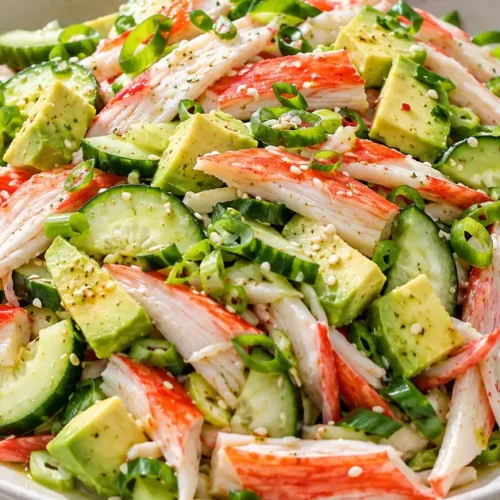
Surimi Cucumber and Avocado Salad
Ingredients
- 12 oz fully cooked surimi seafood sticks thawed if frozen, check package
- 1 whole large English cucumber halved and sliced
- 2 whole ripe but firm avocados diced
- 3 whole scallions thinly sliced
- 2 tbsp fresh lime juice
- 1 tbsp light olive oil
- 1 tsp toasted sesame oil
- 1 tsp low-sodium soy sauce optional, check allergens
- 1 tsp sesame seeds
- 0.25 tsp black pepper
Instructions
- Check the package to confirm the surimi is fully cooked and ready to eat. Shred into bite-size strips.
- Slice cucumber, dice avocado just before serving, and thinly slice scallions.
- Whisk lime juice, olive oil, sesame oil, optional soy sauce and pepper in a small bowl.
- Gently toss surimi, cucumber and scallions with the dressing. Fold in avocado carefully to preserve the cubes.
- Scatter sesame seeds over the salad and serve immediately. Keep refrigerated until serving.
Notes
Frequently Asked Questions
Does surimi salad contain real crab?
Usually not in the same way a fresh crab salad does. Many surimi sticks are fish-based imitation crab products. Some contain shellfish flavorings, so always check the exact package.
Do I need to cook surimi before adding it?
This recipe requires surimi labeled fully cooked and ready to eat. Some products may have different instructions, so follow the package rather than assuming.
Can I make the salad the night before?
Prepare and refrigerate the components separately. Combine with dressing and cut avocado shortly before serving so the cucumber stays crisp and the avocado keeps its texture.
What can replace sesame oil?
Use another teaspoon of light olive oil and a little extra lime zest. The salad will be less nutty but still bright and balanced.
Is surimi gluten-free?
Not necessarily. Some brands use wheat starch or other wheat-containing ingredients. Read the ingredient and allergen label rather than relying on the word surimi.