
Nori-Crusted Baked Salmon with Toasted Sesame and Lemon
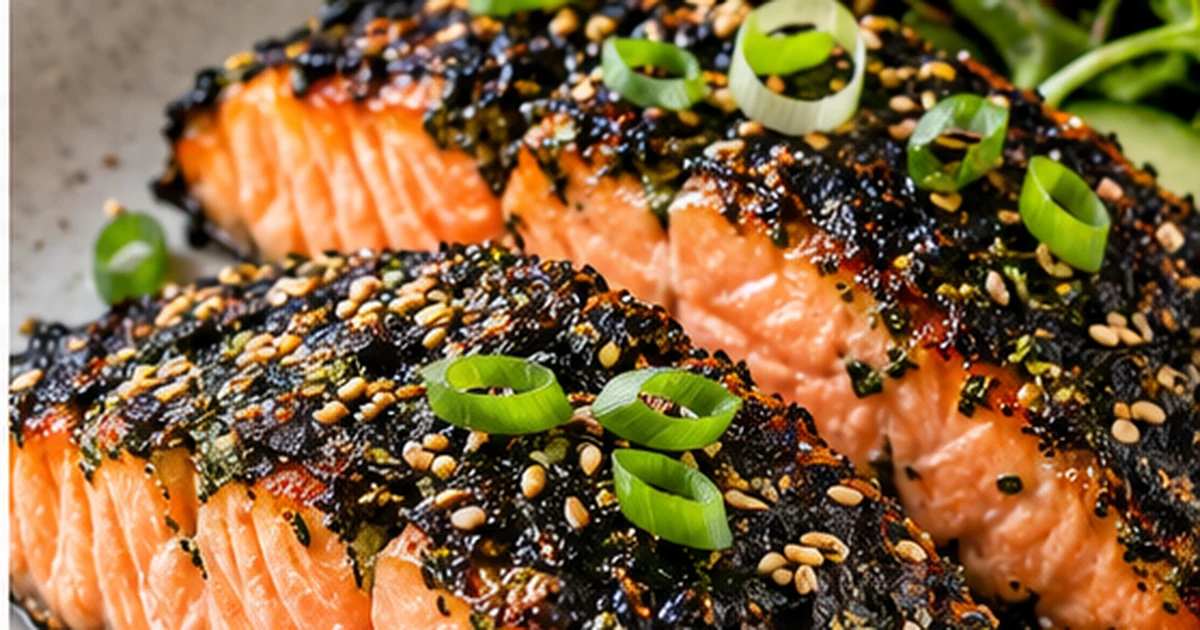
Nori is more than a wrapper for sushi rolls. Its delicate roasted flavor can also finish a baked seafood dish, especially when paired with sesame, lemon and a flaky fish. These nori-crusted baked salmon fillets keep the fish itself simple and put the seaweed where it can remain fragrant instead of simmering away in a sauce. You need plain roasted nori sheets, not thick kelp or ready-seasoned seaweed snacks, and there is no need to prepare rice or roll anything.
The key is timing. Nori is fragile and can turn bitter if exposed to a hot oven for the full salmon cooking time. The fillets therefore bake first, then receive a light nori-sesame topping for the final minutes. A thermometer confirms the fish is cooked through even when fillet thicknesses differ. The result is a distinct use for nori, rather than another version of SABSEA’s existing kimbap or seafood bowls.
Why Nori Works on Baked Salmon
Nori has a thin, toasted-sheet texture and mild savory marine flavor. When crumbled onto oily fish, it becomes a crisp aromatic finish rather than an enclosing wrapper. Salmon has enough natural fat to work with sesame, while lemon keeps the result from feeling heavy. The topping is intentionally simple: roasted nori, toasted sesame, a little panko and lemon zest. Panko helps create a few golden crumbs, but seaweed should remain the identifiable ingredient. If you have eaten nori only in kimbap rolls, this recipe shows a separate technique that does not require cooked rice or a rolling mat. The method is about dry finishing, not steaming the sheet around fish.
Choose the Correct Seaweed Sheets
Shop for plain roasted nori sheets used in sushi or rice rolls. Thin, dry sheets should snap rather than bend like damp paper. Avoid substituting kombu, which is thick kelp more suited to broths, or wakame, which is typically rehydrated for salads or soups. Individually seasoned snack packets can work as a garnish but often contain added salt and oils, so their seasoning will change the dish and may burn faster. Store nori sealed and dry until the moment it is crushed. Once it picks up steam, it can lose its crisp texture. The seaweed flavor should be lightly toasted, not deeply charred. For readers comparing seaweed types, the Serious Eats seaweed primer explains the different culinary roles of nori, wakame and kombu.
Salmon Fillets, Thickness and Doneness
Four skinless salmon portions of five to six ounces each make a reliable family-sized batch. Choose pieces that are fairly similar in thickness so they finish near the same time. Thin tail sections cook sooner than center-cut fillets; you may need to remove a thinner piece before the rest are ready. Check for pin bones and pat the fish dry with paper towels. Moisture on the surface weakens the contrast between the cooked fish and the dry topping. The target is fully cooked salmon, not translucent flesh. The FDA recommends 145°F (63°C) for fish at the thickest part. A thermometer gives a more trustworthy answer than color alone, particularly when you are watching the nori topping and cannot see the entire fish surface.
Ingredients and a Useful Ratio
For four fillets, two roasted nori sheets are enough to make seaweed visible without forming a thick dark blanket. Two tablespoons of sesame seeds and three tablespoons of panko add texture. A teaspoon of toasted sesame oil helps hold dry crumbs together, while a tablespoon of olive oil coats the fish itself. Lemon zest belongs in the topping, where its fragrant oils remain concentrated; fresh lemon wedges at service supply acidity without wetting the crumbs prematurely. A small optional amount of low-sodium soy sauce provides a savory glaze, but can make the surface wet if applied heavily. Salt sparingly and taste the soy sauce before adding more. These proportions keep the dish recognizably salmon rather than transforming it into a breadcrumb casserole.
Prepare the Baking Tray for Even Heat
Heat the oven fully before the fish goes in. A rimmed tray lined with parchment prevents sticking and makes cleanup easier. Arrange the pieces with small gaps so hot air can circulate instead of steaming a crowded pile. Place a thermometer where it is easy to reach, because the final minutes matter more than the exact clock time printed in a recipe. If salmon portions are very thick, give them extra baking time before adding nori rather than asking the thin seaweed to survive a longer roast. If the tray sits too close to the top heating element, the topping can burn while the center is still underdone. A middle oven rack is a practical default. Keep raw fish utensils separate from the bowl holding clean dry topping.
The complete measured ingredients, sequence and servings are recorded in the recipe card below. Save the exact quantities there rather than estimating from the photographs.
Nori-Crusted Baked Salmon with Toasted Sesame and Lemon
Ingredients
- 4 whole skinless salmon fillets about 5 to 6 oz each, pin bones removed
- 2 sheets plain roasted nori crushed into small flakes
- 2 tbsp toasted sesame seeds
- 3 tbsp plain panko breadcrumbs
- 1 tbsp olive oil for fillets
- 1 tsp toasted sesame oil for topping
- 1 tsp low-sodium soy sauce optional, for light glazing
- 1 whole lemon zest plus wedges
- 1 whole scallion finely sliced for serving
- 0.25 tsp black pepper
- 0.25 tsp fine salt optional; taste soy sauce first
Instructions
- Heat oven to 425°F (220°C). Line a rimmed tray with parchment. Pat fillets dry, remove pin bones and arrange with space between pieces.
- Brush salmon with olive oil and a little soy sauce if using; season with pepper. Bake for about 9 to 11 minutes, depending on fillet thickness.
- While salmon cooks, crush plain roasted nori into small dry flakes. Mix with sesame seeds, panko, lemon zest and sesame oil in a clean bowl. Keep away from moisture.
- Remove the tray, carefully scatter the nori-sesame mix over each fillet and return to oven for 3 to 5 minutes. Watch carefully because seaweed burns quickly.
- Insert a food thermometer into the thickest salmon portion and cook until 145°F (63°C). Times depend on thickness. If nori browns too fast, finish the fish with loose foil.
- Transfer cooked salmon to plates, add fresh scallion and lemon wedges, and serve while the nori-sesame topping is still crisp.
Notes
Bake First, Add Nori Near the Finish
The most important technique is a two-stage bake. Put lightly oiled and seasoned salmon into the hot oven for about nine to eleven minutes. While it bakes, crumble nori and combine it with sesame, panko, lemon zest and a tiny amount of sesame oil. Then remove the tray, add a thin layer of topping and return it for approximately three to five minutes. Adjust for fillet thickness and check temperature rather than assuming every oven runs alike. Because nori is delicate, you can also reserve a pinch and sprinkle it after the fish comes out for extra aroma. Avoid burying the topping under extra liquid sauce. When flakes are toasted rather than blackened, they provide an appealing crisp finish without bitterness.
Food Safety and Cooking Temperatures
Seaweed does not alter the basic safe-handling rules for raw fish. Keep salmon refrigerated until preparation, use clean surfaces and utensils, and wash hands after handling the raw fillets. The FDA’s seafood safety guidance advises proper chilling and careful separation of cooked and raw seafood. Bake until the center reaches 145°F (63°C), checking the thickest area. Do not rely on a browned topping to indicate that the fish is ready. If you cut into a portion to test texture, continue cooking as necessary and avoid putting contaminated utensils back into the clean topping bowl. Serve promptly, then refrigerate leftovers within the recommended time limits. Toasted nori itself is a dry pantry item, but the finished dish is still perishable seafood.
How to Keep the Topping Crisp
Dry storage is the first line of defense. Open the nori package only when ready to mix, then crush it into small pieces rather than grinding it into powder. A few irregular flakes provide better texture than a uniform dust. Mix only enough sesame oil to make the sesame and panko cling lightly; a wet paste will steam instead of crisp. Sprinkle the topping in the final minutes and avoid covering the hot tray after baking. If you need to hold fish briefly, keep the topping separate and add fresh nori flakes just before service. Lemon juice belongs on the plate, not poured over the crust five minutes early. These details also explain why the recipe is not suitable for long buffet service if you want the topping to remain crisp.
Serving Suggestions for a Simple Meal
This baked fish pairs easily with steamed vegetables, cucumber salad, roasted green beans or a light grain. A scoop of plain rice is an option but not essential; the dish is different from the canned tuna rice bowl and other bowl recipes on the site because the seafood cooking method is the main event. A squeeze of lemon at the table is often enough sauce. For a second seafood course, contrast the dry nori topping with an herb-forward preparation rather than another sesame glaze. If you are feeding children or diners unfamiliar with roasted seaweed, offer a lighter topping on one fillet. The flavor is mild but recognizable, and adjustable portions help people explore it without dominating the fish.
Variations That Preserve the Technique
Use black and white sesame together for a more pronounced visual contrast, or leave out the panko for a seaweed-sesame finish without breadcrumbs. If omitting panko, reduce the sesame oil slightly so the topping does not become greasy. Lemon can be swapped for a little lime zest, but avoid a large amount of juice before baking. A touch of grated ginger complements sesame if you prefer a warmer aroma. The oven method can also work with other firm fish fillets, though timing must change according to thickness and species. Do not blindly reuse salmon cooking minutes for a delicate white fish. Each variation should preserve the same principle: cook the fish safely, keep nori dry until late and serve while the topping still has texture.
What to Do If the Nori Burns or Falls Off
If the topping darkens too quickly, move the tray to a lower rack or lay foil loosely over the fish while it finishes reaching temperature. Do not press blackened nori into the cooked salmon; remove bitter crumbs and adjust heat for the next batch. If the topping slides off, you may have applied it to a very wet or heavily glazed surface. Pat the fish dry before baking and scatter the mix evenly while the surface still has a little oil. If crumbs remain pale but the fish is fully cooked, a small additional sprinkle of dry toasted nori after plating is better than overcooking the salmon. If the salmon seems dry, check how thick your portions were and whether the oven temperature is accurate.
Storage and Reheating without Losing Flavor
Cooked salmon can be stored refrigerated in a covered container according to standard seafood leftover guidance, but the nori crust will soften. To reheat, warm the fish gently until the leftovers reach a safe reheating temperature and scatter freshly crushed roasted nori on top only after heating. Avoid trying to restore texture by leaving the salmon in a very hot oven for a long time. Keep extra seaweed dry and sealed separately from refrigerated fish. This method is generally better eaten on the day it is cooked, when you can taste both flaky salmon and crisp nori together. If you regularly prepare fish ahead, see SABSEA’s pan-seared salmon guide for another technique, but do not confuse the cooking steps.
Frequently Asked Questions
Can I use seaweed snack packs instead of plain nori?
You can, but they are often already seasoned or oiled. Reduce added salt and watch closely because small snack sheets can burn faster.
Does the nori go on salmon before baking?
Add it near the end of baking, rather than at the beginning. The delicate roasted sheet can turn bitter if baked for the full cook time.
Is this the same as a nori-wrapped sushi roll?
No. The salmon is baked as individual fillets and the nori is a toasted topping. There is no rolling or rice step.
What temperature should baked salmon reach?
For fully cooked fish, measure 145°F (63°C) at the thickest point with a food thermometer. Adjust cooking time for thickness.
Can I make the topping ahead of time?
You can mix dry sesame, panko and crushed nori shortly before baking, but keep it sealed and away from moisture. Add sesame oil and lemon zest close to use.
Explore related seafood methods and ingredients in the SABSEA seafood recipe collection and choose recipes that match the products and handling instructions available to you.