
Canned Tuna Rice Bowl with Cucumber and Lemon
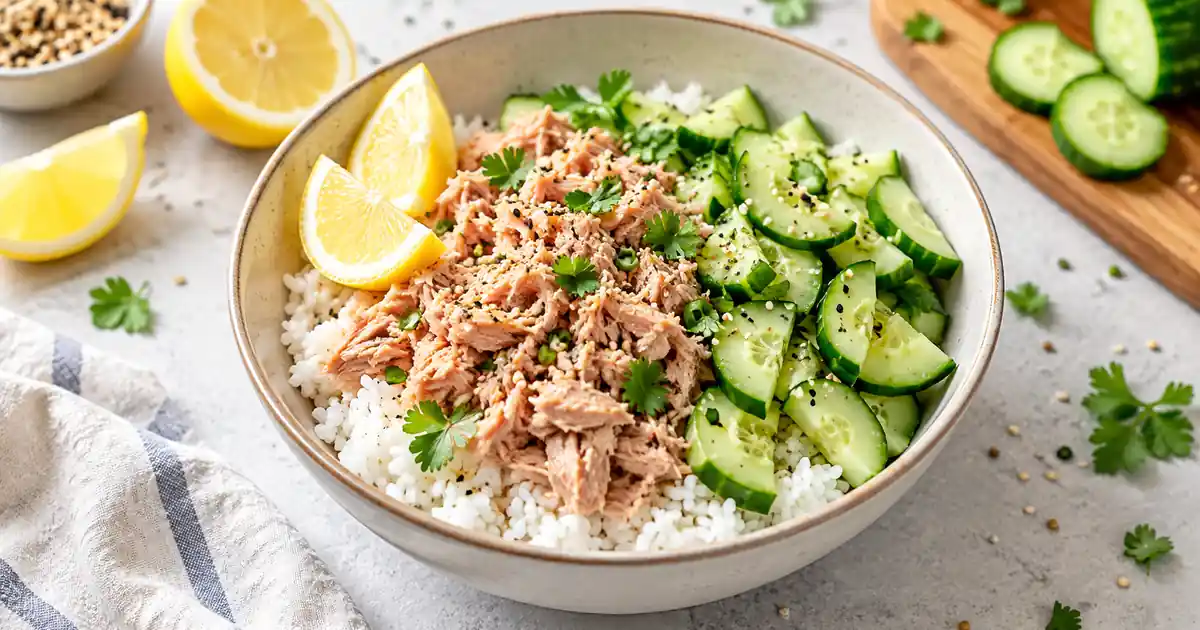
Table of Contents
A canned tuna rice bowl brings a prepared grain, ready-to-eat fish, and crisp vegetables together without asking you to source or handle raw tuna. This version uses cucumber, shredded carrot, parsley, and a measured lemon-and-olive-oil dressing. It is an assembly recipe for one serving, with no cooking stage once the rice is ready. The tuna remains in recognizable flakes, and the vegetables supply contrasting texture rather than disappearing into a mayonnaise-based filling.
The bowl is deliberately different from raw tuna poke and from a loose avocado salsa served as an appetizer. There is no raw fish marinade, soy sauce, avocado, or claim of Hawaiian authenticity. Its useful feature is the way a simple citrus dressing connects the rice and toppings. Start with the ingredient states described below, and use the recipe card for the complete measured formulation.
Canned Tuna Rice Bowl: Choose the Tuna and Rice First
Use one standard five-ounce can of fully cooked light tuna packed in water. The can size describes the unopened product; the amount left after draining varies, so this recipe does not invent a universal drained weight. Drain the tuna in a clean strainer or with the can’s lid used carefully, then lift it into loose flakes with a fork. Do not rinse away all its flavor or press it into a hard, dry clump.
The rice quantity is one cup after cooking. White rice provides a fairly neutral base; it should be tender and separate enough to accept the dressing. This recipe does not prescribe water ratios for every rice variety or include rice cooking in the ten-minute assembly estimate. Cook rice by its package directions beforehand, or use a suitable ready-to-eat rice product according to its label. Dry rice is not an equivalent cup measure.
For a chilled bowl, use rice that was cooled quickly, refrigerated correctly, and is still within its storage window. Freshly cooked rice can instead be used for an immediately served warm-base bowl. Do not leave a large pot sitting at room temperature while waiting for it to become completely cold. The storage section explains why the rice’s history matters even though no raw fish is involved.
What the vegetables and dressing contribute
Measure one-half cup of diced cucumber and one-quarter cup of shredded carrot. Small cucumber pieces make the bowl easier to eat with a spoon or fork, while thin carrot shreds distribute through the grain without requiring a cooking step. Wash the vegetables under running water before cutting, and dry the cucumber’s exterior. If the cucumber has a particularly wet seed center, scoop away that loose portion before measuring the dice.
The dressing uses one tablespoon of fresh lemon juice, two teaspoons of olive oil, and one-eighth teaspoon of black pepper. Measure the juice rather than assuming that a certain fraction of a lemon produces the same amount each time. Lemon supplies acidity; olive oil spreads it through the rice and adds a smoother coating. These are separate roles, so adding more lemon is not a substitute for the oil.
One tablespoon of chopped parsley gives the bowl a fresh herbal finish. Wash and dry the leaves before chopping so they do not carry extra water into the dressing. There is no added salt in the base formulation. Canned tuna varies in seasoning, and it is easier to evaluate the completed bowl than to treat every product as equally salty. This is not a sodium or nutrition claim.
Assemble in a clear sequence
First, confirm that the rice is ready and that any previously cooked portion has been handled safely. Open and drain the tuna, then prepare and measure the cucumber, carrot, and parsley. Use a clean work surface and utensils. Set out the serving bowl and a small container for the dressing so the ingredients can be combined without repeated transfers.
Second, stir the lemon juice, olive oil, and pepper together in the small container. The mixture will not stay permanently emulsified, and it does not need to. Stir it again immediately before using it. Preparing the dressing separately helps distribute the measured lemon instead of leaving a strongly acidic patch beneath one section of tuna.
Third, put the cup of cooked rice in the serving bowl. Add about half the dressing and loosen the rice gently with a fork. If chilled rice is compacted, separate the clumps rather than crushing the grains. The rice should be coated lightly, not swimming in a puddle. Reserve the rest of the measured dressing for the fish and vegetables.
Fourth, arrange the drained tuna, cucumber, and carrot over the rice. Spoon the remaining dressing across these toppings, then scatter on the parsley. Keep the components visible or fold them together gently if you prefer a mixed bowl. Either approach uses the same quantities; aggressive stirring can turn the tuna into a paste and break down the cucumber.
Finally, serve promptly. The estimate is ten minutes of preparation, zero minutes of cooking, and ten minutes total for one bowl. It assumes cooked rice is already available and excludes cooking or reheating it. A purchased rice pouch that requires microwave heating adds its own labeled preparation time. Do not describe an extra heating step as happening within the stated no-cook assembly method.
Adjustments that preserve the bowl’s purpose
Cooked brown rice can replace cooked white rice by the same measured cup if you want a different texture. Its cooking time and liquid requirements are separate, and its flavor will be more noticeable. A switch to leafy greens would create a tuna salad rather than this rice bowl. That may be useful for another meal, but it should not be presented as an identical recipe result.
Oil-packed tuna also changes the formulation. Drain it carefully and consider how much oil remains before adjusting the dressing, rather than adding the full olive-oil amount automatically and promising an identical texture. A ready-to-eat tuna pouch can be considered according to its label and quantity, but a pouch’s serving size is not automatically the same as a drained five-ounce can.
Chopped dill can take the place of parsley for a different herbal profile. Lemon remains the base acid in the stated recipe; lime produces a different citrus character. Avoid adding several salty bottled sauces at once, because they can overwhelm the measured dressing. If you want a handheld meal instead, SABSEA’s canned tuna lettuce wraps provide a separate recipe built around leaves and a thicker filling.
Common assembly mistakes
Too much liquid is the easiest problem to prevent. Drain the water-packed tuna and remove a watery cucumber center before measuring. Adding the dressing in two stages distributes it without requiring more oil or lemon. If the rice already looks wet, investigate the rice preparation and drainage instead of trying to hide the liquid beneath extra toppings.
Uneven cutting makes the bowl harder to eat. Large cucumber chunks can dominate a forkful, and thick carrot pieces are a different experience from fine shreds. Prepare the vegetables in sizes that sit comfortably alongside tuna flakes. There is no need for decorative ribbons if making them takes longer or leaves the ingredients awkward to portion.
The other common mistake is using unknown leftovers because the finished meal looks fresh. Crisp cucumber and lemon juice cannot correct unsafe rice storage. Acid is a seasoning here, not a preservation treatment. If you cannot establish how the rice was cooled and refrigerated, choose a newly prepared base rather than relying on its smell or reheating it to fix its history.
Storage and rice-specific precautions
Keep the assembly close to serving when possible. For advance preparation, store the cooked rice, drained tuna, vegetables, and dressing in separate clean covered containers in the refrigerator. This preserves the cucumber’s crunch and lets you dress only the portion needed. Follow any shorter opened-product instructions on the tuna package. This recipe is designed for one meal, rather than a promise of several days of assembled bowls.
General perishable-food guidance from the FDA calls for refrigeration within two hours, or within one hour when the surroundings are above 90°F, with a refrigerator at 40°F or below. Use shallow containers rather than leaving a deep pot to cool slowly. Those general limits do not replace the more specific handling precaution adopted here for cooked rice.
The FSA’s rice guidance advises cooling rice quickly, ideally within one hour, refrigerating it, and consuming it within twenty-four hours. Cold rice is suitable only when that handling has been followed. If reheating a separate rice portion, reheat only once and make it steaming hot throughout; the US leftover temperature endpoint is 165°F. Stir microwave-heated rice and follow labeled standing directions to reduce cold areas.
For a warm bowl, heat the rice separately and then add the fresh toppings immediately before eating. Do not repeatedly warm and chill an assembled serving. Cucumber and herbs lose their intended texture under heat, and holding the entire bowl while another component is prepared adds unnecessary time outside refrigeration. The practical solution is smaller portions and a known rice-preparation history.
Canned Tuna Rice Bowl with Cucumber and Lemon
Ingredients
- 1 5-oz can fully cooked light tuna packed in water drained
- 1 cup cooked white rice prepared separately; safely handled
- 1/2 cup diced cucumber
- 1/4 cup shredded carrot
- 1 tbsp fresh lemon juice
- 2 tsp olive oil
- 1/8 tsp black pepper
- 1 tbsp chopped parsley
Instructions
- Confirm the cooked rice is ready and safely handled. Drain the ready-to-eat tuna, then prepare and measure the vegetables and parsley.
- Stir the lemon juice, olive oil and black pepper together in a small container.
- Put the cooked rice in a serving bowl and loosen it gently with about half the dressing.
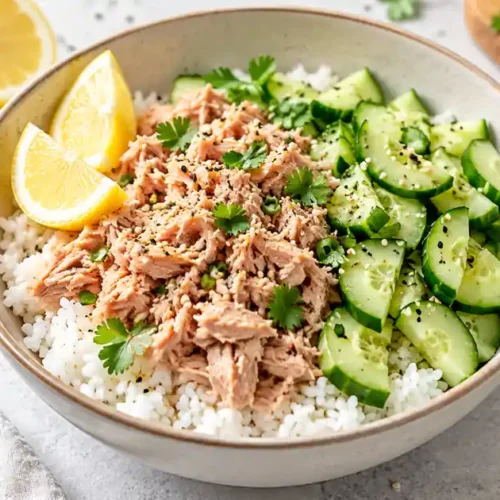
- Arrange tuna, cucumber and carrot over the rice. Spoon on the remaining dressing and add parsley.
- Serve promptly as one bowl. No rice cooking or reheating time is included in the assembly estimate.
Notes
Frequently asked questions
Is this a tuna poke bowl?
It is a canned tuna rice bowl, with fully cooked packaged tuna and a lemon dressing. It does not use raw diced fish or claim a traditional poke preparation. That distinction makes the ingredients and the intended method clearer.
Can I use dry rice instead of the cooked cup?
No. One cup means the quantity after cooking. A cup of dry rice changes both the eventual yield and the work required. Prepare the grain separately and measure the cooked portion before starting the assembly recipe.
Does the tuna need to be cooked again?
The specified commercially canned, ready-to-eat tuna does not need a separate cooking stage for this bowl. Verify the product label. A raw tuna steak or a product requiring cooking cannot be substituted into these instructions.
Can I pack it for lunch away from home?
Keep the components refrigerated until packing and use an insulated container with enough cold packs to maintain safe chilling. Assemble near eating time when practical. Transport is part of the handling history, not an exception to refrigeration limits.
Can I double the recipe?
Double each measured ingredient for two bowls and divide the rice and toppings evenly. Keep only the portion being assembled out of refrigeration. Doubling does not extend the rice’s storage window or change the specified product states.
Keep the ingredients simple and the handling clear
Drain the tuna, prepare the vegetables, and use the measured dressing across both the rice and toppings. The result is a defined canned-fish meal without a raw-fish sourcing question or a long list of competing sauces. Start with safely prepared rice, assemble the portion you need, and serve it promptly.