
Pan Seared Salmon with Crispy Skin (20 Minutes)
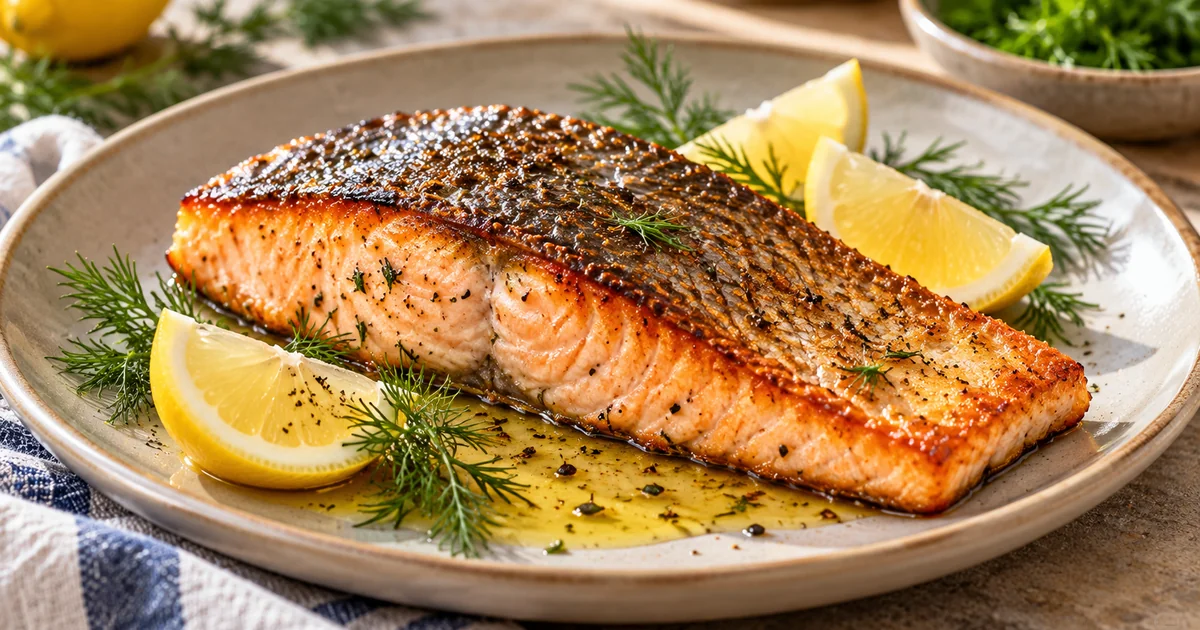
Table of Contents
Pan seared salmon with crispy skin is an easy way to make a restaurant-style salmon fillet with a crackly, golden exterior and tender center. The recipe needs only fresh salmon, a little high-heat oil, salt, pepper and lemon. A straightforward skin-side-first technique lets most of the cooking happen where the crunch develops.
You do not need to add flour, breading or a rich glaze. Proper drying, enough skillet space and a thermometer make the method easier to repeat. Below are exact ingredients, cooking steps, solutions for sticking and soggy skin, and ideas for a complete meal.
Why the Skin Gets Crispy
The secret to pan-seared salmon with crispy skin is not a complicated glaze or extra flour. It is a dry skin surface, deliberate contact with the skillet, enough heat to render the fat beneath the skin and patience while that crust forms. Salmon skin contains moisture and fat; when the surface is wet or constantly moved, it steams instead of turning golden and crisp.
This method begins skin-side down and lets most of the cooking happen on that side. A brief finish on the flesh side gives a gently browned top while protecting the fish from needless flipping. Unlike blackened salmon, where spice crust is the star, this recipe keeps the seasoning simple so the skin’s texture remains the main attraction. The result is a reliable weeknight fillet that can stand beside a salad, rice or roasted vegetables without a heavy sauce.
Ingredients for Crispy-Skin Salmon
For four portions, buy pieces that are similar in thickness and still have the skin attached. Center-cut fillets tend to cook more evenly than one thick piece and one very thin tail piece. This recipe favors a restrained seasoning that lets the salmon taste like salmon.
- Four skin-on salmon fillets, about 6 ounces each: approximately 1½ pounds total, pin bones removed.
- 1½ tablespoons avocado or other neutral high-heat oil: enough to give the pan a thin film.
- ¾ teaspoon kosher salt: divided across the fillets.
- ¼ teaspoon black pepper: freshly ground, for the flesh side.
- 1 tablespoon unsalted butter: optional finish after searing.
- 1 small garlic clove, lightly crushed: optional aromatic for the finishing butter.
- ½ lemon: cut into wedges, juice added at the table.
- 1 tablespoon chopped dill or parsley: optional garnish.
If you skip the butter, the recipe is still complete; a teaspoon of fresh lemon juice at serving provides enough brightness. Avoid pre-mixed spice blends that carry sugar because they can darken prematurely. A nonstick, stainless-steel or cast-iron skillet can work, provided it heats evenly and allows each fillet enough space.
Selecting, Thawing and Deboning Salmon
Choose fish with a clean smell, firm flesh and intact, silvery skin. The scales should already be removed by the fishmonger or removed before cooking. Fresh salmon should stay refrigerated, and thawed frozen salmon should be cooked promptly. Thaw overnight in the refrigerator or keep sealed portions in a cold-water bath for a faster thaw. Do not thaw seafood on a warm counter.
Run clean fingertips gently along the thick part of the fillet to find pin bones, then pull them out with clean fish tweezers. Dry both sides with paper towels, pressing especially carefully against the skin. This step matters more than the brand of pan. Season the flesh with salt and pepper; give the skin only a light, even sprinkle of salt so no damp clumps collect underneath the fish.
Choose the Right Skillet and Heat
A heavy skillet makes it easier to maintain a steady cooking temperature. Stainless steel produces crisp skin if the oil is properly heated and the fish is left alone; cast iron retains heat well but can run very hot, so use medium or medium-high based on your stove. A good quality nonstick pan is approachable for beginners, although the crust may be somewhat less intense.
Heat the pan before adding fish. The oil should shimmer but should not smoke aggressively. Put only two fillets in a medium skillet, and cook in batches if needed. Crowd the pan and water escaping from the salmon collects around it, softening the skin. Keep a clean plate ready for the finished fish and a thin flexible fish spatula at hand.
How to Pan-Sear Salmon with Crispy Skin
- Dry and season. Pat all salmon surfaces dry, especially the skin. Season the flesh with salt and pepper.
- Heat the skillet. Warm a wide heavy skillet over medium to medium-high heat and add about half the oil. Tilt to coat the cooking surface.
- Start skin-side down. Place two fillets skin-side down. Press each gently with a fish spatula for the first 15–20 seconds so the skin does not curl away from the pan.
- Render and crisp. Cook without moving for about 6–8 minutes, adjusting heat so the skin sizzles steadily without scorching. The fish will change color from the bottom upward.
- Finish briefly. Turn carefully and cook the flesh side roughly 2–4 minutes longer, or as needed for the thickness, until the thickest center reaches a food-safe 145°F (63°C) or is opaque and flakes easily.
- Serve skin-up. Set the fish on warm plates with the crisp skin facing upward. If desired, melt butter with crushed garlic in the warm pan off the heat and spoon a little around—not over—the skin. Add lemon and fresh herbs at the table.
Use the times as starting estimates, not precise promises: a one-inch fillet cooks differently from a thin tail portion. If the skin is deep golden but the fish is not done, turn down the heat and finish gently rather than continue blasting the pan. Remove portions individually if they are not equally thick.
How to Check Doneness Without Drying the Fish
For fish, the standard home food-safety recommendation is 145°F (63°C) at the thickest part, or flesh that has turned opaque and flakes easily with a fork. Insert an instant-read thermometer from the side so its tip reaches the center of the thickest section, not the hot pan beneath it. The salmon should no longer appear translucent or gelatinous at the core. Read the FDA guide to selecting and serving seafood safely for reliable handling guidance.
The outside of an oily fish can look cooked well before the middle is ready. Do not decide based solely on a dramatic crust, a color change near the skin, or visible white protein at the edges. Check each piece; you can remove the thinner ones first. A brief off-heat rest while you add your garnishes is fine, but leaving fish on a hot skillet to ‘stay warm’ tends to dry out the lower layers.
How to Prevent Salmon Skin from Sticking
Sticking usually comes from one of three problems: the fish went into cold oil, the skin was wet, or it was moved before the surface crisped. Make sure the oil is shimmering, press the fish briefly against the skillet and allow the skin to cook undisturbed. A properly browned surface often releases much more easily than a damp one.
If you are using stainless steel, resist scraping back and forth. Slide the thin edge of a fish spatula carefully under a corner. If it will not lift without tearing, give it a short additional moment and check the heat. If it has already burned in one spot, lower the flame rather than keep forcing a crisp crust. A clean, smoothly seasoned cast-iron pan and a correctly heated nonstick pan are helpful when learning the technique.
What to Serve with Crispy-Skin Salmon
Keep moist sauces beside the fish instead of spooning them directly over the skin. Lemon wedges, a small herb dressing, steamed asparagus, roasted broccoli, sautéed green beans or fluffy rice all let the salmon remain the focal point. A lightly dressed salad offers texture and acidity, and it can be made before cooking the fish.
For a fresh accompanying dish, see this Greek salad with lemon dressing made with crisp vegetables and feta. A small portion of salad beside the salmon provides contrast without softening the skin. If you prefer a prepared meal in a bowl, our crispy salmon with edamame and ginger rice has a different seasoning and serving format.
Pan-Seared Versus Baked or Air-Fried Salmon
Pan-searing is worth choosing when crisp skin is the priority and you can stand at the stove for a few minutes. Baking is useful for larger portions and less hands-on attention, but oven moisture may soften the skin unless the fish is dried and finished appropriately. Air-frying works particularly well for smaller pieces that benefit from airflow around multiple surfaces.
These methods should not be treated as interchangeable recipes with identical instructions. For bite-sized pieces, try air fryer salmon bites with garlic and lemon. For a broader collection of salmon techniques and ideas, visit the Salmon Recipes hub. The present article remains tightly focused on intact skin-on fillets in a skillet.
Troubleshooting Pale, Soft or Burned Skin
Skin is pale and flexible: the pan was too cool or the fish released too much surface moisture. Dry more thoroughly and avoid crowding. Skin curled and cooked unevenly: press gently during the first moments of contact to keep it flat. Skin burned before the inside finished: the heat was too high for the fillet’s thickness; lower to medium and give the center time to cook safely.
Fillet broke when flipped: use a thin, wide fish spatula and wait until the skin has formed a crust. Oil sputtered intensely: water remained on the fish or the pan was overheated. Keep utensils dry and adjust temperature. Skin was crisp in the skillet but soggy on the plate: it rested skin-side down in its juices. Plate skin-up on a warm, dry surface and serve promptly.
Flavor Variations Without Losing the Crunch
For a delicate finish, add chopped dill and lemon zest over the flesh. For a more savory profile, briefly warm a crushed garlic clove in the optional butter, then spoon the butter beside the fish. A pinch of sweet paprika or ground coriander can add interest to the flesh side without leaving a thick coating on the skin.
For a Mediterranean-style plate, pair with a chopped tomato and cucumber salad; for a heartier dinner, use roasted potatoes or warm lentils. Avoid saucing the skin heavily. If you want the assertive spice-crust version of salmon instead, use our separate blackened-salmon method rather than trying to combine both techniques in one pan.
Storage and Reheating
Once dinner ends, transfer leftovers to a shallow sealed container and refrigerate promptly at 40°F (4°C) or colder. Properly handled cooked fish is generally used within 3–4 days. If your fish was left warm on the table for too long or smells off, discard it. Keep the salmon separate from wet salad dressings and sauces so the leftovers stay easier to use.
Reheat gently and thoroughly to 165°F (74°C) for leftovers, using a covered low oven or short microwave bursts. Neither method completely recreates the fresh skillet crust; if you want more texture, use a lightly oiled pan for a brief finish after heating, without overheating the flesh. Flaked leftover salmon is also convenient in a cold, properly chilled grain salad where crisp skin is no longer the main feature.
A Practical Timeline for Dinner
Prepare side dishes first: wash vegetables, make salad dressing and cook rice if needed. About ten minutes before you plan to eat, take the chilled salmon out, inspect and dry it, remove pin bones and warm the pan. Lay out two clean plates—one for the fish as it cooks and one for the finished meal—so raw fish juices never touch the cooked portions.
Once the fillets are in the pan, pay attention to their skin and the sizzling sound. While the fish cooks mostly unattended, prepare only tasks that let you keep it in view. Warm the serving plates, slice lemon and keep the salad ready; then move the cooked fish straight to the table, skin-side up. This order is what makes a simple skillet method practical even on a busy weeknight.
Pan-Seared Salmon with Crispy Skin (20 Minutes)
Ingredients
- 1 1/2 lb skin-on salmon fillets four roughly equal 6-oz portions, scales and pin bones removed
- 1 1/2 tbsp neutral high-heat oil divided
- 3/4 tsp kosher salt
- 1/4 tsp black pepper freshly ground
- 1 tbsp unsalted butter optional finish
- 1 garlic clove lightly crushed, optional
- 1/2 lemon cut into wedges
- 1 tbsp fresh dill or parsley chopped, optional
Instructions
- Pat each salmon portion very dry, especially the skin. Sprinkle salt and pepper over the flesh and lightly salt the skin.
- Warm a heavy skillet over medium to medium-high heat and add a thin film of oil.
- Place salmon skin-side down and press gently with a fish spatula for 15–20 seconds. Leave skin-side down about 6–8 minutes, adjusting heat to avoid burning.
- Turn carefully and cook another 2–4 minutes, depending on thickness, until salmon reaches 145°F (63°C) in the thickest center or is opaque and flakes.
- Place on warm plates skin-up. If using, gently melt butter with a crushed garlic clove off the heat and spoon a little around the fish, not onto the crisp skin. Serve lemon and dill or parsley.
Notes
Frequently Asked Questions
How long do you pan-sear salmon skin-side down?
For average ¾–1-inch portions, allow about 6–8 minutes skin-side down, then a shorter 2–4-minute finish on the flesh side. Check the thickest center, since larger fillets can take longer.
Should salmon be cooked skin-side down first?
Yes for this crispy-skin method. It lets the fat beneath the skin render and provides the longest contact time where you want the crunch. Press gently for the first 15–20 seconds to prevent curling.
Why is my salmon skin not crispy?
The skin may be damp, the skillet too cool or the pan overcrowded. Dry the skin thoroughly, heat oil until shimmering, give each fillet space and avoid moving it while the crust develops.
Can I make this recipe in a nonstick pan?
Yes. A good nonstick skillet helps with easy release, especially for beginners. Heat it according to its manufacturer’s guidance and avoid overheating an empty coated pan.
What temperature should pan-seared salmon reach?
Follow the standard safe fish temperature of 145°F (63°C) at the thickest part, or check that the flesh has turned opaque and separates easily with a fork.
Explore Other Salmon Recipes
Our salmon collection organizes air-fryer, baked and skillet preparations. For a more strongly spiced crust, see our blackened salmon fillet recipe, or choose an existing fresh salmon burger for another serving style.