
Kombu Dashi Shrimp Soup with Shiitake and Daikon
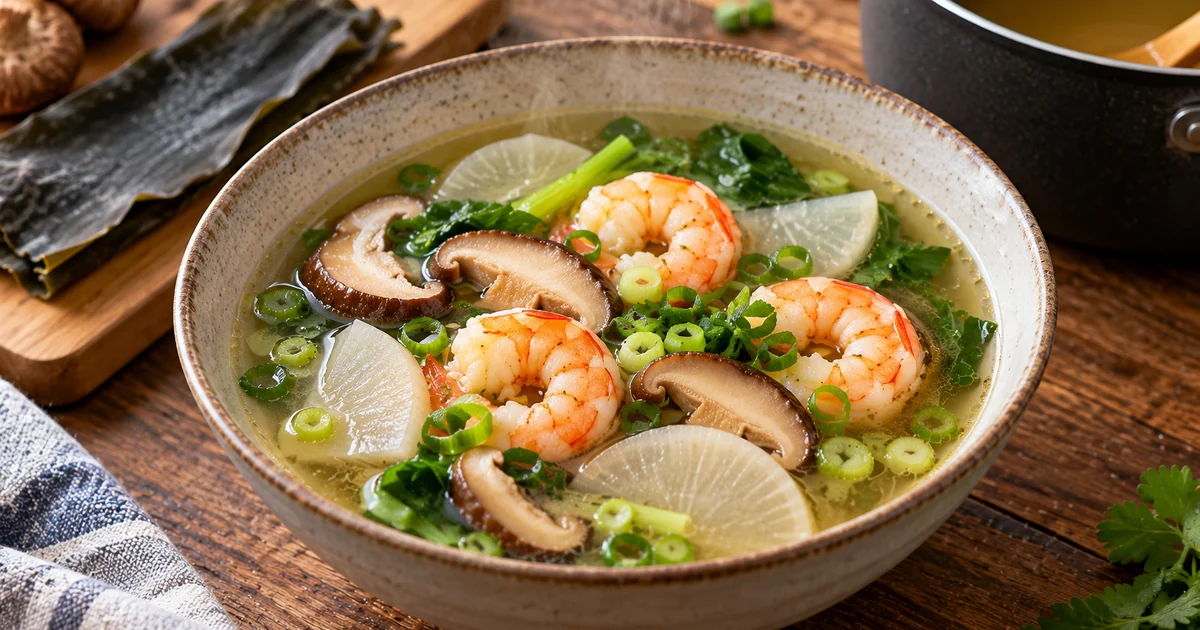
Kombu dashi shrimp soup begins with an ingredient that is almost invisible in the finished bowl: a piece of dried kelp steeped slowly in water. The infusion contributes a rounded savory character without the heaviness of cream, a spicy paste, or a stock made from several kinds of seafood. Add shrimp near the end and the broth stays clear while the seafood remains tender. This version combines daikon radish, shiitake mushrooms, a handful of spinach and fresh scallions. Each has a job, so the bowl tastes complete without becoming crowded.
The key is to treat broth-making and shrimp-cooking as separate tasks. Kombu infuses gently and is removed before the liquid boils. Daikon and mushrooms then simmer long enough to soften and season the stock. Only when those vegetables are nearly ready do the shrimp enter the pot. The recipe below makes four light bowls in approximately 43 minutes, including a twenty-minute kombu soak. It is a useful technique to know even if you later change the vegetables or serve the soup alongside rice.
What Kombu Dashi Adds to a Shrimp Soup
Kombu is dried edible kelp commonly used to make dashi, a light cooking stock. It contains naturally occurring glutamates, which give the infusion a deep, savory impression even when the liquid looks nearly transparent. This version deliberately uses kombu alone rather than dried bonito flakes. The goal is a restrained broth in which the sweetness of the cooked shrimp and the earthy mushrooms remain easy to identify. It is not intended to imitate a spicy noodle soup or a thick shellfish chowder.
A good bowl should first taste of warm seaweed-infused broth, followed by mushroom and radish, with shrimp providing the final seafood note. That sequence depends more on heat management than on expensive ingredients. Strong boiling can make kombu stock taste less balanced and encourages delicate shrimp to firm up too far. If you are new to dashi, taste the plain infusion before adding soy sauce. That baseline makes it easier to judge whether you need a little seasoning or a completely different broth.
Buy Food-Grade Kombu and Fresh Shrimp
Choose kombu labeled for cooking, not decorative seaweed or a mixed seasoned snack. A modest piece of roughly eight grams is enough for the four cups of water specified in the card. Different dried kelp brands vary in thickness and surface appearance. A pale, powdery coating can be part of the kelp, so avoid aggressively scrubbing the sheet under running water. Wipe off obvious debris with a lightly damp cloth when necessary and follow the package instructions for the variety you purchased.
For the shrimp, use peeled and deveined raw shrimp that have been handled and refrigerated properly. Frozen shrimp can work very well if completely thawed in the refrigerator before cooking. Keeping the shellfish in a separate covered bowl while the stock infuses avoids leaving it at room temperature through the soak. Fresh shiitake should smell clean and earthy, not sour or slimy. Remove woody stems, wash the spinach, and slice the daikon thinly enough to become tender in a short simmer.
How Much Kombu to Use
The starting ratio is one eight-gram piece of kombu to four cups of cold water. This creates a light infusion suited to shrimp rather than an overpowering concentrated stock. The dimensions of a dried sheet are less reliable than its weight because a thick piece may weigh twice as much as a thin one of similar size. If there is no kitchen scale, use the brand instructions as a guide and take notes on how strong the resulting liquid tastes.
More kombu does not automatically improve soup. Too much can dominate the mushrooms and contribute unnecessarily high amounts of iodine. Kombu is naturally iodine-rich, so do not treat large quantities as an everyday flavor booster, particularly when you have been advised to manage iodine intake. For this recipe a small measured sheet does the job. You can save the removed piece for another culinary use if it has been handled and stored safely, but do not repeatedly boil it in this delicate broth.
A Gentle Twenty-Minute Kombu Infusion
Place the dried kombu in four cups of cold water and give it about twenty minutes to hydrate. This short soak is part of the preparation time, not an invisible step omitted from the timing. After soaking, move the saucepan onto medium-low heat. Watch for small bubbles around the edge rather than waiting for a rolling boil. Lift out the kombu immediately before the water begins to simmer, then transfer the clear infusion to the pot containing your lightly softened aromatics.
If you accidentally boil the kelp briefly, the liquid is not automatically unusable. Remove it, taste, and decide whether the flavor is still pleasant. For the cleanest result, though, prevention is simpler. The method used in this kombu dashi technique guide likewise emphasizes slow warming and removing the kombu before simmering. The shrimp and mushrooms will bring additional flavor later, so resist compensating for a mild infusion with an excessive amount of soy sauce.
Build the Broth with Shiitake and Daikon
Cook the pale parts of the scallions and freshly grated ginger in one teaspoon of neutral oil only until aromatic. They should not turn brown. Add the kombu infusion, the thin daikon slices and the sliced shiitake mushrooms. A gentle eight- to ten-minute simmer gives the daikon time to lose its raw bite while preserving its shape. The mushrooms release a savory flavor that makes the clear stock more satisfying without changing it into a heavy sauce.
Cutting matters here. Thin quarter-moon daikon slices cook more evenly than thick chunks, while mushrooms sliced to similar thicknesses soften at a consistent pace. Taste a piece of radish before moving on: it should offer only a slight resistance. If the vegetables are still firm, give them another minute or two before the shrimp go in. Shrimp should not be asked to cook for the extra time needed by underprepared vegetables. That distinction is the difference between a clean soup with tender seafood and a bowl with rubbery shrimp.
Add Shrimp at the Right Moment
Once the daikon is tender, add the thawed raw shrimp to the gently bubbling broth. Depending on size and temperature, peeled shrimp may need around three to five minutes to become fully cooked. Stir enough to separate any pieces that cling together, but not so often that the vegetables break apart. Shrimp are ready when the flesh turns pearly and opaque throughout. If some are visibly undercooked, continue cooking them before serving; if unsure, use a food thermometer and safe seafood guidance.
Avoid relying on a timer without looking at the shrimp. A small peeled shrimp cooks faster than a large one, and a cold pot returns to temperature differently from a steadily simmering stock. The FDA seafood handling guide emphasizes proper cooking, cleanliness and refrigeration. Let those practical cues guide the last few minutes rather than trying to preserve an exact clock reading at the expense of food safety.
Finish with Greens and Seasoning
Spinach goes into the pot after the shrimp have almost finished cooking. The leaves need only enough heat to wilt, generally about one minute. Add the measured tablespoon of low-sodium soy sauce, stir, and taste the broth before considering additional salt. Different brands of soy sauce contain different amounts of sodium, and dashi tastes more savory once mushrooms and shrimp have been simmering in it. Finishing with scallion greens keeps the garnish fresh and bright.
A little toasted sesame oil may be added to individual bowls as an optional finishing accent. Because sesame oil is aromatic, a small amount is enough; too much can mask the delicate kombu. If you prefer a sharper finish, a tiny squeeze of fresh lemon at the table is possible, but try the base soup first. The point is not to add every available seasoning. It is to keep the broth transparent in both appearance and flavor so the seafood, kelp and vegetables remain distinct.
The Full Cooking Timeline
Set aside twenty minutes to soak kombu while you prepare the radish, mushrooms, spinach, scallions and shrimp. The hands-on chopping and ingredient organization overlap with the soak; the recipe card provides a realistic total of forty-three minutes rather than advertising only the shrimp simmer. After the kelp is removed, cooking the aromatics takes under a minute, the vegetables about eight to ten minutes, and the shrimp three to five minutes. The greens and final seasoning use the last minute or two.
This order is more useful than a single promise of a quick soup because it tells you where waiting is essential and where preparation can overlap. If you are serving another dish, begin heating the kombu stock while you finish the accompanying rice. Bring diners to the table only after the seafood enters the pot, since shrimp will not improve by sitting in hot broth for a long period. For a larger group, scale the bowls carefully and avoid overcrowding the pot.
Serving Ideas and Useful Pairings
These are light bowls rather than a dense main-course stew. They work well alongside plain short-grain rice or a small portion of noodles cooked separately. Adding dry noodles directly to the pot would absorb liquid and make the broth cloudy, which defeats the intended clarity. A bowl of canned tuna rice with cucumber is another seafood-focused lunch format, but it has a different assembly method and flavor balance.
For a more substantial shrimp meal with a deliberately spicy profile, compare the published Korean shrimp and mussel soup. That recipe uses a chili-forward broth and two types of seafood. This kombu version is intentionally clearer, milder and mushroom-led. Serve with scallion greens, bring the pot to the table soon after cooking, and let each person decide whether the optional sesame finish belongs in their bowl.
Variations That Keep the Broth Clear
Baby bok choy can replace spinach if it is sliced thinly and its thicker stems are added a little earlier. A few thin carrot slices can stand in for part of the daikon, although they contribute sweetness and a different aroma. Fresh oyster mushrooms may substitute for shiitake; keep the total quantity similar so the soup does not become a mushroom stew. For additional body, serve the broth over cooked rice in each bowl rather than simmering uncooked rice in the pot.
To make the heat more prominent, add a small amount of grated ginger at the very end, but do not automatically add a strong chili sauce. The core flavor remains kombu, shrimp and mushrooms. Do not swap raw seafood for fully cooked seafood without adjusting the timing. If using cooked shrimp, warm them only until properly heated, rather than boiling them through a full raw-shrimp cooking interval. The method should be matched to the product actually purchased.
Common Problems and How to Correct Them
Cloudy broth can come from boiling too vigorously, stirring the vegetables aggressively, or adding starchy ingredients. Lower the heat and skim visible foam rather than repeatedly whisking the stock. Mushy daikon usually means that the slices were exceptionally thin or simmered too long. Tough shrimp indicate overcooking; remove the pot from the heat as soon as the shrimp are fully opaque. If the broth seems bland, check whether the kombu was measured and infused gently before adding extra salt.
An overly salty broth is harder to correct, especially after soy sauce is added. Start with low-sodium soy sauce and season late. You can dilute a salty batch with a little plain water, then recheck whether the vegetables and shrimp still taste balanced. If the soup has a strong kelp aroma, use a smaller piece of kombu next time. Culinary adjustments work best when they target the actual cause instead of disguising it with unrelated spices or a rich sauce.
Food Safety and Storage
Keep raw shrimp cold during the kombu soak, use clean utensils, and prevent raw seafood from touching cooked vegetables or serving dishes. Wash your hands and work surfaces after preparing raw shrimp. Cook the seafood fully, then serve the soup promptly. Do not leave a pot of cooked shrimp soup at room temperature during a lengthy meal or overnight. Transfer leftovers to shallow covered containers and refrigerate promptly, following current seafood storage guidance.
When reheating, warm leftovers thoroughly and avoid repeated cycles of heating and cooling. The shrimp can become firmer the second time around, so the soup is at its best on the day it is prepared. Anyone with a shellfish allergy should not use this recipe, and the soy sauce may contain wheat as well as soy. Check product labels if you are cooking for someone with allergies. These straightforward precautions are part of making a simple stock dependable rather than merely attractive.
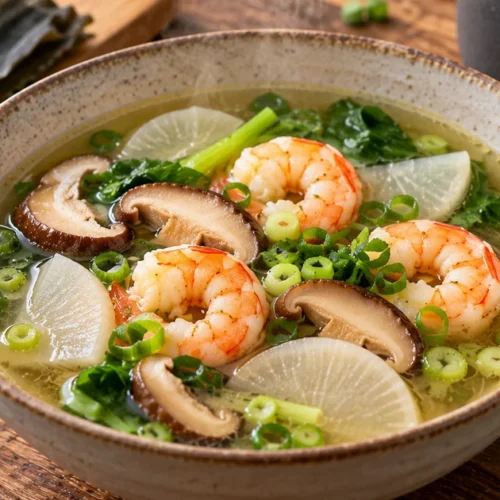
Kombu Dashi Shrimp Soup with Shiitake and Daikon
Ingredients
- 1 piece dried food-grade kombu about 8 g; roughly 4 by 4 inches
- 4 cups cold water for broth
- 1 lb raw peeled and deveined shrimp thawed if frozen
- 5 oz fresh shiitake mushrooms sliced, stems removed
- 1 cup daikon radish thin quarter-moon slices
- 2 cups baby spinach washed
- 3 whole scallions thinly sliced, whites and greens separated
- 1 tsp fresh ginger finely grated
- 1 tbsp low-sodium soy sauce adjust after tasting
- 1 tsp neutral oil for aromatics
- 0.5 tsp toasted sesame oil optional finish
Instructions
- Place kombu in four cups cold water for 20 minutes. Warm gently over medium-low heat and remove kombu just before simmering.
- In a separate soup pot, warm neutral oil, white scallion pieces and ginger for 45 seconds without browning.
- Pour in strained kombu broth. Add daikon and shiitake. Simmer gently about 8 to 10 minutes until the radish is tender.
- Add raw shrimp and cook gently just until firm, pearly and opaque throughout, about 3 to 5 minutes depending on size.
- Stir in spinach until wilted, about 1 minute. Season with soy sauce and taste before adding extra salt.
- Ladle into warm bowls and top with scallion greens and optional sesame oil. Refrigerate leftovers promptly.
Notes
Frequently Asked Questions
Can I make kombu dashi shrimp soup without bonito flakes?
Yes. This recipe intentionally makes kombu-only dashi. Shiitake mushrooms and shrimp add savory depth, so bonito is not necessary for a balanced bowl.
Should I boil kombu to get more flavor?
No. Soak the dried kelp, warm it slowly and remove it just before the liquid begins to simmer. Prolonged boiling is unnecessary for this delicate broth.
Can frozen shrimp go straight into the soup?
For predictable timing and even cooking, thaw shrimp safely in the refrigerator first and keep them cold until they go into the simmering stock.
What can replace daikon radish?
Thinly sliced carrot or baby bok choy can work, but the broth will taste different. Add thicker vegetables early enough to become tender before shrimp are introduced.
Can I make the soup ahead?
You can prepare and chill the kombu broth and chopped vegetables separately. For best texture, cook and add the shrimp close to serving time and refrigerate leftovers promptly.
For more focused seafood ideas, explore the relevant recipes already published at SABSEA. Let the method and ingredients, not an arbitrary number of additions, guide each serving.