
How to Clean Whole Squid: Remove the Quill, Beak and Skin
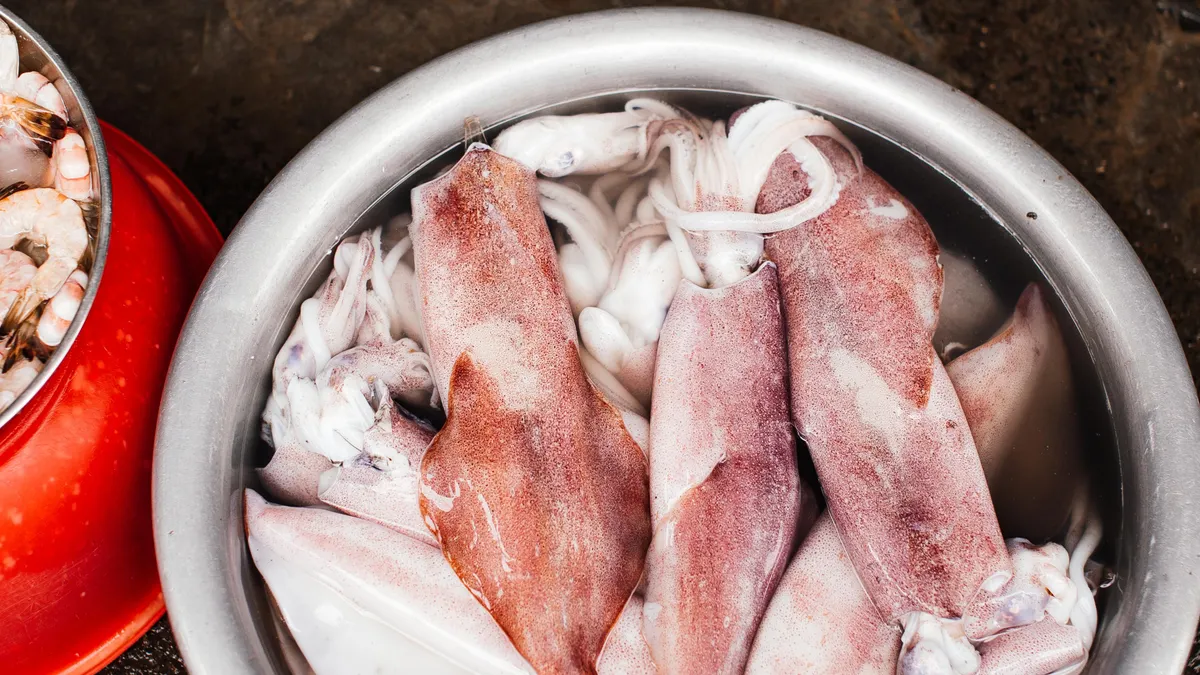
Knowing how to clean whole squid gives you control over freshness, texture and portioning before a seafood recipe begins. This step-by-step guide explains how to remove the head, internal organs, transparent quill and beak, and how to prepare the edible mantle and tentacles without wasting good seafood. Work gently, keep the squid cold, and check each piece before cooking.
Table of Contents
Why Cleaning Whole Squid Matters
Whole squid often arrives with the head, arms, internal organs, transparent quill and thin outer membrane still attached. Cleaning removes parts you do not want in the finished dish and lets you choose whether to cook the mantle as rings, open it into a flat sheet, or leave it as a tube for stuffing. It is a preparation technique rather than a recipe: the result is raw, cleaned squid ready for a separate cooking method. Ask the fishmonger whether the squid is already cleaned, because packaging terms vary. Even precleaned squid deserves a quick inspection for a leftover quill, beak or internal material.
Set Up a Cold, Clean Workstation
Gather a cutting board that can be sanitized, a small sharp knife, kitchen shears, paper towels, a bowl for usable pieces and another for scraps. Keep the squid refrigerated until you are ready to work. Work with one squid at a time and return the cleaned portions to the refrigerator promptly. A clear work surface helps you distinguish the edible mantle and arms from the internal organs. Do not wash seafood with a powerful jet of water: splashes can contaminate surrounding surfaces. When a gentle rinse is necessary to remove visible grit, keep the flow low and clean the sink afterward.
Know the Parts Before You Pull
The mantle is the elongated body tube. The head and arms extend from its open end, while the eyes and beak sit in the head-and-arm section. Inside the mantle is a flexible, translucent support called the quill or pen. The internal organs and, sometimes, an ink sac are attached near the head. The skin is a thin, mottled membrane covering the mantle; removing it is often a preference rather than a strict requirement. The two long feeding tentacles may be longer than the eight shorter arms. Recognizing these parts prevents unnecessary waste and makes the sequence easier to follow. The Washington Department of Fish and Wildlife squid preparation guide also distinguishes between cleaning the whole mantle for rings and opening it for flat pieces.
Separate the Head and Internal Organs
Hold the mantle gently in one hand and the head just below the opening in the other. Pull the head away with a slow, steady motion. Much of the internal material should slide out with it. Avoid squeezing the abdomen or pulling so sharply that the organs burst. If some material remains inside, remove it carefully with your fingers or a spoon. Do not assume a dark stain means the squid is spoiled; squid ink can be naturally dark, although an off odor or slimy deterioration is a reason to reject the seafood. Set the mantle aside while you deal with the head and arms.
Remove the Clear Quill Completely
Feel inside the empty mantle for a firm, plastic-like strip running lengthwise. Grasp its exposed end and slide it out without breaking it. The quill is not an edible bone and should not remain in the squid you cook. Inspect the tube again with your fingers, especially toward its pointed end. If the quill breaks, retrieve the remaining piece rather than simply cutting the mantle into rings around it. A whole mantle can be used for stuffing once it is completely empty; cutting it open is optional and depends on the intended dish.
Trim the Arms and Remove the Beak
Lay the head-and-arm section on the board. Cut across just below the eyes so that the arms and tentacles remain together, separating them from the eyes and internal organs. Turn the arm cluster over and locate the small hard beak at its center. Push it out gently with your fingers and discard it. Check that no hard fragment remains. The arms and tentacles are edible when properly cleaned and cooked, but the beak is not. Trim only what is necessary; cutting too far down wastes edible meat. Some cooks remove the very tips of the longer tentacles for presentation, but this is optional.
Peel the Outer Skin if Desired
Pinch a loose edge of the mottled membrane on the mantle and peel it back with your fingers or a paper towel for better grip. It may come away in strips rather than one sheet. Skin removal gives the squid a paler appearance and is useful for a clean-looking dish, but leaving some skin on is not automatically unsafe. Do not gouge the flesh trying to remove every tiny patch. If you intend to grill the squid, a little skin can remain; if you want evenly white rings, take more time to peel. The fins or wings on the mantle are edible and may be left attached or separated.
Clean the Inside Without Damaging the Tube
Check the cavity for membranes, residual organs or sand. Turn the mantle inside out only if it can be done gently without tearing; otherwise, use your fingers to wipe the inside. A brief gentle rinse under cold running water can help dislodge visible grit, but avoid prolonged soaking because it can waterlog the flesh. Pat the mantle dry with clean paper towels. Moisture on the surface interferes with browning, particularly in a hot skillet. Place cleaned pieces in a covered container in the refrigerator while you finish the remaining squid.
Choose Rings, Flat Pieces or Whole Tubes
For rings, place the empty mantle flat and cut crosswise into even slices; thicker rings are easier to handle on skewers, while thin rings suit quick sautéing. For flat pieces, cut along one side of the tube, open it like a book and lightly score the inside in a shallow crosshatch without cutting through. For stuffing, keep the tube whole and intact. Save the fins and tentacles for the same meal if they are clean. Cutting style changes cooking behavior, so use the preparation specified by the recipe rather than treating all pieces as interchangeable.
Keep Squid Tender During Cooking
Squid can become chewy when it spends an awkward amount of time over heat. Two broad approaches work: cook small pieces quickly over high heat, or use a deliberately longer, gentle braise until tender. Exact timing depends on size, cut, pan heat and recipe; there is no universal number that guarantees tenderness. Dry the pieces before quick searing and avoid crowding the pan. For a grilled preparation, see our grilled squid with lemon. For another cephalopod technique, compare the approach in our pan-seared cuttlefish recipe; the animals are related but not identical.
Food Safety and Storage
Purchase squid from a reputable seller and keep it cold at 40°F (4°C) or below. Follow the package use-by date and official storage guidance; if you will not cook it promptly, freeze it while fresh. Thaw frozen squid in the refrigerator rather than on the counter. Wash hands and sanitize knives, boards and sinks after handling raw seafood. The FDA seafood safety guidance recommends cooking most seafood to 145°F (63°C). Refrigerate fresh seafood for no more than two days after purchase, or freeze it sooner. An ammonia-like or otherwise unpleasant odor is a warning sign, not something seasoning can fix. Do not taste raw squid to assess freshness.
Troubleshooting Common Cleaning Problems
If the head separates but the organs stay inside, reach into the mantle carefully and remove them in small pieces. If the quill is hard to find, feel along the interior wall for a clear rigid strip; do not confuse a thin membrane with the quill. If ink spills, contain it on the board and wash the surface rather than spreading it around the sink. If the skin tears during peeling, lift another edge and continue; perfect peeling is not essential. If the mantle splits, use it as a flat piece instead of forcing it into a stuffing recipe. If the beak is difficult to locate, press gently at the center of the arm cluster until the hard mouthpiece appears.
A Final Inspection Before Cooking
Run a finger through the mantle to confirm the quill and internal material are gone. Check the arm cluster for the beak, and confirm that the eyes and head remnants have been discarded. Look for grit in the cavity and pat everything dry. Decide whether your recipe needs rings, a flat scored mantle or a whole tube. Keep the prepared squid cold until the pan or grill is ready. For broader seafood handling ideas, explore our delicate seafood cooking techniques, raw scallop storage guide, and fish thickness cooking chart; these are complementary guides, not substitutes for squid-specific preparation.
Frequently Asked Questions
Do I have to peel the purple skin off squid?
No. Peeling is largely a texture and presentation choice. Remove the internal organs, quill and beak regardless of whether you peel the skin.
Can I eat squid tentacles?
Yes. The arms and tentacles are edible after proper cleaning and cooking, but the hard beak and eye section must be removed.
What is the clear plastic-looking strip inside squid?
It is the quill, also called the pen. Pull it out completely and discard it before cooking.
Should I wash squid before cooking?
Remove visible grit with a gentle rinse if needed, then dry it thoroughly. Avoid splashing raw seafood juices around the sink.
Can I clean frozen squid after thawing?
Yes. Thaw it safely in the refrigerator first, then inspect and clean it. Some frozen squid is already cleaned, so check the package.