
How to Cook Scallops: Perfect Pan-Seared Scallops
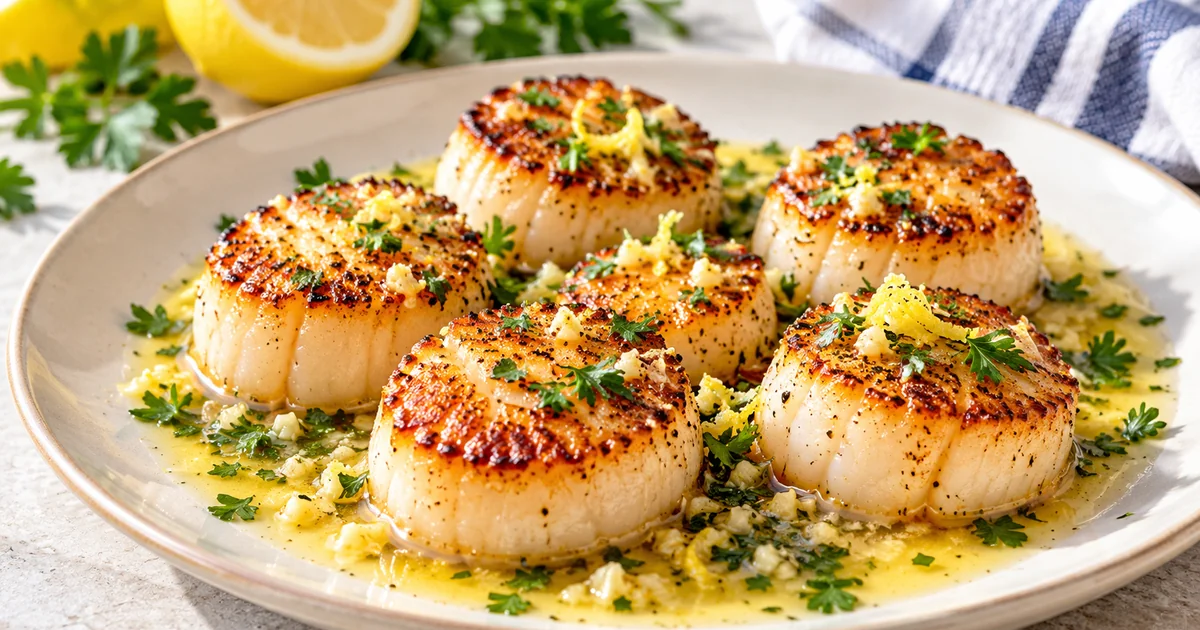
Table of Contents
If you’ve wondered how to cook scallops with a deep golden crust, the answer is simple: start with large, dry sea scallops, remove excess moisture and sear them briefly in a hot skillet. A light garlic-lemon butter finish complements their natural sweetness without covering the browned surface.
This step-by-step guide explains which scallops to buy, how to thaw and prepare them, the pan temperature and timing, and how to recognize when they are cooked. A complete measured recipe follows, along with common mistakes and serving ideas.
The Secret to Perfectly Seared Scallops
Learning how to cook scallops is mostly a lesson in moisture management. Sweet sea scallops can develop a deep golden crust in a hot skillet while remaining tender inside, but only if their surfaces are dry and they have room to sear rather than steam. You do not need breadcrumbs or a thick sauce: clean scallops, a thin film of oil and a brief butter finish create a compelling seafood dish.
This guide covers choosing the right size, identifying dry-packed scallops, safely thawing frozen seafood, removing the side muscle, building a crust and recognizing doneness. The accompanying recipe yields four portions of straightforward garlic-lemon scallops. If you have only cooked scallops with pasta or a restaurant sauce, start with this simple method to understand the basic technique before adding other flavors.
Sea Scallops, Bay Scallops and Dry-Packed Labels
Sea scallops are large, round adductor muscles and are the best choice for the impressive seared pieces pictured in many seafood recipes. Bay scallops are much smaller and cook faster, so they are better suited to quick sautés, soups and pasta. A recipe built around 1½-inch sea scallops cannot use the same exact timing for tiny bay scallops without overcooking them.
Look for dry-packed sea scallops, ideally those without added water-retaining solutions. Wet-packed products may be treated to absorb water, which makes browning harder and can create an unexpectedly salty or watery result. Frozen untreated sea scallops are a good alternative when thawed carefully and dried well. Ask your fishmonger about the pack method rather than judging quality from a perfect white color alone. A mild, fresh sea aroma is desirable; sharp sour or ammonia-like odors are not.
Ingredients and Measurements
Keep the core ingredient list short so each step can be controlled. The following quantities serve four as a light main course, or more people as a starter. Choose scallops of similar diameter and thickness so they cook evenly.
- 1½ pounds large dry-packed sea scallops: about 16–20 pieces, side muscles removed.
- 1½ tablespoons neutral high-heat oil: avocado or another suitable frying oil, divided across batches.
- ½ teaspoon kosher salt: divided over the scallops just before cooking.
- ¼ teaspoon freshly ground black pepper: for a delicate seasoning.
- 2 tablespoons unsalted butter: add after the main sear.
- 2 garlic cloves: finely minced or lightly crushed.
- 1 tablespoon fresh lemon juice: add at the end.
- 1 teaspoon lemon zest: finely grated for fragrance.
- 2 tablespoons chopped parsley: for finishing.
- Lemon wedges: optional at the table.
Use the butter only after you have established a crust with oil. Butter milk solids can brown rapidly at the high initial searing temperature and mask the scallops’ sweet flavor. The garlic should be added late for the same reason. Do not use a sugary prepared glaze during the searing stage.
Thawing and Preparing Scallops
If the scallops are frozen, thaw them in the refrigerator overnight. For a quicker option, keep them sealed in a leakproof bag placed in cold water and cook promptly once thawed. Do not leave shellfish on the counter or immerse loose scallops in warm water. Drain thoroughly and inspect each piece. There is often a small, firmer rectangular flap attached to the side, called the side muscle; pinch it gently and pull it away if present.
Arrange the scallops in a single layer on paper towels and press more towels over the top until both flat surfaces feel dry. If the towels become soaked, replace them. This is the highest-value preparation step because water absorbs heat and produces steam. Sprinkle salt and pepper over the surfaces shortly before the scallops enter the hot pan. Keep the raw seafood chilled during delays rather than letting it warm on the counter.
Which Pan Is Best for Scallops?
A thick stainless-steel or well-seasoned cast-iron skillet is ideal for an intense golden crust, though a properly heated nonstick skillet can be easier for beginners. Use a pan wide enough for a single layer with spaces between scallops. If all the pieces barely fit, cook in two batches; crowding is often the reason scallops turn gray instead of brown.
Heat the pan over medium-high until a small amount of oil shimmers and moves freely. You want a confident sizzle when the first scallop touches the surface, not clouds of overheated oil smoke. Good contact is important: place each scallop flat-side down and avoid moving it until its underside has browned. Prepare clean tongs and a plate in advance so there is no frantic search while the first batch cooks.
How to Pan-Sear Scallops Step by Step
- Dry and season. Remove side muscles as needed. Pat the sea scallops thoroughly dry on both flat sides and season lightly with salt and pepper.
- Heat oil. Add about half the oil to a wide heavy skillet over medium-high heat. Let it shimmer without allowing excessive smoke.
- Sear undisturbed. Arrange half the scallops flat-side down, leaving space. Cook roughly 2–3 minutes for large pieces until the bottom forms a caramel-gold crust.
- Turn and finish. Flip once with tongs and cook roughly 1–2 minutes more. Timing depends on thickness; the flesh should turn opaque and firm, not hard or rubbery.
- Transfer and repeat. Move cooked scallops to a warm clean plate, add the remaining oil and repeat with the second batch.
- Make a quick finish. Reduce the heat. Add butter and garlic to the skillet for 20–30 seconds until fragrant. Remove from heat, stir in lemon juice and zest, then spoon a small amount around the scallops. Sprinkle with parsley and serve immediately.
Choose tenderness over an unnecessarily dark crust. If the outside has browned but the center is not fully cooked, lower the heat for a short finish instead of letting the oil burn. Scallops should be opaque and firm when done, according to current seafood safety guidance. Avoid holding cooked scallops in simmering butter while finishing other parts of dinner.
How to Tell When Scallops Are Cooked
Cooked scallops should look pearly or milky opaque through the middle and feel firm while retaining some tenderness. A center that remains translucent is not the reliable finish point for a standard home-cooking recipe. The FDA’s seafood cooking guidance recommends scallops that have turned opaque and firm. For this reason, treat a restaurant-style description such as “just translucent” as different from the fully cooked home method given here.
The sear changes the scallop’s surface quickly, so color alone does not establish doneness. After turning, check the thickest piece by gently pressing or inspecting a sample, then remove the batch before residual skillet heat makes it rubbery. Smaller scallops cook much faster than the large sea scallops specified here; use their appearance and texture rather than identical minute counts.
Why Wet-Packed Scallops Won’t Brown Properly
Some commercially sold scallops are treated with moisture-retaining solutions. They often release so much water in a hot pan that the surface temperature falls and the scallops steam. You may see a pale, bubbly liquid accumulating where you expected a crisp brown surface. More oil or a longer sear usually makes the texture worse rather than fixing the underlying moisture problem.
Choose untreated dry-packed products when possible, and dry them carefully even if the label says dry. If you already have wet-packed scallops, blot repeatedly, work in smaller batches and accept that the color may be lighter. Do not add flour merely to disguise excess water. The aim is a properly cooked, tender scallop, not an artificial crust that hides an undercooked center.
Preventing Sticking and Uneven Browning
If scallops stick, the pan may not have been hot enough, or you may be trying to turn them before a crust forms. Once a proper sear develops, the surface often releases more easily. With stainless steel, slip a thin fish spatula under a corner rather than pulling with tongs until the scallop tears. Avoid turning repeatedly because each turn cools the contact surface.
Uneven golden spots generally come from a warped pan, different scallop sizes or moisture under only some pieces. Spread the scallops out, match similar sizes in each batch and press each flat base gently against the pan for its first moment. Watch your burner: one side of a large skillet may get hotter than the other. Rotate the pan if necessary, not the scallops themselves, while the first crust forms.
What to Serve with Pan-Seared Scallops
Scallops are delicate and slightly sweet, so a side that is fresh and not heavily spiced works best. Try lemony asparagus, green peas, cauliflower purée, light pasta or a crisp green salad. For a simple starter, plate three or four scallops per person with a spoonful of garlic-lemon butter and a few herbs. For a main course, serve a generous portion alongside vegetables and grains.
For a hearty variation, place the cooked scallops beside pesto pasta with cherry tomatoes, keeping its pesto sauce mostly on the noodles so it does not hide the sear. Our garlic butter scallops pasta is a separately composed dish, while seared scallops with jalapeño vinaigrette has a sharper, dressed finish.
Variations Once You Know the Basic Method
After learning the plain sear, try replacing parsley with dill or chives, or use a little finely grated lemon zest on the serving plate. A pinch of chili flakes can create a warmer finish, but add it to the butter briefly rather than coating the scallops before the hard sear. For a richer sauce, whisk a spoonful of warm water into the butter once the skillet is off the heat so it coats lightly.
A simple citrus-and-herb scallop works with many side dishes, but keep the pan technique consistent. Even when serving scallops with pesto, rice or a vegetable purée, sear them in small batches and add garnishes only after they’re cooked. That separation is what lets one reliable method support many distinct meals without turning the scallops rubbery.
Storage, Reheating and Make-Ahead Work
Raw scallops spoil quickly, so keep them refrigerated and follow the package or fishmonger’s use-by guidance. For meal preparation, measure the butter and lemon, mince the garlic and set the serving dishes ahead of time; wait to dry and cook the scallops until you are ready to eat. They are at their best straight from the skillet.
Refrigerate leftovers promptly in shallow sealed containers, generally consuming properly refrigerated cooked seafood within 3–4 days. Warm thoroughly to 165°F (74°C) when reheating leftovers, but expect a firmer texture than freshly cooked scallops. Gentle reheating in a covered pan with a little liquid is less likely to make them tough than prolonged high heat. Never keep reheating the same portion repeatedly.
Common Scallop Problems and Their Causes
Gray scallops: they steamed from excess moisture or overcrowding. Rubbery scallops: heat continued too long after they were cooked. Bitter butter: butter or garlic was heated at the high initial sear temperature. Torn surface: the scallop was pulled up too soon before it developed a crust.
Too salty: the seafood may have been treated with additives or over-seasoned. Use a lighter hand and taste the finished butter before adding more salt. Watery plate: scallops went into the pan wet or sat in released juices too long. Uneven cooking: different sizes shared the same batch. Fixing these process details usually improves the next attempt more than changing the ingredient list.
How to Cook Scallops: Perfect Pan-Seared Scallops
Ingredients
- 1 1/2 lb large dry-packed sea scallops approximately 16–20; side muscles removed
- 1 1/2 tbsp neutral high-heat oil divided between batches
- 1/2 tsp kosher salt
- 1/4 tsp black pepper freshly ground
- 2 tbsp unsalted butter
- 2 garlic cloves finely minced
- 1 tbsp fresh lemon juice
- 1 tsp lemon zest finely grated
- 2 tbsp fresh parsley chopped
- lemon wedges optional serving
Instructions
- Thaw seafood safely if frozen, remove side muscles and pat scallops completely dry. Season lightly with salt and pepper.
- Add half the oil to a wide heavy skillet over medium-high until shimmering, not aggressively smoking.
- Add about half the scallops flat-side down with space between them; cook without moving for 2–3 minutes until the underside is deeply golden.
- Flip once and cook roughly 1–2 minutes more or as needed until the centers are opaque and firm. Transfer to a warm clean plate.
- Add remaining oil and repeat the sear with the rest of the scallops, adjusting the heat if the pan becomes too hot.
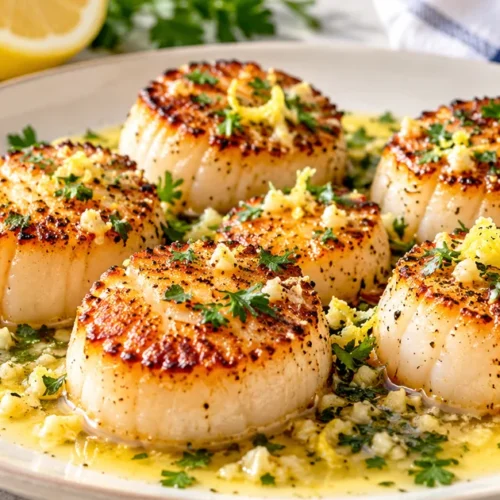
- Lower or turn off the heat, warm butter with garlic briefly until fragrant, then stir in lemon juice and zest. Spoon a little sauce around scallops, finish with parsley and serve immediately.
Notes
Frequently Asked Questions
How long do you cook sea scallops in a pan?
Large sea scallops often need around 2–3 minutes on the first side and 1–2 minutes on the second, but thickness and pan heat vary. Cook until the centers are opaque and firm rather than relying only on a timer.
Why aren’t my scallops browning?
The most common causes are excess surface water, a cool pan or overcrowding. Choose dry-packed sea scallops, dry both sides thoroughly and sear in spaced-out batches.
Should I use butter or oil to sear scallops?
Start with a thin layer of high-heat oil for the crust. Add butter near the end over lower heat so its milk solids and the garlic do not burn.
Can frozen scallops be pan-seared?
Yes. Thaw them safely in the refrigerator or in a sealed bag in cold water, then drain and dry thoroughly. Frozen scallops should not be cooked with the same timing while still icy in the center.
Do I have to remove the side muscle?
If a small tough flap is attached to the side, peel it away before searing. Not every scallop will have one, and the rest of the scallop should remain intact.
More Scallop and Seafood Ideas
For a different sauce, try our scallops with jalapeño vinaigrette. You can also explore cod piccata with lemon and capers for another pan-cooked seafood technique.