
Spicy Korean Seafood Soup with Shrimp and Mussels
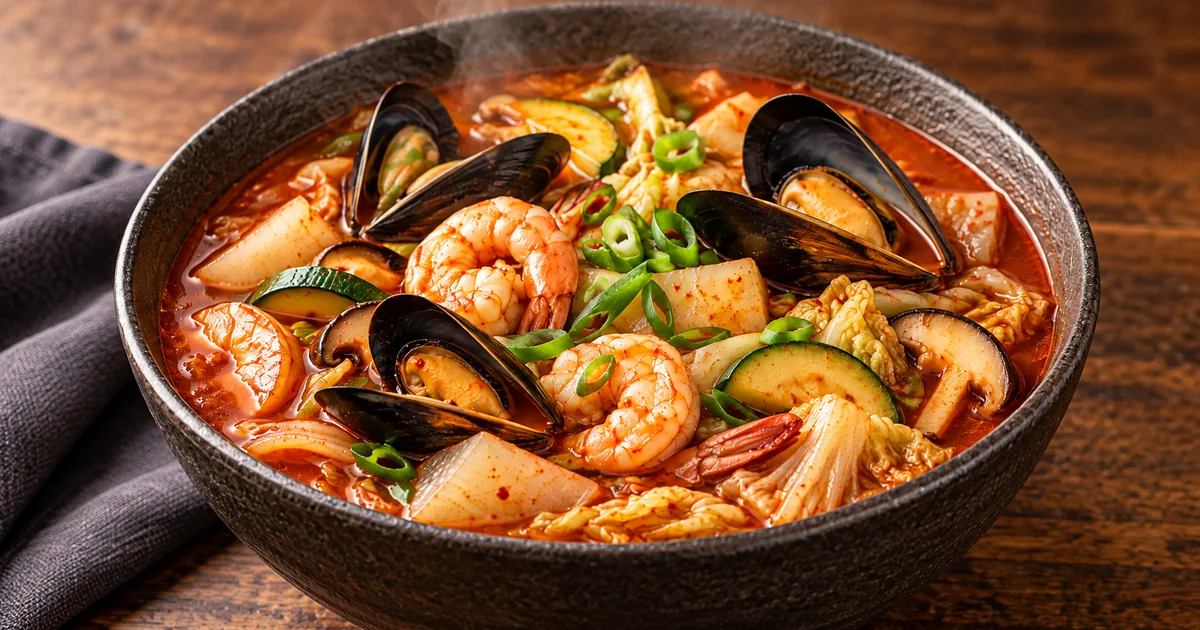
Spicy Korean seafood soup can be made with a measured mix rather than an open-ended assortment of fish and shellfish. This version combines raw shrimp and live mussels in a gochugaru-seasoned anchovy-kelp broth with Korean radish, napa cabbage, zucchini and mushrooms. It is intended as four light soup servings with a clearly defined order for cooking the two kinds of seafood.
The main advantage of limiting the seafood is timing. Mussels cook in their shells until they open, while peeled shrimp go in near the end and cook until pearly and opaque. Trying to cook every species mentioned in the original draft at once would make both doneness and ingredient quantities hard to explain. This article gives a specific sequence and flags steps, such as thawing and stock preparation, that must be done before the advertised clock starts.
The flavor here is chili-led rather than fermented soybean-paste-led. Gochugaru brings the red color and heat, onion and aromatics support the broth, and seafood goes in only after the vegetables have softened. No wine, cooking alcohol or alcohol-based sauce appears in the formulation; always check ingredient labels on packaged stock and seasonings rather than assuming all brands have the same composition.
Table of Contents
Spicy Korean Seafood Soup with Shrimp and Mussels
Ingredients
- 4 cups prepared unsalted anchovy-kelp broth made ahead; check packaged product labels
- 1 lb live mussels in their shells about 450 g; inspected, scrubbed and debearded; follow supplier purging instructions
- 12 oz raw peeled and deveined shrimp about 340 g; thaw in refrigerator first if previously frozen
- 1 tbsp neutral cooking oil for aromatics
- 1 cup thinly sliced Korean radish or daikon about 4 oz
- 1/2 medium onion thinly sliced
- 1 cup chopped napa cabbage
- 1 cup sliced zucchini about 1 small zucchini
- 1 cup sliced mushrooms about 3 oz
- 3 garlic cloves minced
- 1 tsp fresh ginger grated
- 1 tbsp pure gochugaru Korean chili flakes up to 1 extra tbsp to taste; single-ingredient seasoning
- 2 scallions sliced, to finish
- 1/2 tsp fine salt up to this amount, to taste after cooking
- 1 tsp toasted sesame oil optional finishing oil; sesame allergen
Instructions
- Check that the live mussels come from a reputable supplier. Discard broken-shell mussels and any open ones that do not close when tapped; scrub and debeard following supplier directions. Keep mussels and thawed raw shrimp refrigerated separately until their cooking stages; prepare and measure the vegetables.
- Heat neutral oil over medium heat in a wide pot. Soften the onion for about 2 minutes, then briefly add minced garlic and grated ginger. Reduce the heat and stir in 1 tablespoon pure gochugaru for only 20 to 30 seconds without scorching.
- Pour in 4 cups prepared unsalted anchovy-kelp broth. Add Korean radish and napa cabbage. Bring to a steady simmer and cook approximately 8 minutes, until the radish begins to soften. Add sliced zucchini and mushrooms; simmer another 4 to 5 minutes until nearly tender.
- Add the prepared live mussels and cover the pot. Simmer until their shells open during cooking, checking after approximately 5 minutes and allowing longer as needed or according to supplier instructions. Discard any that remain closed after cooking. Move early-opened cooked mussels to a separate clean, covered bowl if necessary.
- Add thawed raw peeled shrimp to the simmering broth. Cook approximately 2 to 4 minutes, or until their flesh is pearly and opaque throughout; continue if needed. Return any cooked mussels held separately to heat through briefly. Taste the fully cooked broth, adjust salt and gochugaru as needed and finish with scallions and optional toasted sesame oil. Serve immediately in clean bowls.
Notes
A broth-led soup, distinct from doenjang jjigae
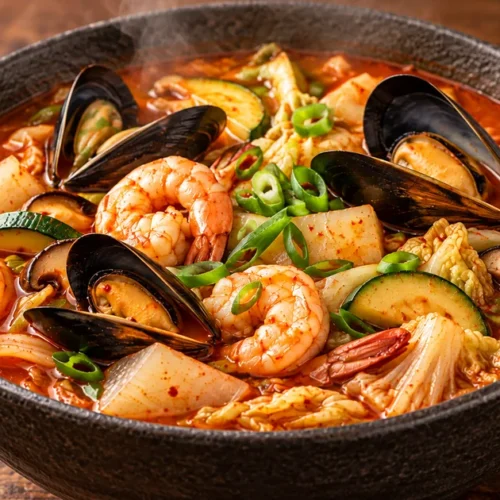
This spicy Korean seafood soup takes a broth-led approach inspired by Korean seafood hot pots. Its heat comes from pure gochugaru (Korean red pepper flakes), supported by garlic, ginger and prepared unsalted anchovy-kelp broth. The measured combination is raw shrimp and live mussels with radish, napa cabbage, zucchini and mushrooms. There is no fermented soybean paste in the ingredient list and no claim that this particular home formulation is a universally authentic Korean recipe.
That distinction matters on SABSEA because our separate seafood doenjang jjigae with shrimp and clams centers its flavor on fermented soybean paste. This recipe deliberately avoids that ingredient. It also omits noodles, so it is not presented as jjamppong, the spicy Korean-Chinese seafood noodle soup. Readers seeking a lighter broth with clearly recognizable shrimp and mussels get a different method instead of another name for the same stew.
Korean cook Hyosun Ro describes broth, seafood, vegetables and gochugaru as familiar components of a Korean spicy seafood hot pot. That source establishes the culinary context, not a claim that this exact combination, proportions or cooking times came from her recipe. The formula below is a separate editorial preparation intended for further kitchen validation.
The measured ingredient plan
For four light soup bowls, begin with 4 cups of prepared unsalted anchovy-kelp broth. Use a broth made ahead from the two named ingredients, or read the label carefully if using a packaged alternative; packaged broths can contain seasoning additions that change the salt level or introduce unwanted ingredients. A plain broth keeps the chili and seafood prominent and lets you control the final salt. Broth preparation itself is not included in the stated 50-minute preparation-and-cooking estimate.
The seafood is deliberately limited to 12 oz (about 340 g) of raw, peeled and deveined shrimp and 1 lb (about 450 g) of live mussels in the shell. Buy the mussels from a reputable seafood seller and follow any supplier-specific cleaning or purging instructions. Keep them chilled and use the seafood before its stated use-by date. Starting with a defined two-species mixture is more useful than the original draft’s interchangeable list of shrimp, clams, mussels, squid and fish, which would require different timings and different yield calculations.
For vegetables and aromatics, measure 1 cup thinly sliced Korean radish or daikon, half a medium onion, 1 cup chopped napa cabbage, 1 cup sliced zucchini, 1 cup sliced mushrooms, 3 minced garlic cloves and 1 tsp grated fresh ginger. You will also need 1 tbsp neutral cooking oil, 1 tbsp pure gochugaru plus up to another tablespoon if preferred, 2 sliced scallions, up to ½ tsp fine salt to taste and an optional 1 tsp toasted sesame oil at the end.
Choose a single-ingredient gochugaru product rather than assuming every mixed seasoning is suitable. This recipe does not require gochujang, cooking wine, fish sauce or another fermented seasoning. Check the labels of all purchased components including broth and optional toppings for alcohol-based additives and dietary or allergy restrictions. Fish (anchovy broth), crustacean shellfish (shrimp), molluscan shellfish (mussels) and optional sesame are relevant allergens.
Prepare seafood and organize the vegetables
Keep the raw seafood refrigerated while you measure the vegetables and seasoning. Frozen shrimp is suitable when thawed safely in the refrigerator ahead of time. Do not count the time needed to thaw a frozen package within the nominal prep time. Keep a separate clean serving utensil and bowl ready so neither touches the raw seafood or its juices. Wash hands, surfaces and utensils between handling uncooked seafood and ready-to-eat ingredients.
Inspect the live mussels immediately before cooking. Discard any with broken shells and any open mussels that do not close when tapped. Scrub and remove beards if your supplier has not already done so, following their directions, and keep them cold until they go into the pot. If the supplier requires additional purging, complete that beforehand. Rinsing or soaking cannot make spoiled shellfish safe; quality and provenance matter at purchase.
Slice the radish thinly so it softens before the seafood enters the pot. Cut the cabbage into short pieces, halve the zucchini lengthwise and slice into half-moons, and slice the mushrooms and onion. Keep scallions aside until serving. Measure the chili flakes in advance. A moderate first tablespoon is easier to adjust than pouring too much pepper into the pot at the beginning.
Build the gochugaru broth without scorching
Heat 1 tbsp neutral oil over medium heat in a wide, heavy pot. Add the sliced onion and stir for about two minutes, just until it begins to soften. Add the garlic and ginger and stir briefly; do not let the garlic become dark. Reduce the heat and add 1 tbsp gochugaru, stirring for roughly 20–30 seconds so the spice disperses in the warm oil. Chili flakes can burn quickly in a hot, dry pot, so have the broth ready before this stage.
Pour in the 4 cups prepared unsalted anchovy-kelp broth, then add the radish and napa cabbage. Bring the liquid to a steady simmer, not a violent boil, and cook for approximately eight minutes or until the radish begins to soften. The cabbage contributes body while the broth remains clear enough to identify the ingredients. Taste a spoonful of broth only after the pot returns to a safe simmer and the utensils used for tasting have not contacted raw seafood.
Add the sliced zucchini and mushrooms. Simmer for another four to five minutes, until the vegetables are nearly tender. The exact pace depends on the thickness of the radish and zucchini, the shape of the pot and the starting temperature of the broth. At this stage, assess heat and salt. Add more pure gochugaru sparingly if desired; leave the optional salt until the seafood is cooked, since mussels can add salinity when they open.
Cook the mussels first, then the shrimp
Once the vegetables are nearly tender, add the inspected live mussels to the actively simmering broth and cover the pot. Cook until their shells open during cooking, checking after approximately five minutes and allowing longer when needed. Cooking time varies with mussel size, batch and pot. Follow supplier directions; discard any mussels whose shells remain closed after cooking. Do not assume every shell will open at exactly the same minute or judge safety solely by a clock.
If individual mussels open before the others, transfer those cooked mussels with a clean utensil to a clean, covered bowl so they are not held in prolonged heat. Once the mussel stage is complete, place the raw peeled shrimp in the simmering broth. Cook until the flesh is pearly and opaque throughout, approximately two to four minutes depending on the size; continue cooking if the shrimp have not reached that point. The FDA’s safe-handling chart distinguishes shrimp’s pearly opaque doneness check from mussels’ shell-opening check. Keep a steady simmer and avoid adding very large frozen shrimp straight from the freezer under these timings.
Return the already-cooked mussels to the soup just long enough to heat them through, and serve promptly. Taste the now-cooked broth and add up to ½ tsp salt if needed. Finish with sliced scallions and the optional toasted sesame oil. Transfer the soup to clean bowls, making sure each diner receives a suitable portion of shrimp, mussels, vegetables and broth. The 30-minute cook figure is an estimate for prepared broth and properly prepped seafood, not a guarantee for every shellfish batch.
Serving, flavor balance and suitable variations
This quantity is intended for four light soup bowls. If the soup is the main course, serve with separately cooked rice; rice is not part of the WPRM ingredient quantities or total time. Present mussels in their shells only to diners who can discard the shells safely, and provide a separate bowl for shells. Keep hot soup hot until serving rather than leaving a seafood pot on an unheated buffet.
A second tablespoon of pure gochugaru is an optional increase for diners who want more chili heat. Add it in small amounts while the broth simmers. If the broth becomes unexpectedly salty, check the stock you used before assuming additional seasoning is necessary. More broth dilutes both salt and heat but changes the recipe’s yield; note that adjustment if making a larger batch. For a milder soup, start with less gochugaru and keep other measurements unchanged.
If live mussels are unavailable, do not make a blind one-for-one substitution with frozen, pre-cooked mussel meat. That product follows its own packaging directions, is sold in different weights and may need a different reheating sequence. Similarly, adding fish, squid, clams or scallops changes doneness checkpoints and should be treated as a separately specified variation rather than an unmeasured handful. The point of this recipe is a repeatable shopping list and cooking order.
Cold-chain, allergies and leftovers
Keep raw seafood at or below 40°F (4°C) before cooking. Buy properly handled live shellfish from reputable suppliers and keep uncooked seafood away from the cooked soup and ready-to-eat garnishes. The FDA seafood selection and serving guidance provides additional buying, storage and cross-contamination advice. The recipe’s active preparation estimate excludes any seller-required mussel purging or refrigerator thawing.
Serve the soup promptly after the shrimp and mussels are fully cooked. Refrigerate perishable leftovers within two hours, or within one hour if the surrounding temperature is above 90°F (32°C). Use shallow containers so the soup cools quickly. Heat stored leftovers thoroughly to 165°F (74°C); bringing the liquid back to a vigorous boil alone is not a substitute for checking that any larger solid pieces are heated through. Discard food that has remained at unsafe temperatures rather than relying on smell.
Allergy information is as important as chili strength. Shrimp is a crustacean shellfish, mussels are molluscan shellfish, anchovy stock contains fish, and optional sesame oil contains sesame. If using a packaged broth or seasoning, follow the exact ingredient and allergen labels. No estimated calorie value or invented review score has been assigned to this proposed editorial formula.
Frequently asked questions
Is this the same as seafood doenjang jjigae?
No. This soup uses gochugaru, garlic, ginger and anchovy-kelp broth, with shrimp and mussels. SABSEA’s separate seafood doenjang jjigae is built around fermented soybean paste and a shrimp-and-clam combination. They are related Korean-inspired seafood preparations, not interchangeable recipes.
Can I make it with frozen shrimp?
Yes. Choose raw peeled, deveined shrimp and thaw them safely in the refrigerator ahead of cooking. The time on this recipe card assumes they are thawed. Add shrimp after the mussel stage and simmer until pearly and opaque throughout, following the package directions for the size you buy.
How do I know when the mussels are cooked?
Begin with properly sourced, live mussels and discard any with broken shells or shells that do not close when tapped. Cook the mussels in the simmering broth until their shells open during cooking, following your supplier’s directions. Discard any that remain closed after cooking; do not rely on the recipe’s estimated minutes alone.
Can I reduce the spice?
Yes. Start with less than one tablespoon of pure gochugaru and taste the fully cooked broth before adding more. The red-pepper flavor is useful even at moderate heat. Do not substitute an unmeasured chili sauce without checking its seasoning, allergens and ingredient label.
Does this seafood soup need gochujang or cooking wine?
No. The specified formulation gets its heat from pure dried gochugaru and its savory base from prepared unsalted anchovy-kelp broth, garlic, ginger and vegetables. No cooking alcohol is used. Check purchased seasoning and stock labels carefully so that they match your dietary requirements.
A practical seafood soup for a weeknight table
The finished bowl is designed around a clear order: measured vegetables soften first, live mussels cook until opened, and shrimp enters near the end. Gochugaru adds the chili character without shifting the dish into doenjang territory. Keep the ingredients and supplier instructions visible when cooking, taste the fully cooked broth before adjusting salt, and allow for variation in mussel size and equipment. This is a specific recipe formulation prepared for SABSEA editorial use, not a claim of personal kitchen testing.