
Crispy Salmon with Edamame and Ginger Rice
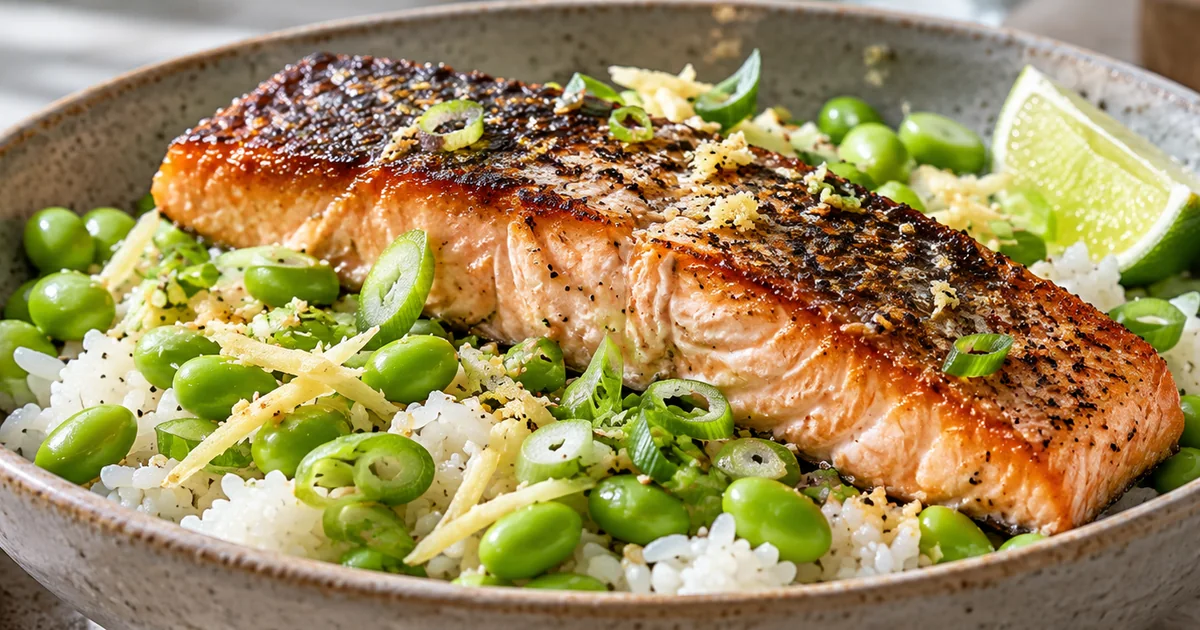
Crispy salmon with edamame and ginger rice works best when the fish is cooked separately from the rice and the two are brought together at the table. This version pairs skin-on salmon with a gently seasoned ginger rice and warm shelled edamame. The skin gets a chance to brown against the pan; the rice stays soft rather than soaking in a sticky glaze. Scallions and lime finish the bowl. It is a cooked-salmon recipe with a specific skillet method, not another smoked-salmon assembly bowl or a collection of interchangeable bowl ideas.
The ingredient list is intentionally short. The rice cooks in water with ginger, the edamame warms in the same pot near the end, and the fish gets salt, pepper and a modest coating of oil. There is no tea infusion or wasabi sauce hidden behind the title. Use a food thermometer to establish that the salmon reaches 145°F (63°C) in its thickest part; browned skin alone cannot tell you whether the center is done. The suggested cooking windows are planning estimates because fillet thickness, pan material and stove heat vary.
Table of Contents
Why Crispy Salmon with Edamame and Ginger Rice Works
The fish and rice use different heat levels, so it helps to start the rice first. While it simmers, dry and season the fillets and get the pan ready. Add the edamame to the cooked rice and let it heat through under the lid while the salmon cooks. That sequence gives you a warm base without holding the fish so long that its browned skin softens. The recipe is written for two main-course bowls, each with one fillet, rather than an unspecified amount of fish scattered over several servings.
Skin-on fillets suit the skillet method because their skin forms the contact surface. If your fish is skinless, you can cook it to the same safe endpoint, but it cannot have crisp skin; the result is a different texture. Choose fillets of similar thickness if possible, since one thin tail piece and one thick center piece will not be ready at the same moment. Check both pieces separately. Keep raw fish and its juices away from the finished rice, cutting board, garnish and serving plates.
Ingredients and what each one does
For two bowls, use 1/2 cup dry jasmine rice, 3/4 cup water, and 2 teaspoons finely grated fresh ginger for the base. Rinse the rice if your package directs you to do so; follow its water ratio when it differs from the measure here, since brands and rice styles absorb water differently. The stated recipe assumes ordinary white jasmine rice and a covered saucepan, not pre-cooked rice. Rice cooking and a short covered rest are included in the estimated cook time. Brown rice needs a different water ratio and considerably longer cooking; it is not an equal-time substitution.
Stir 1 cup thawed, shelled edamame into the rice after the grains are tender. Use a commercially prepared product and follow any package direction requiring cooking; do not assume every package is ready to eat. Cover the pot and heat the edamame until hot throughout. If the rice has become dry, a tablespoon of water can loosen it before the covered heating step. Thawed edamame keeps this final heating brief, but the package’s directions take precedence over the recipe estimate.
For the fish, use two skin-on salmon fillets, about 6 ounces each, fully thawed, 1 tablespoon neutral oil, 1/2 teaspoon kosher salt, and 1/4 teaspoon ground black pepper. Patting the skin dry helps direct pan heat to the surface instead of spending it on moisture. The oil belongs in the skillet and is not a marinade. Salt and pepper season both fillets; adjust at the table only after tasting, since kosher salt brands vary in crystal size. A fish spatula makes it easier to slide under delicate skin without tearing it, but a thin ordinary spatula can work.
Finish with 2 sliced scallions and 1 lime cut into wedges. Scallions offer a fresh contrast to the warm rice; lime can be squeezed over each bowl just before eating so it does not soften the skin while the fish rests. No mayonnaise, soy glaze, sesame oil or sweet sauce is part of this version. Adding one may taste good, but it changes the formulation and, with soy or sesame, potentially changes allergen information. Check the edamame package for soy labeling and any cross-contact notices relevant to your diners.
How to cook the rice and salmon together
Put the rice, water and ginger in a small saucepan. Bring to a simmer, cover, reduce the heat to low and cook according to the rice package, about 15 minutes for many white jasmine products. Do not lift the lid repeatedly to test the grain; the covered steam is part of the method. When the rice is tender and the water is absorbed, take the pot off the heat and let it stand, covered, for five minutes. Then fluff with a fork. If the package calls for a different ratio or time, use those instructions as the reliable guide for your rice.
As the rice cooks, keep the salmon refrigerated until you are ready to use it. Dry the skin and flesh with paper towels and season with the measured salt and pepper. Wash hands and clean any surface or utensil that has touched raw fish. Heat a skillet over medium heat, add the oil, and place the fillets skin-side down. Press each briefly and gently with the spatula so the skin makes even contact, then leave it undisturbed while it browns. If the pan smokes heavily or the skin darkens before the center cooks, lower the heat. A moderate pan is easier to manage than a fiercely hot one.
Cook the first side for roughly six to eight minutes, depending on thickness and pan heat, then turn carefully. Cook the other side for about three to five minutes, checking the thickest center of each fillet with a thermometer. The target is 145°F (63°C). These ranges are estimates, not an alternative to the thermometer. If one piece reaches the endpoint first, move it to a clean plate while the other continues. Do not put cooked fish back onto the plate that held raw fillets. The skin may lose some crunch as it rests, so finish the bowls promptly.
While the fish cooks, stir the thawed edamame into the rested rice. Cover and warm over low heat until hot throughout, following the edamame package if it specifies a longer cooking step. Divide the rice and edamame between two bowls. Put one salmon fillet on each serving, preferably skin-side up, and add scallions. Offer lime wedges at the table. A squeeze of lime after the bowls reach the table preserves the distinction between crisp fish and soft rice.
Getting the texture right
Moisture is the common reason a skin-on fillet sticks and steams instead of browning. Dry the surface, use a preheated skillet with oil, and resist nudging the fish immediately. The skin often releases more readily once it has browned. Forcing a spatula under pale, still-adhering skin can strip it from the fillet. A pan with a stable medium heat and enough room around each piece also matters; crowding two large fillets into a small skillet traps steam. If your pan is too small, cook one piece at a time and keep the first on a clean plate briefly while finishing the second.
Rice needs its own attention. Too much water creates a wet base that dulls the contrast of the dish. Too little can scorch the bottom before the grain is tender. Start with the specified rice and water, use a well-fitting lid, and defer to the package if its directions differ. If the pan has a particularly broad base, evaporation may be faster. A spoonful of water and a short covered rest can soften slightly underdone rice, but it cannot rescue badly scorched grains. Warming thawed edamame only after the rice has cooked avoids turning it dull and overcooked during the entire simmer.
The thermometer should reach the thickest part of the fish, without touching the pan. Appearance gives useful cues but is not a precise measure: skin can be deep brown while a thick center is still below the food-safety endpoint. Conversely, a thin fillet may be done before the suggested time has elapsed. Treat the clock as a coordination tool and the thermometer as the final check. If you prefer skinless salmon, place it in the skillet carefully and turn as needed; describe the outcome as pan-seared rather than promising crisp skin.
Useful swaps and serving ideas
Short-grain white rice can make a softer bowl, but it may need another water ratio and timing. Use the package as your guide and consider that change a variation, not a direct substitution for the specified jasmine rice. Frozen shelled edamame can be convenient if it is thawed and then heated as directed. Fresh ginger gives the base a clear flavor without a prepared sauce. If fresh ginger is unavailable, omit it rather than guessing at a concentrated dried-ginger equivalent for this formula.
Sliced cucumber can be served on the side if you want something cool, but it is deliberately absent from the measured card. This bowl’s core is the contrast of the salmon skin, rice and edamame. A simple green salad is another side that does not compete with the lime. If you are making a second batch for a larger group, use a second skillet or cook the fish in rounds; do not stack uncooked fillets in one pan. Scale the rice in a pot large enough for even simmering and check each piece of fish individually for doneness.
The finished bowl is best assembled immediately. Spoon rice first, then set the fish on top just before serving. If the salmon sits skin-side down against wet rice for an extended period, the browned skin softens. Keep lime separate until the table for the same reason. This is a small serving decision, but it does more for the intended texture than adding a complicated topping. The measured amounts produce two complete bowls; side portions and diners’ appetites can vary.
Storage and reheating
Cool leftovers promptly in shallow containers and refrigerate at 40°F (4°C) or below within two hours of cooking, or within one hour when the ambient temperature exceeds 90°F (32°C). Store the fish and rice separately if possible, so they can be reheated evenly. General U.S. leftover guidance allows three to four days under refrigeration, but cooked rice warrants a stricter plan: the UK Food Standards Agency advises cooling it as quickly as possible, ideally within an hour, using it within 24 hours and reheating it no more than once until steaming hot throughout. For this mixed rice bowl, use the rice’s shorter window rather than applying the general three-to-four-day allowance to the whole meal.
Reheat the portion you plan to eat, not the whole batch repeatedly. Heat refrigerated fish and rice thoroughly to 165°F (74°C) as leftovers; a microwave-safe covered dish with a little water can help the rice heat evenly. Stir the rice partway through microwave heating and check for hot and cold spots. Salmon skin will generally lose its original crispness in storage. If any cooked rice or fish was left out past the safe room-temperature limit, discard it rather than relying on reheating to make it safe. Labeling a container with the cooking date makes the rice’s one-day limit easier to follow.
Related: For another salmon-and-rice combination, see this salmon rice bowl.
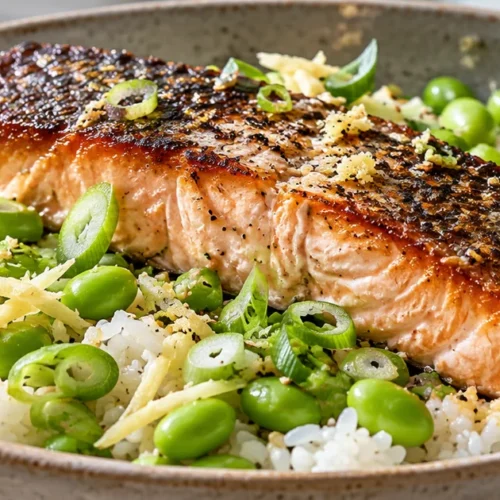
Crispy Salmon with Edamame and Ginger Rice
Ingredients
- 1/2 cup dry white jasmine rice
- 3/4 cup water or rice-package ratio
- 2 tsp finely grated fresh ginger
- 1 cup shelled edamame thawed; follow package cooking directions
- 2 fillets skin-on salmon about 6 oz each, fully thawed
- 1 tbsp neutral oil
- 1/2 tsp kosher salt
- 1/4 tsp ground black pepper
- 2 scallions sliced
- 1 lime cut into wedges
Instructions
- Combine rice, water and ginger; simmer covered according to the rice package, about 15 minutes, then rest covered five minutes and fluff.
- While the rice cooks, dry the fully thawed salmon and season with salt and pepper.
- Heat oil over medium heat. Cook salmon skin-side down about 6–8 minutes, turn and cook about 3–5 minutes more, until each thickest center reaches 145°F (63°C). Transfer to a clean plate.
- Stir thawed edamame into cooked rice; cover and heat until hot throughout, following its package cooking directions.
- Divide rice and edamame between two bowls, add one fillet to each, and finish with scallions and lime. Serve promptly.
Notes
Frequently asked questions
Can I use frozen salmon?
Yes, if it is fully thawed safely before you dry and sear it. Plan the thaw separately from the active recipe time and follow the package’s handling directions. A frozen center changes the cooking behavior enough that the stated skillet window would be misleading. Check each thawed fillet with a thermometer at its thickest point.
Does the rice have to be jasmine rice?
No, but the measured water and timing are written for white jasmine rice. Another rice type can change both. Follow its own package directions and then add the edamame after the grain is cooked, heating the edamame according to its package. Brown rice in particular takes longer than the time in this recipe.
Can I make the bowls ahead?
You can prepare components ahead under the cold-storage rules above, but the skin’s texture is best right after pan-searing. The rice has a 24-hour refrigerated use window under the cited FSA advice, and any reheated rice should be heated once until steaming throughout. Assemble after reheating rather than storing salmon on wet rice.
Why is my salmon skin sticking?
It may be damp, the pan may not have heated evenly, or you may be trying to turn it before it has browned enough to release. Dry it well, use the measured oil and moderate heat, and slide a thin spatula beneath the skin only once it releases. Pan material also affects sticking; the food-safety endpoint still governs when the flesh is ready.
Is the edamame cooked in the rice pot?
It is warmed in the covered pot after the rice is tender, using thawed shelled edamame. Check the package: if the product calls for a particular cooking step, carry that out before serving. Do not treat an instruction to heat through as proof that every frozen edamame product is ready to eat without its specified preparation.
A balanced way to finish
Start with the rice, let the salmon reach its safe endpoint, and assemble only when both components are hot. The recipe does not need an elaborate glaze: ginger in the rice, scallions and lime give each part a recognizable role. Use the rice and edamame package directions and a thermometer whenever the products or fish thickness differ from the planning estimates here.