
Blackened Salmon with Homemade Cajun Seasoning (20 Minutes)
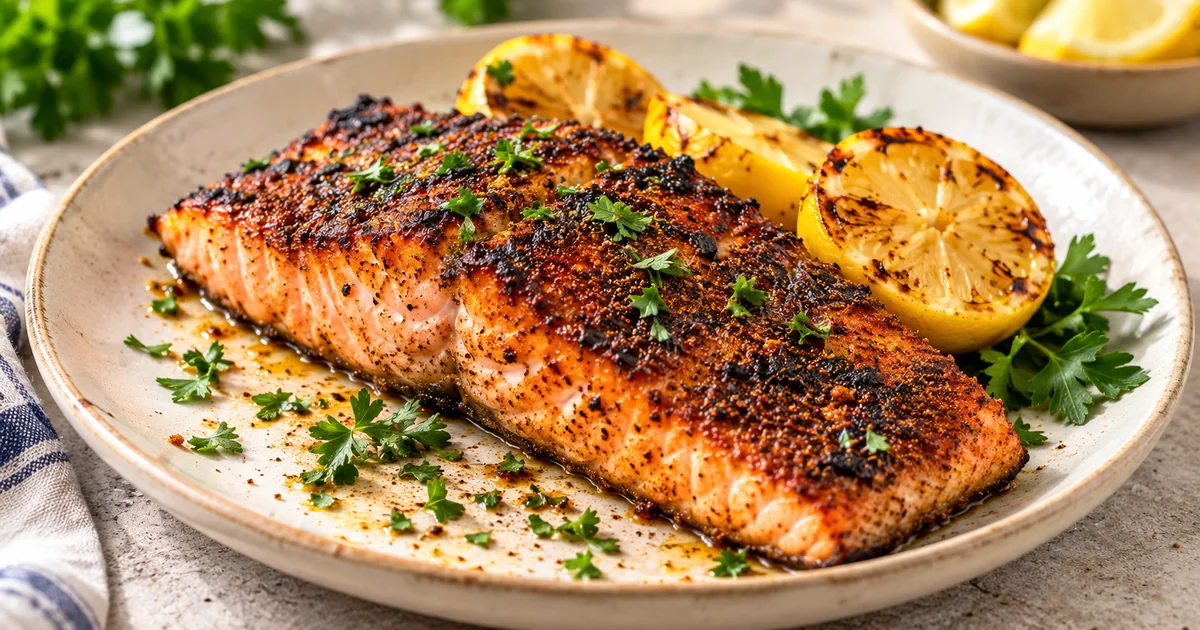
Table of Contents
Blackened salmon is a quick skillet dinner with an aromatic, deeply browned seasoning crust and tender salmon underneath. This recipe uses a balanced homemade Cajun-style spice mix, a wide skillet and a simple lemon finish. You can prepare the dry seasoning in advance and cook the fish in about 10 minutes once the portions are ready.
The goal is controlled browning rather than burnt spices. Below you’ll find exact measurements, reliable pan instructions, doneness checks, serving ideas and fixes for the most common problems, so the result stays repeatable on an ordinary home stove.
Why This Blackened Salmon Recipe Works
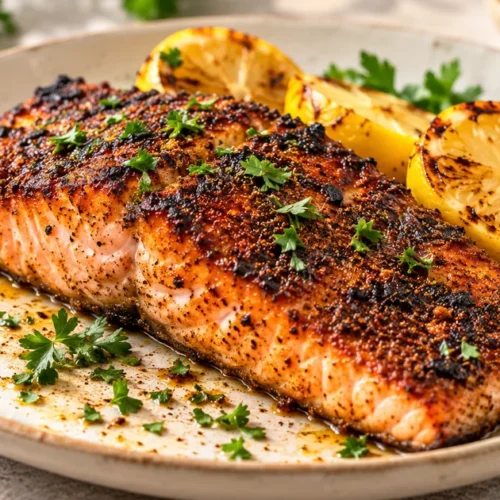
Good blackened salmon is about a deeply toasted spice crust, not a piece of fish burned on the outside. A thin layer of paprika, thyme, oregano, garlic, onion and pepper meets a hot, lightly oiled skillet. In a few minutes those seasonings turn aromatic and dark, while the fish stays moist enough to flake. The flavor is bold without requiring a bottled seasoning mix, a long marinade or a complicated sauce.
This version uses four evenly sized salmon portions rather than a single large fillet. Individual pieces are easier to turn, to check for doneness and to serve without breaking apart. The process is built for a well-ventilated home kitchen: preheat the pan, keep the heat under control and move the fish instead of allowing the spices to scorch. If you have cooked salmon before but struggled to get a crust, the drying, seasoning and heat-control steps below make the difference.
Ingredients and Exact Measurements
The ingredient list makes four servings using roughly 1½ pounds of salmon. Choose center-cut pieces of similar thickness, ideally about ¾ to 1 inch thick. Thickness, not simply weight, determines cooking time. Keep the lemon for the finished plate instead of squeezing it onto the raw fish, since early moisture interferes with browning.
- 1½ pounds salmon fillets: four portions, about 6 ounces each, skinless or skin-on as preferred.
- 1½ teaspoons smoked paprika: provides the main color and rounded smoky flavor.
- 1 teaspoon sweet paprika: gives the crust an even red-brown base.
- ¾ teaspoon garlic powder and ½ teaspoon onion powder: distribute savory flavor evenly.
- ½ teaspoon dried thyme and ½ teaspoon dried oregano: aromatic herbal notes.
- ½ teaspoon kosher salt and ¼ teaspoon freshly ground black pepper: season the fish.
- ⅛ teaspoon cayenne: optional; increase only if your diners enjoy heat.
- 2 tablespoons neutral high-heat oil: such as avocado oil, divided between batches.
- 1 lemon: cut into wedges for serving.
- 2 tablespoons chopped parsley: optional finish.
If your salmon has skin, it can stay on; just remember that the seasoning will coat the exposed flesh and the skin needs its own contact time with the skillet. For a gluten-free plate, check packaged spice labels for added ingredients. A fresh homemade blend allows you to adjust salt and heat before any fish touches the pan.
How to Choose and Prepare the Salmon
Look for fillets with firm flesh, a clean ocean-like smell and consistent thickness. Fresh and properly thawed frozen salmon both work. Avoid pieces with a sour or ammonia-like odor or unusually mushy edges. Frozen fillets should thaw in the refrigerator, ideally overnight. For a faster thaw, keep the fish sealed in leakproof packaging in cold water and cook it promptly after thawing.
Blot every surface thoroughly with paper towels. Moisture creates steam, and steam prevents the spice coating from toasting against the pan. Remove any pin bones with clean tweezers and allow the portion surfaces to dry while you measure the spices. Do not leave seafood at room temperature for extended periods. If you use a small skillet, cook in two batches rather than squeezing all four pieces together.
Make a Balanced Cajun-Style Seasoning
Combine the smoked paprika, sweet paprika, garlic powder, onion powder, thyme, oregano, kosher salt, pepper and optional cayenne in a shallow bowl. Rub any dried herbs between your fingertips to break down coarse leaves. The aim is a fine, evenly distributed mixture that adheres to the salmon rather than collecting in thick patches.
Taste intensity comes from the blend, so don’t compensate for a weak crust by simply adding more cayenne. A generous dusting is enough; heavy clumps of powder burn before thick fish cooks through. Season both exposed sides of skinless pieces, or the flesh and sides of skin-on fillets. Pat gently to help the mixture stick. Blackening seasoning is usually most effective when it goes straight from the bowl to a preheated skillet.
How to Make Blackened Salmon in a Skillet
- Prepare. Dry four salmon portions thoroughly. Stir together the seasonings and coat the exposed surfaces evenly.
- Preheat. Put a heavy skillet over medium-high heat for a couple of minutes. Add about 1 tablespoon oil; it should shimmer but not smoke aggressively.
- Sear the first side. Lay two portions in the pan, presentation side down for skinless pieces. Leave them undisturbed for about 3–4 minutes so a coherent crust can form.
- Turn carefully. Slide a thin fish spatula under each portion and turn. Lower heat slightly if spices begin to smell acrid. Cook another 2–4 minutes, checking thickness and the center.
- Confirm and serve. For food safety, cook finfish to 145°F (63°C) at the thickest point, or until opaque and easily separating with a fork. Move to a warm plate, repeat with remaining fish, garnish with parsley and serve lemon wedges alongside.
These minute ranges are guidance for medium-thick portions, not a guarantee. Very thin fillets may finish sooner, while thick center cuts take longer. A thin instant-read probe is more reliable than judging color of the crust. Remove a finished portion before cooking the next batch instead of leaving cooked fish over direct heat.
The Best Pan and Heat for Blackening
A seasoned cast-iron skillet can deliver excellent contact heat, and a thick stainless-steel skillet is a practical alternative. Neither should be heated until uncontrollably smoking. Spices need enough heat to toast and darken, but paprika and garlic powder can turn bitter if the pan stays too hot. Medium-high is a starting point; adjust to your stove and watch the coating rather than relying only on the dial setting.
Use a high-heat oil and keep a window open or an extractor fan running. Add oil immediately before the fish goes in and let the fillet sit undisturbed until it releases readily. If the seasoning sticks badly, the fish may need another short moment to form its crust; forcing it early can tear the surface. If black bits burn in the pan between batches, wipe out the skillet carefully once it cools enough, then add fresh oil.
How to Know When Blackened Salmon Is Done
Because the exterior is intentionally dark, surface color is a poor indicator of doneness. Check the thickest part with a clean instant-read thermometer. The standard safe endpoint for fish is 145°F (63°C), or flesh that is opaque and flakes apart easily. Slide the probe sideways into a thick portion if inserting from the top would give a shallow or inaccurate reading. See the FoodSafety.gov safe cooking temperatures chart for current reference guidance.
The thinner tail portions may finish before the thick center pieces. Arrange the fish so similar sizes cook together, or remove individual portions as soon as they are ready. A pale bead of protein on the surface can appear during cooking and is not a reliable timer. Let the cooked salmon stand only briefly while plating; lengthy holding on a hot pan will undo the careful heat control.
What to Serve with Blackened Salmon
Blackened salmon has a warm spice profile, so crisp, fresh sides work especially well. Serve it with cucumber salad, roasted zucchini, steamed green beans, simple rice or a cool yogurt-based dressing. If the fish tastes quite spicy, a generous squeeze of lemon and a mild grain side restore balance without hiding the seasoning.
For a complete plate, spoon the fish beside a quinoa and roasted-vegetable salad that supplies texture and a gentle contrast. For another flavor direction using seasoned salmon, see our blackened salmon tacos with mango avocado salsa. This fillet recipe stands alone; the taco recipe builds a separate handheld meal.
Blackened Salmon Versus Cajun Salmon
The two labels overlap, but they describe slightly different things. “Cajun” often refers to a flavor family built around paprika, garlic, onion, herbs and pepper. “Blackened” describes the cooking technique that forms a toasted, dark crust when those spices contact a sufficiently hot pan. You can season salmon with this mixture and bake it, but the final texture will be different from the skillet version.
A blackened fillet should have a robust, spice-forward exterior that protects the delicate fish. It does not need a thick paste or a harsh burnt taste. If you prefer a milder result, omit the cayenne and use sweet paprika for a larger share of the blend while keeping the same drying and pan technique.
Troubleshooting the Spice Crust
Coating falls off: the fish may be too wet, or it was turned before a crust developed. Pat the surface dry and wait for an easy release before flipping. Seasoning tastes bitter: the heat was likely too aggressive or powdered spices sat too long in the skillet. Reduce heat slightly and clean out burned residue before the next batch.
Fish is dry: a thin portion may have cooked at the same speed as a thick one; check each piece separately. Exterior is pale: the skillet was crowded or insufficiently hot, so moisture collected instead of evaporating. Brown in batches and use only enough oil to create a thin film. Uneven flavor: the spice blend was not mixed thoroughly, or heavy clumps gathered along the edges; distribute a measured, fine coating.
Flavor Variations That Keep the Technique
For a fragrant citrus finish, add lemon zest to the plate rather than to the raw fish, where it may scorch. For a green herb contrast, finish with chopped parsley, dill or finely sliced scallions. Add an extra pinch of smoked paprika if you enjoy a deeper smoky note, or exchange the dried thyme for a little dried basil to change the aroma.
You can also serve the same cooked fillet over a bowl of warm rice with fresh cucumber, but keep the title and recipe focused on the blackening method. If you’re looking for an altogether different salmon preparation, our air fryer salmon bites are designed around smaller pieces and a different cooking environment. Our salmon recipes collection helps you compare other methods before choosing dinner.
Storage, Leftovers and Reheating
Transfer leftover fish to a shallow, covered container and refrigerate promptly; don’t leave it sitting beside a hot stove after dinner. Follow standard seafood refrigeration guidance and aim to use cooked leftovers within 3–4 days when continuously refrigerated at 40°F (4°C) or colder. If the fish was held out too long or develops off odors, discard it.
To reheat, place a portion in a lightly covered oven-safe dish with a spoonful of water and warm gently until safely heated throughout; leftover dishes should reach 165°F (74°C). A microwave on reduced power also works in short increments but can soften the spice crust. For a better texture, flake cold, properly stored salmon into a warm grain bowl just before serving instead of heating it repeatedly. Reheated fillets will not retain quite the same crust as freshly seared fish.
Make-Ahead Strategy for a Fast Dinner
Mix a small jar of the dry spices in advance, clearly label it and keep it sealed away from moisture. Purchase similarly sized portions so there is no last-minute trimming. Wash salad vegetables and prepare the grain side ahead; leave salmon seasoning and searing until shortly before eating, because a damp fish surface undermines the crust.
On cooking day, put out a shallow seasoning dish, a tray for the raw fish, clean serving plates, a fish spatula and a thermometer. Set the table while the skillet heats. After handling raw seafood, wash hands, utensils and work surfaces before touching the garnish or cooked fish. This workflow removes frantic last-minute steps without compromising food safety.
Blackened Salmon with Homemade Cajun Seasoning (20 Minutes)
Ingredients
- 1 1/2 lb salmon fillets four similar 6-oz portions, skinless or skin-on, pin bones removed
- 1 1/2 tsp smoked paprika
- 1 tsp sweet paprika
- 3/4 tsp garlic powder
- 1/2 tsp onion powder
- 1/2 tsp dried thyme
- 1/2 tsp dried oregano
- 1/2 tsp kosher salt
- 1/4 tsp black pepper freshly ground
- 1/8 tsp cayenne pepper optional
- 2 tbsp neutral high-heat oil such as avocado oil; divided
- 1 lemon cut into wedges, for serving
- 2 tbsp fresh parsley chopped, optional
Instructions
- Pat four salmon portions completely dry. Combine both paprikas, garlic powder, onion powder, thyme, oregano, salt, black pepper and optional cayenne. Season exposed fish surfaces in a thin even layer.
- Warm a wide heavy skillet over medium-high heat and add about half the oil. The oil should shimmer, not smoke heavily.
- Add salmon in a single layer, cooking in batches if needed. Let it cook undisturbed roughly 3–4 minutes until a dark toasted spice crust develops without smelling burnt.
- Flip carefully and cook approximately 2–4 minutes more for medium-thick portions, adjusting for thickness. Cook to a safe 145°F (63°C) center or opaque, flaking flesh.
- Transfer to clean plates. Repeat with remaining portions and oil if needed. Add lemon wedges and chopped parsley; serve promptly.
Notes
Frequently Asked Questions
Is blackened salmon very spicy?
Not necessarily. The dark crust mostly comes from toasted paprika and herbs. Start with just ⅛ teaspoon cayenne for four portions or omit it entirely, then serve extra pepper separately for anyone who prefers more heat.
Can I make blackened salmon with frozen fillets?
Yes, but thaw the salmon completely and safely before cooking. Refrigerate overnight or use a sealed bag in cold water, then pat each fillet very dry. Trying to blacken still-frozen fish makes the crust burn before the center cooks.
Do I need a cast-iron skillet?
No. Cast iron retains heat well, but a heavy stainless-steel pan can also create a crust. Avoid a very thin pan that has sharp hot spots, and adjust heat whenever spices start smelling acrid.
Should I remove the salmon skin?
Either way works. Skinless salmon gives two seasoned flat surfaces, while skin-on fish benefits from careful skin-side contact and seasoning on the flesh. For either choice, check the thickest center for doneness.
Can blackened salmon be made ahead?
Prepare the spice mix and side dishes ahead, but sear the salmon near serving time. The fragrant crust tastes best fresh and tends to soften during refrigeration or reheating.
More Seafood Recipes
Explore more options in our salmon recipe hub, including fresh salmon burgers and crisp oven-friendly or air-fryer methods. Keep each cooking style separate to choose the texture you want.