
Salmon Recipes: Easy Baked, Grilled, Air Fryer & More
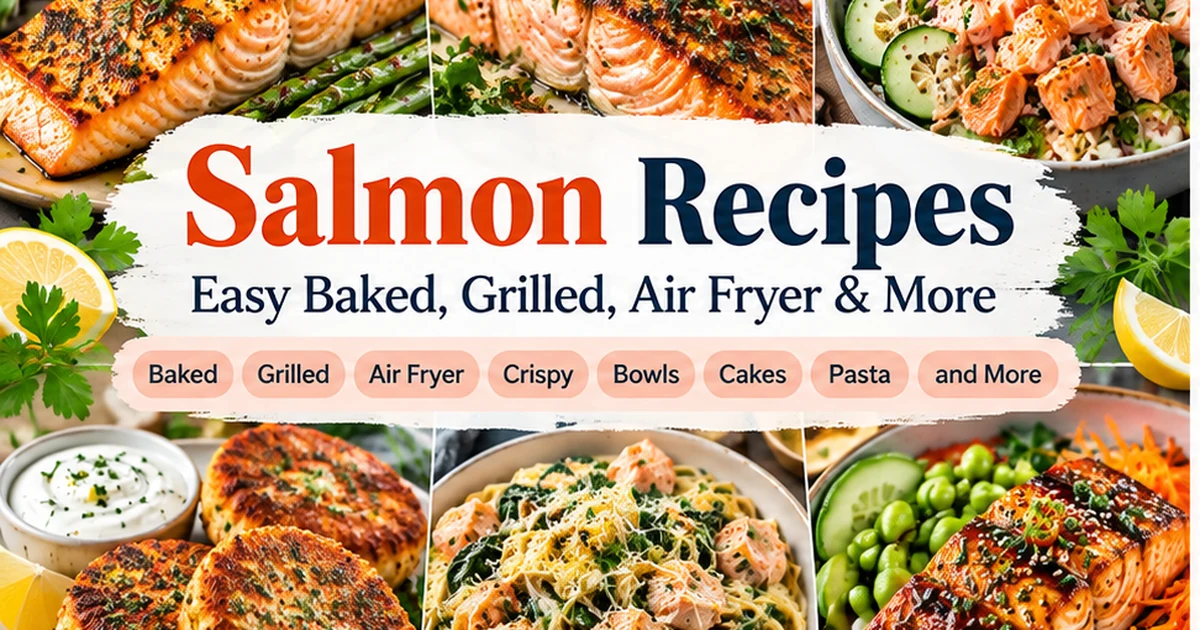
Table of Contents
Salmon recipes can be fast, simple, and very different from one another depending on the cooking method. A hot skillet gives you crisp edges, the oven makes hands-off dinners easy, the grill adds smoky flavor, and the air fryer is useful when you want smaller portions or quick salmon bites.
This guide is the main SABSEA hub for choosing what to cook with salmon. Instead of forcing one method on every fillet, it organizes our best salmon ideas by technique, meal format, and the kind of dinner you want to make. Use it when you have salmon but have not yet decided whether tonight should be baked, grilled, air-fried, served in a bowl, turned into cakes, or used in a more creative recipe.
Most of the recipes below have their own complete instructions, ingredients, and timing. The goal here is to help you choose the right one quickly and then move directly to the detailed recipe.
Best Salmon Recipes by Cooking Method
The easiest way to narrow down salmon recipes is to start with your equipment and the texture you want. If you prefer a browned surface, choose a skillet, grill, or air fryer. If you want a gentler method with less hands-on cooking, baked salmon is usually the better choice.
- Air fryer: fast, compact, and good for crisp edges. Start with our air fryer salmon bites or air fryer maple soy salmon.
- Oven: ideal for hands-off weeknight cooking. Try baked salmon in parchment when you want a moist, enclosed cooking method.
- Grill: best when you want char and a stronger outdoor-cooking flavor. Our grilled cilantro salmon and cedar-planked salmon take that route in different ways.
- Skillet: useful for crisp surfaces and precise cooking. For a complete meal, see crispy salmon with edamame and ginger rice.
Quick Salmon Recipes for Busy Nights
For busy evenings, the most useful salmon recipes are the ones with short ingredient lists and methods that do not require long marinating. Smaller pieces cook faster than whole sides of salmon, and simple seasoning lets the fish work with many side dishes.
Our air fryer salmon bites with garlic and lemon are built for that kind of meal. The salmon is cut into even cubes, lightly seasoned, and cooked quickly. They work especially well over rice, quinoa, greens, or vegetables.
If you want a complete bowl instead of deciding on sides separately, use our cooked salmon bowls guide. It organizes bases, vegetables, toppings, and sauces so you can turn already-cooked salmon into a full meal without making every component complicated.
Another fast option is honey ginger salmon. It gives you a sweeter, aromatic direction when plain lemon and herbs feel too familiar.
Baked and Oven Salmon Ideas
Baking is one of the easiest salmon methods because the oven gives you steady heat and leaves your hands free for the rest of dinner. The main decision is whether you want the fish exposed for more surface browning or enclosed to hold in more moisture.
Baked salmon in parchment traps steam around the fish and is useful when tenderness matters more than a crisp surface. It is also a convenient method when you want to include herbs, citrus, or vegetables in the packet.
For a more elaborate oven recipe, salmon Wellington in puff pastry turns salmon into a centerpiece dish. Our baked salmon in puff pastry ideas explore another direction for the same general technique.
If your goal is a simple dinner rather than a presentation dish, keep the oven method basic and use sides for variety. Roasted vegetables, potatoes, rice, couscous, or a fresh salad can all work without changing the salmon itself.
Grilled Salmon Recipes
Grilling adds a flavor that is difficult to reproduce indoors. It works especially well with thicker fillets that can handle direct heat long enough to develop color without drying out immediately.
For a bright herb profile, try grilled cilantro salmon. If you want a slower, more aromatic grilling approach, cedar-planked salmon uses the plank as both a cooking surface and a source of smoky character.
Grilled salmon pairs naturally with vegetables, grain salads, rice, and yogurt-based sauces. Keep the side dishes lighter when the salmon has a strong glaze, and use brighter sauces when the seasoning on the fish is simple.
Air Fryer and Crispy Salmon
The air fryer is most useful when you want quick cooking and concentrated heat around smaller portions. It is also convenient when you do not want to heat the full oven.
Choose air fryer salmon bites for bowls, salads, and wraps. Choose air fryer maple soy salmon when you want a glazed fillet rather than cubes.
For a crisp skillet-style meal with rice, our crispy salmon with edamame and ginger rice combines the fish and side dish into a more complete dinner.
Salmon Bowls, Burgers, Cakes, and Canned Salmon
Salmon does not have to stay in fillet form. Some of the most practical salmon recipes use cooked or canned fish in formats that are easier to portion, pack, or reuse.
For cakes and patties, start with our salmon cakes recipe, which is already receiving search visibility for that exact style of dish. You can also compare it with Greek salmon patties or salmon croquettes with canned salmon.
For bowls, use the salmon bowls guide when you want a flexible structure, or try the smoked salmon rice bowl for a more specific flavor profile.
For party food and snacks, easy smoked salmon dip and hot smoked salmon dip show how the same fish can move from dinner to an appetizer format.
Fresh, Frozen, Canned, or Smoked Salmon?
Fresh and frozen salmon fillets are the most flexible choices for grilling, baking, pan-searing, and air frying. Frozen salmon can be especially practical because you can keep portions on hand and thaw only what you need. Thaw it completely in the refrigerator and pat the surface dry before cooking so seasonings adhere and the exterior browns more effectively.
Canned salmon is better suited to recipes where the fish is mixed with other ingredients, such as cakes, croquettes, patties, and some salads or bowls. Smoked salmon works differently again: it is already strongly seasoned and is usually best in dips, breakfast dishes, rice bowls, sandwiches, or cold plates where its texture and smoky flavor remain noticeable.
Flavor Pairings That Work With Salmon
Salmon can carry both bright and rich flavors, but the best recipes usually choose one clear direction. Lemon, garlic, dill, parsley, and yogurt create a fresh profile. Ginger, sesame, scallions, and soy-based seasonings move the fish toward an East Asian-style dinner. Honey, mustard, and mild chili give you a sweeter glaze, while paprika, cumin, and herbs work well when you want a warmer spice profile.
Use sides to balance the main flavor instead of repeating it. A sweet glaze works better with plain rice and crisp vegetables than with another sweet side. A simple lemon-herb fillet can handle a richer potato dish or creamy sauce. Thinking in contrasts makes it easier to build a complete salmon dinner without adding too many competing flavors.
A Simple Salmon Dinner Formula
When you do not want to follow a complicated menu, use a three-part formula: choose one salmon method, one base, and one vegetable. For example, pair air fryer salmon bites with rice and cucumber, grilled salmon with potatoes and a green salad, or baked salmon with quinoa and roasted vegetables. Add one sauce or finishing element only if the fish itself is lightly seasoned.
This approach also helps with meal planning. The same cooked salmon can become dinner with vegetables on the first night and a bowl or salad the next day. If you know you want leftovers, choose a seasoning that will still make sense cold or gently reheated rather than a very heavy sauce that only works immediately after cooking.
How to Choose the Right Salmon Recipe
Use the cooking method as your first filter. If you have 15 minutes and want minimal cleanup, choose the air fryer or a skillet. If you are feeding several people, a baked recipe is usually easier to scale. If the weather is good and you want stronger char, use the grill.
Then think about the form of salmon you have. A thick fresh fillet is ideal for baking or grilling. Smaller pieces work well for salmon bites. Cooked leftovers are excellent for bowls. Canned salmon is practical for cakes and croquettes, while smoked salmon naturally fits bowls, dips, and lighter meals.
Finally, choose the flavor direction. Lemon, garlic, herbs, ginger, sesame, honey, mustard, yogurt sauces, and mild spices all work with salmon in different ways. Rather than adding many strong flavors at once, let one main direction lead the recipe and use the sides to add contrast.
Salmon Doneness and Food Safety
For a straightforward safety benchmark, the FDA’s seafood handling guidance says most seafood should be cooked to 145°F. If you are not using a thermometer, fish should be opaque and separate easily with a fork. Use the specific recipe instructions as your cooking guide, then confirm doneness before serving.
Frequently Asked Questions
What is the easiest way to cook salmon?
Baking and air frying are two of the easiest methods because they require relatively little hands-on work. Choose the oven for larger portions and the air fryer for smaller, faster meals.
What are the best salmon recipes for beginners?
Start with baked salmon, air fryer salmon bites, or a simple grilled fillet with lemon and herbs. These methods use short ingredient lists and make it easier to focus on cooking the fish properly.
Can I use canned salmon for dinner recipes?
Yes. Canned salmon works especially well in salmon cakes, croquettes, patties, and some bowls. It is a practical option when fresh fillets are not available.
What can I make with leftover cooked salmon?
Use it in rice or grain bowls, salads, wraps, or patties. Our cooked salmon bowls guide is a useful starting point because the fish can be combined with several different bases and toppings.
What sides go well with salmon?
Rice, quinoa, potatoes, roasted vegetables, green salads, cucumber, avocado, and simple yogurt or lemon-based sauces all pair well with salmon.