
Cooked Shrimp Ceviche with Lime and Avocado
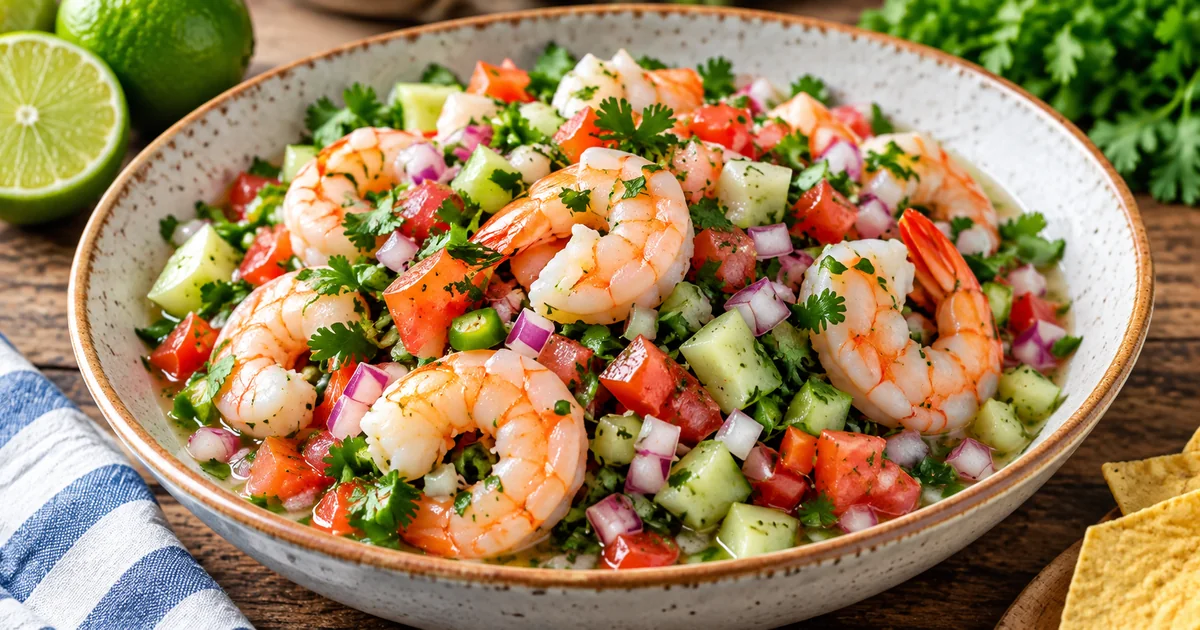
Cooked shrimp ceviche puts the citrus, crunch and herbs of a ceviche-style dish around shrimp that is already fully cooked. This version combines one pound of chilled ready-to-eat shrimp with freshly squeezed lime juice, diced Roma tomatoes, cucumber, red onion and cilantro. Avocado is folded in at the last moment so each spoonful retains some creamy contrast. It is a four-serving seafood appetizer or two larger light lunches, not a raw-shrimp preparation.
A chilled bowl is convenient, but the short ingredient list makes accuracy important. The shrimp must arrive cooked and ready to eat, or must have been properly cooked and chilled before this recipe’s preparation time begins. Lime supplies flavor: it is not a substitute for heat, nor does a change in appearance prove that uncooked shellfish is safe. This distinction is especially important when a general ceviche article presents raw and precooked shrimp as interchangeable. The FDA recommends thoroughly cooking seafood to minimize foodborne illness risk.
The recipe below uses measured citrus rather than an instruction to submerge shrimp in unlimited juice. A short refrigerated rest lets the cooked shrimp pick up flavor while the vegetables remain recognizable. Prepare the other ingredients with clean tools, keep everything cold and serve promptly with plain corn tostadas or tortilla chips if desired. Neither the ingredients nor the serving suggestion calls for wine, cooking alcohol or alcoholic sauces.
Table of Contents
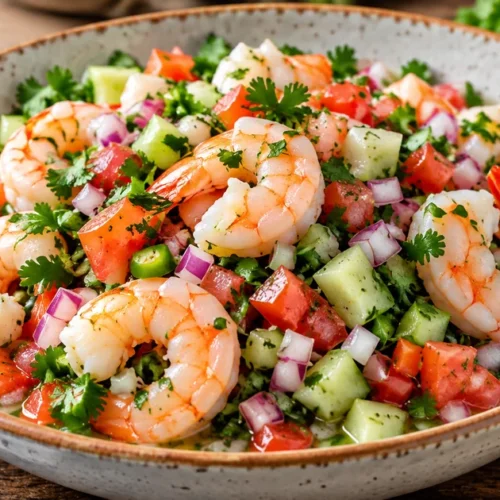
Cooked Shrimp Ceviche with Lime and Avocado
Ingredients
- 1 lb fully cooked, peeled and deveined ready-to-eat shrimp about 450 g; fully chilled, drained and thawed in refrigerator in advance if frozen
- 1/3 cup freshly squeezed lime juice measured; about 3 medium limes depending on size
- 2 tbsp freshly squeezed orange juice balances the lime
- 2 Roma tomatoes seeded if very juicy and finely diced
- 1/2 medium cucumber finely diced; remove particularly wet seeds
- 1/4 cup finely diced red onion
- 1/4 cup chopped fresh cilantro plus optional small extra pinch for garnish
- 1 small jalapeño optional; seeded and finely diced
- 1/2 tsp kosher salt start with this amount and adjust after mixing
- 1/8 tsp freshly ground black pepper optional
- 1 medium ripe avocado optional; diced just before serving
- 4 lime wedges optional, served separately
Instructions
- Confirm the shrimp is fully cooked and ready to eat, thawed according to its package in the refrigerator if previously frozen. Keep it chilled, drain thoroughly and cut large pieces into bite-sized chunks. Do not use raw shrimp directly for this no-cook recipe.
- Wash and dry the produce. Seed and dice the tomatoes, dice the cucumber and red onion, chop the cilantro and finely dice the optional seeded jalapeño. Keep the avocado whole until just before serving.
- In a clean, nonreactive bowl, whisk together the measured lime juice, orange juice, kosher salt and optional black pepper. Stir in the red onion and optional jalapeño, followed by tomatoes, cucumber and cilantro.
- Fold the thoroughly chilled, cooked shrimp into the citrus-dressed vegetables. Cover and refrigerate for about 15 minutes for flavor; this resting period is not a substitute for cooking raw shrimp.
- Just before serving, gently fold in the optional diced avocado or arrange it on top. Divide into four appetizer bowls, offer optional lime wedges and serve immediately with plain corn tostadas or tortilla chips on the side if desired. Keep unused portions refrigerated.
Notes
Why choose cooked shrimp for ceviche?
Ceviche describes several regional preparations rather than one fixed recipe. Some versions begin with raw fish or shellfish exposed to citrus; this editorial variation deliberately starts with fully cooked, chilled shrimp. The lime dressing delivers the bright flavor profile, while the shrimp’s cooked state removes any suggestion that a fifteen-minute soak is a reliable food-safety treatment. Call it cooked-shrimp ceviche, not a claim to a single traditional or authentic regional formula.
Buying cooked and peeled shrimp can also keep this a straightforward assembly recipe. Read the packaging carefully: the product should clearly be labeled cooked or ready to eat, not just cleaned, peeled or deveined. If it is frozen, thaw according to its package instructions in the refrigerator ahead of time. The brief thirty-minute planning window below excludes a lengthy frozen-product thaw. If you start with raw shrimp instead, you must first cook it thoroughly and chill it safely before proceeding; do not simply increase the lime-marinating time.
The ingredient choices are intentional. Roma tomatoes give fresh acidity without a large volume of watery seeds. Cucumber adds a cool bite; finely diced red onion contributes sharpness without becoming the entire flavor of the bowl. Cilantro and an optional small jalapeño build the familiar herb-and-chile direction. Fresh avocado is reserved for the finish because prolonged mixing can crush the pieces and cloud the citrus dressing.
The measured ingredient plan
Begin with one pound of cooked, ready-to-eat, peeled and deveined shrimp, fully chilled and drained. Large shrimp may be cut into two or three bite-sized pieces; small cooked shrimp can remain whole. This quantity yields four modest appetizer bowls. If the shrimp package has a shorter after-opening storage limit than any general leftover recommendation, follow the package’s instruction.
For the dressing, measure one-third cup of fresh lime juice and two tablespoons of fresh orange juice. The orange is a small balancing accent, not a sweet replacement for lime. Dice two Roma tomatoes and half a medium cucumber; remove excess tomato seeds and drain particularly wet cucumber before mixing. Add one-quarter cup finely diced red onion, one-quarter cup chopped cilantro and one small seeded, finely diced jalapeño if wanted. Start with a half teaspoon of kosher salt and an eighth teaspoon of ground black pepper, then taste the assembled dressing before adding more seasoning.
One medium ripe avocado is optional but suits this specific bowl; dice it only just before serving. Four lime wedges are an optional table garnish, not additional liquid that should be counted in the measured recipe. Plain corn tostadas or tortilla chips can be offered separately, but they are not required for the four-bowl yield. Check packaged condiment or chip labels if an ingredient restriction matters to your household.
Choosing, thawing and chilling the shrimp
The seafood package determines whether this is truly a no-cook assembly. Choose shrimp marked cooked and ready to eat, with the proper refrigeration or frozen-storage instructions intact. A thawed package should still be cold when opened. Do not leave a bag on the counter to speed up thawing; the FDA recommends gradual refrigerator thawing, with other safe methods used according to whether the seafood will immediately be cooked. For this cold dish, refrigerator-thawed ready-to-eat shrimp is the clear default.
Drain any packing liquid and dry very wet shrimp gently with a clean paper towel so it will take up the citrus dressing without diluting it. Use clean food-preparation tools for the ready-to-eat seafood and freshly washed vegetables. If you have handled raw seafood elsewhere in the kitchen, wash tools and work surfaces thoroughly before assembling the cold dish. The shrimp should go back into the refrigerator while the vegetables are being prepared.
Never rely only on a pink color or the words ‘fresh shrimp’ when purchasing. Raw shrimp is not suitable for the no-cook method described here. If an opened container has been held improperly or smells off, discard it rather than assuming lime juice will make it safe. The aim is to serve a properly chilled, fully cooked product with a flavorful dressing, not to use citrus as a preservation step.
Prepare the citrus and crunchy vegetables
Wash and dry the tomatoes, cucumber, chile, cilantro and limes. Seed the tomatoes if they are very juicy, and cut both tomatoes and cucumber into small, fairly even dice so the components will combine neatly with the shrimp. Finely dice the red onion rather than slicing it into large chunks. If using jalapeño, remove the stem and seeds, dice it finely and keep it optional for guests who prefer a milder appetizer.
In a medium nonreactive bowl, combine the one-third cup of lime juice, two tablespoons of orange juice, salt and black pepper. Stir in the red onion and optional jalapeño first. Give them a couple of minutes while you finish chopping; this briefly exposes the onion to the citrus and helps distribute the chile in the dressing. Add the diced tomato and cucumber but hold back the avocado. Exact vegetable quantities matter here because adding several extra tomatoes would dilute the measured dressing and change the yield.
The fresh cilantro can be added just before the shrimp, saving a small pinch as a visual garnish if desired. This is an assembly sequence, not a chemical cooking stage. Do not describe a change of color or firmness during the brief rest as evidence that any raw seafood has cooked. All the shrimp used in this preparation must already be fully cooked.
Combine, chill briefly and finish
Add the drained, fully cooked and chilled shrimp to the dressed vegetables. Fold gently so each piece receives some citrus without crushing the tomato. Cover the bowl and refrigerate it for about fifteen minutes. The chill is there to bring the flavors together, not to make unsafe seafood safe. If the shrimp, vegetables and dressing were not cold to begin with, correct the temperature before serving rather than relying on a short refrigerator rest alone.
Just before serving, fold in the diced avocado if using it, or arrange it on top of individual portions to keep the pieces intact. Taste a small amount of the properly chilled finished dressing and adjust salt only if needed. Divide among four shallow appetizer bowls, using a clean serving spoon. Serve the lime wedges alongside rather than squeezing all four into the measured mixture. Extra citrus should be a guest choice, not an unrecorded change to the formula.
For an appetizer, put plain corn tostadas or tortilla chips on a separate dry plate so they stay crisp. For a light lunch, spoon the ceviche over clean lettuce leaves and serve it with a simple side instead. These serving formats do not change the seafood recipe’s official four-bowl yield. Keep unused portions in the refrigerator rather than leaving the serving bowl out throughout a long gathering.
Prevent a watery or overly sharp ceviche
Wet vegetables and unmeasured citrus cause many disappointing bowls. Seed particularly juicy tomatoes, drain cooked shrimp after thawing and shake excess rinse water off the cilantro. Use a measured one-third cup of lime juice first. You can offer wedges at the table, but soaking a pound of cooked shrimp under several cups of lime juice will bury the other flavors and turn a compact appetizer into a soupy mixture.
Dicing matters too. Small, fairly even tomato and cucumber pieces distribute through the shrimp, while enormous onion chunks dominate the bite. The red onion is deliberately restricted to a quarter cup. If you want less heat, omit the jalapeño rather than replacing it with an untested sauce that may contain other ingredients. Keep cilantro at a measured quarter cup so it contributes flavor without becoming the entire dish.
Avocado is particularly sensitive to timing. Add it last, after the brief chill, or set slices on each serving. Folding it into the bowl hours earlier can produce a muddier appearance. The recipe’s time estimate assumes the seafood is already chilled and cooked and the vegetables are ready to handle; it does not include thawing a large frozen block or preparing uncooked shrimp.
Variations that preserve the basic formula
A cucumber-forward bowl is easy: add a little extra diced cucumber at serving time, not while measuring the first batch, and accept that the balance of dressing will change. For a citrus-forward garnish, offer a fresh lime wedge with each portion. If you prefer no chile, the jalapeño is optional and can be omitted without modifying the cook status or main preparation sequence. Orange juice may be omitted for a sharper profile, but if you remove it, do not silently claim the dish will have the same measured flavor balance.
For a more substantial lunch, serve the finished ceviche over lettuce with a piece of plain bread or a handful of tortilla chips. Keep the grain or starch outside the ingredient list unless you deliberately recalculate recipe servings. Prepared salsa, ready-made hot sauce and seasoning blends are not needed. Homemade substitutions also require attention to labels if allergies or household dietary restrictions are relevant.
Do not swap in raw shrimp, raw white fish, raw scallops or any other uncooked seafood and retain these instructions. Such a substitution would be a different recipe with different food-safety requirements. Cooked crab could inspire another cold appetizer, but its package storage instructions, quantity and handling should be validated separately rather than copied into this shrimp recipe by name.
Food safety, allergens and leftovers
Shrimp is crustacean shellfish. Check the cooked-shrimp label and keep it away from other foods when someone has a shellfish allergy; the recipe is not safe for a person with that allergy. Prepared chips, toppings and any condiment have their own ingredient lists. Use cold, ready-to-eat cooked shrimp, clean produce and clean utensils. The FDA advises thoroughly cooking seafood to minimize risk, and its shrimp doneness cue is firm, pearly and opaque flesh; raw shrimp should not be used directly in this cold recipe. For general guidance, see FDA seafood selection and handling.
Because this is a chilled, perishable seafood appetizer, keep it refrigerated at or below 40°F (4°C). Do not leave it out longer than two hours, or one hour if the surrounding temperature is above 90°F (32°C). Serve smaller cold portions and replenish them from the refrigerator when feeding several people. For the general holding rules, see USDA guidance on leftovers and cold foods.
Store any promptly chilled remainder covered in the refrigerator. USDA’s general advice is three to four days for properly stored cooked leftovers, but this mixed, chilled dish is at its best when eaten promptly, and a shorter shrimp-package after-opening instruction controls. Avocado may soften and the vegetables will release water over time. Discard leftovers if time-temperature rules were exceeded; adding more lime does not reset their safety. This recipe provides no nutritional analysis or personal test report.
Frequently asked questions
Can I make this with raw shrimp if I soak it longer in lime?
No. This formulation uses already fully cooked, chilled shrimp. Citrus adds flavor but should not be treated as a validated substitute for cooking raw shellfish. If raw shrimp is what you have, fully cook it by an appropriate method and chill it safely before following this separate cold assembly recipe.
How can I tell that packaged shrimp is ready for this recipe?
Choose a package clearly labeled cooked or ready to eat, and follow its refrigeration, thawing and after-opening instructions. Peeled and deveined alone does not mean the shrimp is cooked. If the product state is unclear, ask the supplier or choose a clearly labeled alternative.
Is this a traditional Mexican shrimp ceviche?
It is a Mexican-inspired cooked-shrimp version using lime, tomato, cucumber, cilantro and optional chile. Ceviche practices vary by region and household; this article does not claim a single authentic or traditional formula.
Can I prepare the vegetables in advance?
Yes. Clean, dice and refrigerate the tomato, cucumber, onion and cilantro separately, and keep cooked shrimp refrigerated. Mix shortly before serving and add the avocado at the end so the cold bowl stays appealing.
How long may the finished bowl sit out?
Keep it cold and refrigerate promptly. General USDA guidance limits perishable food at room temperature to two hours, or one hour above 90°F (32°C). Do not use additional lime juice to extend those limits.
A bright finish with a clear recipe method
Cooked shrimp ceviche works when the recipe tells the reader exactly which shrimp to buy, how much citrus to use and what each short stage is supposed to do. It is a cold assembly, not a shortcut for making raw seafood safe. The tomato, cucumber, onion and cilantro give the bowl structure, and the optional avocado turns it into a fuller appetizer without complicating the measured base.
For another fully cooked seafood appetizer on SABSEA, the published Cowboy Crab Dip with Corn and Peppers uses a warm baked format rather than a chilled citrus dressing. They serve different occasions and should not be combined into one recipe card. Prepare this ceviche with clearly labeled cooked shrimp, keep the bowl cold, and serve it when the vegetables and avocado look their best.