
Homemade Fish Balls with Ginger for Clear Seafood Soup
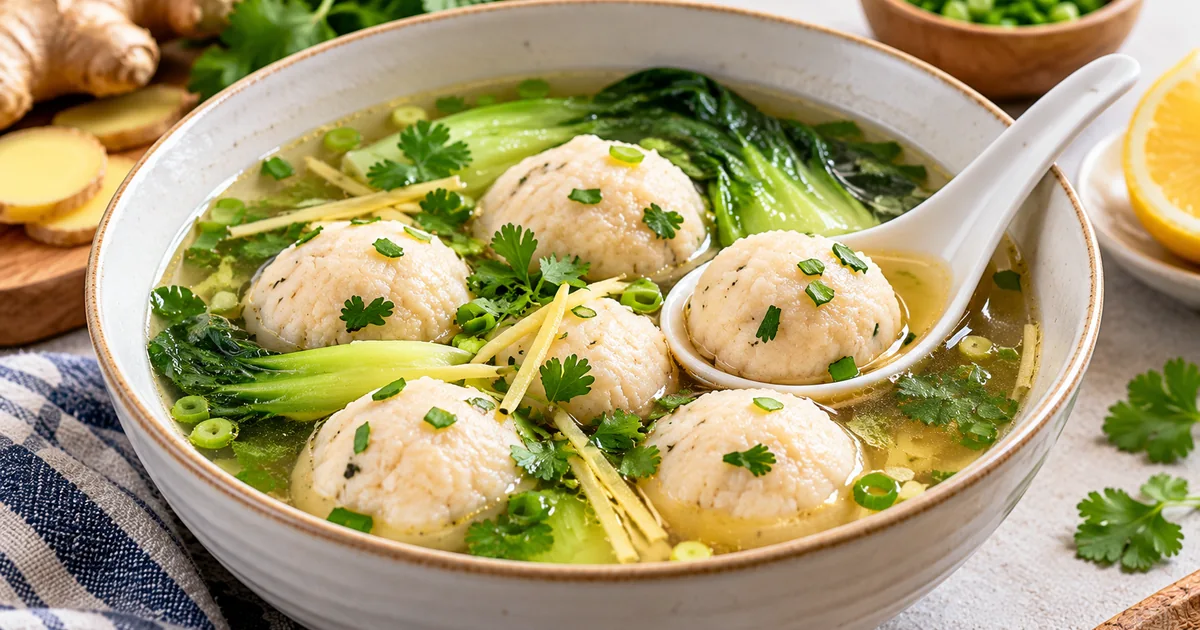
Homemade fish balls are not the same as breaded fish cakes or patties. Their pleasing texture comes from working cold boneless fish into a smooth paste, giving that paste a brief rest and poaching small portions gently. In this recipe, the fish balls are served in a clear ginger broth with shiitake mushrooms, carrot and scallions so you can taste the fish rather than hide it under a heavy sauce.
The equipment can be simple: a food processor, a bowl, two spoons and a wide saucepan. Keeping the mixture cold and adding water slowly are more important than specialized gadgets. The resulting balls should feel tender and lightly springy, not rubbery. The method also explains how to tell when the centers are cooked rather than relying on the balls floating to the surface.
Table of Contents
Fish balls versus fish cakes
Fish cakes often contain chunks or flakes of fish combined with potato, breadcrumbs or vegetables and then pan-fried into patties. Fish balls start with a much smoother paste. The proteins in the fish are worked until they bind together, creating a cohesive texture that can be gently poached in liquid. A small quantity of starch helps the paste hold its shape without making it bready.
This is a mild, soup-friendly version rather than a deep-fried street-food snack. The ginger, scallions and clear broth give the dish a light aromatic profile. If you prefer a crisp coating, look at our homemade fish fingers; for flattened patties, the sea bream fish cakes use a different technique.
Choosing fish and keeping everything cold
Pollock, cod and tilapia are all possible choices, provided they are boneless, skinless and fresh-smelling. Choose lean white fish without large fatty sections for a clean pale paste. A very wet or repeatedly thawed fillet can weaken the mixture, so blot it carefully. If using previously frozen fish, thaw under refrigeration and work with it while still very cold.
Chill the processor bowl briefly if your kitchen is warm. Dice the fish just before pulsing, and return the mixture to the refrigerator whenever you are interrupted. Warm fish paste becomes loose, more difficult to shape and harder to poach neatly. Keep equipment that touched raw fish separate from garnishes.
How the binding ingredients work
Cornstarch absorbs a small amount of moisture and gives the mixture body. Egg white helps bind the paste and adds a gentle texture without making the balls dense. Ice-cold water loosens the mixture a little so the processor can develop a smooth paste; add it gradually, because two tablespoons may be plenty for a wetter fillet.
Ginger keeps the flavor fresh, white pepper adds a restrained warmth and scallions contribute green flecks without taking over. Salt also helps the fish proteins form a cohesive mixture as you stir. Avoid adding large pieces of vegetables directly to the paste; they can interrupt the smooth structure and cause uneven shaping.
Mixing the paste for a springy texture
Pulse the chopped fish in short bursts until no obvious large pieces remain. Stop and scrape down the bowl, then add egg white and starch. With the processor running briefly, drizzle in ice water a little at a time until the paste looks smooth and clings together. Do not add extra water just because the mixture looks thick; fish naturally contains moisture.
Transfer to a cold bowl and stir firmly for a minute or two. This mechanical mixing strengthens the structure. The paste should be sticky and able to sit in a spoon rather than pouring. Fold in scallions only after the smooth base forms, then chill covered for about twenty minutes. A short rest also makes scooping less messy.
Shaping neat fish balls without sticking
Dampen your hands lightly or use two teaspoons dipped in cold water. Scoop evenly sized portions, around one tablespoon each, and smooth them with a gentle rolling motion. You do not need perfect spheres; consistent size matters more for cooking. Large balls will require a longer poach than the smaller ones called for here.
Arrange the shaped portions on a chilled plate while the broth warms. If the paste is too soft to hold any shape, refrigerate a little longer before adjusting its ingredients. Adding handfuls of cornstarch would make the fish balls gummy, so troubleshoot temperature and water content first.
Why gentle poaching matters
A vigorous boil knocks the delicate fish balls into one another and can roughen their surfaces before they set. Instead, bring the clear broth to a gentle simmer with small bubbles and slide in the balls a few at a time. Keep the pot uncrowded. They should poach steadily in the broth while mushrooms and carrot finish cooking.
Begin checking around five minutes for tablespoon-sized balls. Some will rise as they cook, but floating is not a reliable food-safety test. Check the largest ball with an instant-read thermometer to confirm a 145°F (63°C) center, or follow the general FDA guidance for fully cooked fish. The texture should be set and the center no longer raw.
Building a clear ginger broth
Use unsalted vegetable stock or a light seafood stock so you can control the final salt. Shiitake mushrooms add savoriness and carrot gives sweetness without making the soup cloudy. Slice them relatively thinly so the vegetables cook in the same short window as the fish balls. Add grated ginger directly to the broth for a second layer of aroma.
A small amount of reduced-sodium soy sauce is optional for depth. Taste first, because some packaged stocks are already seasoned. Keep the broth at a simmer rather than boiling it hard, especially after adding fish balls. Baby spinach goes in only near the end, when it wilts quickly and keeps a fresh color.
Serving ideas and make-ahead options
Serve four or five fish balls per bowl with mushrooms, carrot, scallions and broth. A side of steamed rice or rice noodles turns the soup into a more substantial meal. Add a few drops of sesame oil to individual bowls if desired rather than making the whole pot oily. Fresh herbs can be scattered on top immediately before serving.
You can prepare the fish paste earlier in the day and keep it chilled until shaping. For longer storage, cook the fish balls fully, cool promptly and refrigerate in a separate container from the broth. If you want a more strongly seasoned seafood soup, our Korean seafood soup has a different flavor direction and should remain its own recipe.
Troubleshooting soft or tough fish balls
Soft fish balls can result from excess water, warm paste, incomplete mixing or uneven sizing. Work with thoroughly chilled fish, add the water in small amounts and stir until the paste becomes tacky. If one test ball breaks, keep the remaining paste cold and mix again before shaping. Do not compensate by boiling harder.
Tough rubbery results are more likely when the balls are cooked too vigorously or kept simmering long after they are done. Remove them once the centers are safely cooked. If the broth gets cloudy, the heat may be too high or bits of paste may have separated; lower to a gentle simmer and skim the surface without overworking the balls.
Storage, reheating and safe seafood handling
Cooked fish balls and broth should be cooled promptly and refrigerated in shallow covered containers. They are best when eaten within two or three days for texture, within the general three-to-four-day window for properly refrigerated cooked fish. Freeze fully cooked fish balls in a single layer before transferring them to a sealed bag if you need longer storage; texture may soften slightly after thawing.
Reheat in gently simmering stock until piping hot rather than repeatedly boiling the same pot. Wash utensils and surfaces thoroughly after preparing raw fish paste. For safe fish cooking, use the FoodSafety.gov minimum-temperature chart and the FDA seafood guide.
Step-by-Step Recipe
Measure the ingredients before heating the appliance or pot. The quantities below correspond to four servings and the cooking guidance in the recipe card. Follow each step in order, but use a thermometer and the actual fish thickness to decide when cooking is complete.
Ingredients for four servings
- 1 1/4 lb skinless boneless white fish, pollock, cod or tilapia, very cold
- 2 tbsp cornstarch, for binding
- 1 large egg white
- 2 tbsp ice-cold water, add gradually
- 1 tsp finely grated fresh ginger, for fish paste
- 1 tsp kosher salt, divided
- 1/4 tsp white pepper
- 2 scallions, finely chopped, divided
- 1 tsp toasted sesame oil, optional
- 5 cups unsalted vegetable or seafood stock, for broth
- 1 cup sliced shiitake mushrooms
- 1 small carrot, thinly sliced
- 1 tsp fresh grated ginger, for broth
- 1 tsp low-sodium soy sauce, or to taste
- 1 cup baby spinach, optional finish
Method
- Keep the fish cold and blend. Pat raw white fish dry, remove bones, dice and chill. Pulse in a food processor with egg white, cornstarch, 1 teaspoon grated ginger, white pepper and about half the measured salt. Add ice water gradually until the paste turns smooth and slightly sticky.
- Work and chill the paste. Stir vigorously with a spoon 1 to 2 minutes to develop a cohesive texture. Fold in half the chopped scallions and optional sesame oil. Cover and refrigerate about 20 minutes so the mixture firms enough to shape.
- Build the clear broth. Bring stock, shiitake mushrooms, carrot, the second teaspoon of ginger and soy sauce to a gentle simmer in a wide saucepan. Cook about 5 minutes until vegetables begin to soften. Taste and adjust using the remaining salt.
- Shape and poach the fish balls. With damp hands or two lightly wet spoons, form 16 small balls. Slide gently into barely simmering broth in batches. Poach about 5 to 8 minutes depending on size; do not use a rolling boil. Confirm at least one of the largest centers reaches 145°F (63°C) and that all balls are fully cooked.
- Finish soup and serve. Add spinach for the final minute if using. Distribute fish balls, mushrooms, carrot and clear broth among four bowls. Scatter remaining scallions and serve immediately.
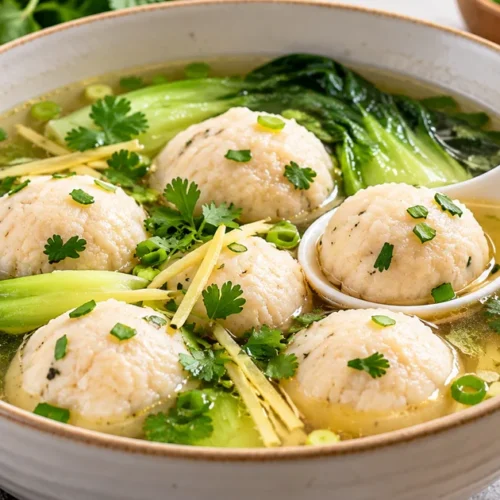
Homemade Fish Balls with Ginger for Clear Seafood Soup
Ingredients
- 1 1/4 lb skinless boneless white fish pollock, cod or tilapia, very cold
- 2 tbsp cornstarch for binding
- 1 large egg white
- 2 tbsp ice-cold water add gradually
- 1 tsp finely grated fresh ginger for fish paste
- 1 tsp kosher salt divided
- 1/4 tsp white pepper
- 2 scallions finely chopped, divided
- 1 tsp toasted sesame oil optional
- 5 cups unsalted vegetable or seafood stock for broth
- 1 cup sliced shiitake mushrooms
- 1 small carrot thinly sliced
- 1 tsp fresh grated ginger for broth
- 1 tsp low-sodium soy sauce or to taste
- 1 cup baby spinach optional finish
Instructions
- Pat raw white fish dry, remove bones, dice and chill. Pulse in a food processor with egg white, cornstarch, 1 teaspoon grated ginger, white pepper and about half the measured salt. Add ice water gradually until the paste turns smooth and slightly sticky.
- Stir vigorously with a spoon 1 to 2 minutes to develop a cohesive texture. Fold in half the chopped scallions and optional sesame oil. Cover and refrigerate about 20 minutes so the mixture firms enough to shape.
- Bring stock, shiitake mushrooms, carrot, the second teaspoon of ginger and soy sauce to a gentle simmer in a wide saucepan. Cook about 5 minutes until vegetables begin to soften. Taste and adjust using the remaining salt.
- With damp hands or two lightly wet spoons, form 16 small balls. Slide gently into barely simmering broth in batches. Poach about 5 to 8 minutes depending on size; do not use a rolling boil. Confirm at least one of the largest centers reaches 145°F (63°C) and that all balls are fully cooked.
- Add spinach for the final minute if using. Distribute fish balls, mushrooms, carrot and clear broth among four bowls. Scatter remaining scallions and serve immediately.
Notes
Frequently Asked Questions
Which fish is best for homemade fish balls?
Lean boneless white fish such as pollock, cod or tilapia works. Keep it very cold and dry the surface carefully before blending.
Can I make fish balls without a food processor?
Yes, but it takes more chopping and beating to create a smooth cohesive paste. Use a sharp knife and work on a chilled board until the mixture is very finely minced.
Why do homemade fish balls turn soft?
The paste may be too warm or wet, or not mixed sufficiently. Chill it, add ice water gradually and stir until cohesive before forming balls.
Can I freeze homemade fish balls?
Fully cooked fish balls can be cooled, frozen separately and packed in an airtight bag. Reheat thoroughly in hot broth; their texture may be slightly softer.
How can I tell when fish balls are cooked?
Do not rely only on floating. Check one of the largest centers for 145°F (63°C), or verify that the fish is fully cooked, opaque and set throughout.
For more ideas using different seafood or cooking techniques, explore the related SABSEA recipes linked above. Each recipe has its own method and ingredients, so choose the one that matches the fish or shellfish available to you.