
Air Fryer Cod with Lemon Pepper (20-Minute Recipe)
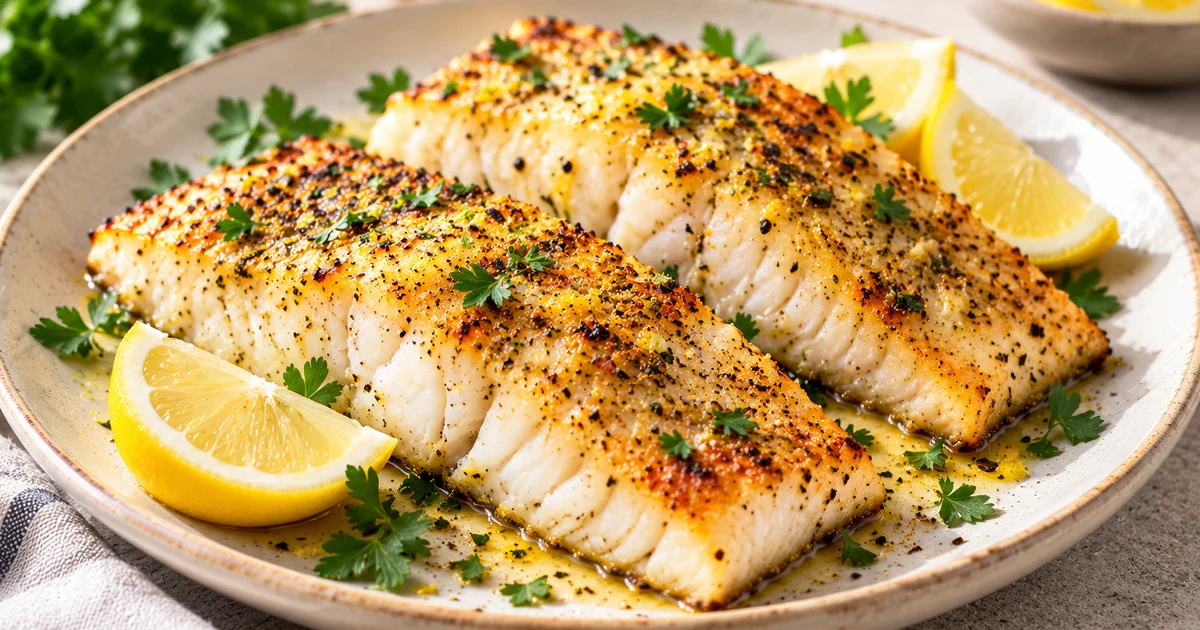
Table of Contents
Air fryer cod with lemon pepper gives lean white fish a fragrant, lightly golden surface while keeping the center moist and flaky. This measured recipe uses four similar-size cod portions, a thin layer of oil, fresh lemon zest, pepper and a restrained blend of pantry seasonings. You can prepare the fish in minutes and let circulating hot air do most of the cooking.
The important details are thickness, space in the air-fryer basket and when you add lemon juice. Wet cod fillets steam and cook unevenly; overly crowded pieces trap moisture. Follow the practical steps below for a repeatable dinner instead of treating a single minute setting as a guarantee.
Why This Recipe Works
Cod is lean and mild, which makes it a good match for high-velocity air-fryer heat as long as the surface is lightly oiled. Lemon zest carries an aromatic citrus flavor without soaking the raw fillets. Paprika encourages a warm color and thyme adds a savory note that does not hide the fish.
The cooking method is not the same as deep-frying: there is no heavy batter to create a crust. Expect the top to be lightly firm and the interior to separate into moist flakes. This makes the recipe appropriate for a quick dinner paired with fresh vegetables, rather than trying to imitate breaded restaurant fish.
Choosing and Thawing the Fish
Look for cod with firm flesh, a mild clean smell and consistent thickness. Fresh and properly frozen fish are both useful; ask for boneless center-cut portions where possible. Avoid strongly fishy or ammonia-like odors, excessive discoloration, and torn packaging.
Thaw frozen cod in the refrigerator overnight, or use a sealed bag in cold water for a faster thaw and cook promptly. Pat away moisture carefully because water on the surface delays color and interferes with seasoning adhesion. Thick and thin portions belong in different cooking batches whenever possible.
Ingredients and Substitutions
The measured seasoning is strong enough to make mild cod taste lively without making it overly salty. Coarse black pepper gives small bursts of heat, lemon zest keeps the flavor fresh, and garlic powder seasons more evenly than clumps of fresh garlic that could scorch in moving hot air.
Use a neutral olive oil rather than flooding the basket. The oil helps carry flavor and protect exposed lean surfaces, while fresh lemon juice belongs on the plate after cooking. If your cod has been lightly brined, reduce the salt and adjust at the table.
- 1 1/2 lb boneless cod fillets: four portions, around 6 ounces each, thawed if frozen
- 1 1/2 tbsp olive oil: lightly coat fish
- 1 tsp finely grated lemon zest: from a washed lemon
- 1 tsp freshly cracked black pepper: adjust to taste
- 3/4 tsp garlic powder
- 1/2 tsp sweet paprika
- 1/2 tsp kosher salt
- 1/4 tsp dried thyme
- 1 tbsp fresh lemon juice: add after cooking
- 2 tbsp chopped parsley: optional finish
- lemon wedges: for serving
The Right Equipment and Heat
Air fryers differ substantially in basket depth, wattage and preheat behavior. Use the temperature recommended here as a baseline, then check the fish rather than relying on the display alone. A perforated basket circulates heat over the fillet, so keep enough clearance for air to reach each piece.
An instant-read thermometer is valuable for avoiding both raw centers and dry edges. A thin fish spatula helps lift cooked portions without leaving pieces behind. If the basket coating is delicate, use a suitable nonmetal tool and avoid abrasive cleaning between batches.
Prepping for Best Texture
Before turning on the appliance, thaw the cod completely and remove any visible pin bones. Blot both sides dry with paper towels. Measure the dried seasoning in a small bowl, wash and zest the lemon, and put a clean plate beside the air fryer for the cooked fish.
Brush the fish with just enough oil to form a thin sheen. Season both broad surfaces rather than piling the mixture on one side. Heavy wet marinades can drip through the basket and create smoke; this dry-spice method is designed to minimize that problem.
Cooking Time and Safe Doneness
For cod fillets approximately 3/4 to 1 inch thick, a preheated 390°F air fryer often takes roughly 9–12 minutes. Very thin pieces can finish earlier; thick loin portions may need extra minutes. If cooking in several batches, the second batch may cook faster because the fryer is already hot.
The safe endpoint for fish is 145°F (63°C) or opaque flesh that flakes easily. Insert the probe into the thickest part without touching the basket. Do not keep the cod cooking until it looks deeply browned: lean fish can become dry long before its surface turns dark.
For current food-safety guidance, refer to the FoodSafety.gov safe minimum temperature chart and the FDA seafood handling guide. These sources cover safe handling and the standard fish doneness target, which matters more than any fixed timing claim.
Troubleshooting Common Problems
A pale, watery top usually signals that the fish was wet or crowded. Dry the next batch more thoroughly and separate portions. If edges curl up or become chalky, the fillets may be too thin for the setting; lower the temperature slightly and start checking sooner.
If the spice mixture tastes bitter, powdered garlic or paprika may have scorched on an exposed corner. Use an even coating and avoid excessive oil. Cod that breaks when lifted is not necessarily overdone; use a broad spatula and slide under the full fillet rather than pulling at one edge.
What to Serve with Air Fryer Cod
The lemon-pepper profile pairs naturally with steamed broccoli, sautéed green beans, fluffy rice or a crisp cucumber salad. Keep heavier dressings on the side so the fish remains the center of the plate. A wedge of lemon at the table lets diners set their preferred brightness.
For a more substantial vegetable side, serve the fish beside a Greek salad with lemon dressing. If the main course needs a contrasting sauce, a small spoonful of plain yogurt mixed with herbs works well, but it should be added after cooking rather than coating the fish in the basket.
Try this complementary Greek salad with lemon dressing for an easy complete meal; serve sauces separately where preserving a crisp fish surface matters.
For another fish cooking technique on SABSEA, compare oven-baked cod with garlic and olive oil, while keeping this recipe focused on its own fish species and cooking method.
Flavor Variations and Dietary Swaps
For a warmer flavor, exchange thyme for a little dried oregano and use smoked paprika instead of sweet paprika. For a milder plate, reduce the black pepper by half and rely more on lemon zest and parsley. Thinly grated orange zest can replace a small part of the lemon zest without changing the cooking method.
For a crumb-topped version, use a separate tested breading formula and a different cook time; moist breadcrumbs applied to this recipe can block airflow and give a patchy result. A quick herb finish or a few drops of oil after cooking are more dependable adjustments for this exact method.
Storage and Reheating
Place cooked leftovers in a shallow covered container and refrigerate promptly at 40°F (4°C) or colder. Properly stored cooked fish is typically best within three to four days. Separate the lemon wedges and wet salad components from the leftover fillet.
Reheat leftovers thoroughly to 165°F (74°C) and avoid repeated heating. A low oven or brief, gentle air-fryer reheat can warm the fish, but the lean fillet will not be as juicy as on the first day. Break leftover cod into a grain bowl or salad if you prefer not to reheat a thick piece again.
How This Method Differs from Other Recipes
Baked cod is ideal for a large dish and allows pan juices to collect around the fish, while air-fried cod focuses on quick, circulating heat with little added liquid. Pan-fried cod offers direct skillet contact and more pronounced browning. These are distinct cooking techniques with different textures.
For a classic oven version see our existing baked cod with garlic and olive oil; for a sauced skillet dinner try cod piccata, and for crisp stovetop contact see the pan-fried cod recipe. Those guides help you choose a method before cooking rather than adding multiple unrelated cooking methods here.
Related reading: cod piccata with capers and pan-fried cod fillets show distinct recipe styles. These internal links are intended to guide readers among cooking methods, not to suggest that the pages are identical.
Make-Ahead and Serving Timeline
The seasoning blend can be mixed the previous day and stored in a closed jar. Wash herbs, prepare rice and cut vegetables ahead, but keep the cod cold until the air fryer is nearly ready. Seafood should not sit out while you finish unrelated tasks.
If making dinner for several people, divide fish portions into size-matched batches. Prepare clean plates and serving sides before the first batch finishes. Cooked cod tastes best served promptly, so plan the final vegetable or rice step to coincide with the fish rather than holding the fillets warm for a long time.
Step-by-Step Air Fryer Cod with Lemon Pepper (20-Minute Recipe)
Use the following sequence with the measured ingredients above. The finish times assume properly thawed fillets of similar thickness; check each portion individually and observe food-safety guidance rather than relying exclusively on the clock.
- Preheat and prepare. Preheat the air fryer to 390°F (199°C) if recommended by the appliance maker. Pat four similar cod portions completely dry and inspect for stray bones.
- Mix the seasoning. Stir together lemon zest, black pepper, garlic powder, sweet paprika, salt and dried thyme. Brush cod lightly with olive oil and sprinkle the seasoning evenly over both sides.
- Arrange in one layer. Place fish in the basket with a little space between fillets; cook in batches if necessary. Avoid stacking and do not crowd the airflow.
- Air-fry and check. Cook for about 9–12 minutes for average 3/4–1-inch pieces, checking earlier for thin fillets. The safe center target is 145°F (63°C), or fully opaque flesh that flakes with a fork.
- Finish and serve. Lift fish with a flexible spatula, drizzle with lemon juice and scatter fresh parsley over the top. Serve immediately with rice, vegetables or salad.
Air Fryer Cod with Lemon Pepper (20-Minute Recipe)
Ingredients
- 1 1/2 lb boneless cod fillets four portions, around 6 ounces each, thawed if frozen
- 1 1/2 tbsp olive oil lightly coat fish
- 1 tsp finely grated lemon zest from a washed lemon
- 1 tsp freshly cracked black pepper adjust to taste
- 3/4 tsp garlic powder
- 1/2 tsp sweet paprika
- 1/2 tsp kosher salt
- 1/4 tsp dried thyme
- 1 tbsp fresh lemon juice add after cooking
- 2 tbsp chopped parsley optional finish
- lemon wedges for serving
Instructions
- Preheat the air fryer to 390°F (199°C) if recommended by the appliance maker. Pat four similar cod portions completely dry and inspect for stray bones.
- Stir together lemon zest, black pepper, garlic powder, sweet paprika, salt and dried thyme. Brush cod lightly with olive oil and sprinkle the seasoning evenly over both sides.
- Place fish in the basket with a little space between fillets; cook in batches if necessary. Avoid stacking and do not crowd the airflow.
- Cook for about 9–12 minutes for average 3/4–1-inch pieces, checking earlier for thin fillets. The safe center target is 145°F (63°C), or fully opaque flesh that flakes with a fork.
- Lift fish with a flexible spatula, drizzle with lemon juice and scatter fresh parsley over the top. Serve immediately with rice, vegetables or salad.
Notes
Frequently Asked Questions
Can I air fry cod straight from frozen?
This recipe is tested conceptually for fully thawed fillets. Frozen cod needs different timing and should be cooked using the appliance manufacturer’s frozen-fish guidance; for consistent seasoning and doneness, thaw safely first.
What temperature should air fryer cod reach?
The standard safe fish temperature is 145°F (63°C) at the thickest center, or opaque flesh that flakes readily. Use an instant-read thermometer whenever possible.
Should I flip cod in the air fryer?
Many baskets cook thin fillets evenly without a flip. Check the appliance guidance and turn carefully only when needed; delicate cod may break if repeatedly handled.
How do I stop cod drying in the air fryer?
Choose evenly sized portions, dry and lightly oil them, avoid overcrowding, and begin checking before the high end of the cooking range.
Can I use the same seasoning on haddock?
Yes, the seasoning profile also suits haddock, but cooking times vary with fillet size and equipment. Check safe doneness independently rather than copying a minute setting.
More Seafood Recipes
Continue exploring seafood methods through oven-baked cod with garlic and olive oil, cod piccata with capers, pan-fried cod fillets. The best next recipe depends on the fish you have and whether you prefer oven heat, an air fryer, or direct skillet contact.