
How to Choose Tinned Seafood for Easy Dinners
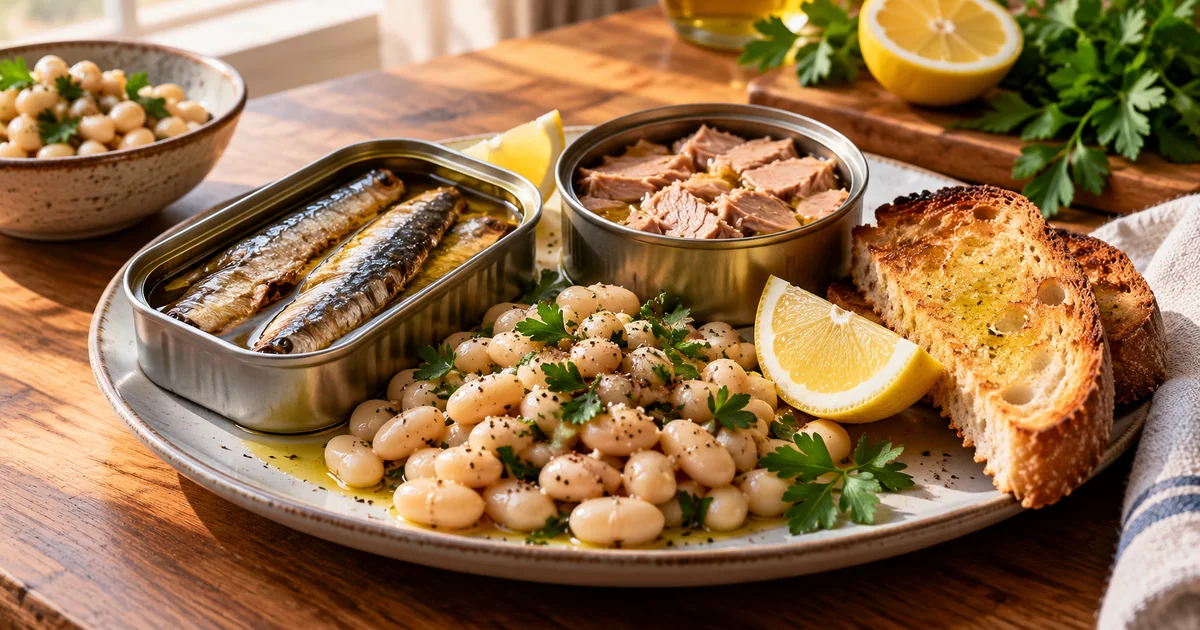
Tinned seafood for easy dinners can solve a practical problem: it is available before you decide what to cook. A can of fish and a few familiar pantry or fresh ingredients can become a meal without thawing a fillet or making a separate trip to the fish counter. The useful question is not which brand is supposedly “best.” It is which type of fish, packing liquid, and product format will suit the dinner you want to assemble.
This guide covers commercially canned, shelf-stable seafood such as tuna, sardines, salmon, mackerel, and certain shellfish. Refrigerated seafood sold in tins or jars may look similar but requires the storage shown on its label. Check the package before putting it in a pantry. The ideas below are meal frameworks, not substitute instructions for the specific recipes linked later. They make it easier to select the right product and avoid buying a tin that does not fit the meal.
Table of Contents
Tinned Seafood for Easy Dinners: Start with the Meal
Think first about whether the fish should blend into a filling, remain in recognizable pieces, or contribute its packing liquid to a sauce. Canned tuna generally flakes easily and can be folded into a pasta, grain, or chopped salad. Sardines hold together more visibly and can be laid over toast or added gently near the end of a pasta dish. Canned salmon may arrive as firm chunks or softer flakes, sometimes with skin and bones. Read the description if that distinction matters for the preparation. Mackerel can be assertive and works well with acidic vegetables and plain starches. Canned clams and other shellfish may have a useful liquid, but follow the label and a specific tested recipe when that liquid is part of a cooked sauce.
The amount in a tin is not necessarily the amount of fish on the plate. Net weight includes the packing liquid, while drained weight, if shown, is closer to the fish you will use after draining. A five-ounce can from one line may not yield exactly the same drained amount as another. For a recipe with measured quantities, follow its stated drained or undrained amount rather than substituting tins by count alone. For an informal meal, open and inspect one tin before deciding how much to add.
Read the label for preparation and storage
“Packed in olive oil,” “packed in water,” and “in tomato sauce” describe substantially different starting points. Oil-packed fish can bring richness to toast or pasta. Water-packed fish provides a more neutral base when you intend to add a dressing. A seasoned sauce can be convenient, but its salt, heat, sweetness, or allergens may already determine the direction of dinner. Taste and read the ingredients before adding a full second dressing. This is a planning choice, not a judgment that one packing medium is inherently better.
Check whether the item is actually shelf-stable until opened. Some premium tins are sold from refrigerated cases and must remain chilled; the container shape does not override the storage instruction. Note the use-by or best-by information and follow the maker’s directions after opening. If a product lists allergens beyond fish or shellfish, such as soy, sesame, wheat, or milk in a sauce, do not infer its contents from a photo on the front label. The ingredient and allergen panel is the relevant source.
Commercially canned fish is generally already cooked as part of processing, but a specific product may be smoked, marinated, or prepared in a way that changes the intended serving method. Follow its label. If you are cooking a separate component such as pasta, rice, or vegetables, treat that component’s cooking and storage as its own task. Do not imply that a cold tin cooks rice or that lemon juice makes raw seafood safe.
Five useful dinner formats
Pasta with fish added near the end
Cook pasta and prepare its sauce first. Gently fold in the fish near the end so it warms without becoming shredded into a paste. Sardines, capers, tomatoes, garlic, and lemon are one coherent direction; the detailed method and quantities belong in SABSEA’s sardine pasta with sun-dried tomatoes and capers. A water-packed tuna pasta may need added oil or another sauce, while an oil-packed fish may bring some of its own. Check whether the recipe calls for draining before pouring in the full tin.
A grain bowl assembled from cooked components
Start with rice, couscous, or another grain that is already cooked and handled safely. Add vegetables for contrast, then use tuna, salmon, or mackerel as the seafood component. Keep a sauce modest until you know how the fish is seasoned. A flavored tin can take the place of part of a dressing, but it does not automatically create a balanced sauce. If you prepare rice ahead, cool and refrigerate it promptly according to specific rice guidance; a shelf-stable tin does not extend the safe life of cooked rice.
Toast or flatbread with something crisp
Toast makes sense for whole sardines or larger flakes of fish that would disappear in a heavily mixed salad. Add sliced tomato, cucumber, pickled onion, or a few herbs after the bread is toasted. Put very wet toppings on shortly before eating so the bread retains texture. The fish can be served at room temperature only within ordinary perishable-food time limits once opened; leaving an assembled platter out for hours is not a storage strategy.
A substantial salad
Toss greens and chopped vegetables with a dressing, then add drained seafood gently. Tuna can be distributed through a chopped salad; sardines and salmon are easier to see when placed on top. If the tin is packed in a seasoned sauce, decide whether to incorporate a small amount or drain it before dressing the greens. Build only the amount you intend to serve soon if the vegetables or avocado will soften. The fish remains a perishable food once opened even if the unopened tin lived in the pantry.
Patties when the fish needs a new texture
Flaked canned fish can be combined with a binder and cooked as patties, but proportions and pan timing matter. Use a complete recipe rather than assuming that any mixture of fish and breadcrumbs will hold. SABSEA’s canned tuna patties with fresh herbs and spices provides a distinct prepared-dish option. This guide does not reproduce its measured formula or claim that uncooked patties can be stored indefinitely.
Match flavor without hiding the fish
Acidic ingredients such as lemon, pickled vegetables, or tomatoes can cut through a rich oil-packed fish. Plain potatoes, pasta, bread, or grains can give a strongly seasoned tin room in the meal. Crunch from cucumber, radish, or toasted bread helps distinguish the fish from a soft base. These are flexible pairings, not a requirement to add all of them. Pick one starch, one or two vegetables, and a modest finish before deciding whether the meal needs more.
Salt deserves attention because tins, capers, pickles, prepared sauces, and some breads may each contribute it. Taste the fish and sauce before seasoning the entire bowl. A tin packed with chili or tomato sauce may work poorly with a dressing designed for plain water-packed tuna. Conversely, a plain tin often benefits from a little olive oil or a deliberate sauce. Let the label and the intended meal guide that decision.
For canned salmon, read whether the bones and skin are included. Some people enjoy them; others prefer a boneless, skinless product for a salad or sandwich. Do not promise that a can is bone-free based solely on the species. Gently sort through the fish if serving someone for whom a stray bone would be a concern. With whole sardines, explain the presence of bones and let diners decide how to eat the fish comfortably.
Buying and pantry mistakes to avoid
Do not buy a leaking, bulging, or badly dented can. USDA guidance says such containers should not be used. Store unopened shelf-stable cans in a cool, dry place and follow their date and storage directions. A rusty, damaged, or compromised seal is a reason to discard the item, not an invitation to taste a small amount to see whether it is fine.
Avoid building a pantry around a product you have never read closely. A photo of plain fish may conceal a spicy sauce, an unfamiliar allergen, or a refrigerated storage requirement. Compare price using the fish amount you actually intend to use, not only the sticker price per container. A smaller tin may be enough for a toast topping but insufficient for a family pasta. Buying two different formats can be more useful than buying a large stack of the same flavored tin.
Another common mistake is treating every format as interchangeable. A sauced tin can turn a crisp salad soggy, while dry, drained fish may need a dressing. Firm chunks should be folded in gently if the final texture matters. And when a specific recipe uses a weight of drained fish, swapping a smaller tin without adjusting the other ingredients can leave the meal out of balance.
Once the tin is open
Transfer unused seafood to a covered food-safe container, refrigerate promptly, and follow any shorter label instruction. USDA general leftover guidance emphasizes chilling perishable foods within two hours, or within one hour if exposed to temperatures above 90°F (32°C). Cooked leftovers generally have a three-to-four-day refrigerated window, but a particular opened product may specify less time. Do not leave fish in a serving bowl on the counter while you save the rest for later. Wash utensils that touched the fish before reusing them with other ready-to-eat food.
If the seafood is folded into cooked rice, pasta, dairy dressing, or vegetables, the assembled meal has its own storage and quality limits. Crisp vegetables may lose texture before the maximum food-safety window. Rice needs particular care when cooling and reheating; use dedicated rice guidance rather than treating it as simply another unopened pantry food. Reheat cooked leftovers to 165°F (74°C) when reheating is appropriate, and check the center of a mixed dish. A chilled salad meant to be eaten cold is a different serving format and should remain properly chilled until serving.
Frequently asked questions
Is “tinned” different from “canned” seafood?
In everyday US cooking, both words commonly describe seafood sealed in a metal container. The useful distinction is whether the particular package is shelf-stable or must be refrigerated. Read the storage statement; appearance alone does not settle it.
Should I drain oil-packed fish?
Follow the recipe. A little of the packing oil can suit toast or pasta, but adding all of it may change a measured sauce. If you want a more neutral base, drain the fish and add your own dressing. Do not assume the label’s net weight equals the drained fish weight.
Can I use sardines instead of tuna in every recipe?
Not automatically. Whole sardines and flaky tuna distribute differently and may have different packing liquids. A sandwich or pasta can sometimes accommodate either with adjustments, while a measured patty recipe needs its specified fish and binder. Treat a substitution as a change to the recipe, not a guaranteed identical result.
What makes a tin useful for a quick dinner?
A clear product label, a format suited to the meal, and a few compatible pantry or fresh ingredients are more useful than a brand ranking. Think about the intended texture, serving size, sauce, and storage before buying. That turns a convenient product into a specific dinner plan.
Can I eat tinned seafood straight from the can?
Many commercially canned seafood products are already cooked and can be eaten without reheating, but the package directions still control. Check whether the product is shelf-stable, refrigerated, smoked, or packed with a sauce that has its own handling instructions. If the label requires heating or refrigeration, follow it rather than assuming every tin is ready to serve in the same way.
Keep the choice practical
Tinned seafood is most helpful when you decide its role in the meal before opening it. Choose a format that suits your dish, read its storage and ingredient information, and combine it with a simple starch and fresh or cooked vegetables. For a fully measured dinner, move from this selection guide to an actual recipe. The tin provides the seafood; the rest of the meal still benefits from a clear method and sensible handling.