
Cooked Salmon Bowls: Bases, Toppings, and Assembly
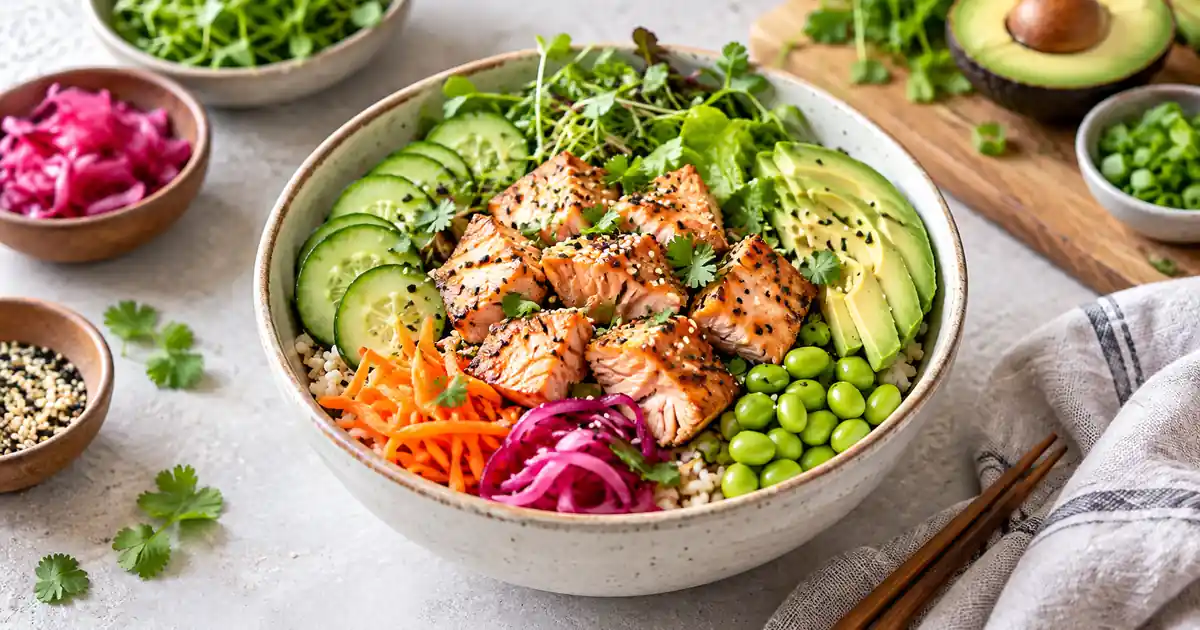
Table of Contents
Cooked salmon bowls are easier to plan when you choose the fish preparation before assembling the toppings. A glazed fillet, a crisp piece of pan-cooked salmon, and a ready-to-eat tin bring different amounts of seasoning, moisture, and texture to the bowl. Start with one complete fish recipe or a suitable ready-to-eat product, then build a meal around it rather than combining several unrelated sauces and methods.
This guide helps you make those choices. It is not a second version of a specific salmon rice bowl recipe, and it does not offer an unmeasured collection of supposedly complete recipes. Use the linked recipe when you need exact ingredients and cooking instructions. Here, the emphasis is on arranging compatible components, keeping textures distinct, and handling cooked fish and grains thoughtfully.
Cooked Salmon Bowls: Choose the Kind of Salmon First
For freshly cooked salmon, decide whether you want a whole serving-size fillet or smaller pieces. A fillet can sit over the base and remain the focal point, while large flakes spread through the bowl more easily. Breaking a crisp-skinned fillet into very small pieces can hide the texture you worked to create. If the skin is part of the presentation, place that side upward and keep wet dressing away from it until serving.
Ready-to-eat shelf-stable canned salmon is a different starting point. Read the label for storage, serving, and any bones or skin included in the tin. Drain or retain its liquid according to the intended recipe rather than assuming every tin behaves like freshly cooked fish. A seasoned product may already bring enough oil, heat, and salt that another rich dressing is unnecessary.
Refrigerated smoked salmon is another product category, with its own instructions and safety considerations. Do not treat it as interchangeable with a shelf-stable tin or assume that every smoked product can be handled identically. This guide centers on cooked salmon and appropriately labeled ready-to-eat products; it does not provide raw-fish bowl instructions or claim that an attractive piece of fish is safe to eat without cooking.
Select a base that suits the meal
Rice is useful because it gives loose flakes and vegetables somewhere to settle. Prepare the chosen variety according to its package or a reliable complete recipe. White rice, brown rice, and other grains differ in water needs and cooking time, so a bowl guide should not silently substitute one into another recipe’s cooking schedule. Begin the slowest component first when planning a hot dinner.
A grain base should support the fish without disappearing beneath liquid. Let freshly cooked rice finish its prescribed resting stage, then loosen it gently before portioning. If a sauce is thin, serve it sparingly or alongside rather than soaking the entire base. Avoid trying to correct wet rice by piling on more crisp toppings; the underlying texture problem will still be there.
Greens or prepared vegetables can form a base when you do not want a grain bowl. Wash raw leaves and dry them well so dressing is not diluted. A bed of warm vegetables is also an option, but a cabbage or broccoli base is a different meal from rice. Do not borrow a rice recipe’s total time or portions and present them as if they apply automatically to every variation.
Balance the vegetable textures
Choose vegetables for a particular job. Cucumber provides a cool, crisp contrast; cooked green beans or broccoli bring a warmer, more substantial bite. Thinly sliced scallions can act as a finish rather than an entire vegetable layer. There is no need to include every colorful ingredient in the refrigerator just because a bowl gives you room to arrange them.
Cut raw toppings to a size that can be eaten comfortably with the fish and base. Oversized cucumber rounds and long leaves make a bowl difficult to mix or lift. Prepare watery ingredients close to serving, and keep them separate from crisp elements while the salmon cooks. If using thawed frozen vegetables, follow their cooking instructions; do not assume that thawing alone makes every product ready to eat.
Avocado can add a soft element, particularly when the fish and vegetables are leaner in texture. Add it near serving so it keeps its shape. If a dressing is already creamy, avocado may be optional rather than essential. The useful goal is contrast: one soft base, a recognizable fish portion, and a few toppings that still have distinct textures when the bowl reaches the table.
Use one main sauce direction
A bowl becomes confusing when the fish has one strong glaze, the rice another seasoning, and the vegetables a third heavy dressing. Choose a sauce direction before cooking. With a clearly seasoned fish recipe, keep the base and vegetables relatively simple. With plain cooked salmon, a suitable dressing can supply the main flavor without requiring several competing condiments.
Add sauces gradually. You can put a little on the fish and offer more at the table, but you cannot easily remove a generous pour from rice. Consider the salt already present in canned fish, broth-cooked grains, prepared dressings, or pickled toppings before seasoning again. Read ingredient and allergen labels, especially when sauces contain soy, sesame, mustard, fish, or shellfish-derived ingredients.
Keep a clean serving sauce separate from any mixture that touched raw salmon. A brushing sauce used during cooking should not automatically become a cold dressing at the table. This is a handling distinction, not a style preference. Use clean utensils to assemble the finished bowl and a clean plate for cooked fish rather than reusing its raw preparation plate.
Assemble in a sensible order
Have the base, vegetables, and serving utensils ready as the fish approaches its cooking endpoint. Put the base into the bowl, arrange the vegetables so the different textures remain visible, and add the salmon. Finish with the chosen dressing and any small garnish. If the skin is meant to stay crisp, keep it above wet ingredients rather than burying it under sauce.
For a cold bowl, keep safely cooked and refrigerated fish chilled until assembly. A cold meal does not require warming the salmon just to cool it again. For a hot bowl, prepare cold raw toppings separately and add them at the end. Trying to heat cucumber, avocado, rice, and salmon together produces a different result from warming only the components intended to be hot.
The FoodSafety.gov temperature chart lists 145°F for fish and 165°F for reheated leftovers. Check the relevant endpoint rather than relying on a fixed bowl-assembly timer. The time needed for the whole meal depends on the fish recipe, grain, equipment, and whether you begin with prepared ingredients.
Start with a complete recipe when you want exact quantities
Our Fly By Jing smoked salmon rice bowl with avocado and cucumber is a defined, one-serving assembly recipe using a specified tin and rice that is already cooked. Follow that card for its measured mayonnaise, furikake, scallions, and optional lime. The tin supplies a particular chili-crisp seasoning; that product-specific recipe is not a template for raw salmon or every smoked salmon on the market.
That distinction matters when planning shopping and time. A recipe written for cooked rice does not include cooking a fresh pot in its assembly estimate. A salmon fillet recipe may need both cooking and resting while the bowl’s other components are prepared. Read the complete instructions before deciding that any bowl will be a ten-minute dinner merely because the final arrangement is quick.
For your own combination, keep it straightforward: choose a reliable cooked fish preparation, one properly prepared base, a few vegetables, and a compatible sauce. This guide supplies the planning framework, not invented measurements or a nutrition calculation for an undefined serving. If you need a repeatable result with a stated yield, use a complete recipe rather than treating a list of suggestions as a recipe card.
Make-ahead work should keep components separate
Prepare washed vegetables and a suitable dressing in separate covered containers according to their ingredients. Portion the fish separately from a moist grain base where practical, so you can heat only what needs heating. Keeping sauces separate also lets you adjust the bowl at serving without making every stored portion soggy. Label containers with the preparation date so you are not relying on memory.
The FDA recommends refrigerating perishables promptly, within two hours or within one hour above 90°F, and keeping the refrigerator at 40°F or below. Use shallow containers rather than leaving a deep pot of food cooling on the counter. The handling instructions for the fish, toppings, and dressing all matter; assembling them does not extend their usable storage period.
Rice deserves separate attention. The Food Standards Agency’s rice guidance recommends rapid cooling, ideally within one hour, refrigerated use within 24 hours, and reheating only once until steaming hot throughout. For bowls containing make-ahead rice, use that stricter practice rather than applying a broad leftover window to every component. Do not count on reheating to fix rice that was stored poorly.
Common bowl problems and practical fixes
A soggy bowl often starts with too much liquid or ingredients stored together too early. Dry washed vegetables, portion sauce gradually, and keep crisp toppings out until serving. If cooked salmon is dry, use larger flakes with a compatible moist accompaniment rather than reheating it repeatedly to chase a fresh-cooked texture. Stop heating once the required endpoint has been reached.
An overly salty bowl may contain several seasoned components that seemed mild on their own. Taste the base and dressing before assembly, account for the fish’s seasoning, and leave additional condiments on the side. Adding more acid does not remove salt. A plain base and fresh vegetables may make the meal more comfortable to eat, but planning the seasonings beforehand is more reliable.
When everything in the bowl feels soft, add a genuinely crisp vegetable or keep an existing crisp element separate until the last moment. Avoid piling on decorative ingredients that do not suit the recipe. A useful bowl is easy to eat, has a clear flavor direction, and gives the salmon an identifiable role rather than burying it beneath unrelated toppings.
Frequently asked questions
Do all salmon bowls need rice?
No. A prepared grain, vegetables, or washed greens can form the base. Each choice changes the meal’s preparation and storage needs. Use the directions for the chosen ingredient rather than carrying over a rice recipe’s timing.
Can I prepare the entire bowl the night before?
Separate components usually retain their textures more effectively. Keep fish and perishable toppings refrigerated, add dressing near serving, and follow the stricter rice handling practice when rice is included. An attractive assembled bowl is not automatically a suitable storage container.
Can canned salmon replace a fresh cooked fillet?
It can support a different bowl, but read its label and account for its moisture and seasoning. It will not provide a fresh fillet’s crisp skin or identical texture. Follow a complete canned-salmon recipe when you need exact amounts and yield.
Should I put hot salmon over cold salad leaves?
You can arrange a meal with warm fish and cool vegetables for immediate service, but add the fish near serving so the leaves do not sit wilting beneath it. Prepare only the portion you intend to eat rather than leaving mixed temperatures waiting on the table.
Where does the bowl’s total preparation time come from?
It comes from all the necessary components, not just assembly. Starting with cooked rice and a ready-to-eat tin is different from thawing fish and cooking brown rice. Read the chosen recipe and plan the slowest step first.
Build around the salmon you actually have
Choose the fish preparation, match a base and vegetables to it, and keep one clear sauce direction. Use complete recipes for measured quantities and handling instructions, then assemble thoughtfully. A smaller set of compatible ingredients is often more useful than a bowl packed with every possible topping.