
How to Use Canned Sardines in Simple Meals
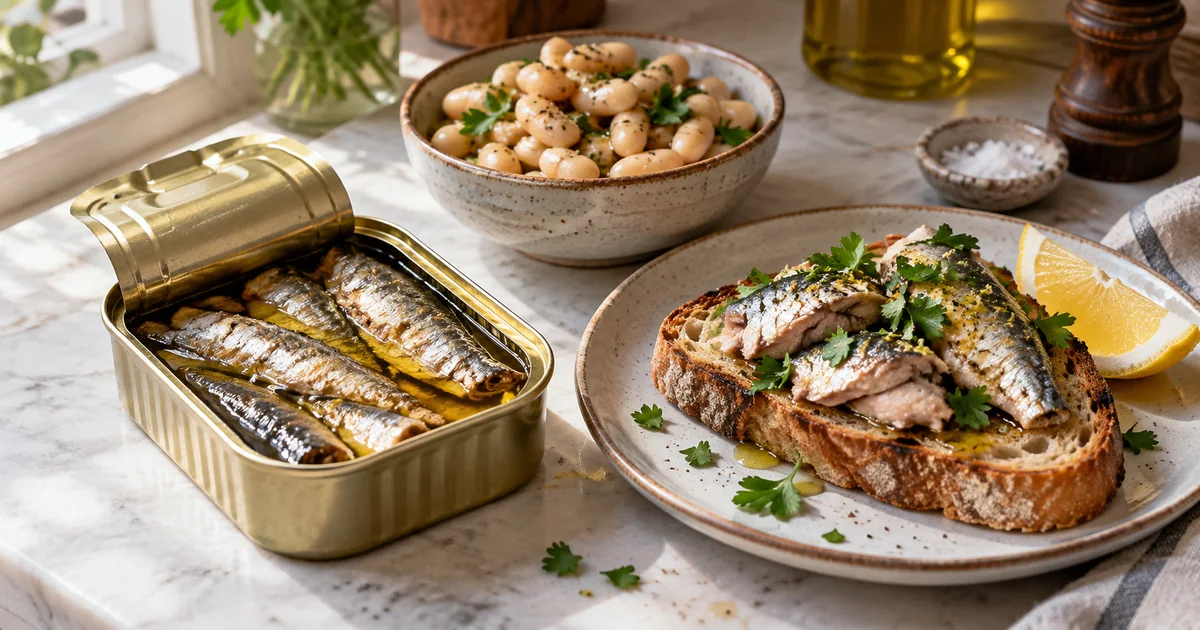
Knowing how to use canned sardines starts with treating them as already prepared fish and deciding how they will fit into the meal. The simplest approach is to decide what the fish will add to the plate, then choose one base and one fresh or acidic contrast. On toast, sardines can be a briny topping. Over beans, they can turn a small pantry bowl into a more substantial meal. Folded into warm potatoes, they can provide a savory element without a separate sauce. Each of these is a serving pattern, not a measured recipe disguised as one.
This guide focuses on canned sardines themselves: what different packing liquids do, how to handle an opened tin, when to add fish to hot food, and how to avoid a soggy or over-salted result. It does not rank brands, make a personal tasting claim, or promise that every tin tastes the same. If you want a complete pasta method, SABSEA’s sardine pasta with sun-dried tomatoes and capers is the separate recipe page; this guide should not reproduce its ingredient list and steps.
Table of Contents
How to Use Canned Sardines: Start with the Label
Read the package before opening. Sardines may be packed in olive oil, another oil, water, tomato sauce or a seasoned sauce. That liquid changes the dish. Oil-packed fish can contribute some richness to a dry grain or toast; water-packed fish may benefit from a little olive oil at the table; tomato-packed fish already brings a sauce whose seasoning may conflict with a lemon-heavy dressing. These are general culinary choices, not a recommendation for a particular brand or a claim about its quality.
The label also tells you the tin’s actual weight, fish allergens, additional seasonings, storage directions and any need to use the product by a date. Do not infer that every sardine tin is boneless or skinless. Many contain soft edible bones; others are specifically sold without them. If texture or accessibility matters to your diners, buy the form that matches the serving plan rather than describing all tins as identical. Read the label for mustard, soy, dairy or other ingredients in prepared sauces; plain fish and a flavored product have different allergen profiles.
Look at the can itself as well as the printed date. USDA guidance warns against using cans that are bulging, leaking, rusted at critical seams or badly dented, because their seal may be compromised. Do not taste fish from a suspect container to decide if it is safe. Keep unopened shelf-stable tins according to their label, away from excessive heat. A refrigerated product in a can or pouch is a different category: follow its cold-chain instructions rather than assuming the container makes it shelf-stable.
Open, drain and portion with intention
Set the tin on a stable counter, lift the lid carefully and avoid sharp edges. If the packing liquid is useful to the dish, spoon out a small amount first; it is easier to add than to undo a soaked piece of toast. For a fresh salad or bowl, lift the fish with a fork and let excess oil or sauce drip back into the tin. For a spread, a little oil may help the fish break into a moist texture. Choose the amount based on the actual tin and base, not an automatic instruction to pour every drop onto the meal.
Sardines are delicate. They can stay whole for a visible topping or be broken into rough pieces to distribute through beans or potatoes. Aggressive stirring turns them into a paste; that can be useful for a spread but not if you wanted identifiable pieces. Tongs may crush the fillets, so a fork or small spoon often gives more control. Put them on the base just before serving when texture matters, especially on toast or crisp vegetables.
Salt is another reason to assemble before seasoning. Fish packed in seasoned sauce, olives, capers, pickles and salty cheese can add up quickly. Taste the combination first, then decide if it needs anything else. A squeeze of lemon, sliced cucumber, chopped parsley or a spoonful of plain cooked beans can provide contrast without turning the guide into a product endorsement. None of these add-ons is compulsory, and the amounts should be measured in any future standalone recipe card rather than implied here.
Three useful ways to build a plate
Toast plus a fresh layer: Use a sturdy piece of toasted bread as the base. Put a thin layer of sliced tomato, cucumber or mashed beans beneath the fish, depending on what is available, and add sardines near the moment of eating. The base keeps the bread from absorbing every drop of packing liquid, while the fish remains visible and easy to portion. A few drops of lemon juice can brighten plain oil-packed fish, but tomato-sauce sardines may already have enough acidity. This is a flexible structure, so a specific toast recipe would need exact bread, topping and yield details before it deserved WPRM.
Beans plus greens: Start with cooked, drained beans and a handful of washed, dry greens. Add the sardines and a modest amount of packing oil or another dressing after tasting. Cold beans can make a no-cook lunch; warm beans can become a different dinner, but keep the opened fish chilled until you are ready to assemble. If using home-cooked beans, observe their own safe cooking and storage instructions. Canned beans should be drained or rinsed according to the dish and label. A very wet bowl masks the sardines’ texture, so drain both components as needed.
Warm potatoes plus herbs: Cook the potatoes separately until tender, then add the sardines after taking the pot off the heat. Residual warmth can heat the fish gently without prolonged boiling that fragments it. Parsley or another fresh herb can lift a plain oil-packed version; a flavored tomato tin may call for a different direction. This is not a promise that sardines cook the potatoes or that every tin is designed to be heated inside its container. Never heat a sealed can on a burner or in an oven as a shortcut.
These patterns help you choose a meal from what is actually in the pantry. They do not give calculated servings or nutrition. A small tin may make a topping for one person; a larger package or several tins can feed more. Let the labeled net weight and the rest of the meal determine portions. A guide that calls every version a “complete dinner” would misrepresent the bread-only or fish-only examples, so add sufficient vegetables and a suitable base for the meal you intend.
Keep hot and cold components sensible
Canned sardines do not need the same raw-fish cooking step as fresh sardines, provided the tin is a properly handled ready-to-eat product whose label confirms that status. When serving them with hot rice or potatoes, heat the base using its own directions and add the fish at the end. When serving with cold salad, use washed produce and clean utensils, and keep the assembled dish cold until eating. Do not leave an opened tin or a prepared salad on the counter through a long gathering.
The distinction between shelf-stable and refrigerated packaged fish matters. Commercially shelf-stable canned seafood has been processed for room-temperature storage while sealed; refrigerated smoked seafood requires a refrigerator even before opening and has different Listeria cautions for higher-risk people. Check the package’s required storage state rather than assuming that “tinned” or “smoked” always means the same thing. This article is about shelf-stable canned sardines, not cold-smoked salmon or a chilled fish pâté.
After opening, transfer any fish you are saving to a clean covered food container and refrigerate according to the label. The package may specify a shorter use window than general leftover advice. Keep it at or below 40°F (4°C) and refrigerate promptly: FoodSafety.gov’s general limit is within two hours, or within one hour in temperatures above 90°F (32°C). If you combine sardines with cooked rice, follow the rice’s stricter guidance as well. The UK Food Standards Agency advises cooling cooked rice quickly, ideally within an hour, using it within 24 hours and reheating only once until steaming hot. A fish-and-rice bowl inherits the shorter rice window.
For a warm leftover meal, reheat previously cooked components thoroughly to 165°F (74°C) under the U.S. leftovers chart. The FSA specifically warns that mishandled cooked rice has risks that reheating does not simply erase. These rules concern storage and handling; they are not a request to recook the original sealed ready-to-eat sardines as if they were raw fish. If a prepared fish meal has been left out past the room-temperature limit, discard it instead of judging by smell alone.
Common mistakes that make the meal less useful
Pouring the entire tin of oil into a small salad can overwhelm the greens. Taste a spoonful of the packing liquid first and add only what improves the particular bowl. Conversely, draining everything from water-packed fish and putting it on dry toast may leave the bite flat; a small fresh dressing or tomato layer can help. Different packed products call for different assembly decisions. That is why a generic instruction to drain all sardines is less helpful than reading the label and considering the base.
Adding fish at the start of a long pasta or vegetable simmer can break it into fine flakes. If you want visible sardines, fold them in near the end. If you intentionally want a sauce with fish dispersed throughout, use a measured recipe that specifies that technique. A guide can explain the choice without pretending both results are identical. Likewise, several strong toppings at once can hide the fish instead of supporting it; select one source of acid and one fresh contrast to begin.
Avoid treating a can with a damaged seam as a bargain. Its safety is more consequential than the price or the convenience of an almost-ready dinner. Avoid assuming the label’s serving size tells you how many complete meals the tin makes; it may refer only to a regulatory portion. Lastly, do not describe any untested combination as the “best” way to eat sardines. A reader can use the packing medium and the intended base to make an informed decision without a false ranking.
Frequently asked questions
Are canned sardines already cooked?
Commercially shelf-stable canned sardines are processed as a ready-to-eat product, but always read the particular label for storage and preparation directions. A refrigerated seafood product or a damaged can cannot be treated as interchangeable. The fresh whole sardines in SABSEA’s grilled sardines with chermoula are a separate raw-fish recipe with its own cooking endpoint.
Do I have to eat the bones?
Check the product you bought. Some tins contain soft bones and some are sold boneless. You can select a boneless product if you prefer, but do not promise that every can has the same form. Handling and texture preferences are different from claims about nutrition, which this guide does not calculate.
Can I put sardines in a hot dish?
Yes, you can add a suitable ready-to-eat tin to a hot base near the end of preparation. Long simmering may break the fish apart, so decide whether you want whole pieces or a dispersed sauce. Heat rice, potatoes or other cooked components safely according to their own instructions, and do not heat a sealed can.
What should I do with fish left in an opened tin?
Follow the package’s instructions for opened storage and any stated use-by interval. Move unused fish into a clean covered food container, refrigerate promptly at 40°F (4°C) or below, and use the shorter applicable label limit. Do not assume an unopened shelf-stable date still applies after the seal has been broken.
Is this the same as a sardine pasta recipe?
No. This guide helps you choose and handle a tin and build several kinds of meals. A complete pasta recipe needs one defined ingredient set, yield and cooking sequence. SABSEA’s linked sardine pasta article is the place for that specific dish; this page does not duplicate its recipe card.
Make the tin fit the meal
The useful questions are concrete: What is the fish packed in? Is it truly shelf-stable before opening? Do you want distinct pieces or a spread? What base and fresh contrast will make an actual plate? Answer those from the label and the meal you plan to serve, then handle opened fish and leftovers with the same care as other perishable food. The guide provides decisions and serving patterns, without inventing a favorite brand or turning flexible ideas into an unmeasured recipe card.