
How to Reheat Cooked Tuna Steak
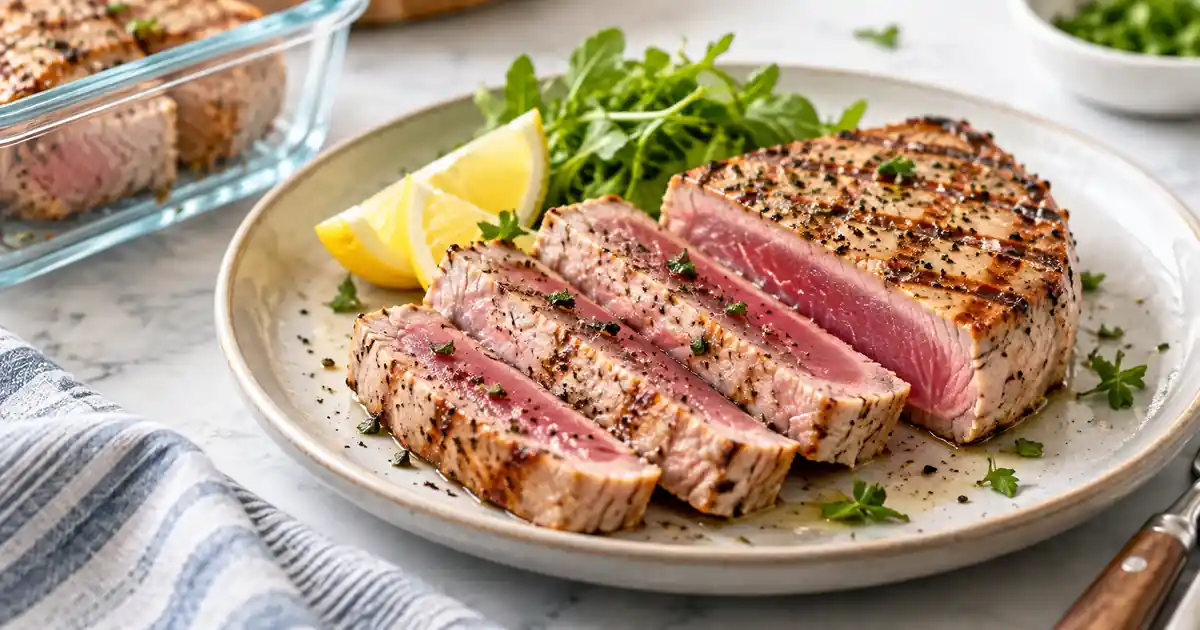
To reheat cooked tuna steak, choose between an attractive second meal and another round of drying heat. A steak that was firm and moist at dinner can become chalky when it sits in a hot skillet for too long. The practical approach is to start with properly handled leftovers, warm only the portion you need, and use a thermometer to check the center. A little moisture and a cover help protect the surface, but neither replaces the food-safety endpoint.
This guide concerns leftover cooked tuna, not raw tuna, unopened canned fish, or a method for preserving a rare center. It does not promise to bring a steak back to its original texture. Instead, it explains how to make sensible choices about reheating, serving the fish cold, and turning a dry piece into a different kind of meal. Those decisions are useful whether the original tuna was grilled, baked, or cooked in a skillet.
Table of Contents
How to Reheat Cooked Tuna Steak: Check the Leftovers First
First establish what happened after the original meal. Fish left on the table for a prolonged period is not rescued by a careful reheating method. If you do not know how long it sat out, whether it was refrigerated, or whether it was cooked appropriately, do not assume that a hot sauce will make it suitable to eat. A storage problem comes before a texture problem.
The FDA’s handling guidance calls for prompt refrigeration of perishable foods, within two hours or within one hour in temperatures above 90°F. Keep the refrigerator at 40°F or below. Smaller, shallow containers cool leftovers more effectively than one deep, tightly packed dish. Follow any shorter instructions supplied with the fish or its accompanying ingredients.
Use clean utensils when removing the steak from its container. Keep the remaining portion refrigerated rather than bringing the entire batch to room temperature while deciding what to cook. Notice whether the tuna is a thick steak, a thin tail piece, or already sliced: those shapes need different attention during reheating. A browned crust can be appealing, but it does not tell you what is happening in the middle.
The reheating endpoint is different from the original cooking endpoint
FoodSafety.gov lists 145°F for cooking fish and 165°F for reheating leftovers. For a leftover tuna steak that you choose to reheat, check for 165°F in the center with a food thermometer. These numbers describe different stages. Do not select the lower temperature simply because it leaves the steak pinker or more tender.
A thermometer is particularly helpful with a thick piece. Insert the probe so its sensing area reaches the center, without touching the pan. Check another position if the steak is irregular. A bubbling liquid around the fish does not prove the middle is hot enough. Likewise, a microwave can make the edges very hot while leaving a cooler area inside.
There is no single reliable number of minutes for every leftover steak. Thickness, refrigerator temperature, equipment, and whether the fish is sliced all affect heating. Work toward the measured endpoint rather than following an unsupported promise of a perfectly restored steak. If maintaining the texture matters more than a hot presentation, consider a cold meal only when the fish was properly cooked and safely stored from the beginning.
Reheat in a covered skillet with a little moisture
A skillet is useful when you want to watch the tuna and adjust the heat as you work. Choose a pan that comfortably fits the portion. An oversized pan lets a small amount of liquid disappear quickly, while a crowded pan makes it difficult to check individual pieces. Add a modest splash of water or an appropriate unsalted broth to create some moisture, then place the fish in the pan and cover it.
Use gentle heat that keeps the liquid moving without aggressively boiling it away. This is a reheating approach, not a second high-heat sear. The cover reduces surface drying while the center warms. Check periodically, and add a little more liquid if the pan becomes dry. Avoid scraping or repeatedly flipping the tuna, especially if it is already breaking into flakes.
When the center reaches the leftover endpoint, transfer the portion to a clean plate and serve. Add a fresh dressing or sauce afterward if desired. Trying to rebuild a deeply browned crust after the steak is already hot usually subjects the fish to more heat than the meal needs. Keep a plain reheating liquid separate from a sugary glaze that could catch against the pan.
Use the oven when reheating several portions
For more than one steak, a covered ovenproof dish offers room to arrange the pieces without stacking them. Put the tuna in a single layer, add a small amount of water or suitable broth, and cover the dish with its lid or a secure oven-safe covering. Use a moderate oven setting and inspect the fish as it warms; an exact setting and timer cannot account for every size of leftover steak.
Check each portion rather than assuming the largest one represents the whole dish. Thin edges may become dry before a thicker center is ready. If one portion reaches the safe reheating endpoint first, remove that portion with clean utensils instead of leaving it in the oven while the others finish. Keep the finished food ready to serve promptly.
An oven method is less convenient for a few small flakes, which can dry quickly in a broad dish. It also should not become an excuse to warm a whole batch that you will put back into storage. Plan the quantity before switching on the oven. A fresh side dish can be prepared separately while the tuna reheats, avoiding a long wait after it is ready.
Microwave small portions carefully
The microwave is a practical option for one serving, particularly when the tuna will be flaked into another hot dish. Use a microwave-safe dish and arrange the fish without piling it into a dense mound. Add a little moisture and cover with an appropriate microwave-safe cover that allows steam to escape according to the equipment’s directions.
Heat in short intervals, checking between them rather than running a long uninterrupted cycle. Turn or rearrange the pieces where practical so different areas warm more evenly. Follow the microwave’s guidance on standing time. After standing, check the temperature in more than one place and continue heating if any part of the serving has not reached the appropriate endpoint.
Be careful when removing the cover because trapped steam can burn. A crisp crust will usually soften in this method, so choose a serving format that welcomes that change. A moist topping for potatoes or vegetables is more forgiving than a presentation built around a sharply seared exterior. The convenience comes from a suitable portion and format, not from ignoring the center temperature.
When a cold meal makes more sense
Safely cooked and refrigerated tuna can be served cold without deliberately warming it first. Flake it with clean utensils and pair it with a fresh base such as washed greens, cooked chilled beans, or bread. Choose one dressing that fits the original seasoning. Lemon and olive oil can suit a simply seasoned steak, while a strongly flavored original glaze may need only a restrained fresh accompaniment.
Cold service does not reset the storage clock. Keep the fish chilled until you assemble the meal, and do not leave a prepared salad out while waiting for other dishes. Use the most restrictive instructions among the components. Rice, for example, brings its own handling considerations; do not automatically treat every grain base like a tin of shelf-stable beans.
For future meals, decide before cooking whether you need an extra steak. If you prefer pantry-based tuna lunches, our canned tuna patties with herbs and spices use a different ingredient and a complete measured recipe. Do not substitute a leftover fresh steak into that card without considering the difference in moisture, seasoning, and preparation.
Fix dryness by changing the serving format
Dry tuna cannot be made fresh again by calling a reheating method foolproof. It can, however, be broken into smaller flakes and paired with something moist. A sauce coats those smaller pieces more evenly than it coats a thick, dry steak. Add the fish late to a prepared hot accompaniment, then check the completed portion reaches the reheating endpoint.
Taste the accompaniment before adding more salt. The original steak may already have a salty marinade, crust, or sauce. Avoid layering several strong dressings simply to cover dryness. A little fresh acidity at the table can brighten the plate, but acid is seasoning; it is not a substitute for safe storage or heating.
Choose a format that you actually want to eat. If the tuna has become unpleasantly dry despite safe handling, keeping it as the centerpiece of a second dinner may not be useful. Planning smaller original quantities can prevent that problem next time. No method here promises an identical second-day result or a particular nutrition outcome.
Frequently asked questions
Should I reheat tuna straight from the refrigerator?
You can start with the refrigerated portion rather than leaving it on the counter to warm. Arrange it for even heating and allow the center temperature, not the surface appearance, to determine when it is ready. Take out only what you intend to serve.
Can I keep a rare tuna steak rare when reheating it?
This guide does not provide that method. Reheating leftovers calls for a different endpoint from a quick original sear. A rare center and a hot exterior do not demonstrate that the whole leftover portion reached the recommended temperature.
Is olive oil enough to stop the steak drying out?
Oil can lubricate the surface, but it cannot replace moisture already lost from the flesh. A covered method, suitable portion size, and stopping once the safe endpoint is reached are more useful than repeatedly adding oil to a very hot pan.
Can I reheat the steak more than once?
Avoid repeatedly warming and cooling the same portion. Divide the leftovers when storing them and reheat only the amount needed for the next meal. This reduces handling and prevents the whole batch from becoming progressively drier.
Does this advice apply to unopened canned tuna?
No. An unopened shelf-stable tin is a different product with its own label instructions. This page addresses a steak cooked for an earlier meal. Once a tin is opened or mixed into a prepared dish, handle that dish according to its ingredients and storage directions.
Choose a method that fits the second meal
Start with trustworthy storage, portion the fish, and choose gentle covered heating when a hot meal is wanted. Check the center, then serve promptly. If a cold presentation suits safely handled leftovers better, use that option thoughtfully. The aim is a practical second meal with honest expectations about texture.