
Air Fryer Smelt Fish: Crispy Whole Smelt with Lemon
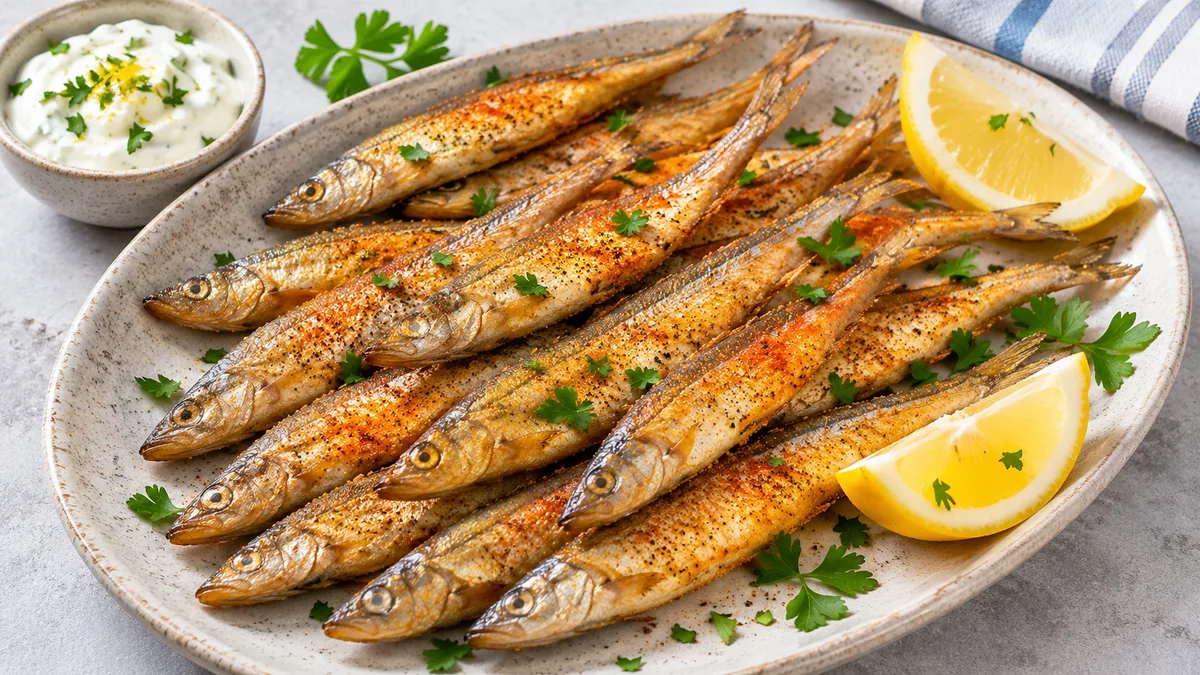
Air fryer smelt fish can be crisp and pleasantly delicate without a deep fryer. This practical method uses cleaned whole smelt, a thin cornmeal-and-paprika dusting, lemon and parsley, with careful advice about thawing, basket space, fish size, bones and safe doneness. It is designed for a small batch of prepared fish, not a generic air-fryer setting for every seafood species.
Why small smelt work in the air fryer
Smelt are small, slender fish with a delicately sweet flavor and a thin skin that browns quickly. Unlike a thick cod loin, each smelt has relatively little flesh around its backbone, so the challenge is not getting heat into the middle of a large portion. The challenge is cooking a collection of small fish evenly without piling them up or drying the slender tails. A spacious air-fryer basket, a light oil coating and early checks make this a practical alternative to pan-frying.
This version uses cleaned whole smelt, a modest dusting of fine cornmeal, garlic, paprika and lemon zest. The coating is deliberately thin: you should still recognize the shape of every fish, not see a heavy shell of breading. The lemon juice goes on after cooking because wet acid introduced before air-frying can soften the surface. If you prefer a completely unbreaded version, the method can be adapted with a little less oil and an earlier check for browning.
What kind of smelt should you buy?
Look for smelt sold as a named food fish by a reliable seafood seller, either fresh and refrigerated or properly frozen. The fish should be cold, their skin intact, and their odor mild rather than sour or ammonia-like. Smelt size varies by species and region. Small lake smelt and larger marine smelt will not cook at identical rates, which is why the recipe uses a first-check time rather than promising that every basket will finish on one exact minute.
Ask whether the fish have already been scaled, gutted and cleaned. For this particular recipe, buy cleaned, gutted fish with heads on or off according to your preference. If they are frozen, thaw them overnight in a covered container in the refrigerator. Never leave a bag of fish thawing on a warm counter. The FDA seafood handling guide describes safe buying, thawing and separation from ready-to-eat food. Pat the thawed fish dry before any coating.
How to clean and dry whole smelt
If your smelt are sold whole and uncleaned, follow fishmonger or manufacturer instructions for removing the innards and rinsing the cavity; otherwise use fish that have already been prepared. Remove any obvious loose scales and inspect the body cavity. Handle the fish gently because their skin tears more easily than a large fillet. Rinse briefly only if necessary and immediately dry the exterior and cavity using clean paper towels. Dispose of fish waste promptly and sanitize the work surface.
Drying is crucial because an air fryer moves hot air over the food rather than immersing it in fat. Water trapped beneath a cornmeal coating can turn that coating pasty. Spread the prepared fish on a tray, lightly blot the skin, and separate any pieces that are stuck together. Work in small batches and keep the rest refrigerated until it is their turn. You can leave the heads attached for presentation, but inspect bones and remove them when serving anyone for whom small bones pose a risk.
Seasoning for crisp skin without a heavy crust
A simple mix works best: fine cornmeal, mild smoked paprika, garlic granules, black pepper and lemon zest. Fine cornmeal provides a faint texture without making the little fish look bulky. Use enough olive oil to coat the skin thinly so the dusting adheres. A neutral high-heat cooking oil may also be used. Avoid pouring thick wet marinades over the fish; they can drip into the basket and prevent browning. Fresh minced garlic tends to scorch during this short hot cook, so use dry granules in the coating and fresh herbs afterward.
Measure the salt rather than scattering it heavily: the final plate needs only enough to make the natural fish flavor clear. The recipe uses paprika for a warm color, not for intense heat. If you want more spice, add a small pinch of red pepper flakes to the dry mixture. Skip acidic bottled sauces at the preparation stage. Keep lemon wedges ready for the table, along with chopped parsley, to finish the hot fish just before eating.
Air fryer smelt recipe: ingredients and exact steps
The recipe card below provides the quantities for approximately four small appetizer portions and a practical cooking sequence. The method assumes cleaned, thawed smelt of roughly similar size, not frozen uncleaned fish. Temperature and time depend on the appliance and size, so check a first small batch before cooking the whole lot.
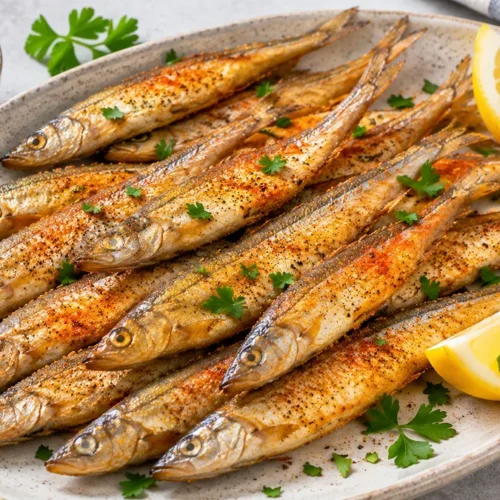
Crispy Air Fryer Smelt Fish with Lemon
Equipment
- Air fryer
- Fish spatula or silicone tongs
- Shallow mixing bowls
Ingredients
- 1 1/4 lb smelt fish cleaned and gutted, thawed and patted very dry
- 1 1/2 tbsp olive oil plus a little for basket if recommended
- 3 tbsp fine cornmeal optional light coating
- 1/2 tsp garlic granules
- 1/2 tsp smoked paprika
- 1/4 tsp ground black pepper
- 1/4 tsp fine salt adjust to taste
- 1 tsp fresh lemon zest
- 2 tbsp fresh parsley chopped, to finish
- 1 lemon cut into wedges, to finish
Instructions
- Use already gutted, cleaned smelt. Thaw in the refrigerator if frozen, inspect and pat the skin and cavity dry.
- Preheat the air fryer to 390°F (200°C) according to manufacturer directions.
- Mix cornmeal, garlic granules, smoked paprika, pepper, salt and lemon zest. Toss fish with measured olive oil and dust lightly with the dry mixture, shaking off excess.
- Place fish in a lightly oiled basket if needed, leaving space between pieces. Cook in batches rather than stacking.
- Begin checking after 6 minutes; turn gently if needed. Continue until browned and cooked through, often 8–12 minutes in total, depending on size and appliance. Finfish reaches a safe endpoint at 145°F (63°C) or when opaque and separating easily, per official guidance.
- Transfer gently to a warm plate; add parsley and lemon wedges. Inspect bones before serving anyone for whom small bones are a concern.
Notes
How to air fry smelt evenly
Preheat the air fryer to 390°F (200°C), following the manufacturer’s directions for your model. Toss the dry fish with a measured little oil. Mix the cornmeal and dry seasonings separately, then dust and shake off the excess. If you can see loose piles of cornmeal in the basket, the coating is too thick. Lightly oil the basket if the manufacturer recommends it. Lay each fish in a single layer with a small gap around it, rather than stacking heads and tails into a solid pile.
Begin checking after about six minutes. Carefully turn or shake the fish as appropriate for your basket and continue until the coating looks lightly golden and the fish is cooked through. Many small smelt take roughly eight to twelve minutes, but this is a planning interval, not a universal safety guarantee. FoodSafety.gov recommends finfish reach 145°F (63°C), or be opaque and separate easily with a fork when an accurate center reading is impractical. Very small fish can be hard to probe reliably; do not mistake a browned coating for guaranteed doneness.
Can you eat the bones and heads of smelt?
Some traditional preparations serve very small smelt whole, but it would be misleading to tell every reader that every smelt bone is safe to swallow. Smelt species, size, age and cooking method affect the bones’ size and firmness. A larger fish may have a noticeable backbone even when the skin is crisp. Check the fish yourself before eating and remove bones as needed, particularly when serving children, older adults or anyone who has difficulty handling small bones.
Heads are optional. They can be removed before seasoning, or left attached for presentation if the fish were cleaned appropriately. If you are serving the fish at a gathering, tell people that the dish contains whole fish and may contain bones. This makes the experience more comfortable than assuming all diners are familiar with the preparation. For general fillet handling, our thin fish fillet guide explains how to move fragile fish with less breakage.
Troubleshooting soggy smelt and uneven color
Fish look pale: their surfaces may have been wet, the basket crowded or the unit not preheated. Dry the next batch carefully and leave more air space. Tails are dry: the fish may differ in size; group similar lengths and check early. Cornmeal rubs off: use a little oil and press the seasoning gently rather than piling dry flour on the fish. Fish stick to the basket: follow the appliance’s oiling guidance and wait for the skin to release before lifting.
The coating burns before the flesh cooks: check whether your air fryer runs hot and lower the temperature a little for the remaining batch. Fish break when tossed: use a fish spatula or tongs gently rather than shaking a crowded basket vigorously. Flavor tastes flat: add fresh lemon, parsley and a small pinch of salt after cooking instead of prolonging the cook. Remember that a crisp appearance is only one part of a successful dinner; safe cooking matters first.
What goes with crispy air fryer smelt?
Serve smelt immediately on a warm plate with lemon wedges, chopped parsley and a simple cool dip made from plain yogurt, grated lemon zest and fresh herbs. Keep the dip chilled until serving. Rice, roasted potatoes or a cucumber-and-tomato salad can turn a small appetizer portion into a more complete meal. Place a separate bowl for bones and heads on the table, and provide napkins if diners will eat the fish by hand.
If you enjoy garlic and lemon seafood, try our grilled whole grey mullet with lemon and herbs for a larger fish that needs a different cooking technique. Our pan-fried whiting is another crisp fish idea, but it uses larger fillets and skillet heat. These recipes are useful companions without competing with the specific smelt-in-air-fryer question addressed here.
Storage and safe reheating
Cooked smelt tastes best immediately, while the surface is crisp. Refrigerate leftovers promptly in a shallow covered container at or below 40°F (4°C). The FDA recommends refrigerating seafood within two hours of cooking, or one hour if the surroundings are hotter than 90°F (32°C). Properly refrigerated cooked fish is generally used within three to four days. Discard fish with an uncertain storage history, even if the surface still appears crisp.
For reheating, warm only the amount you intend to eat, using an oven or air fryer carefully so the small fish do not dry out. FoodSafety.gov advises heating leftovers to 165°F (74°C). That is different from the original cooking endpoint for raw finfish. Avoid serving leftover fish cold to guests without knowing whether it has been held safely. The best approach is still to air-fry the quantity you need and save the rest of the cleaned, uncooked fish refrigerated or frozen according to the package guidance.
Frequently Asked Questions
Can I air fry smelt from frozen?
This recipe uses thawed and dried smelt. If your frozen package specifically allows cooking from frozen, follow its directions; the timing here will not be reliable.
What temperature works for air fryer smelt?
390°F (200°C) is a practical starting point for cleaned, similarly sized fish. Check early and confirm safe doneness rather than relying only on the timer.
Do I need to coat smelt in flour or cornmeal?
No. A light cornmeal dusting gives extra texture, but cleaned smelt can be cooked with just a thin film of oil and dry seasoning.
Do I need to remove smelt bones before eating?
Inspect each fish and remove bones as needed. Never assume all smelt bones are suitable for every diner, particularly children.
Why are my air fryer smelt soggy?
Excess moisture, a crowded basket and thick coating can cause sogginess. Dry the fish, preheat and cook in one layer.