
How to Remove Pin Bones from Salmon Without Tearing the Fillet
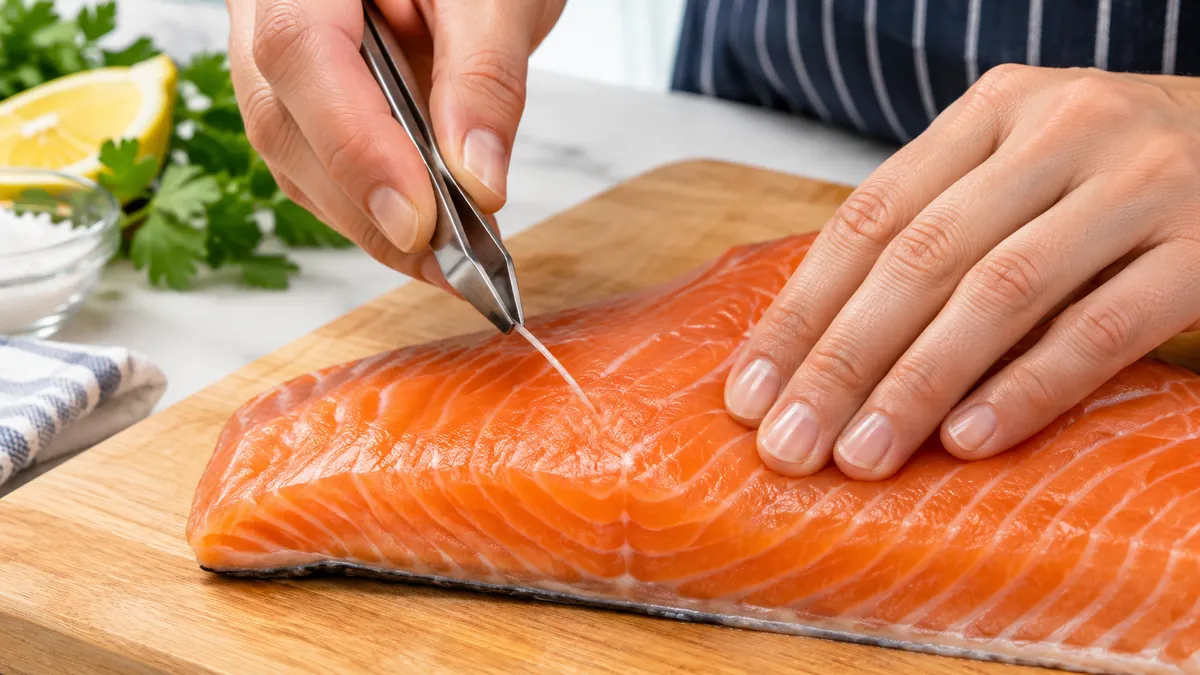
Learning how to remove pin bones from salmon is a practical kitchen skill that keeps the fillet intact while making it easier to serve. The trick is to find the bone line with your fingertips and pull each bone along its natural angle, not straight up. This guide focuses on raw fillets, with skin-on and skinless variations, tool choices, troubleshooting, and food-safety steps.
Table of Contents
Why Pin Bones Need a Separate Check
Pin bones are small, flexible bones that can remain in a salmon fillet after the backbone and ribs have been removed. They run in a line through the thick portion of many fillets and are easy to miss when the flesh is cold and firm. Removing them before cooking makes serving more comfortable, especially when preparing portions for children or guests. This is different from removing the skin, trimming the belly, or deboning a cooked whole fish. A fillet can be skin-on and still have its pin bones removed. Never assume a package labeled boneless is completely free of bones; check it with your fingertips.
What You Need Before Starting
Prepare a clean cutting board, a bright work light, paper towels, and a dedicated pair of clean fish-bone tweezers or narrow food-safe pliers. Choose a tool with a firm grip and smooth, aligned tips; loose household pliers can crush flesh and may not be food safe. Keep the salmon refrigerated until you are ready to work, and return it to the refrigerator promptly afterward. Wash hands and clean any surfaces or utensils that contact raw fish. A separate plate for the finished fillet helps prevent the bones you have removed from ending up back on the fish.
Find the Bone Line by Touch
Place the salmon skin-side down if the skin is attached, with the thickest end facing you. Gently move the pads of your fingers across the flesh, working from the head end toward the tail end. You may feel tiny hard points arranged along a diagonal line. Use light pressure rather than digging into the fish. The bone tips can be more noticeable if you gently flex the fillet over your hand, but do not bend it sharply or tear the flesh. If you cannot find any, inspect the entire thick section again under good light; the fish may already have been deboned.
Pull Each Bone in Its Natural Direction
Grip the exposed tip of one bone close to the surface. Pull steadily along the angle at which the bone lies, generally toward the head end, rather than lifting it straight upward. Following the bone’s path minimizes tearing and preserves the fillet’s appearance. If a bone breaks, stop and feel for the remaining piece before proceeding. A clean paper towel can improve grip if the bone is slippery. Work methodically from one end of the line to the other, placing every removed bone immediately in a discard bowl. Avoid repeated squeezing with the tweezers, which can mash delicate flesh.
Check Again Before Portioning
Run your fingertips over the original line and then across the rest of the fillet. Rotate the fillet if needed and inspect both the thick and tapered areas. Bone counts vary with the cut and fish size, so there is no reliable number to remove. Once the surface feels smooth, portion the fish with a sharp clean knife. For attractive servings, cut with confident strokes rather than sawing. If cooking skin-on portions, keep the skin intact: pin-bone removal does not require skin removal. Remember that a careful inspection reduces risk but cannot guarantee the complete absence of bones.
If the Bones Are Hard to Grasp
Very fresh or tightly chilled flesh can hold pin bones firmly. Pat the surface dry and try again with better lighting and a tool that grips more precisely. Do not leave fish at room temperature to soften it. If the bone tip is buried, gently expose it with the edge of the tweezers rather than cutting a deep channel through the flesh. When bones are numerous, broken, or difficult to identify, ask a fishmonger to remove them or choose a professionally trimmed fillet. Do not use a magnet: fish bones are not reliably magnetic.
Skin-On Versus Skinless Salmon
The technique is essentially the same for both types. On skin-on salmon, the skin helps support the flesh while you pull. On skinless fillets, use a lighter touch and steady the portion with your free hand. For a thin tail piece, there may be fewer or no pin bones, but it still deserves inspection. Do not confuse the silvery skin, connective tissue, or harmless white albumin that appears during cooking with pin bones. The important distinction is the hard, pointed feel under your fingertips.
Food Safety While Handling Raw Salmon
Keep raw salmon cold, ideally at or below 40°F (4°C), and minimize time on the counter. Wash your hands with soap and water after handling it, and sanitize the board and tweezers before using them for ready-to-eat foods. Do not rinse raw fish under a strong tap, because splashing can spread contamination around the sink. For most home preparations, cook finfish to an internal temperature of 145°F (63°C), measured in the thickest part with a food thermometer, or follow current official guidance for an equivalent safe endpoint. Removing pin bones is a preparation step, not a substitute for safe storage or cooking.
What to Do After Deboning
Pat the fillet dry and choose a cooking method based on thickness. For crisp skin, see our pan-seared salmon guide; for a stronger spice crust, explore blackened salmon. If you need timing guidance for other fish cuts, our oven cooking chart explains why thickness matters. Keep cleaned fillets refrigerated until cooking and use a thermometer rather than judging doneness by a clock alone. You can also explore the salmon recipe collection for serving ideas.
Common Mistakes and How to Avoid Them
The most frequent mistake is pulling straight up instead of following the bone’s angle, which leaves ragged holes in the flesh. Another is relying only on sight: many bone tips are nearly invisible, while touch makes them easier to locate. Rushing through a single pass can miss bones near the thicker end. Using blunt or dirty tools introduces avoidable handling problems. Finally, do not promise a completely boneless meal simply because you performed the check; serve thoughtfully and tell diners to remain attentive, particularly when children are eating.
Can You Remove Pin Bones After Cooking?
Yes, but it is usually less precise. Cooked salmon flakes easily, so pulling bones afterward can break apart a neat portion. If you discover a bone while serving, stop and remove it carefully with clean utensils. For meals where presentation matters, inspecting the raw fillet first is generally easier. For a whole fish, the anatomy and technique differ; our guide to deboning cooked whole fish covers that separate task. Never blend or mash fish with suspected bones and assume they will disappear.
Quick Checklist Before Cooking
Confirm that your board and tweezers are clean, feel along the entire thick section, pull each bone in its own direction, discard bones away from the food, and repeat the fingertip check. Then dry the surface, portion the fillet, refrigerate promptly if you are not cooking immediately, and wash your equipment. These small steps take only a few minutes and make the transition to cooking much smoother. The aim is careful preparation with minimal damage to the fish, not speed at the expense of a thorough inspection.
Once the bones are out, move the salmon to a clean plate and feel along the thickest part again in two directions. Check the trimmed edge and the narrow tail as well: the alignment of pin bones can differ from fillet to fillet. Keep the fish cold throughout preparation, use tweezers reserved for food, and place removed bones in a separate container rather than leaving them on the cutting board. Even a thoroughly checked fillet can retain a small bone, so inspect portions carefully when serving children or anyone who may find bones difficult to manage.
Deboning prepares the salmon for cooking; it does not replace proper cooking or raw-fish precautions. If you are cooking the fillet skin-side down, see our guide to pan-seared salmon with crispy skin for a separate cooking technique. The FDA’s seafood handling guidance explains how to keep fish refrigerated, avoid cross-contamination and judge safe cooking.
Frequently Asked Questions
Do all salmon fillets have pin bones?
No. Some are removed during processing, but any fillet should be checked because a few can remain.
What is the best tool for salmon pin bones?
Clean fish-bone tweezers or narrow food-safe pliers with a firm, precise grip work well.
Should I remove salmon skin to pull pin bones?
No. You can remove pin bones while leaving the skin attached.
Can I use ordinary eyebrow tweezers?
Only if they are dedicated to food use, thoroughly cleaned, and grip securely; purpose-made fish tweezers are preferable.
Does removing pin bones make salmon safe to eat raw?
No. Bone removal does not control parasites or pathogens; raw-fish safety requires separate sourcing and handling precautions.
For other fish preparation techniques, read how to handle thin fish fillets. The same principle applies: work gently and let the structure of the fish guide your technique.