
Salmon Roe Rice Bowl with Cooked Salmon and Cucumber
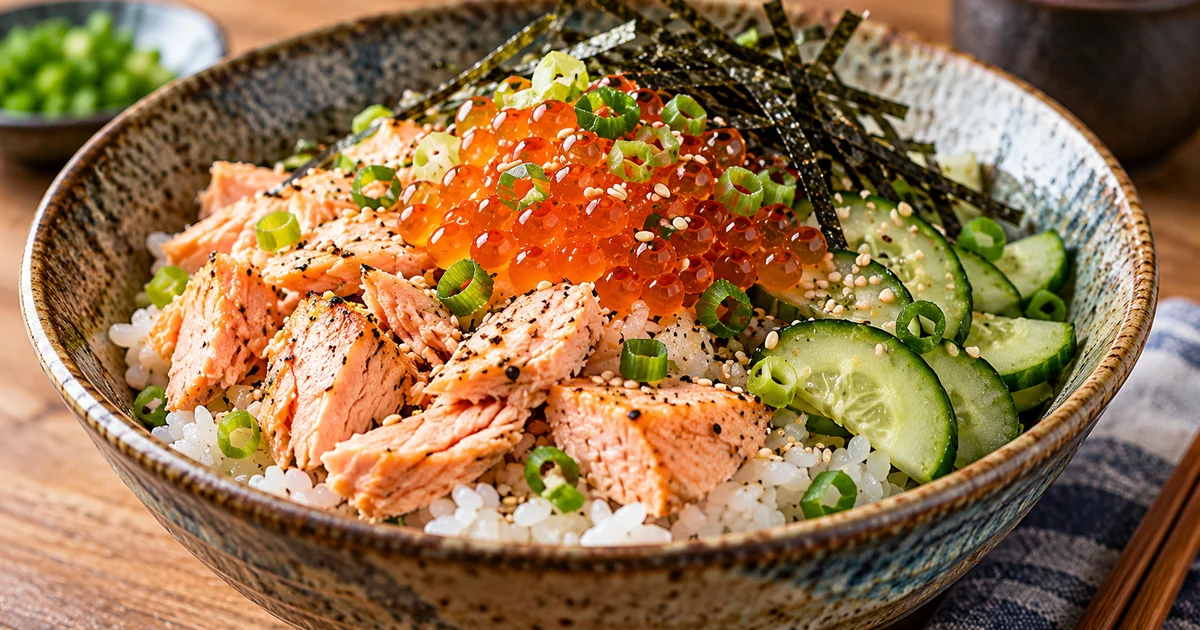
A salmon roe rice bowl pairs two very different textures from the same family of fish: warm flakes of fully cooked salmon and cool, delicate salmon roe that bursts lightly against the rice. The result feels special but does not demand raw fish preparation. Cucumber supplies crunch, scallions add freshness and thin strips of nori finish the bowl without overwhelming the bright orange roe. This recipe keeps the ingredients recognizable instead of mixing everything into a heavily dressed salad.
The method is straightforward, but food handling matters. Salmon is cooked completely and flaked, rice is freshly prepared or safely reheated, and commercially prepared ready-to-eat roe stays refrigerated until the final moment. Serving the roe away from the hottest rice helps preserve its texture. Four bowls take roughly thirty-five minutes once cooked rice is ready; cooking rice from dry grains adds extra time. The sections below explain where to spend your effort and how to distinguish this bowl from raw-fish poke, smoked salmon lunches and seafood ramen.
What Makes a Salmon Roe Rice Bowl Distinct
Salmon roe is not simply a salty decoration. Its rounded beads provide brief pops of briny flavor that contrast with soft rice and cooked fish. Using a measured tablespoon per bowl allows the roe to remain an accent rather than making every bite aggressively salty. The cooked salmon offers a substantial protein component, while cucumber and scallions give freshness and prevent the combination from becoming too rich. That balance is why this version needs only a little soy sauce and lemon at the table.
This dish is different from a raw-fish poke bowl. The salmon is cooked through rather than briefly marinated, and the roe is purchased ready to eat rather than harvested or prepared at home. It is also distinct from the site’s spicy smoked salmon rice bowl, where packaged chili-crisp fish supplies the main flavor. Here the flavor is intentionally more delicate, allowing diners to recognize the rice, flaky salmon and roe separately.
Buy Salmon Roe from a Reputable Source
Look for commercially prepared salmon roe sold and stored as a refrigerated ready-to-eat product. Read the packaging for use-by information, temperature instructions, allergens and any specific handling requirements. Roe products can differ in how they were processed, salted and packaged, so it is not safe to assume that every jar has identical storage characteristics. Buy it late in your shopping trip, transport it cold and put it promptly into the refrigerator when you reach home.
Do not equate attractive color with microbiological safety. A bright appearance cannot tell you whether a refrigerated seafood product has been kept at an appropriate temperature. This recipe does not ask you to cure roe, handle fresh fish eggs or serve home-prepared raw fish. For people advised to avoid high-risk refrigerated ready-to-eat seafood, including some pregnant or immunocompromised diners, choose a suitable fully cooked alternative or seek individual food-safety guidance rather than relying on lemon juice to make roe safe.
Choose and Cook the Salmon
A boneless skinless salmon fillet weighing roughly one pound gives four bowls a meaningful portion without hiding the other toppings. Pat it dry, brush with a small amount of neutral oil and season lightly with black pepper. Bake at 400°F (205°C) until cooked through, which may take twelve to fifteen minutes depending on the fillet’s actual thickness. Confirm safe doneness rather than treating the time alone as proof. The flesh should separate into moist flakes without a translucent center.
Let the cooked fillet rest briefly and use a clean fork to break it into large pieces. Those flakes are easier to arrange on rice than tiny shreds and produce a more appealing contrast with the round roe. The FDA seafood guide describes safe seafood selection and cooking. Keep the raw fish and its utensils separate from the finished ready-to-eat toppings, particularly the roe, cucumber and nori, which will not be cooked later.
Cooked Rice Is Part of the Safety Plan
Short-grain rice is pleasant here because the grains cling lightly and are easy to lift with chopsticks or a spoon. Measure four cups of cooked rice for four servings. If you start with dry rice, make it according to the package directions and add its cooking time to your overall plan. The thirty-five-minute recipe clock assumes the rice is already cooked. That distinction prevents a simple bowl from promising a speed it cannot deliver for everyone.
Rice needs proper temperature control. Use freshly cooked rice while hot, or use previously cooked rice that was refrigerated promptly and reheated thoroughly. Do not build lunch bowls from rice that has been sitting on the counter since the morning. When assembling, spread the rice gently rather than compressing it into a solid block. The warm grains provide a comforting base, but there is no reason to expose chilled roe to prolonged heat. The temperature contrast is part of the appeal.
Prepare Cucumber, Scallions and Nori
Slice the cucumber into thin rounds or half-moons that are large enough to remain crisp. Two scallions provide mild sharpness without the heavy bite of raw onion. Separate white and green pieces if you want more visual control, reserving the greenest rings for a final garnish. Roasted nori should be cut into fine strips shortly before serving so it does not become damp on the counter. Two sheets divided across the four bowls add an attractive seaweed accent.
These small preparations are not interchangeable with a pre-mixed vegetable salad. Cucumber contributes cool crunch, scallions lift the richness and nori adds a toasted marine aroma. Keep the components in separate small bowls until assembly if you are serving guests. That makes it easier to build portions evenly and prevents cucumber liquid from pooling in the rice. An overly elaborate topping lineup would make the roe harder to notice and create unnecessary prep work.
The Best Way to Assemble Four Bowls
Begin with one cup of cooked rice per bowl. Place large flakes of cooked salmon over one side, followed by cucumber on the other side. Scatter scallions and some sesame seeds across the top. Keep the center or a small upper corner free for the roe, which should be the last main ingredient added. This arrangement is not only decorative: it reduces the time the chilled roe spends sitting on hot rice and keeps its delicate texture intact.
Remove the roe from the refrigerator immediately before the bowls are served. Use a clean spoon to place roughly one tablespoon onto each serving, and return any unused portion to cold storage according to its package directions. Finish with the nori strips just before carrying the bowls to the table. Serve a small amount of low-sodium soy sauce and fresh lemon separately rather than pouring them over the roe in advance. That way diners can adjust the bowl without losing its essential contrast.
How Much Roe Is Enough?
A tablespoon of salmon roe per serving is a useful starting point for a bowl already containing cooked salmon. Roe varies considerably in saltiness, bead size and intensity, and some products are seasoned more heavily than others. Keeping the serving modest makes the dish easier to balance and leaves space for the sweet flavor of the fish. For an especially delicate product, reduce the additional soy sauce before adjusting the roe amount.
More roe is not always more enjoyable, and it also increases cost. A four-tablespoon jar portion divided among four bowls gives an attractive finish without requiring a large specialty purchase. If you have only a small amount, distribute it in a compact mound on each bowl rather than trying to scatter individual beads everywhere. This presentation gives a similar visual impression and allows a more intentional mix of warm cooked salmon, cool cucumber and briny topping.
Dress Lightly So the Roe Remains the Focus
One tablespoon of low-sodium soy sauce and one tablespoon of lemon juice are enough for the whole recipe as optional table seasonings. They are not meant to be mixed into a heavy marinade. Salmon roe already brings salt and richness, while the salmon fillet has been cooked with oil and pepper. A few sesame seeds add a nutty finish and the nori contributes its own savory note. Start with the plain bowl and add only what seems missing after the first bite.
If you need a creamy element, a very small amount of plain yogurt-based dressing could be served on the side, but it changes the intended character. The cleaner version makes it easier to judge the freshness of the roe and the quality of the fish. Avoid sweet, sticky sauces that coat every grain of rice, and do not use citrus as an imagined sanitizing treatment for a refrigerated ready-to-eat seafood product. Seasoning is about flavor, not a substitute for safe sourcing and storage.
Ingredient Substitutions That Still Make Sense
Brown short-grain rice can replace white rice, although it has a firmer bite and often needs a longer cooking period. Thin ribbons of radish or a little shredded carrot can add crunch beside the cucumber. If you prefer slightly more acidity, serve an extra lemon wedge at the table rather than increasing the measured liquid in every bowl. The bowl may also be made with chilled fully cooked salmon, but all cooked components must have been stored safely and used within recommended limits.
Roe is the defining ingredient of this particular article, so replacing it entirely with sesame seeds produces a different dish rather than a salmon roe rice bowl. For a more everyday meal that does not require specialty roe, the existing canned tuna rice bowl gives a simpler ready-to-eat fish option. For diners who enjoy a noodle-based use of roe, gourmet seafood ramen uses salmon roe in a very different broth-focused preparation.
What Not to Do with Salmon Roe
Do not cook the roe in the oven with the salmon or stir it vigorously into hot rice. The individual beads are delicate and can lose their intended appearance and texture. Do not leave opened roe on the kitchen counter while chopping the rest of the ingredients. Do not assume a small jar of seafood is shelf-stable just because it is salted. Packaging instructions, actual refrigeration and clean utensils matter much more than appearance.
Another common mistake is treating the entire dish as a raw salmon preparation because the topping is called roe. The fish component in this recipe is baked to safe doneness. The ready-to-eat roe is a separate commercially processed component and must be handled according to its own requirements. Keeping that distinction clear helps the recipe stay reproducible and prevents readers from misunderstanding the salmon preparation, cooking times and safety expectations.
Make-Ahead Plan and Storage
You may wash and slice the cucumber ahead of time, refrigerating it in a clean covered container. The salmon can also be cooked in advance if cooled and refrigerated promptly, although freshly cooked flakes have the best texture. Rice can be prepared earlier only if handled safely: cool and refrigerate promptly, then reheat thoroughly when needed. Keep all the components separate rather than assembling a bowl hours ahead and allowing the nori to soften in cucumber moisture.
The final bowls should be assembled shortly before eating. Keep the roe cold until you are ready to use it, follow the container instructions once opened and avoid repeated trips between the table and refrigerator. Leftover cooked fish and rice must be refrigerated promptly. The roe has its own shelf-life and handling instructions, which may not match those for cooked salmon. For a packed lunch, use suitable cold storage and consider serving the roe separately until the moment of eating.
Serving the Bowl and Understanding the Occasion
This bowl makes a lovely small lunch or a composed seafood dinner when paired with a light vegetable side. Its vivid appearance comes from a limited number of ingredients rather than a long list of sauces. Choose bowls wide enough to keep the topping groups distinct, place a spoon nearby for the roe and bring soy sauce to the table in a small dish. A bowl with clear components also lets diners avoid an ingredient they do not want without disturbing the rest of the meal.
Roe is a specialty ingredient, so the recipe makes sense for occasions when sourcing it is part of the plan. It need not become a routine weeknight expense to justify its place on a seafood website. The practical value is in learning how to pair the delicate refrigerated topping with safely cooked fish and correctly handled rice. Once those principles are understood, the result can be assembled with little fuss and presented without claiming that raw fish or elaborate restaurant equipment are necessary.
Salmon Roe Rice Bowl with Cooked Salmon and Cucumber
Ingredients
- 1 lb skinless salmon fillet boneless
- 4 cups cooked short-grain rice fresh or safely reheated
- 4 tbsp commercially prepared ready-to-eat salmon roe refrigerated
- 1 whole English cucumber thinly sliced
- 2 whole scallions sliced
- 2 sheets roasted nori thin strips
- 2 tsp neutral oil for salmon
- 1 tbsp low-sodium soy sauce serve separately
- 1 tbsp fresh lemon juice serve separately
- 2 tsp toasted sesame seeds garnish
- 0.25 tsp ground black pepper for salmon
Instructions
- Heat oven to 400°F (205°C). Pat salmon dry and brush with oil and pepper.
- Bake until fish is safely cooked through, about 12 to 15 minutes depending on thickness. Flake into large pieces with a clean fork.
- Divide fresh hot rice or safely reheated rice among four bowls. Never use rice stored at room temperature.
- Arrange cucumber, salmon and scallions over rice.
- Take refrigerated ready-to-eat roe out just before serving and spoon one tablespoon onto each bowl away from the hottest rice. Do not warm the roe.
- Add shredded nori and sesame seeds. Offer lemon juice and soy sauce at the table and promptly refrigerate unused refrigerated ingredients.
Notes
Frequently Asked Questions
Is the salmon in this salmon roe rice bowl raw?
No. The salmon fillet is baked until safely cooked through and then flaked. The roe is a separate commercially prepared ready-to-eat refrigerated ingredient.
Can I put salmon roe directly onto hot rice?
It is better to place it away from the hottest rice and add it just before serving to preserve the delicate texture and keep refrigerated roe from sitting warm.
How much salmon roe should I buy?
The recipe uses four tablespoons total, or one tablespoon for each of four bowls. Check the package size and keep any remainder refrigerated according to its label.
Can I prepare the rice bowls the night before?
Prepare cooked salmon, rice and vegetables separately with proper refrigeration. Assemble shortly before serving, adding roe and nori at the last moment.
Is commercially prepared salmon roe suitable for everyone?
Not necessarily. Ready-to-eat refrigerated seafood may carry risks for some people, including pregnant or immunocompromised diners. Follow product instructions and seek appropriate food-safety guidance.
For more focused seafood ideas, explore the relevant recipes already published at SABSEA. Let the method and ingredients, not an arbitrary number of additions, guide each serving.