
Smoked Salmon Fattoush with Cucumber and Herbs
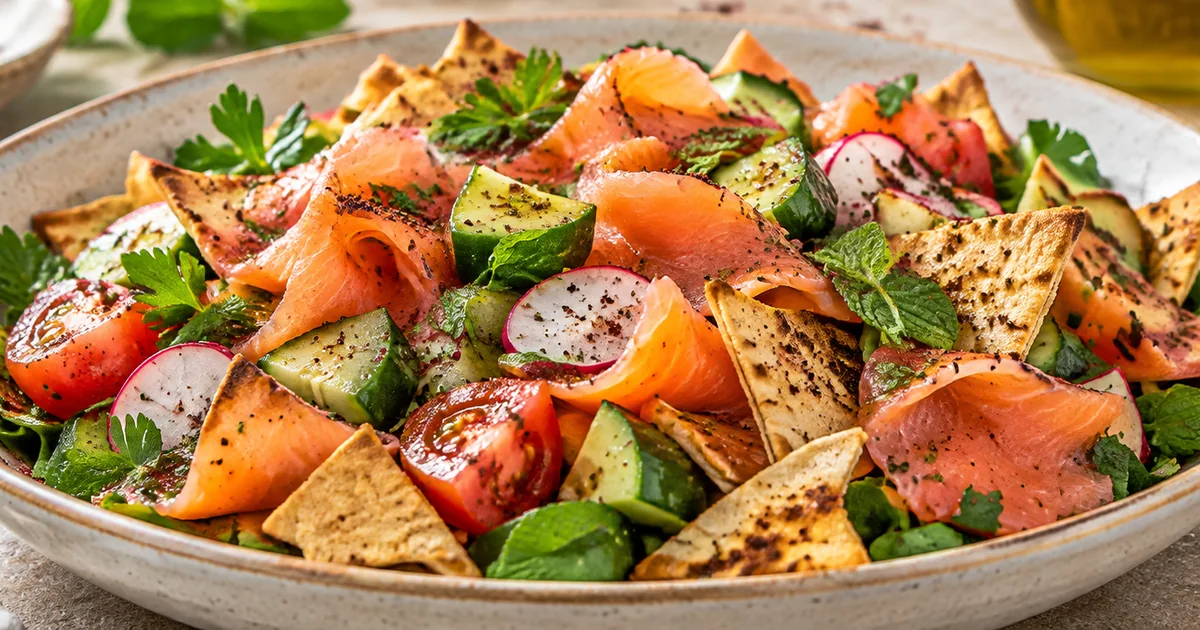
Smoked salmon fattoush gets much of its appeal from the contrast between crisp toasted pita, chopped vegetables, herbs, and a bright dressing. This seafood version adds pieces of shelf-stable canned smoked salmon just before serving. The fish makes the salad substantial enough for two light main-course portions while retaining the salad’s contrasting textures. It is a seafood variation on the familiar bread-and-vegetable salad.
The recipe uses commercially canned smoked salmon that is labeled shelf-stable while unopened and ready to eat after opening. That product state matters. Refrigerated smoked salmon from a deli case has different handling and special Listeria considerations, particularly for people at higher risk; it is not the product specified here. Read the package before buying, and follow its directions for draining, refrigeration after opening, and any allergen information. If a tin is packed in a strongly flavored sauce, it may not suit this lemon-and-sumac dressing.
There is a short oven step to toast one pita. The salmon is not cooked in this recipe, and the vegetable assembly should happen close to serving. The estimated timing is fifteen minutes of preparation plus seven minutes to crisp the pita, or approximately twenty-two minutes total, for two main-course servings. Thickness of pita and oven behavior can change the toast time. Watch for a dry, crisp result rather than letting the bread scorch to meet a number.
Table of Contents
Smoked Salmon Fattoush Ingredients and Structure
One plain pita provides a modest amount of crunch. Cut it into bite-sized pieces and toss it with one teaspoon of olive oil before toasting. A pita with a thick pocket can take slightly longer than a thin one. You want crisp pieces that remain identifiable after a quick toss, not a powder of crumbs. Keep the pita separate while you prepare the vegetables and add it at the end.
Two cups of chopped romaine create a sturdy green base. One cup of diced cucumber and one cup of diced tomato provide the fresh, juicy portion. Half a cup of thinly sliced radishes contributes crunch and a peppery note. A quarter cup of chopped flat-leaf parsley and two tablespoons of chopped mint make the salad herb-forward without turning it into a bowl of garnish. These are measured volumes after chopping, not vague instructions to add as much as looks attractive. Wash produce under running water and dry the greens well; excess water dilutes the dressing.
For the seafood, use six ounces of ready-to-eat, shelf-stable canned smoked salmon, gently drained if the package calls for it. The listed six ounces refers to the amount of fish used in the salad, not an assumption that every tin has the same drained yield. A product packed in water or a mild oil is easier to pair with lemon and sumac than a sweet or spicy prepared sauce. Break the fish into pieces with a fork, leaving some larger flakes to scatter over the dressed vegetables. Inspect for any unexpected bones according to the product and diners’ needs.
Whisk two tablespoons of olive oil with one tablespoon of lemon juice, one teaspoon of ground sumac, and a small pinch of black pepper. The dressing is deliberately spare because the salmon may already be seasoned or salty. No additional salt is specified in the base formula. Taste the actual fish and dressing separately before deciding whether a portion needs more seasoning at the table. Check that the sumac is a single spice rather than a pre-salted blend if you want to keep the formula predictable.
Toast the pita without drying the salad
Heat the oven to 400°F (205°C). Cut the pita into roughly one-inch pieces and spread them on a baking sheet. Drizzle with the teaspoon of oil and turn to coat lightly. Toast for about six to eight minutes, turning once if needed, until the pieces feel crisp and show a little color. Remove them from the sheet to cool. The estimated cook time is seven minutes as a planning average; check actual bread rather than expecting every brand and thickness to finish at exactly seven.
While the pita toasts, chop and dry the romaine, cucumber, tomato, radishes, parsley, and mint. Put the greens and vegetables in a broad bowl, with enough room for a gentle toss. Whisk the olive oil, lemon juice, sumac, and pepper in a separate small bowl. Preparing the dressing away from the fish helps you judge its acidity and prevents you from accidentally breaking the salmon into tiny shreds while mixing everything else.
Toss the vegetables and herbs with most of the dressing. Fold in the salmon gently or arrange its pieces over the salad. Add the pita at the last moment and drizzle over the remaining dressing only if the salad needs it. Divide between two bowls and serve at once. The pita softens as it sits in tomato juices and dressing, so keeping it separate until the final toss is a practical texture step, not a decorative flourish.
Choose the right smoked salmon
The phrase “smoked salmon” covers products with different processing and storage requirements. This article specifies a shelf-stable, commercially canned, ready-to-eat product. Check that the package explicitly permits pantry storage before opening. If it requires refrigeration, treat it as a different product and follow its label. An opened tin becomes perishable even if the sealed one was shelf-stable. Transfer unused fish to a covered food-safe container and refrigerate promptly.
FoodSafety.gov advises people at higher risk of Listeria infection, including pregnant people, older adults, and people with weakened immune systems, to avoid refrigerated smoked seafood unless it is canned or shelf-stable or used in a cooked dish. That is one reason the product description here is precise. The guidance is not a claim that any specific canned product is guaranteed safe for every person; labels, recalls, and individual medical advice still matter. If a diner needs a different seafood choice, do not quietly swap a refrigerated cold-smoked package into this uncooked salad.
The salmon amount is substantial enough to make the two bowls more than a side of vegetables, while leaving room for bread and herbs. If the tin’s contents are in large firm pieces, lift them out carefully. If the fish arrives already flaked, add it last and use fewer turns. A very oily tin may need more draining so that the measured dressing does not become heavy. Do not pour its entire packing liquid over the greens unless a revised recipe explicitly accounts for it.
Serving variations and boundaries
This measured salad is complete as written. If using it as a side dish, the same batch could be divided into smaller portions, but the recipe makes two main-course servings. Offer additional plain pita alongside for people who want more bread rather than silently changing the card’s ingredient quantity. A separate plate of cut vegetables also works for a larger spread without altering the dressing ratio in the main bowl.
If mint is unavailable, a parsley-forward variation is possible, but the herb balance will change. The written formula includes both. A different lettuce may be softer and collapse sooner under tomato and dressing, so the romaine specified here is intentional. Sun-dried tomatoes, capers, avocado, or a creamy sauce would move the salad toward a different flavor profile; none is needed to make this recipe work. Keep variations clearly separate from the measured core instead of inserting extra ingredients into instructions that no longer match the card.
For a lunch to carry, pack the pita, dressing, salmon, and washed vegetables separately in chilled containers and combine them just before eating. The dressing can sit with the vegetables briefly, but tomatoes and cucumber release liquid over time. The fish still needs correct post-opening refrigeration. Use a cooler or insulated bag with cold packs when refrigeration will not be available during transport; do not treat the shelf-stable status of the unopened tin as a license to leave an assembled seafood salad warm.
Common problems and simple fixes
Watery salad usually begins with wet greens or unseeded, very juicy tomatoes. Dry the washed vegetables, remove excess tomato liquid if necessary, and add dressing shortly before serving. Soggy pita has a different cause: it spent too long in the dressed bowl. Toast until crisp, cool it, and hold it separately until the last toss. These two changes preserve the contrast that makes fattoush useful as a salad.
If the salad tastes too salty, first check the smoked salmon and any salted sumac blend. There is no added salt in the measured dressing; piling on capers or feta without balancing the rest can make matters worse. If the salmon overwhelms the herbs, keep its larger pieces scattered on top so each forkful can include vegetables and pita. Do not mince the fish into a paste to force every ingredient into a uniform bite.
Do not use an old tin that is leaking, bulging, or badly dented. USDA guidance says to avoid food from containers with those warning signs. Nor should you assume the salmon is safe because lemon juice was added. Lemon contributes flavor, not a validated cooking step for raw fish. The specified canned fish is already a ready-to-eat product, and the salad method depends on that starting state.
Storage and food handling
This salad is best assembled for immediate serving because the vegetables release moisture and the pita softens. Keep the unopened canned salmon according to its label, then refrigerate any unused opened fish in a covered container. Chill the assembled seafood salad promptly. General FoodSafety.gov guidance calls for refrigerating perishable foods within two hours, or within one hour if exposed to temperatures above 90°F (32°C), and keeping the refrigerator at 40°F (4°C) or below. Follow any shorter time printed on the salmon package.
General cooked-leftover guidance often allows three to four days under proper refrigeration, but a dressed salad can lose its desired texture much sooner and its seafood package may require earlier use. For quality, store the pita separately and plan to eat the prepared salad soon. Do not repeatedly return a serving bowl to the table, let it warm, and then put it back in the refrigerator. If it has spent too long at room temperature, discard it rather than trying to make it safe with another squeeze of lemon.
The salad is intended to be eaten chilled or shortly after assembly. Reheating its bread and vegetables would not restore their texture. If you choose to make a hot dish with the salmon, that is a separate recipe with its own method and temperature guidance, not an unlisted step of this fattoush. Keep handling instructions tied to the actual product and dish.
Related: For another quick way to use smoked salmon, try this easy smoked salmon dip.
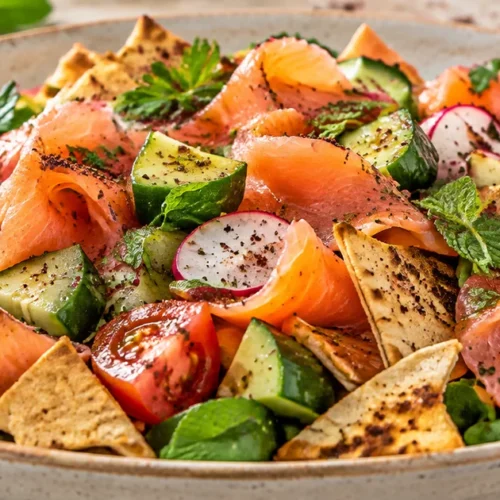
Smoked Salmon Fattoush with Cucumber and Herbs
Ingredients
- 1 plain pita cut into bite-size pieces
- 1 tsp olive oil for pita
- 2 cups chopped romaine washed and dried
- 1 cup diced cucumber
- 1 cup diced tomato
- 1/2 cup thinly sliced radishes
- 1/4 cup chopped flat-leaf parsley
- 2 tbsp chopped mint
- 6 oz shelf-stable canned ready-to-eat smoked salmon drained as directed by the label
- 2 tbsp olive oil for dressing
- 1 tbsp fresh lemon juice
- 1 tsp ground sumac check for salt in blended products
- 1 pinch black pepper
Instructions
- Heat the oven to 400°F (205°C). Cut the pita, toss with 1 teaspoon olive oil, and toast on a baking sheet for 6–8 minutes until crisp. Let cool.
- Wash, dry, and chop the romaine, cucumber, tomato, radishes, parsley, and mint.
- Whisk 2 tablespoons olive oil with the lemon juice, sumac, and black pepper.
- Toss the vegetables and herbs with most of the dressing. Gently add or arrange the drained, ready-to-eat smoked salmon.
- Add the crisp pita immediately before serving. Use the remaining dressing if needed and divide between two bowls.
Notes
Frequently asked questions
Is this a traditional fattoush recipe?
It is a smoked-salmon variation built around the recognizable pita, chopped vegetables, herbs, lemon, and sumac combination. The salmon adds a seafood element while the crisp pita and chopped vegetables remain the focus.
Can I use refrigerated smoked salmon instead?
This formula specifies shelf-stable canned smoked salmon. Refrigerated products have different handling and Listeria considerations, especially for higher-risk people. Do not make a one-for-one substitution without reviewing the product label and the intended diners; the official guidance cited below explains the distinction.
Can the pita be prepared in advance?
Yes. Toast it and let it cool fully, then keep it dry and separate from the vegetables and dressing until serving. The final toss, rather than the toast time, is what controls whether the bread stays crisp in the bowl.
Why does the dressing have no added salt?
The canned smoked salmon and some sumac blends may already supply salt. The written dressing lets you assess the actual product first. Additional seasoning at the table can be considered after tasting; do not assume all brands have identical sodium levels.
Does the salad need to be cooked after assembly?
No. The seafood specified is a labeled ready-to-eat canned product, the pita is toasted separately, and the vegetables are served fresh. The oven step crisps the pita only. A raw-fish or refrigerated smoked-fish product would require a different food-safety decision.
A salad built around contrast
The practical sequence is short: toast and cool pita, wash and dry vegetables, whisk a measured lemon-sumac dressing, and add the ready-to-eat salmon gently. Keep the bread separate until the last moment. With a precise product description and clear handling, this becomes a seafood salad with its own purpose rather than another general smoked-salmon ideas article or a second version of an existing rice bowl.