
Chicory Salad with Lemon-Anchovy Dressing
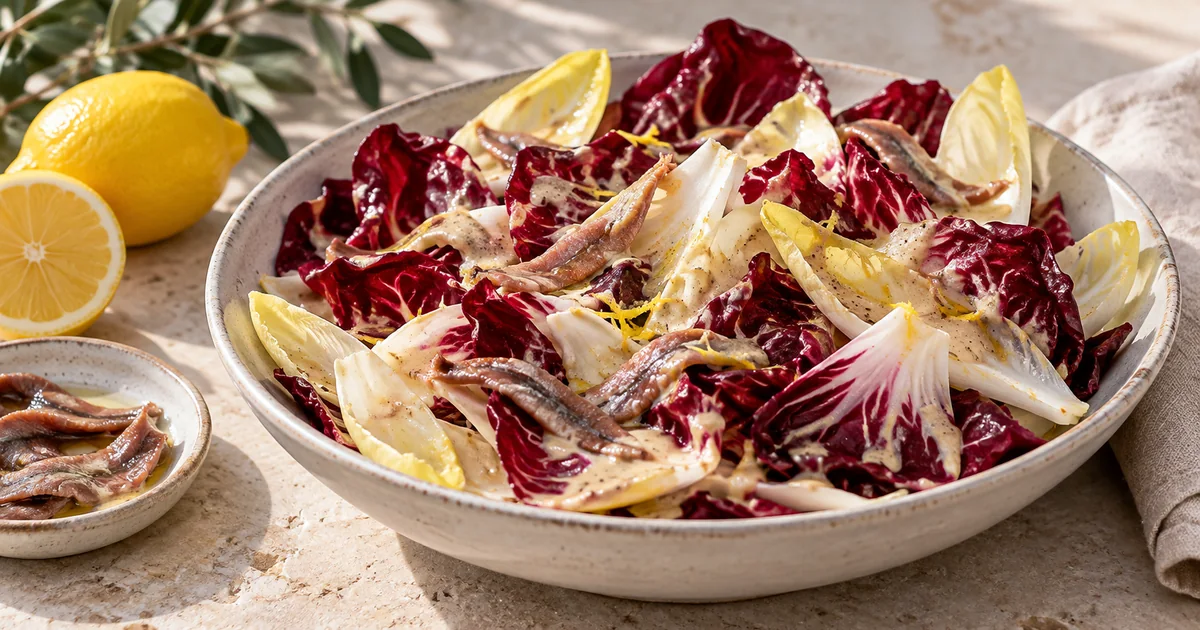
Chicory salad with lemon-anchovy dressing has a pleasantly assertive bite, so a thin, acidic dressing can seem to disappear against it. This salad uses anchovies as part of a lemon and olive-oil dressing, with a little Dijon mustard to help the mixture coat the leaves. Thinly sliced radicchio and separated Belgian endive leaves provide contrasting shapes, while parsley gives the finished bowl a fresh edge. The anchovies are incorporated into the dressing; the salad is a seafood-seasoned dish, not a claim that it is a fish main course.
This is a practical home salad with enough dressing to coat four side portions, without a second sauce or an ambiguous instruction to add anchovies “to taste.” The recipe also explains how to keep the leaves crisp, how to adjust bitterness without concealing it, and how to prepare components ahead. Exact saltiness varies by anchovy brand, so taste the finished dressing before adding any optional table salt.
Table of Contents
Build the Chicory Salad with Lemon-Anchovy Dressing
Use one small head of radicchio, approximately six ounces after trimming, and two Belgian endives, approximately eight ounces together. The two heads do not need to weigh exactly the same, but weighing or estimating them helps prevent a large head from overwhelming the measured dressing. Remove damaged outer leaves and the hard base of each endive. Separate the leaves, cutting only very large ones in half lengthwise so they remain easy to pick up with a fork. Halve the radicchio, remove its core and slice its leaves thinly.
Wash the leaves under cool running water and dry them thoroughly in a salad spinner or between clean towels. Water clinging to the leaves dilutes the dressing and pools at the bottom of the bowl. The separated endive leaves also make it easy to spot any grit near their bases. Keep raw seafood and ready-to-eat produce on separate surfaces if you are preparing another dish at the same time. Anchovies from a jar or tin should be handled according to their label, including refrigeration after opening where directed.
Radicchio and endive both have a naturally bitter edge. The dressing’s lemon is there to sharpen and balance that flavor, not remove it. If you prefer a milder plate, use a little less radicchio and a little more endive, but expect the stated yield and dressing ratio to change. A different leafy green such as romaine would produce a different salad: it can accept the dressing, but the chicory contrast in the title would no longer be the point. Keep the specified leaves for the first execution of this formulation.
Make a measured anchovy dressing
For the dressing, use four oil-packed anchovy fillets, drained, one small garlic clove finely grated, two tablespoons fresh lemon juice, one teaspoon Dijon mustard, and four tablespoons extra-virgin olive oil. Mash the anchovies with the garlic into a paste in a small bowl. Whisk in lemon juice and mustard, then slowly whisk in the oil. The mixture may look creamy while it is whisked; it can separate after standing, so whisk it again just before tossing. No additional oil is called for when assembling.
The anchovy paste should disperse through the liquid instead of leaving large salty pieces on individual leaves. A fork works if the fillets are soft; chop stubborn pieces with a knife before mashing. Some anchovies are packed with very salty oil, and some Dijon products contain different amounts of salt. Taste the dressing after all measured ingredients are combined. If it seems sharply acidic, allow it a minute to settle and toss a leaf in it before changing the formula. The leaf, not a spoonful of concentrated dressing, is the useful comparison.
Do not automatically add salt to the dressing or the finished bowl. The anchovies and mustard already season it. Black pepper is optional at the table, but the measured card includes one-quarter teaspoon freshly ground black pepper to give a reproducible starting point. Lemon juice is specified as a measured liquid rather than “one lemon” because fruit size varies. If you have a large lemon, save the remainder for another dish; squeezing all of it into the bowl would change the acid-to-oil balance.
Anchovies are fish, and mustard may be an allergen under some labeling regimes. Read the packages for additional ingredient and cross-contact information if you are serving someone with an allergy. Worcestershire sauce is not a substitute for the fillets in this formulation: ingredients and concentrations differ, and some versions also contain anchovy. A plain extra-virgin olive oil lets the citrus and chicory remain recognizable. A strongly flavored infused oil may overwhelm the subtle parsley finish.
Toss and serve without soggy leaves
Place the dry radicchio, endive and one-quarter cup roughly chopped flat-leaf parsley in a broad serving bowl. Add about three-quarters of the dressing and toss gently with clean tongs. Coat the leaves rather than crushing the endive. Taste one dressed leaf; add the remaining dressing if the bowl needs it. The entire measured dressing is available for these four portions, but smaller or larger produce heads may not require precisely the same coating. Serve promptly on four side plates or at the table from the bowl.
Using a broad bowl creates room to lift the leaves through the dressing. Pouring all the liquid into a compact bowl and pressing the greens down can bruise them and leave oil at the base. Endive tips tend to catch a little sauce, while the thin strips of radicchio distribute it more evenly. If the dressing sits for several minutes, give it another brisk whisk immediately before tossing. Keep a separate clean spoon for tasting so the jar of remaining dressing is not contaminated by used utensils.
This is a side salad. It can accompany cooked fish, a simple bean dish or warm bread, but it does not contain enough seafood or starch to be represented as a complete seafood dinner. If a full meal is the goal, choose a separately cooked protein whose preparation is documented elsewhere rather than implying the anchovy dressing satisfies that role. Its bright, briny flavor also works with a plainly prepared main dish; a second heavily salted sauce would compete with the dressing.
Adjustments that preserve the recipe’s idea
If the endive heads are unusually large, remove one or two extra leaves for another use instead of silently doubling the dressing. If radicchio is particularly bitter, slice it finer and use the full parsley amount. Those adjustments alter the distribution of flavor without adding an unmeasured sweetener. Some recipes sweeten bitter greens, but this version does not require honey; adding it would be a separate variation rather than an ingredient hidden in the instructions.
White wine vinegar could replace some lemon juice in a future tested variation, but it is not a one-for-one promise here. Its acidity varies by product and it changes the character of the dressing. Similarly, yogurt or mayonnaise would make a creamy anchovy dressing instead of the light lemon-and-oil mixture specified. For a seafood-free table, use a different salad and dressing rather than presenting omitted anchovies as equivalent: the anchovy is the defining seasoning in this recipe and the title should remain truthful.
Parsley is intentionally added to the leaves instead of blended into the dressing. That keeps the dressing’s measured oil and lemon ratio visible and prevents finely chopped herbs from turning the mixture muddy if it is made ahead. A few extra parsley leaves can decorate the plate, but a large extra handful could change the leaf-to-dressing balance. No croutons, cheese or olives are necessary to fulfill the recipe; their salt, texture and potential allergens belong to a different variation.
Prep-ahead and cold storage
You can wash and dry the chicories in advance. Store them in a clean covered container lined with a dry towel in the refrigerator, and keep the dressing separately in a covered jar. Shake or whisk the dressing again before use. Do not dress the salad until you are ready to serve, since acid and salt draw moisture from cut leaves and remove the crisp contrast that makes the dish useful. The exact condition of the greens matters more than assuming a fixed number of crisp days.
Follow the anchovy package’s refrigeration and use-after-opening directions for the dressing. Because opened packaged fish products and cut produce have product-specific handling instructions, the article deliberately avoids promising that a mixed, dressed salad is safe for a set number of days. Refrigerate promptly at 40°F (4°C) or below. FoodSafety.gov advises refrigerating perishables within two hours, or one hour if they are exposed to temperatures above 90°F (32°C). Discard a salad that has exceeded the relevant room-temperature limit instead of treating lemon juice as a preservative.
If you expect leftovers, set aside undressed leaves and only dress what will be eaten. A mixed dressed portion can lose its texture quickly even when it remains cold. This quality issue is different from a verified safety limit. An opened tin of anchovies should not be stored uncovered in the original can unless its manufacturer specifically directs that practice; transfer unused fillets and their oil as the package recommends. Note the date opened and consult the product label.
Related: If you enjoy the savory anchovy element here, this anchovy tapenade is another useful way to build on that flavor.
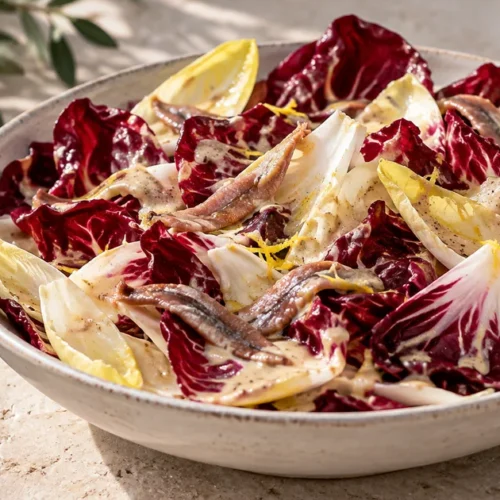
Chicory Salad with Lemon-Anchovy Dressing
Ingredients
- 1 small head radicchio about 6 oz trimmed; cored and thinly sliced
- 2 heads Belgian endive about 8 oz total; separated and trimmed
- 1/4 cup roughly chopped flat-leaf parsley
- 4 fillets oil-packed anchovies drained
- 1 small clove garlic finely grated
- 2 tbsp fresh lemon juice
- 1 tsp Dijon mustard
- 4 tbsp extra-virgin olive oil
- 1/4 tsp freshly ground black pepper
Instructions
- Wash and thoroughly dry the radicchio, endive, and parsley. Trim and cut as listed.
- Mash the drained anchovies and grated garlic to a paste.
- Whisk in lemon juice and Dijon mustard, then slowly whisk in olive oil and black pepper. Taste on a leaf before considering salt.
- Place the chicories and parsley in a broad bowl and toss gently with about three-quarters of the dressing.
- Add more of the measured dressing as needed and serve promptly as four side portions.
Notes
Frequently asked questions
Is this a Caesar salad?
No. Both salads can use anchovy in a dressing, but this one is built around radicchio and Belgian endive with a measured lemon-olive-oil dressing. It has no romaine, egg-based emulsion, croutons or Parmesan in its formulation. Calling it Caesar would imply a different set of expectations and ingredients.
Can I use anchovy paste instead of fillets?
Possibly, but paste concentration and added ingredients vary by brand. This recipe specifies four drained oil-packed fillets; there is no reliable universal equivalent amount of paste. Consult the product label rather than guessing an exact exchange.
Can I make the whole salad ahead?
Prepare the leaves and dressing separately, then toss close to serving. The cut greens stay crisper that way, and you can judge how much of the measured dressing the actual heads need. Keep both components refrigerated and follow the anchovy label for opened-product storage.
What if the dressing tastes salty?
Taste it on a leaf first. If it still overwhelms the chicory, use less of the prepared dressing on the measured greens and save the remainder according to the anchovy package’s cold-storage instructions. Avoid adding table salt automatically. For a future batch, compare a different anchovy brand, but do not secretly reduce the measured fish in the current card without updating it.
Can this be a meal on its own?
The yield is four side portions. It can be part of a meal alongside another clearly prepared dish, but the measured ingredients do not justify calling it a complete seafood main. That distinction keeps both the serving guidance and the recipe title honest.
Finish with a clear purpose
The salad depends on a few concrete choices: dry chicory leaves, an anchovy paste spread evenly through lemon and oil, and a last-minute toss. Serve it as a crisp side dish, tasting the dressing before tossing so the lemon and salty anchovies complement the bitter leaves.