
Shrimp and Shiitake Brown Rice Congee
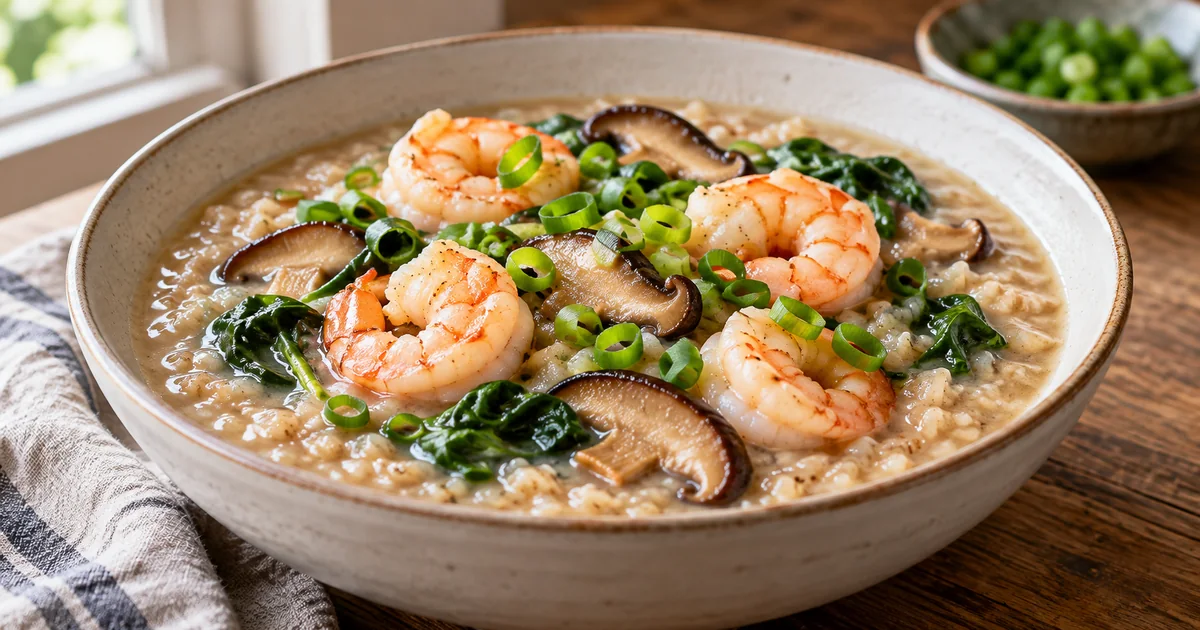
Shrimp and shiitake brown rice congee takes patience. The grains soften slowly in plenty of liquid, changing a pot of rice and broth into a spoonable porridge. In this version, shiitake mushrooms and ginger build the savory base while shrimp and spinach go in near the end. That timing gives the rice its long simmer without subjecting the shrimp to the same treatment. The result is a seafood-centered meal for four, not a vegetable congee with an optional shrimp garnish.
This is a stovetop method for uncooked brown rice, not a way to use a container of cooked rice from the refrigerator. The difference matters both for timing and for food safety. The estimated cook time is about ninety minutes for the rice and finishing ingredients, after approximately fifteen minutes of preparation. Brown rice brands, pot width and burner settings can change the time considerably, so the practical endpoint is a tender grain and the texture you want. It is not an express meal or a guaranteed ninety-minute result.
Table of Contents
Shrimp and Shiitake Brown Rice Congee Ingredients
Begin with half a cup of dry brown rice and six cups of unsalted or low-sodium vegetable broth. The broth will reduce as the grains soften; have hot water ready if the pot becomes too thick before the rice is tender. This recipe uses a relatively modest rice quantity because the goal is a loose porridge rather than four bowls of firm cooked rice. Rinse the rice in a sieve until the water runs less cloudy, then drain it. Rinsing does not replace cooking or make rice safe to leave at room temperature later.
Use four ounces of fresh shiitake mushrooms, stems removed and caps thinly sliced. The stems are often too tough for the texture intended here; save them for a separate stock if useful, rather than adding them to the bowl. One tablespoon of neutral oil, two teaspoons of freshly grated ginger and two minced garlic cloves start the aromatic base. These are additions to the rice, not an unmeasured commercial seasoning mix.
One pound of raw, peeled and deveined shrimp makes this a proper shrimp congee. Use shrimp that have been refrigerated or safely thawed according to their package. The shrimp enter only when the rice is ready, and they are cooked until firm and pearly or white and opaque. Two cups of baby spinach wilt at the end, followed by one tablespoon of soy sauce and one teaspoon of toasted sesame oil. Two sliced scallions finish the bowls. Check the broth and soy sauce labels for salt and allergens; the recipe does not add a separate measured dose of salt. The soy sauce and sesame oil are modest accents rather than a heavy sauce.
There are eleven measured ingredient lines in the recipe card: rice, broth, mushrooms, neutral oil, ginger, garlic, shrimp, spinach, soy sauce, sesame oil and scallions. Hot water for texture adjustment is a cooking aid, not a hidden ingredient amount. The raw shrimp in this recipe cooks in the simmering porridge after the rice softens; cooked shrimp would require a different final heating step.
Build the porridge base
Choose a heavy pot with room for a gentle simmer and occasional stirring. Heat the neutral oil over medium heat. Add the sliced shiitake and cook for a few minutes until their moisture begins to evaporate and they soften. Stir in ginger and garlic briefly, just until fragrant. Garlic can scorch if left against the hot base of a dry pot, so pour in the broth promptly. Add the rinsed brown rice and bring the liquid to a boil.
Lower the heat to a gentle simmer and leave the lid slightly ajar. Stir periodically, especially as the liquid thickens and grains begin to settle. A full rolling boil wastes liquid and can leave the outside of a grain soft while the middle remains firm. If the bottom threatens to stick, lower the heat and stir more often. Add a little hot water whenever the rice needs more time but the pot is becoming too dry. The six cups of broth is the starting volume; absorption and evaporation are variable, and adding water to reach the specified spoonable texture is part of the method.
Start testing the rice after about seventy minutes. A brown rice congee may need roughly eighty to ninety minutes or more to become soft enough for a porridge, depending on the grain. The finished rice should be tender throughout; the broth should flow around it when stirred. A slightly thinner pot will continue to thicken as it rests. Do not decide that the rice is done solely because the clock reached the headline time.
Add shrimp at the right moment
Once the rice is tender, bring the pot back to a steady gentle simmer and add the raw shrimp. Stir to submerge them and cook just until they turn firm and pearly or white and opaque, usually a few minutes depending on size. Cut one of the largest shrimp if needed to check that its center is no longer translucent. FoodSafety.gov gives the opaque, pearly appearance as the specific shrimp endpoint; do not leave raw shrimp in a warm but no longer simmering pot and assume residual heat will finish it.
Stir in the spinach and let it wilt. Add the measured soy sauce and toasted sesame oil, then taste the hot liquid before deciding whether the bowls need any adjustment. Divide among four bowls and top with sliced scallions. Use clean bowls and utensils rather than those that held the raw shrimp. The long rice simmer and short shrimp finish are the key relationship in this recipe. Cooking everything together from the start would make the shrimp tough and leave its actual endpoint hard to judge.
Texture adjustments without changing the recipe
Some diners prefer congee thin enough to pour, while others want it to mound gently on a spoon. The measured starting broth gives a consistent basis, but grain size and evaporation still vary. If the pot becomes too thick before the rice is tender, add hot water in small amounts, stir, and continue simmering. If it is too thin after the rice is fully soft, simmer uncovered briefly before adding the shrimp. Avoid reducing aggressively after the shrimp goes in, because the seafood would be exposed to unnecessary extra heat.
Stirring also changes texture. More frequent stirring releases starch and makes the liquid creamier; too little stirring risks sticking in a broad, hot pot. Use a heavy-bottomed vessel if available and scrape the base gently. A different grain such as white rice would cook on a different schedule and absorb liquid differently. It is not a direct substitution in a recipe specifically designed around brown rice.
Fresh shiitake adds texture as well as flavor. If its slices remain large and chewy relative to the softened rice, cut them more thinly before cooking. The spinach adds color and wilts quickly; put it in only after the shrimp is nearly done. Scallions remain a fresh finish and do not need to spend the full simmer in the pot.
Shopping and handling the seafood
Buy shrimp that are properly refrigerated or held frozen, with intact packaging and no unpleasant odor. Thaw frozen shrimp in the refrigerator, or use an official safe cold-water method and cook it promptly. Keep raw shrimp and its juices away from washed spinach, scallions and the serving bowls. Wash hands, board and utensils after raw-seafood contact. FoodSafety.gov’s seafood-handling advice emphasizes cold storage and separation from ready-to-eat food, and its temperature chart gives shrimp’s opaque endpoint.
The recipe assumes one pound of shrimp after the shopping and thawing decision, with shells removed and veins taken out. If you buy shell-on shrimp, the package weight includes shells and may leave less meat than the card intends. Select a peeled weight that matches the formulation or allow for that difference in shopping. Shrimp sizes vary; a few very large pieces may need more time than small ones. Check actual doneness instead of treating the last few minutes as a fixed guarantee.
Soy sauce commonly contains wheat and soy, and toasted sesame oil contains sesame. Shrimp is a crustacean shellfish. Check actual labels and handle dietary restrictions with care. This article does not promise that swapping an unmeasured alternative condiment produces the same result. A low-sodium broth allows better control of the final seasoning, especially when the soy sauce and shrimp products may bring their own salt.
Serving and useful variations
Serve the congee hot in bowls that can hold a generous ladleful without overflowing. A plain side of cucumber or lightly cooked greens can add contrast, but the shrimp, mushrooms and spinach already make this a complete savory bowl. Keep any extra condiment at the table rather than mixing an unknown amount into the shared pot. The stated four servings are meal portions from the measured batch, not a nutrition calculation.
For a milder version, keep the same ginger and garlic but select a less salty broth and taste after the soy sauce goes in. For a stronger mushroom note, a different amount of shiitake would need a revised card; this recipe uses four ounces. If a reader wants cooked shrimp from a previous meal, that would change the final heating step and leftover handling. The version here starts with raw shrimp and cooks it in the simmering congee.
This is also distinct from a quick seafood soup. The brown rice is intentionally cooked until soft and releases starch, yielding a thicker texture and a longer method. Calling it a thirty-minute dinner would misrepresent the grain and encourage readers to stop before the rice is ready. The long simmer can be mostly gentle, but it still needs periodic attention and enough liquid.
Cooling, storage and reheating
Rice needs particular care after cooking because Bacillus cereus spores can survive cooking and grow if cooked rice is held warm or cools slowly. Do not leave a deep pot of shrimp congee on the stove overnight. Divide leftovers into shallow covered containers and cool and refrigerate them promptly. UK Food Standards Agency advice gives a stricter one-day window for cooked rice dishes: eat or freeze within 24 hours, and reheat rice only once until steaming hot throughout. Follow that specific rice advice for this mixed dish instead of applying a longer general leftover window to its rice component.
FoodSafety.gov’s general perishable-food rule calls for refrigeration within two hours, or within one hour above 90°F (32°C), and reheat of leftovers to 165°F (74°C). The FSA’s rice-specific recommendation is more restrictive about storage duration and repeated reheating. Label the containers and portion only what you will reheat. Stir thoroughly while reheating so cold pockets do not remain in thick porridge, and check that the food is hot throughout and reaches the relevant 165°F endpoint. Add a splash of water if the congee has thickened in the refrigerator; this changes texture, not the need for proper reheating.
Related: If you want another grain-based shrimp dinner, try this shrimp quinoa bowl.
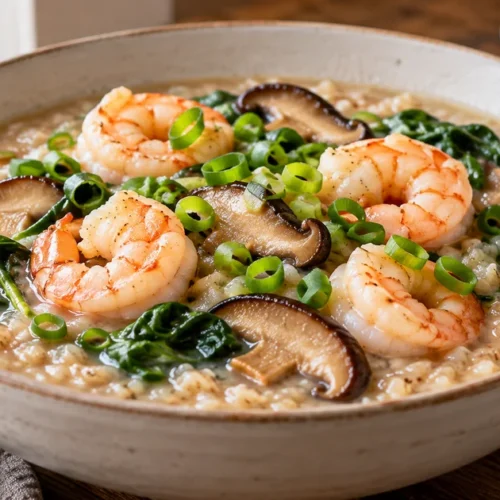
Shrimp and Shiitake Brown Rice Congee
Ingredients
- 1/2 cup dry brown rice rinsed
- 6 cups unsalted or low-sodium vegetable broth
- 4 oz fresh shiitake caps thinly sliced
- 1 tbsp neutral oil
- 2 tsp grated fresh ginger
- 2 cloves garlic minced
- 1 lb raw shrimp peeled, deveined and thawed
- 2 cups baby spinach
- 1 tbsp soy sauce
- 1 tsp toasted sesame oil
- 2 scallions sliced
Instructions
- Rinse the brown rice, slice the shiitake, and prepare the remaining measured ingredients, keeping raw shrimp cold and separate.
- Soften mushrooms in the oil; stir in ginger and garlic briefly. Add broth and brown rice and bring to a boil.
- Simmer gently with the lid ajar, stirring and adding hot water as needed, roughly 80–90 minutes or until the rice is fully tender and the porridge spoonable.
- Add raw shrimp to the simmering porridge and cook until firm, pearly or white and opaque. Wilt spinach, then stir in soy sauce and sesame oil.
- Divide into four bowls and top with sliced scallions.
Notes
Frequently asked questions
Can I start with cooked brown rice?
The measured recipe starts with dry rice and six cups of broth. Cooked rice has already absorbed liquid and would need different amounts, timing and storage decisions. Do not insert a container of leftover rice into this card and assume the ninety-minute simmer still applies.
When should I put in the shrimp?
Only after the brown rice is tender and the pot is at a steady simmer. Cook the raw, peeled shrimp until firm and pearly or white and opaque, then finish with spinach. Putting shrimp in at the start of the long rice simmer would overcook it.
What if the pot is thick before the rice is soft?
Add hot water a little at a time, stir and lower the heat if the bottom is sticking. Continue until the grain itself is tender. The fixed broth amount is a starting point, while evaporation varies with the pot and burner.
Is the ninety-minute cook time guaranteed?
No. It is a planning estimate for this brown rice method. Grain type, pot shape and heat can lengthen the simmer. Use tender rice and properly cooked shrimp as the endpoints rather than forcing the recipe to match a clock.
How long can I keep leftovers?
Cool and refrigerate promptly in shallow containers. Because the dish contains cooked rice, follow the FSA’s rice-specific advice to eat or freeze within 24 hours and reheat only once, until steaming hot throughout. Follow the general 165°F (74°C) leftover reheating endpoint as well. Discard food that has exceeded safe holding times.
A slow rice dish with a short seafood finish
The method is straightforward once the timing is clear: simmer the brown rice with mushrooms and aromatics until spoon-soft, then cook shrimp in the hot porridge and wilt the spinach. It rewards patience at the rice stage and attention at the shrimp stage. Judge the porridge by fully tender rice and opaque shrimp rather than the clock alone.