
Pan-Seared Sole with Brown Butter, Beets, and Capers
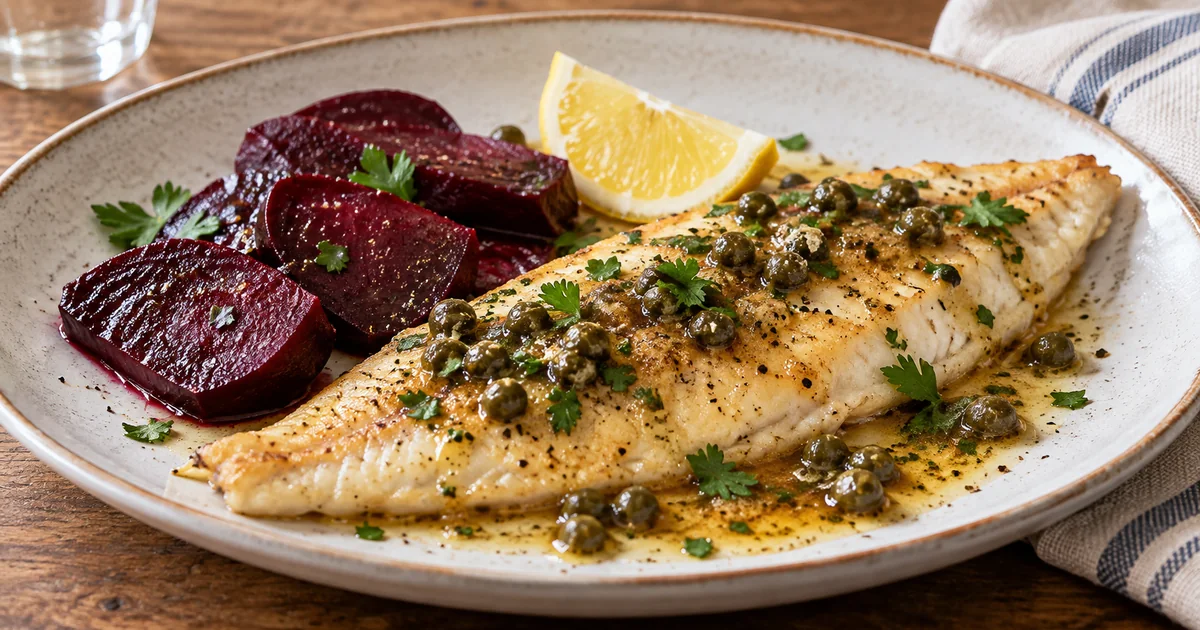
Pan-seared sole with brown butter cooks quickly, which makes it an appealing partner for vegetables that are ready to warm rather than raw beets that need a long roast. This recipe begins with plain, already-cooked beets. A skillet then cooks the fish, warms the beets and makes a modest brown-butter pan finish with capers and lemon. The steps are ordered around those different cooking needs. There is no promise that raw beets will turn tender in the few minutes it takes to cook sole.
The finished plate is two main-course servings: two fillets per person, a portion of warm sliced beets, and a spoonful of the measured butter-caper mixture. Sole is delicate, so a wide skillet, moderate heat and a thin spatula matter more than a dramatic high-heat sear. The endpoint is still the food-safety target for finfish, 145°F (63°C) in the thickest part when a thermometer can be used reliably. Thin fillets make probing awkward; if the piece cannot be measured accurately, follow the official alternative cue that the flesh is no longer translucent and separates easily with a fork. Color alone is not a reason to assert a guaranteed time.
Table of Contents
Why Pan-Seared Sole with Brown Butter Works with Beets and Capers
Start with four sole fillets, about four ounces each, fully thawed, and pat them dry. Two similarly sized fillets per plate are easier to portion than one unspecified large piece. The formula uses one-quarter cup all-purpose flour, one-half teaspoon kosher salt and one-quarter teaspoon ground black pepper for a light dusting. Shake off excess flour; it is not meant to form a thick coating. The flour helps the fish take on color, but a heavy layer can fall into the pan and burn while the fragile flesh cooks. Wheat is an allergen here, and a gluten-free substitute has not been validated for this exact method.
Use one tablespoon neutral oil for the first fish-cooking stage. Save three tablespoons unsalted butter for the finishing stage, where its milk solids can brown without forcing the fish to remain over heat. The separated fats also make the sequence easier to follow: brown and cook the sole, move it to a clean platter, then make the caper finish in the same skillet. Do not assume that dark butter is better. The goal is a nut-brown appearance and aroma before it turns black or tastes scorched.
For the vegetables, use eight ounces plain cooked beets, drained and sliced into roughly quarter-inch pieces. Vacuum-packed or home-cooked beets can work if they are unsweetened and unseasoned; follow package refrigeration instructions once opened. Pickled beets are not interchangeable because their acid and sugar change the balance of the pan sauce. Raw beets require a separate cooking method and substantially more time. The 20-minute estimate below assumes that the beets are already fully cooked and ready to warm.
Finish with two tablespoons drained capers, one tablespoon freshly squeezed lemon juice, and two tablespoons chopped flat-leaf parsley. Capers bring salt, so taste before adding any more at the table. Lemon juice is added off the strongest heat to preserve a bright finish and reduce spitting when water-based liquid meets hot fat. Pat the capers dry after draining to reduce splatter. The lemon-caper combination also appears in other fish dishes, but this plate’s central contrast is warm beet slices and a measured brown-butter finish on thin sole, not a cod piccata sauce.
Prepare the fish and warm-beet plan
Keep the fish refrigerated while setting up the station. Slice the already-cooked beets and keep them on a clean plate. Stir the flour, measured salt and pepper together on a shallow dish. Pat each thawed fillet dry, then dust both sides lightly and shake away surplus. Wash hands after handling raw fish, and do not use the fish’s flour dish or preparation plate for the cooked fillets. Put a clean serving platter nearby before heating the skillet.
Warm plates make a thin fish dinner easier to serve promptly, but do not use a hot oven to hold the finished sole while making the butter; continued heat can overcook it. The beets will take only a few minutes in the skillet after the fish comes out. If your skillet is too small to hold all four fillets with space around them, cook in two batches. Avoid stacking them while hot, because steam softens the surface and pieces may adhere to each other.
Heat the tablespoon of oil over medium heat in a wide skillet. Lay in the dusted fillets without crowding. Cook approximately two to three minutes on the first side and one to two minutes on the second for thin pieces, adjusting for actual thickness. Turn carefully with a thin spatula; a rushed flip can split the flesh. Check for the safe endpoint of 145°F (63°C) in a measurable thick point, or the official opaque-and-flakes cue if accurate probing is not possible. Transfer each finished piece to the clean platter. Timings are a planning range, not a substitute for a doneness check.
If the first batch leaves a heavy layer of scorched flour in the pan, carefully wipe the pan after it cools enough to handle and use a clean skillet for the butter stage. Dark burnt crumbs would make the sauce taste acrid. Keep the heat at medium, not maximum. Add the measured three tablespoons unsalted butter to the pan and swirl it until foamy. Watch the milk solids near the bottom; once they turn nut brown, reduce the heat. The change can happen quickly, so have sliced beets, drained capers and lemon ready before the butter goes in.
Add the cooked beet slices to the brown butter and turn gently for about one to two minutes, just until heated through. The beets may tint the butter pink; this is expected, though a very wet beet product can cool the skillet. Add the drained capers for roughly thirty seconds. Turn the heat off, then add the measured lemon juice carefully and stir. Taste the sauce with a clean spoon before deciding whether the plate needs any extra seasoning. Spoon beets and caper butter beside or over the sole and scatter the parsley just before serving.
Keep the fish intact and the butter usable
Sole’s thin shape means the two sides are not equally thick. The edge may become opaque before the center. Follow the thickest area, and be prepared to move a thinner piece off the heat ahead of a thicker one. A flexible metal fish spatula gives support along the fillet. Sliding it under the fish before attempting to lift helps prevent a break. A minor tear does not make the food unsafe; it simply makes a plated presentation less neat.
Do not pour lemon into butter that is smoking. Remove the skillet from high heat first and add the liquid with care to avoid splashes. The butter should smell toasted rather than burned. If it turns nearly black, discarding it and starting again with the measured amount is more useful than masking it with extra lemon. Using unsalted butter allows the capers to control the base salinity; salted butter can be used only as a deliberate revised formula with a fresh salt check, not a silent substitution.
The flour dusting is intentionally thin. Too much flour can turn the skillet pasty after the fish is removed, making it hard to see the butter solids brown. Measure the quarter cup, then discard what remains in the raw-fish dredging dish; do not save contaminated flour for another use. If you want an unfloured fish dinner, that would require rechecking the pan behavior and timing. It may be possible, but the two methods should not be assumed to behave identically.
Serving and sensible variations
The recipe provides fish and beets for two, so a plainly cooked grain or green vegetable can complete the meal if desired. Keep any side lightly seasoned because the capers and brown butter already command the plate. A few additional fresh parsley leaves can be used for appearance, but the measured two tablespoons are enough for the recorded preparation. The beets should be served warm rather than stewed until soft in the butter; their job is to provide a contrasting earthy sweetness and firm bite.
Other thin flatfish fillets may behave similarly in a pan, but species, cut, thickness and availability change the time. If you replace sole with flounder, test each fillet’s endpoint and call the dish by its actual fish. Avoid replacing it with a thick cod portion while retaining the same two-to-three-minute guidance; that is a different recipe. If beets are not appealing, an entirely different vegetable will remove one of the main flavor and visual ideas in this article. This recipe is meant to be specific, not a generic pan-fried fish template.
Fresh lemon is a measured ingredient here, but bottled juice may vary in flavor. Capers also vary by pack liquid. Drain them and taste the completed butter rather than adding another salty topping automatically. If you are cooking for guests with a dairy allergy, the three tablespoons of butter are not a minor garnish; choosing another fat would change the central brown-butter flavor and requires a new recipe and title. The same caution applies to replacing wheat flour for someone avoiding gluten: make the allergen choice deliberately and test the alternative.
Storing leftovers
Refrigerate cooked fish and beets promptly in shallow covered containers at 40°F (4°C) or below, within two hours of cooking or one hour when the surrounding temperature exceeds 90°F (32°C). General FoodSafety.gov guidance gives a three-to-four-day refrigerator window for most properly handled leftovers, but quality is better when thin sole is eaten sooner. Reheat leftovers to 165°F (74°C) using a thermometer where practical. The original crisp surface and the butter’s emulsified appearance will not return perfectly on reheating, so make only the portion you expect to use.
If you made the plate with a pre-cooked packaged beet product, follow its opened-package storage date if that is shorter than the general leftover limit. Do not hold the cooked fish at room temperature for a long dinner service. A low-heat covered skillet can reheat gently, but continue heating until the center reaches the leftover endpoint. Adding water or more butter would alter the measured sauce; a little of the existing refrigerated butter can be warmed with the fish instead. Discard anything left beyond the relevant room-temperature limit.
Related: For another simple fish finish, see this lemon butter sauce for fish.
Pan-Seared Sole with Brown Butter, Beets, and Capers
Ingredients
- 4 fillets sole about 4 oz each, fully thawed
- 1/4 cup all-purpose flour for light dusting; discard remainder after raw fish contact
- 1/2 tsp kosher salt
- 1/4 tsp ground black pepper
- 1 tbsp neutral oil
- 3 tbsp unsalted butter
- 8 oz plain already-cooked beets drained and sliced about 1/4 inch
- 2 tbsp capers drained
- 1 tbsp fresh lemon juice
- 2 tbsp chopped flat-leaf parsley
Instructions
- Slice the already-cooked beets. Dry the sole and lightly dust with flour mixed with salt and pepper. Discard any flour left in contact with raw fish.
- Heat oil over medium in a roomy skillet. Cook sole without crowding, approximately 2–3 minutes on the first side and 1–2 minutes on the second, checking 145°F (63°C) in a thick enough point or the official opaque-and-flakes cue. Move to a clean platter.
- In the skillet, brown butter over medium just until its milk solids become nut brown, then reduce heat.
- Warm the cooked beets in butter about 1–2 minutes, stir in capers for about 30 seconds, turn heat off, and carefully add lemon juice.
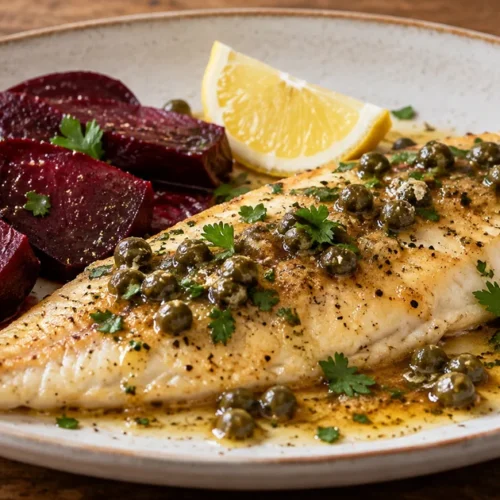
- Divide sole and beets between two plates, spoon over the measured caper butter, finish with parsley, and serve.
Notes
Frequently asked questions
Can I roast raw beets as part of this recipe?
You can cook beets separately before starting, but the stated prep and cook times do not include that process. Use already-cooked plain beets for the method and 20-minute estimate stated here. A raw beet will not become tender during the brief pan-finishing step.
Is brown butter the same as melted butter?
No. It is butter heated until its milk solids take on a nut-brown color and toasted aroma. It passes from brown to burned quickly, so prepare the other ingredients first and stop heating before adding the lemon. If the solids become black, start again rather than serving scorched butter.
Can I skip the flour?
The measured method uses a light flour dusting. Omitting it changes the fish’s pan contact and the amount of residue in the skillet. It is a reasonable idea for a separately tested variation, but no exact alternative time is validated for this method. Keep the wheat-allergen information visible in the current formulation.
Why does the sauce look pink?
Beet pigment can tint brown butter as the slices warm in it. That appearance is expected; it does not mean the fish is raw. Check the fish itself using the safe-temperature or official opaque-and-flakes cue, not the color of the sauce.
Can this be prepared ahead?
The beets can already be cooked, drained and sliced before the fish goes into the pan. The sole and brown-butter finish are best cooked close to serving because thin fish can overcook during holding and browned butter changes texture as it cools. Follow the cold-storage rules for any components prepared in advance.
A clear finishing point
Use pre-cooked beets, cook the sole safely without crowding, and brown the measured butter only after the fish is off the heat. Keep the warm beets ready before finishing the butter, then spoon the lemon-caper sauce over the fish and serve promptly.