
Warm Tuna and White Bean Skillet with Tomatoes and Spinach
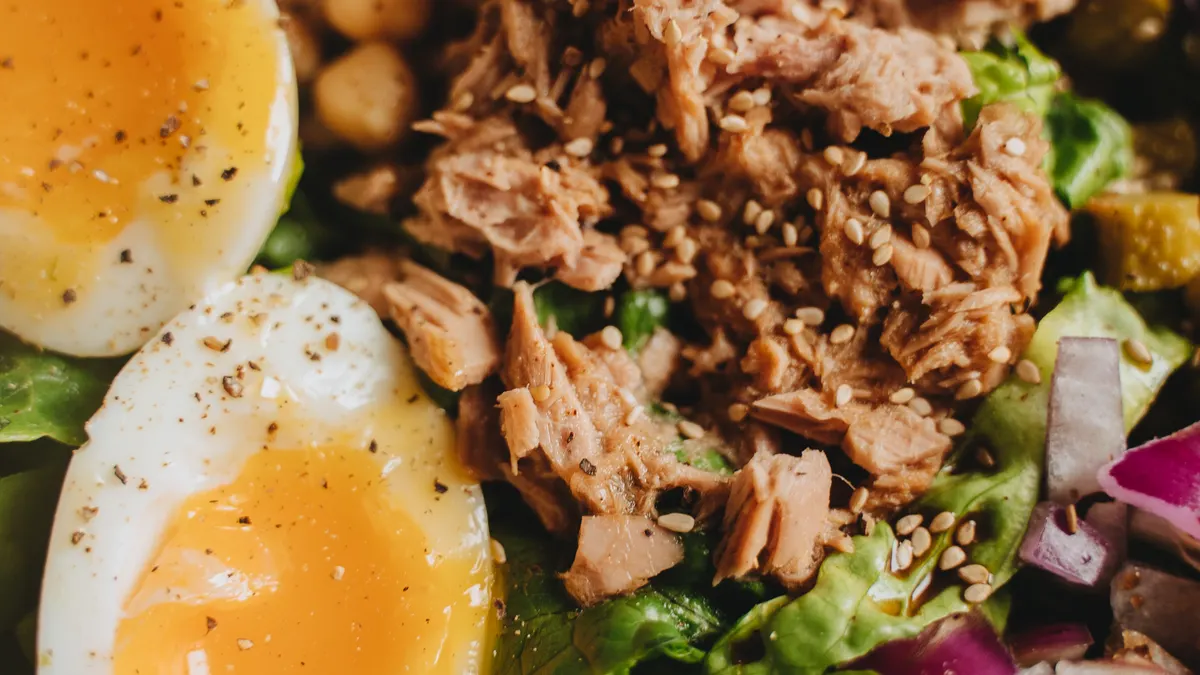
Warm tuna and white bean skillet turns canned tuna and cannellini beans into a comforting one-pan meal with cherry tomatoes, garlic, spinach and lemon. Unlike a mayonnaise-based tuna salad, this recipe gently warms the beans and vegetables first and adds the fish at the end so it remains in soft flakes. The guide covers choosing canned tuna, preventing watery beans, substitutions, food safety and a practical measured recipe.
Featured photo: illustrative presentation of tuna, legumes and vegetables.
A warm canned-tuna dinner, not another tuna salad
Most canned-tuna recipes are designed to be eaten cold: stir together tuna, mayonnaise and chopped vegetables, then spoon the mixture onto bread. This warm tuna and white bean skillet serves a different need. It turns two pantry staples into a quick main dish with softened cherry tomatoes, garlic, cannellini beans and spinach. The tuna goes in near the end, so it becomes pleasantly warm without being stirred into dry crumbs.
Cannellini beans have a creamy interior and a thin skin that makes them useful in a shallow skillet. They carry the pan juices and make the meal substantial, while the tuna adds a savory seafood component. Lemon juice and parsley are finishing ingredients, not a heavy sauce. The entire dinner uses one pan and ordinary groceries, making it different from our classic tuna salad with celery and lemon and our baked tuna casserole.
What canned tuna works best in a skillet?
Choose commercially canned tuna packed in water or olive oil. Tuna in water gives you more control over the amount of oil in the finished pan, while an oil-packed product can have a softer, richer texture. Read the can label and drain the fish gently, reserving none of the packing liquid unless it is a plain, suitable ingredient you intend to use. Solid tuna tends to hold larger pieces; chunk light tuna often breaks into smaller flakes. Either can be used without changing the underlying cooking method.
This recipe calls for two 5-ounce cans of fully cooked, shelf-stable tuna. It does not call for a fresh tuna steak, which would require a different method and appropriate cooking checks. Check cans for swelling, damage or leaks and discard suspect products. For households making seafood choices for pregnant people or children, the FDA/EPA fish advice differentiates tuna varieties: canned light tuna and canned albacore are not interchangeable in mercury guidance. No single recipe is a substitute for those serving recommendations.
Why white beans need a gentle simmer
Rinse and drain two 15-ounce cans of cannellini or another mild white bean. Canned beans are already cooked, so the goal is not a long boil. Instead, you want them to warm throughout and pick up flavor from garlic, tomatoes and olive oil. A few beans will naturally soften and thicken the liquid. Overstirring can crush nearly all of them into a paste, especially if they have been canned for a long time.
Use a broad skillet rather than a tall saucepan so the tomato juices reduce slightly. Begin with a tablespoon or two of water or unsalted vegetable broth; add more only if the mixture becomes dry. A spoonful of mashed beans can thicken the sauce without cream. The beans and tuna both contribute salt depending on their labels, so taste near the end rather than seasoning aggressively at the beginning.
Tomatoes, garlic, spinach and lemon: the flavor balance
Cherry tomatoes are useful here because their skins soften quickly and their sweet-tart juices create a light coating for the beans. Halve them so they release moisture in a few minutes. A small shallot or half a red onion adds sweetness. Garlic should be cooked just until fragrant, not browned to bitterness. A pinch of dried oregano gives a familiar Mediterranean direction without making the dish an imitation of any specific regional specialty.
Baby spinach wilts in the final minutes and adds color without a long cooking time. If you prefer kale, remove the tough stems and allow extra time and a splash of water to soften the leaves before adding the tuna. Lemon zest gives aroma in the pan, but fresh lemon juice is better stirred in off heat. Parsley brightens the plate and a small drizzle of olive oil can be used at serving if the finished beans look dry.
Warm tuna and white bean skillet recipe card
The recipe card provides a measured recipe for four modest portions. Start the vegetable and bean base first, then gently fold in tuna at the end. The times refer to commercially canned, already cooked fish and beans, not raw tuna steaks. Keep ingredients refrigerated once cans are opened and do not leave the finished meal at room temperature for long.
Warm Tuna and White Bean Skillet with Tomatoes and Spinach
Equipment
- Wide skillet
- Colander
- Flexible spatula
Ingredients
- 2 5-oz cans canned light tuna fully cooked, drained, broken into large flakes
- 2 15-oz cans cannellini beans rinsed and drained
- 1 1/2 cups cherry tomatoes halved
- 2 cups baby spinach washed and dried
- 1 small shallot finely diced
- 3 garlic cloves minced
- 2 tbsp extra-virgin olive oil
- 1/2 tsp dried oregano
- 2 tbsp water or unsalted vegetable broth plus a little extra if needed
- 1 lemon juice and finely grated zest
- 2 tbsp fresh flat-leaf parsley chopped
- 1/4 tsp black pepper
- to taste fine salt taste before adding; canned ingredients vary
Instructions
- Drain tuna gently into a strainer, leaving larger flakes. Rinse and drain beans well; keep them separate.
- Warm olive oil in a wide skillet on medium-low heat. Cook shallot about 2–3 minutes; stir in garlic and oregano for 30 seconds without browning.
- Add cherry tomatoes, black pepper and water or unsalted broth. Cook 4–5 minutes until tomatoes soften and release juices.
- Fold in drained cannellini beans; simmer gently for 3–4 minutes until hot. Do not mash or boil vigorously.
- Add baby spinach and stir gently until wilted, about 1–2 minutes. Reduce heat to low.
- Add drained cooked tuna in large flakes, warm briefly without hard simmering, turn off heat and fold in lemon juice, zest and parsley. Taste for salt.
- Spoon into warm bowls, preserving the large tuna flakes. Serve immediately with lemon wedges or toasted bread as desired.
Notes
Step-by-step stovetop method
Warm olive oil in a wide skillet over medium-low heat. Cook sliced shallot for two to three minutes, then add minced garlic and oregano. Stir until aromatic without letting the garlic brown. Add halved cherry tomatoes and cook until they begin to collapse. At this point the pan should contain a little juice; if the tomatoes are very dry, add one tablespoon of water. Stir in the rinsed cannellini beans and a small amount of black pepper.
Cover loosely and allow the beans to become hot while the juices mingle, stirring only occasionally. Add baby spinach and fold until the leaves wilt. Turn the heat to low or off, add drained cooked tuna in large flakes and fold just enough to coat. The residual heat warms the tuna without shredding it. Taste; finish with fresh lemon juice, zest and chopped parsley. Serve immediately with a wide spoon, keeping the tuna and beans in distinct pieces.
How to keep tuna flakes visible and beans intact
The biggest texture mistake is treating canned tuna like raw mince. It has already been cooked, so hard simmering it in a tomato pan often makes it dry and stringy. Rather than adding tuna while the onions are cooking, wait until the beans and spinach are hot. Slide the tuna into the pan in large sections and fold only once or twice. A flexible spatula is kinder to the pieces than a stiff whisk or a pointed spoon.
Beans deserve similar care. Rinse them gently in a colander and shake off water without pressing. If you need a thicker sauce, mash just two tablespoons of beans against the side of the skillet. Do not mash the whole batch unless you actually want a spread. Serve the mixture with a slotted spoon when the tomatoes have released more liquid than expected. Next time, use a wider pan or briefly reduce the juices before the tuna enters.
Simple substitutions without changing the dish
Great Northern beans can replace cannellini, although they may become softer in the pan. Fresh ripe diced tomatoes can replace cherry tomatoes; allow them extra time to cook down. Chard is another green option, but its stems need earlier cooking than spinach leaves. A small amount of drained capers or sliced olives adds brininess, so reduce added salt if you use them. A pinch of smoked paprika provides another layer of flavor without changing the pantry-centered method.
If you want a slightly fuller meal, spoon the skillet over warm rice, couscous or toasted bread. The recipe is dairy-free as written, without requiring a creamy dressing. For a cold alternative suited to packed lunches, our canned tuna rice bowl is a different preparation. For a contrast in texture, see crisp tuna-cabbage salad, which relies on raw vegetables rather than gently warmed beans.
What to serve with warm tuna and white beans
A slice of lightly toasted bread can soak up the tomato and garlic juices, while a simple cucumber salad or lemon-dressed greens offers something crisp next to the soft beans. For a bowl, serve a portion over rice and add extra parsley. If serving directly from the skillet, use a heat-safe trivet and leave the tuna flakes on top so diners can see the main ingredients. The dish does not need grated cheese or a thick bottled sauce.
If you are feeding people with different preferences, keep lemon wedges and red pepper flakes at the table instead of seasoning every portion heavily. For children, check for any fish bones that may have survived processing and follow age-appropriate portion guidance. Canned tuna choices differ in mercury content, and the FDA fish advice is relevant when planning the rest of the week’s meals.
Food safety, leftovers and reheating
Although the tuna and beans were shelf-stable before opening, the prepared skillet is perishable. Move leftovers promptly into shallow sealed containers and refrigerate at 40°F (4°C) or below. Official food-safety advice recommends refrigerating perishable foods within two hours, or within one hour above 90°F (32°C). Use properly stored cooked leftovers within three to four days. A clean serving spoon and separate food storage container help avoid contamination from the dining table.
For reheating, warm the leftovers thoroughly to 165°F (74°C), according to FoodSafety.gov guidance for leftovers. The tuna will not stay as delicate after reheating, so avoid repeated hot-cold cycles. You can also prepare the bean-and-tomato base ahead and refrigerate it separately, then warm it fully and fold in freshly opened canned tuna just before serving. That is the best make-ahead option when keeping distinct flakes is a priority.
Frequently Asked Questions
Can you cook canned tuna in a skillet?
Yes. Canned tuna is already cooked; fold it into a warm bean-and-tomato base near the end to avoid drying it out.
Do cannellini beans need to be boiled first?
Canned cannellini beans are already cooked. Drain and rinse them, then warm gently in the skillet until thoroughly hot.
Can I make this with tuna packed in olive oil?
Yes. Drain and taste it before adding all the recipe oil; oil-packed tuna can contribute extra richness.
Can I make this skillet without spinach?
Yes. Substitute another tender green or simply increase the tomatoes. Tougher greens need extra cooking time before the tuna is added.
How should I store leftover tuna and white beans?
Refrigerate promptly in shallow covered containers and generally use within three to four days. Reheat leftovers thoroughly to 165°F (74°C).