
How to Poach Shrimp for Shrimp Cocktail (Tender Every Time)
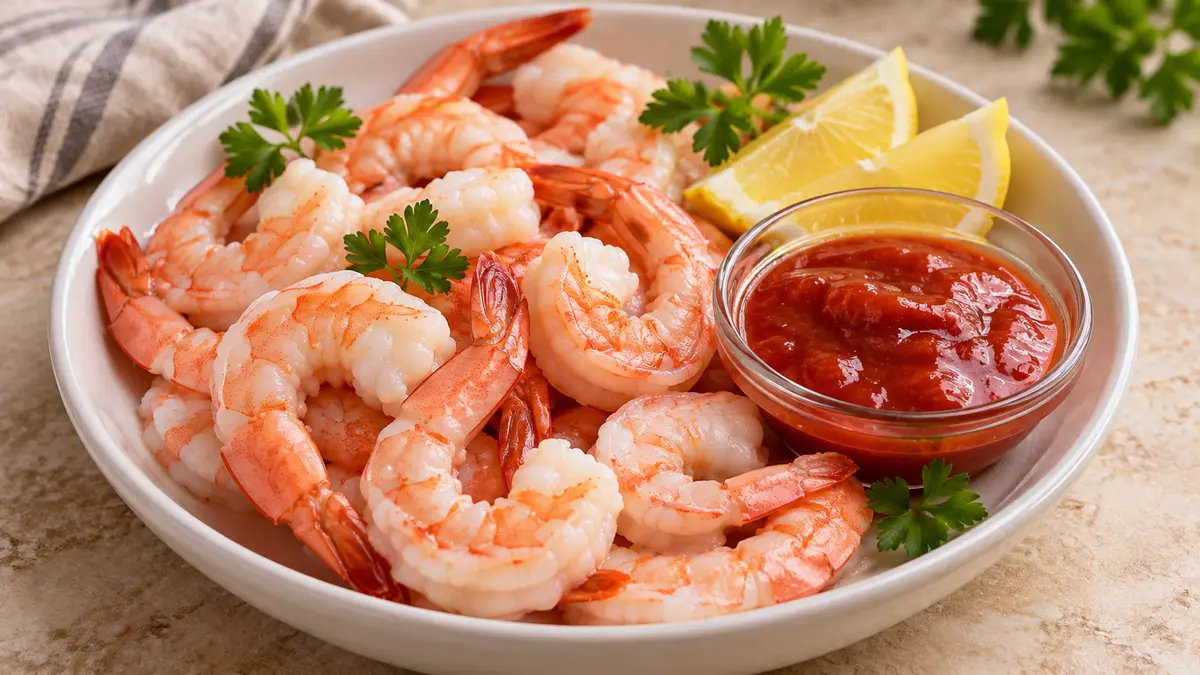
Learning how to poach shrimp for shrimp cocktail is mostly about temperature control. Start with thawed shrimp, perfume the water with lemon and aromatics, then cook gently and chill immediately. The result is sweet, tender shrimp that taste fresh instead of tough or waterlogged.
Table of Contents
This straightforward method works for a party platter, an easy starter or a make-ahead lunch. You do not need a complicated broth or specialized equipment just a pot, a slotted spoon, an ice bath and a thermometer.
Why gentle poaching works
Shrimp cocktail depends on a simple contrast: tender, sweet shrimp served cold with a lively sauce. A hard boil can make the outside of a shrimp tighten before its center finishes cooking. Gentle poaching gives you more control. The seasoned water adds a light citrus aroma without masking the shrimp, while a short ice bath stops residual heat from pushing the texture toward rubbery. This method is especially useful when preparing a platter for guests because the shrimp can be cooked ahead and chilled safely.
Choose the right shrimp
Large shrimp labeled 21–25 per pound are a practical size for cocktail: substantial enough to dip, but quick to cook. Jumbo shrimp work too, though they may need a little longer. Buy raw shrimp rather than precooked shrimp so you can control texture. Shell-on shrimp generally hold their shape well and can be peeled after poaching; peeled shrimp are more convenient and work with the same method. Look for shrimp with a clean, mild smell and firm flesh. Avoid packages with excessive ice crystals or signs of repeated thawing. Frozen shrimp are often an excellent option when handled properly.
Thawing without compromising texture
For the most even cooking, thaw frozen shrimp in a covered container in the refrigerator overnight. If you are short on time, seal the shrimp in a leakproof bag and submerge it in cold water, changing the water as needed until thawed. Never thaw shrimp on the counter or in warm water. Drain and pat dry before adding them to the pot. Shrimp that are still partly frozen will cook less evenly, so allow them to thaw fully. Keep raw shrimp separate from ready-to-eat garnishes and wash utensils and surfaces after handling.
What goes into the poaching liquid
The poaching liquid here is deliberately restrained: water, fresh lemon, bay leaves, peppercorns and a little salt. Simmering the aromatics for five minutes before adding shrimp releases their fragrance. You can add a few parsley stems or a thin slice of fresh ginger for a different accent, but avoid piling in so many seasonings that the shrimp lose their delicate flavor. Use enough liquid to submerge the shrimp comfortably. The liquid should be steaming with small bubbles, not churning at a vigorous boil when the shrimp go in.
How to tell when shrimp are done
Timing depends on shrimp size, starting temperature and how quickly the liquid recovers heat. For large thawed shrimp, begin checking after about two minutes; many batches finish in two to four minutes. Look for opaque flesh and a firm but springy feel. Shape alone is not a reliable test: shrimp naturally curl, and a tight ring can indicate overcooking. For food safety, check that the thickest shrimp reaches 145°F (63°C) with a food thermometer. Remove the shrimp promptly rather than leaving them in the hot pot while preparing the ice bath.
Cool, peel and serve
Set up the ice bath before cooking. Transfer shrimp directly from the poaching liquid into ice water for two to three minutes, just long enough to stop cooking. Drain well; excess water dilutes dipping sauce and makes the platter slippery. Peel off the shells and remove the dark intestinal vein if it was not removed before cooking. Leaving the final tail segment intact gives guests an easy handle, although fully peeled shrimp are better for salads and bowls. Arrange on a chilled plate with lemon wedges. Keep the platter refrigerated until serving rather than leaving seafood out during a long gathering.
A simple dipping sauce
For a quick, bright sauce, stir together 1/3 cup ketchup, 1–2 teaspoons prepared horseradish, 1 teaspoon lemon juice and a few drops of hot sauce. Taste before adding more horseradish; brands vary considerably in heat. If you prefer a creamy dip, mix plain Greek yogurt with lemon zest, chopped dill and a pinch of salt. Keep sauces chilled in separate bowls. The poaching recipe itself remains versatile: the shrimp also work in grain bowls, chopped salads and lettuce cups.
Make-ahead and storage
Cooked shrimp are convenient for entertaining, but temperature control matters. Cool them quickly, place in a covered shallow container and refrigerate at 40°F (4°C) or below. For best texture, prepare them the day before serving; use refrigerated cooked shrimp within three to four days. Do not leave shrimp at room temperature for more than two hours, or more than one hour above 90°F (32°C). Do not return cooked shrimp to a plate or utensils that held raw shrimp unless they have been washed. If the shrimp develop an off smell or slimy texture, discard them.
Common mistakes and fixes
Rubbery shrimp usually result from a rolling boil, excessive cooking time or leaving shrimp in hot liquid after they are done. Fix this by lowering the heat before adding shrimp, checking early and preparing the ice bath first. Watery shrimp are often inadequately drained after chilling; pat them dry before plating. Bland shrimp may need a brighter sauce or an extra lemon wedge rather than more salt in the poaching pot. Uneven doneness usually means shrimp of different sizes were cooked together; sort by size or remove smaller pieces first.
Serving ideas and useful variations
For a classic platter, arrange the shrimp around a small bowl of sauce and tuck lemon wedges between them. For a casual lunch, pile chilled shrimp over crisp lettuce, cucumber and avocado with a lemony dressing. For a larger seafood menu, serve them before a baked fish main course. You can also fold chopped shrimp into a chilled pasta salad just before serving. If you want a warm preparation instead, see our garlic lemon butter shrimp scampi. For more shrimp cooking methods, browse the shrimp recipes collection.
Frequently asked questions
Should I peel shrimp before poaching?
Either works. Shell-on shrimp are easy to peel after chilling, while peeled shrimp are more convenient for a ready-to-eat platter. Keep cooking times under close observation in both cases.
Can I use frozen shrimp?
Yes. Thaw them completely in the refrigerator or using a safe cold-water method before poaching for more even results.
Why use an ice bath?
The ice bath stops carryover cooking quickly and helps preserve a tender texture. Drain the shrimp thoroughly afterward.
How long do cooked shrimp keep?
Refrigerate promptly and use within three to four days, keeping them at 40°F (4°C) or colder.
Can I make the platter the day before?
Yes. Cook, chill, peel and refrigerate the shrimp covered; arrange on a chilled platter shortly before serving.
Poached Shrimp Recipe Card
The ingredient amounts and step-by-step instructions are collected in the printable recipe below.
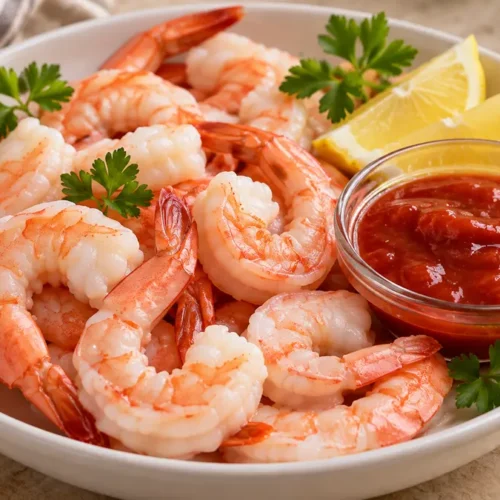
How to Poach Shrimp for Shrimp Cocktail
Ingredients
- 1 lb large raw shrimp (21–25 per pound), shell-on, deveined if possible
- 6 cups water
- 1 lemon, halved
- 2 bay leaves
- 1 tsp black peppercorns
- 1 tsp kosher salt
- 1 cup ice
- 1 cup cold water for ice bath
Instructions
- Thaw frozen shrimp overnight in the refrigerator, or in a sealed bag under cold running water. Keep shrimp chilled until cooking.
- Combine 6 cups water, lemon halves, bay leaves, peppercorns and salt in a medium pot. Bring to a boil, then lower to a gentle simmer for 5 minutes.
- Prepare a large bowl with ice and 1 cup cold water. Set a colander nearby.
- Add shrimp to the gently simmering liquid. Stir once and cook for about 2–4 minutes, depending on size, until opaque and firm and the thickest shrimp reaches 145°F (63°C). Avoid a rolling boil.
- Immediately transfer shrimp with a slotted spoon into the ice bath for 2–3 minutes to stop cooking. Drain thoroughly.
- Peel shrimp, leaving tails attached if preferred, and pat dry. Refrigerate promptly and serve chilled with lemon wedges and a dipping sauce.