
Pan Seared Grouper with Tomato Olive Relish
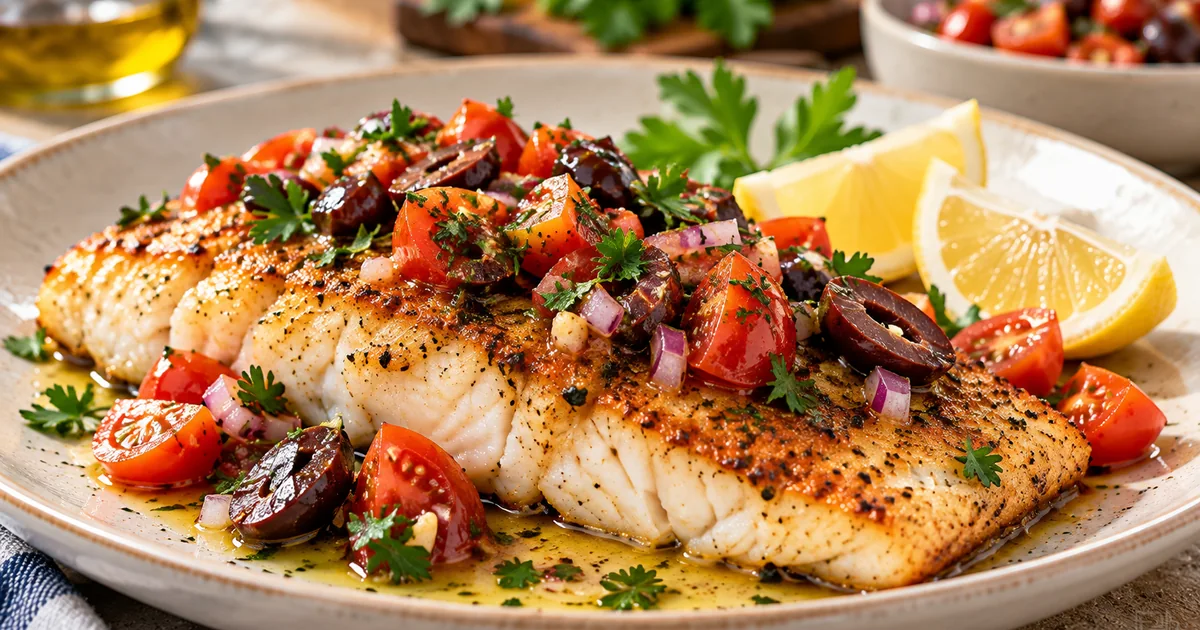
Pan seared grouper benefits from a simple skillet treatment. The flesh is firm enough to hold a golden edge yet mild enough that an aggressively seasoned sauce can hide its appeal. This version keeps the fish lightly salted and finishes it with a cool relish of tomatoes, olives, parsley and lemon. The contrast between warm fish and fresh vegetables is what makes the plate feel more complete.
You do not need a complicated coating or a large amount of butter. Dry fillets, a properly heated skillet and one careful turn do most of the work. Cooking time still depends on fillet thickness, and the skin can change how the first side behaves. The method below explains those variations so you can adjust rather than rely on a single rigid number.
Table of Contents
What makes grouper different in a hot pan
Grouper is a relatively meaty white fish with broad flakes and a mild, slightly sweet taste. It generally holds together more firmly than fragile sole, though an overcooked fillet can still become dry. Because of that texture, pan-searing is effective: a short direct contact develops color while the center stays moist.
The relish is assembled separately and never touches raw fish. This matters for both food safety and flavor. Tomatoes stay crisp and juicy, olives retain their briny bite and the lemon tastes lively rather than cooked away. You can serve the same garnish with other seafood, but the cooking treatment here is specifically designed for grouper fillets.
Buying and preparing the grouper
Choose fillets with a mild fresh smell, consistent color and flesh that springs back slightly when pressed. Ask your fishmonger to remove pin bones and trim any particularly thin tail sections. Pieces around 6 ounces each make convenient servings. If your fillets are very thick, plan to reduce the stovetop heat after turning or finish gently in a moderate oven.
Frozen grouper works once thawed thoroughly in the refrigerator. Avoid leaving raw fish out while you prepare a long list of vegetables. Make the relish first, then dry and season the fish just before cooking. Excess surface moisture is the main reason a hot pan gives a pale steamed surface instead of a golden one.
The role of each relish ingredient
Cherry tomatoes are sweet and sturdy enough to hold their shape when chopped. Black olives add a restrained salty note; use Kalamata for a deeper flavor or mild ripe olives if you want less brine. Finely diced red onion supplies crunch, and fresh parsley keeps the mixture herbaceous without dominating the fish.
Lemon juice and zest have different jobs. The juice sharpens the tomato dressing, while the zest adds fragrance that is noticeable even with a small amount of liquid. One small garlic clove is enough. Use extra virgin olive oil in the relish, then a separate measured amount of oil for the skillet to avoid carrying uncooked fish drippings into the salad.
Choosing the right skillet and oil
A heavy nonstick or well-seasoned skillet is the easiest option for delicate portions. Stainless steel can give excellent browning if properly heated and oiled, but the fish must be allowed to release naturally before turning. Do not pry at a crust that is still attached; it will often come away cleanly when it has developed enough color.
Medium-high heat gives the surface a quick start without burning the seasoning. If the oil smokes heavily, lower the heat and allow the pan to settle before adding fish. A thin film of olive oil should be sufficient. Do not put four large fillets into a small pan, because crowding can lower the temperature and produce steaming.
The practical timeline for searing
Pat the grouper dry, season lightly and place the first side in the hot pan. With skinless fillets, choose the side you want to display at serving. Leave it alone for approximately four or five minutes for a 1-inch portion. When the outer edge turns opaque and the underside releases without tearing, lift and turn with a broad spatula.
The second side often needs only three to five more minutes. Thick portions take longer than thin ones. Check the thickest center for 145°F (63°C), or opaque flesh that flakes. A thermometer gives more reliable guidance than color on a seasoned surface. Remove fillets individually as soon as they finish and let them rest briefly before adding relish.
Skin-on versus skinless grouper
Skin-on fillets can produce a crisp underside when completely dried and pressed gently against the pan for the first several seconds. Begin skin-side down and give that side most of the cooking time. Keep the relish away from the crisp skin until the food reaches the table; otherwise the tomato juices soften it quickly.
Skinless pieces are simpler and are often the form sold in supermarkets. They can still brown beautifully, but you need not chase the same crackling-skin texture. If the fish is exceptionally delicate, use slightly lower heat and a well-oiled nonstick pan rather than forcing a dark crust.
What to do when the fish sticks or breaks
A fillet that clings to the pan has often been moved too early or placed on a surface that was insufficiently prepared. Wait a short moment, slide a thin flexible spatula beneath the widest edge and lift carefully. Repeated attempts to flip the fish can pull off small flakes and damage the presentation.
If the exterior is browning faster than the inside is cooking, reduce heat after turning. Conversely, a pale surface suggests excess moisture, a crowded pan or insufficient preheat. Resist adding more spices to hide a cooking issue; improve the pan temperature and drying the next time.
Plating, side dishes and related seafood
Build each plate with a warm base such as herbed rice, boiled new potatoes or simply cooked green beans. Transfer the grouper carefully and spoon the tomato olive relish beside or on top. Add parsley and a lemon wedge at the end. A spoon of the relish juices can dress the vegetables as well.
For another pan method on a thinner species, see our pan-seared sole. If you want a sauce instead of a raw relish, try the lemon butter sauce for fish. The baked mahi mahi recipe offers an oven-based alternative for firm white fish.
Make-ahead planning and leftovers
The tomato olive relish can be chopped shortly before dinner and refrigerated, but it is brightest when added after the fish is cooked. If making it ahead, hold the lemon juice separately and stir it in near serving time so the tomatoes stay reasonably firm. Dry and season raw grouper only close to cooking.
Store leftovers promptly in separate shallow containers. Properly chilled cooked fish is generally used within three to four days, but the crisp exterior is best on day one. Reheat gently and serve with fresh relish. Review the FDA’s seafood handling advice for avoiding cross-contamination and FoodSafety.gov for safe temperature guidance.
Step-by-Step Recipe
Measure the ingredients before heating the appliance or pot. The quantities below correspond to four servings and the cooking guidance in the recipe card. Follow each step in order, but use a thermometer and the actual fish thickness to decide when cooking is complete.
Ingredients for four servings
- 1 1/2 lb boneless grouper fillets, four portions around 6 ounces, skin on or off
- 1 1/2 tbsp olive oil, for searing
- 1/2 tsp kosher salt, divided
- 1/4 tsp freshly ground black pepper
- 1/4 tsp sweet paprika, optional for light color
- 1 cup cherry tomatoes, halved
- 1/3 cup pitted black olives, chopped
- 2 tbsp finely diced red onion
- 1 tbsp chopped fresh parsley, plus extra to finish
- 1 tbsp fresh lemon juice
- 1 tsp lemon zest
- 1 tbsp extra virgin olive oil, for relish
- 1 small garlic clove, finely grated into relish
Method
- Make the tomato olive relish. Combine tomatoes, olives, red onion, parsley, lemon juice and zest, garlic and 1 tablespoon extra virgin olive oil. Add a small pinch of the measured salt. Set aside while you prepare the fish.
- Dry and season the fillets. Blot grouper dry and check for bones. Season both sides with remaining salt, pepper and optional paprika. Let the fish stand only briefly while the skillet warms, keeping raw seafood away from ready-to-eat relish.
- Heat the skillet. Set a large heavy skillet over medium-high heat until hot. Add 1 1/2 tablespoons olive oil, swirling to coat. Place grouper down gently and do not overcrowd; cook in two batches if the pan is small.
- Sear without moving. Cook the first side about 4 to 5 minutes for 1-inch fillets, until the fish releases with gentle spatula pressure and has golden edges. Turn once with a wide spatula, then cook about 3 to 5 minutes more, adjusting for thickness.
- Verify doneness and plate. Check that the thickest center reaches 145°F (63°C) or is opaque and flakes easily. Rest briefly on a clean plate, spoon room-temperature tomato olive relish over each fillet and serve at once.
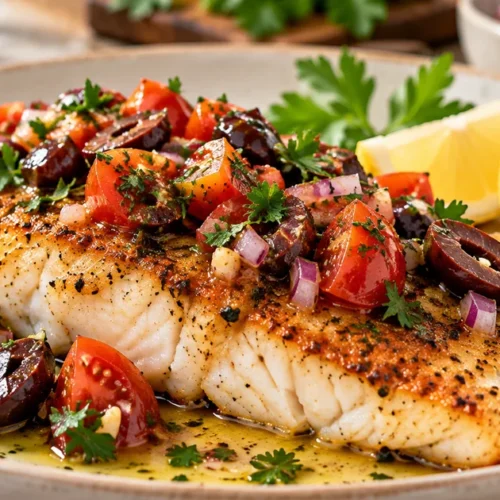
Pan-Seared Grouper with Tomato Olive Relish
Ingredients
- 1 1/2 lb boneless grouper fillets four portions around 6 ounces, skin on or off
- 1 1/2 tbsp olive oil for searing
- 1/2 tsp kosher salt divided
- 1/4 tsp freshly ground black pepper
- 1/4 tsp sweet paprika optional for light color
- 1 cup cherry tomatoes halved
- 1/3 cup pitted black olives chopped
- 2 tbsp finely diced red onion
- 1 tbsp chopped fresh parsley plus extra to finish
- 1 tbsp fresh lemon juice
- 1 tsp lemon zest
- 1 tbsp extra virgin olive oil for relish
- 1 small garlic clove finely grated into relish
Instructions
- Combine tomatoes, olives, red onion, parsley, lemon juice and zest, garlic and 1 tablespoon extra virgin olive oil. Add a small pinch of the measured salt. Set aside while you prepare the fish.
- Blot grouper dry and check for bones. Season both sides with remaining salt, pepper and optional paprika. Let the fish stand only briefly while the skillet warms, keeping raw seafood away from ready-to-eat relish.
- Set a large heavy skillet over medium-high heat until hot. Add 1 1/2 tablespoons olive oil, swirling to coat. Place grouper down gently and do not overcrowd; cook in two batches if the pan is small.
- Cook the first side about 4 to 5 minutes for 1-inch fillets, until the fish releases with gentle spatula pressure and has golden edges. Turn once with a wide spatula, then cook about 3 to 5 minutes more, adjusting for thickness.
- Check that the thickest center reaches 145°F (63°C) or is opaque and flakes easily. Rest briefly on a clean plate, spoon room-temperature tomato olive relish over each fillet and serve at once.
Notes
Frequently Asked Questions
How long should grouper cook in a skillet?
A fillet roughly 1 inch thick might need about 4 to 5 minutes on the first side and 3 to 5 on the second at medium-high heat. The thickness and pan change the timing, so check for 145°F (63°C) at the thickest center.
Should I leave the skin on grouper?
You can. Dry the skin carefully and begin skin-side down if you want a crisp underside. Skinless fillets are also suitable and are easier to find.
What kind of pan is best for grouper?
A heavy nonstick, seasoned cast-iron or properly heated stainless-steel skillet works. The key is a hot, lightly oiled surface and one gentle turn.
Can I use frozen grouper fillets?
Yes, provided you thaw them safely and blot them very dry before searing. Do not use the same timing for thick pieces still frozen at the center.
Is grouper the same as snapper?
No. Both are firm white fish, but species and thickness differ. The relish can pair with both; check the cooking time and safe center temperature for whichever fish you choose.
For more ideas using different seafood or cooking techniques, explore the related SABSEA recipes linked above. Each recipe has its own method and ingredients, so choose the one that matches the fish or shellfish available to you.