
Baked Mahi Mahi with Lemon, Garlic and Herbs
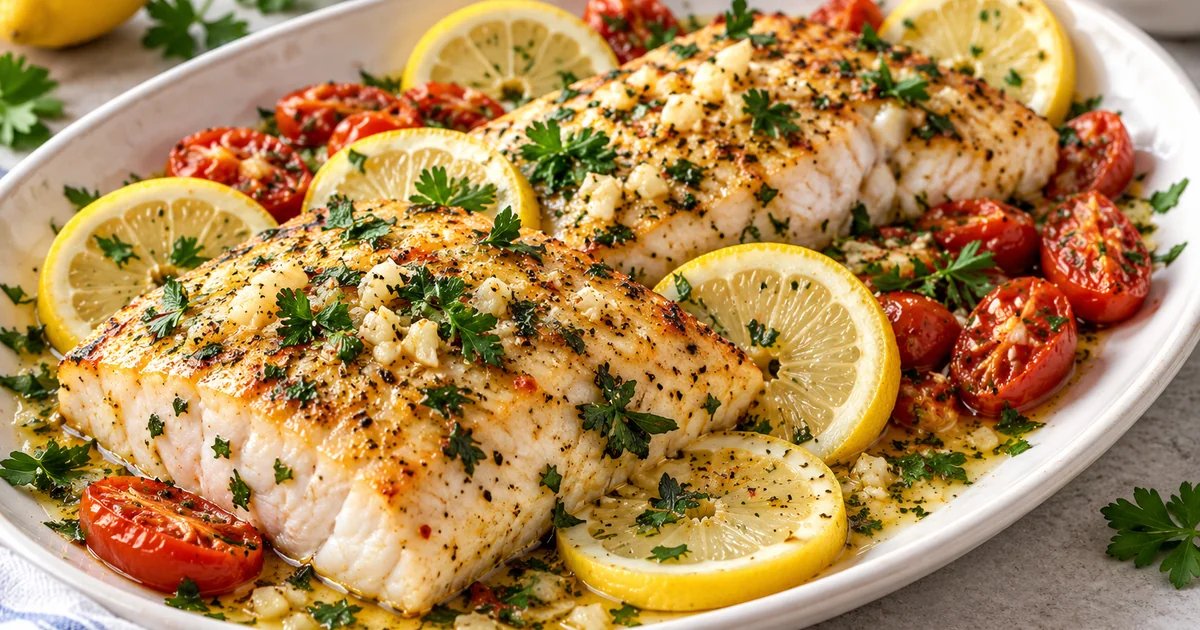
Table of Contents
Baked mahi mahi with lemon, garlic and herbs turns mild, firm white fish into an easy oven dinner with juicy cherry tomatoes and a bright pan sauce. The fillets bake in one dish at 400°F, while the garlic, oregano and citrus flavor the fish without a heavy coating.
The method works well for four evenly sized portions. You’ll find exact ingredient amounts, a practical baking-time range, reliable doneness checks, ideas to prevent dry fish and side dishes that suit a fresh seafood dinner.
Why This Baked Mahi Mahi Recipe Works
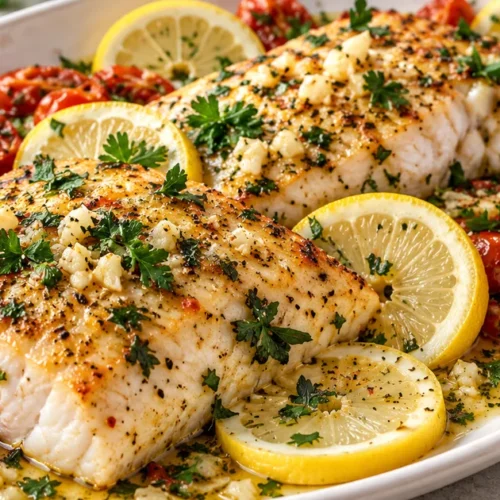
Baked mahi mahi is a straightforward way to cook a firm, mild white fish with very little last-minute attention. Thick mahi-mahi fillets keep their shape in a baking dish, and a simple mixture of lemon, garlic, herbs and olive oil builds flavor without making the dish heavy. Cherry tomatoes soften beside the fish and contribute their juices to the pan sauce.
This recipe uses a 400°F (205°C) oven so the fish cooks steadily while the lemon and garlic season the surface. The critical decision is when to remove the baking dish: mahi mahi is leaner than salmon and can become dry if left in the oven for too long. Using similar-sized fillets, keeping a thermometer handy and spooning the juices around the finished fish creates a more consistent result than guessing based on the clock alone.
Ingredients and Exact Measurements
Choose four mahi-mahi fillets of approximately the same thickness. Frozen fillets are suitable when completely thawed and dried. The sauce is deliberately simple, with garlic and herbs doing most of the work and a little butter added at the end for a silky finish.
- Four mahi-mahi fillets, about 6 ounces each: roughly 1½ pounds total, skinless and pin-bone free.
- 2 tablespoons extra-virgin olive oil: for coating the fish and dish.
- 2 tablespoons unsalted butter: melted for a gentle finishing sauce.
- 4 garlic cloves: finely minced.
- 1 lemon: zest about 1 teaspoon, juice about 2 tablespoons and reserve thin slices if desired.
- 1 cup cherry tomatoes: halved so they release juices while baking.
- 1 teaspoon dried oregano: for savory Mediterranean-style flavor.
- ½ teaspoon sweet paprika: adds warm color without aggressive heat.
- ½ teaspoon kosher salt: divided over the fish.
- ¼ teaspoon freshly ground black pepper: plus more to taste.
- 2 tablespoons freshly chopped parsley: add after baking.
For a version without butter, replace it with another tablespoon of olive oil and use the tomato juices to create a spoonable pan sauce. Keep lemon juice measured until baking is nearly finished so its fresh acidity is not lost under too much heat. A little zest gives a vivid aroma without saturating the fish.
How to Choose Mahi Mahi Fillets
Mahi mahi is a firm-textured, lean ocean fish with a mild sweetness. Look for fillets that hold together, have consistent thickness and smell clean rather than sour or strongly fishy. Color can vary, so focus more on proper handling, freshness and texture than on expecting every piece to look identical. Ask whether the skin and pin bones have already been removed.
If using frozen fish, thaw it safely in the refrigerator overnight. For a faster thaw, keep a sealed package in cold water and cook the fish promptly. Pat the fillets dry before coating them with oil and seasoning. Excess water dilutes the sauce and can lead to steaming rather than the gentle roasting effect you want. Keep the seafood chilled while preparing vegetables and preheating the oven.
The Best Dish and Oven Temperature
A shallow ceramic, glass or metal baking dish works well as long as the fillets fit in a single layer with a little space around them. Deeply stacking fish makes the cooking time less predictable and keeps the bottom pieces wetter. Lightly oil the dish so the fillets can be lifted without breaking. Spread the tomato halves around—not underneath—the fish so they roast and release their juices.
Set the oven to 400°F (205°C) and wait until it is fully preheated. A hotter oven can brown more quickly but risks drying the edges before the center finishes, while a very low oven gives less color. The 400°F setting offers a useful middle ground for center-cut fillets about ¾–1 inch thick. If your pieces are significantly thicker, expect a longer cook and check them with a thermometer.
How to Bake Mahi Mahi with Garlic and Lemon
- Preheat and prepare. Heat the oven to 400°F (205°C). Lightly oil a shallow baking dish. Pat four mahi-mahi fillets dry and arrange them in a single layer.
- Mix the seasonings. Combine olive oil, minced garlic, dried oregano, paprika, salt, pepper and lemon zest. Brush over the fish and turn to coat lightly.
- Add tomatoes. Arrange halved cherry tomatoes around the fillets. Place a few thin lemon slices between pieces if desired, avoiding a thick layer directly over the fish.
- Bake. Put the dish on the oven’s middle rack and cook approximately 12–18 minutes for average ¾–1-inch fillets. Begin checking early; fish should reach 145°F (63°C) in the thickest center or become opaque and flake readily.
- Finish the sauce. Remove the dish from the oven. Stir melted butter and measured fresh lemon juice into the warm tomato and garlic pan juices. Spoon sauce around the fish and sprinkle with chopped parsley.
- Serve immediately. Transfer portions carefully with a broad spatula and add warm vegetables, rice or a crisp salad.
These are estimated cooking times, not an instruction to leave every fillet in for exactly 18 minutes. Thin tail portions may be ready significantly earlier. Remove them once cooked rather than letting them dry out while a thicker center piece finishes.
How to Tell When Baked Mahi Mahi Is Done
Mahi mahi is a lean fish and becomes firm when fully cooked. Check the thickest point with a clean thermometer; the standard food-safe fish temperature is 145°F (63°C). Without a thermometer, look for flesh that is opaque and separates easily into flakes under gentle pressure. A translucent center needs more cooking even if the surface looks beautifully seasoned.
Use the FoodSafety.gov seafood temperature chart as a reference. Baking times depend on fillet thickness, the oven’s actual temperature and how cold the fish was when it entered the dish. A few minutes of overcooking can make lean mahi mahi seem dry; the pan sauce helps at serving, but it cannot truly reverse overcooking.
How to Keep Mahi Mahi Tender
Start with evenly sized fillets and use a dish that isn’t overcrowded. Dry the fish, but coat it promptly with oil and seasonings so the surface doesn’t dehydrate while the oven warms up. Do not press down on the fillets during baking; they need gentle heat, not mechanical pressure. Most importantly, check the center early and remove the fish at the safe endpoint instead of adding a long buffer.
The cherry tomatoes offer useful moisture because they soften as the fish cooks, but do not drown the dish in broth. A large volume of liquid changes this from baked fish to poached fish and can wash the herbs from the surface. If the pan juices reduce too far, add a tablespoon of warm low-sodium vegetable broth after cooking rather than extending the oven time.
Balancing the Lemon-Garlic Herb Sauce
Lemon zest, lemon juice and garlic play different roles. Zest gives a fragrant aroma with little acidity, juice provides brightness, and garlic supplies savory depth. Add the zest with the seasonings so it perfumes the oil, but save most of the juice for the finished pan sauce. That sequence preserves a fresh citrus character without turning the cooked fish sharply sour.
Minced garlic should be distributed thinly on the fillets; thick clumps can become bitter around their edges. If you prefer a milder garlic note, use three cloves instead of four and add more parsley when serving. The tomatoes provide natural sweetness to offset lemon. Taste a spoonful of the warm sauce before seasoning further, since the fish and vegetables will already contain salt.
What to Serve with Baked Mahi Mahi
Light Mediterranean-inspired sides complement the lemon and herbs. Good options include couscous, fluffy brown rice, asparagus, roasted zucchini, sautéed green beans and a cucumber-tomato salad. Spoon the warm tomato pan juices over the rice or vegetables rather than covering the fish with a thick sauce. A sliced lemon on the side lets each diner adjust acidity.
For a more substantial, vegetable-forward pairing, serve the fillets with a Mediterranean chickpea salad. Its legumes and crisp vegetables make a good contrast to the soft, lean fish. If you’d rather use the grill, our easy grilled mahi mahi recipe covers the smoky method; the present recipe is specifically designed for baking.
Baked Versus Grilled Mahi Mahi
Grilling creates char and a smoky aroma when the fish has direct contact with hot grates. Baking is gentler, less weather-dependent and easier when you want to cook tomatoes and garlic in the same dish. Both are useful, but they need different heat management and handling. A grilled fish recipe should not simply be copied into the oven without changing temperatures, times and the way moisture is managed.
Another serving option is tacos: cooked mahi mahi can be paired with cabbage and a fresh sauce in a handheld meal. Our mahi mahi tacos with ginger-lime sauce already cover that different intent. These articles complement one another in a future Mahi Mahi Recipes collection rather than competing for the same single keyword.
Flavor Variations with the Same Baking Method
For a greener finish, use parsley and dill together. A pinch of thyme can replace oregano, and a small amount of ground coriander works with the lemon and garlic. For a slightly smoky result, use smoked paprika in place of sweet paprika but do not add so much that it overwhelms the fish. A few thin slices of sweet bell pepper can roast alongside the tomatoes if cut small enough to soften during the same time.
If your family enjoys more heat, sprinkle chili flakes onto individual plates rather than loading the entire dish. To make a dairy-free version, skip the butter and finish the pan juices with one tablespoon of olive oil. Keep the cooking method and safe doneness checks unchanged. The variations should complement the basic lean-fish recipe, not turn it into an unrelated casserole.
Troubleshooting Baked Mahi Mahi
Dry fish: it stayed in the oven too long or was cut into small thin pieces. Check the center earlier next time. Watery pan: thawed fillets were not dried or the dish was overly full. Pat dry and use a wide vessel. Burned garlic: clumps sat directly against a hot exposed edge; spread the garlic in the oil and keep the dish on the middle rack.
Fish broke apart: a narrow spatula or repeated handling may have damaged it; use a wide turner and lift gently. Sauce tastes flat: stir in fresh lemon juice and parsley after the dish leaves the oven. Tomatoes remain firm: very large tomatoes may need to be halved or pre-roasted briefly so they finish at the same time as the fish.
Make-Ahead Preparation and Storage
You can prepare the herb mixture and cut the tomatoes in advance, refrigerating them safely until cooking time. Keep the raw mahi mahi separately chilled and do not leave seafood sitting at room temperature as the oven heats. Because lemon can change surface texture during a long soak, season the fillets shortly before baking rather than leaving them covered in acidic sauce for hours.
Refrigerate cooked leftovers promptly in shallow sealed containers; use continuously refrigerated cooked fish generally within 3–4 days. To reheat, cover a portion lightly with a spoonful of water or pan juices and warm thoroughly to 165°F (74°C). Expect a somewhat firmer texture than fresh fish. Leftover flaked mahi mahi can work in a grain bowl if properly chilled, but avoid reheating the same leftovers repeatedly.
Baked Mahi Mahi with Lemon, Garlic and Herbs
Ingredients
- 1 1/2 lb mahi mahi fillets four skinless 6-oz pieces of similar thickness
- 2 tbsp extra-virgin olive oil
- 2 tbsp unsalted butter melted for finishing; or use olive oil
- 4 garlic cloves finely minced
- 1 lemon 1 tsp zest, about 2 tbsp juice; optional thin slices
- 1 cup cherry tomatoes halved
- 1 tsp dried oregano
- 1/2 tsp sweet paprika
- 1/2 tsp kosher salt
- 1/4 tsp black pepper freshly ground
- 2 tbsp fresh parsley chopped
Instructions
- Heat oven to 400°F (205°C), lightly oil a shallow baking dish, and pat four mahi mahi fillets dry.
- Mix olive oil, garlic, oregano, paprika, salt, pepper and lemon zest. Brush lightly over the fish.
- Place fillets in a single layer. Scatter halved cherry tomatoes around them; add a few lemon slices beside fish if desired.
- Bake on the middle rack about 12–18 minutes depending on thickness, checking early. Fish should reach 145°F (63°C) or be opaque and flake easily.
- Remove dish from oven. Stir melted butter and fresh lemon juice into the warm tomato-garlic pan juices; spoon sauce around fish.
- Sprinkle chopped parsley over the fillets and serve promptly with rice or vegetables.
Notes
Frequently Asked Questions
What temperature should I bake mahi mahi at?
This method uses a preheated 400°F (205°C) oven, which works well for typical ¾–1-inch fillets in a shallow baking dish. Adjust the time for thicker or thinner pieces and verify a safe 145°F (63°C) center.
How long does mahi mahi take in the oven?
About 12–18 minutes is a practical starting range for medium-thick fillets at 400°F, but thickness and oven calibration matter. Begin checking early and remove each portion as soon as it is safely cooked.
Can I bake frozen mahi mahi without thawing?
For the most reliable texture and even timing, thaw in the refrigerator first, drain and pat dry. Cooking directly from frozen needs a different validated timing plan and won’t use the estimates in this recipe.
How do I keep baked mahi mahi from drying out?
Use evenly sized fillets, coat with a little oil, check doneness early and stop cooking at 145°F (63°C) or when the flesh is opaque and flakes easily. A small amount of tomato and lemon pan sauce helps at serving.
Is mahi mahi a strong-tasting fish?
No. Mahi mahi is generally mild and slightly sweet with a firm, flaky texture, which is why it pairs well with lemon, garlic, herbs and simple vegetable sides.
More Fish Dinner Ideas
For a different firm white fish, our cod piccata with lemon and capers offers a quick skillet method. Or browse salmon recipes for alternative textures and cooking styles.