
Steamed Mussels with Garlic, Lemon and Fresh Herbs
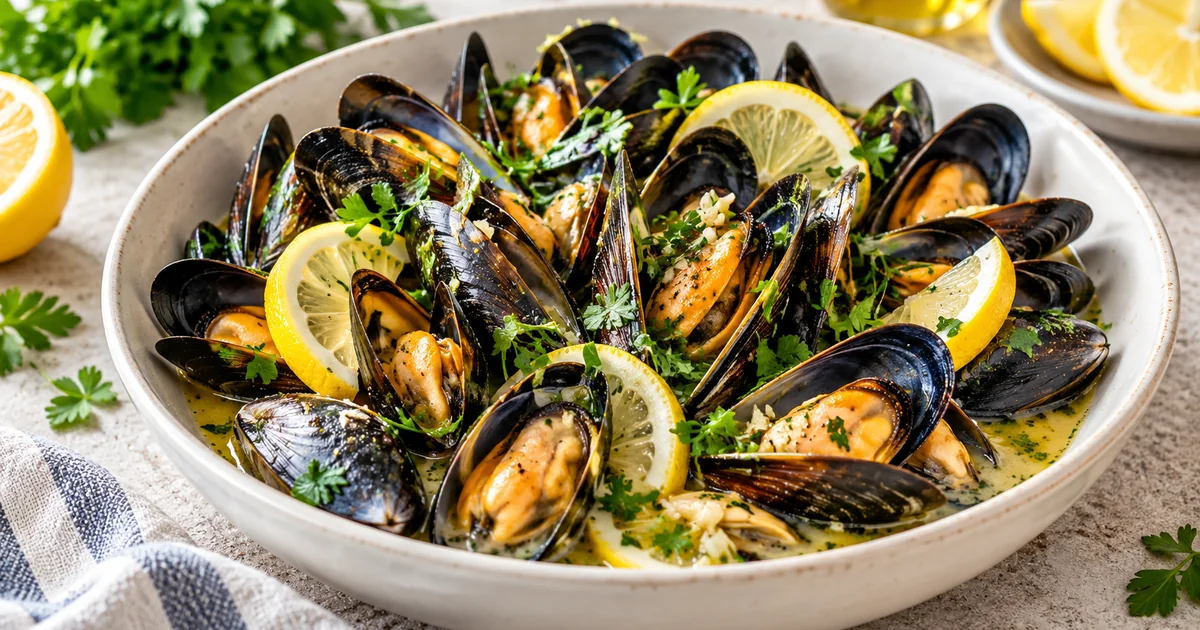
Table of Contents
Steamed mussels with garlic and lemon combine tender shellfish with a fragrant broth of olive oil, shallot, garlic, parsley and fresh citrus. Once the mussels are properly cleaned, the actual steaming takes only a few minutes. The cooking liquid becomes a light sauce that is especially good with bread or rice.
This guide focuses on the details that matter: how to select live mussels, remove the beards, avoid gritty sauce, cook until the shells open and finish the broth without overwhelming the seafood.
Why Garlic-Lemon Steamed Mussels Work
Steamed mussels make an elegant seafood dinner with surprisingly little active cooking. Fresh mussels release a briny liquid as they open, which joins garlic, shallot, lemon and broth to create a light, aromatic sauce. Instead of hiding the mussels beneath a thick coating, this version keeps the flavors clean so each shellful tastes fresh and distinctive.
The most important work happens before the pot heats up: selecting live mussels, checking each shell and removing any grit or beards. Once cleaned, the mussels need only a short, covered steam. The cooking liquid is a delicious part of the meal, so plan to bring the pot or a wide bowl to the table with clean spoons and lemon wedges. Cooking several pounds at once makes the dish practical for two hungry seafood lovers or four smaller portions with a substantial side.
Ingredients for Steamed Mussels
Use fresh, responsibly handled live mussels and a broad lidded pot. The quantities below create four modest main-course portions with bread or another side. Mussel size and the amount of meat per shell vary, so generous eaters may want larger portions. Taste the broth before adding any additional salt: the mussels contribute their own natural salinity.
- 3 pounds live mussels: scrubbed and debearded immediately before cooking.
- 2 tablespoons extra-virgin olive oil: for gently sweating the aromatics.
- 1 small shallot: finely chopped.
- 5 garlic cloves: minced, not browned.
- ¾ cup low-sodium vegetable or seafood broth: creates steam and sauce without overpowering the mussels.
- 2 tablespoons unsalted butter: added off the heat for a silky finish.
- 1 lemon: zest half, juice the whole fruit, and offer extra wedges if desired.
- ¼ cup chopped flat-leaf parsley: for a fresh herb finish.
- ¼ teaspoon freshly ground black pepper: season to taste.
- ⅛ teaspoon red pepper flakes: optional gentle heat.
If you prefer a lighter sauce, reduce the butter to 1 tablespoon or omit it and finish with a small drizzle of olive oil. Either choice retains a useful broth. A low-sodium broth is preferable to a heavily seasoned stock; it gives you control once the mussels release their cooking juices.
How to Choose Live Mussels Safely
Buy mussels from a reliable fish market or supermarket seafood counter with appropriate harvest and handling information. The shells should be intact and smell clean and ocean-like, not sour or strongly unpleasant. Refrigerate promptly after purchase. Avoid treating mussels like ordinary vacuum-packed fillets: live bivalves need to breathe, so do not store them submerged in fresh water or in a fully airtight container.
Before cooking, reject cracked or broken shells. Open mussels that close when tapped can still be alive, but shells that remain gaping after a gentle tap should be discarded. Follow the seafood-safety advice from the U.S. FDA on selecting and preparing shellfish, including checking that the shells open during cooking and discarding those that do not. When in doubt about whether a live mussel is safe, don’t try to salvage it.
Cleaning, Scrubbing and Debearding
Inspect the mussels one by one under cool running water just before cooking. Use a stiff clean brush or the rough side of a fresh kitchen sponge to remove grit and sea debris. Some farmed mussels arrive very clean, but give them the same inspection. Pull away the fibrous tuft—often called the beard—by gripping it firmly and tugging toward the shell hinge. A small knife can help with stubborn fibers, but avoid slipping against the shell.
Do not leave live mussels soaking in a sink full of tap water for an extended period. Fresh water can harm saltwater shellfish, and the cooking pot does not need the mussels to be waterlogged. A brief rinse and proper scrubbing are enough for most cultivated mussels. Put cleaned mussels in a colander in the refrigerator if there is a short delay, and keep raw shellfish away from ready-to-eat garnishes.
The Right Pot, Liquid and Heat
Choose a wide, heavy pot with a tight-fitting lid. A wide base heats the broth quickly and gives steam a better path between shells. If you are cooking three pounds in a small saucepan, work in batches instead of forcing the lid onto a tightly packed mound. Mussels do not need to be submerged; a relatively small amount of aromatic liquid quickly makes plenty of steam, and the shellfish release more as they cook.
Start the shallot over medium heat so it softens without deep browning. Add garlic last for only a short fragrant interval, then pour in the broth before the garlic takes on a dark color. A strong boil for a long time reduces the broth too much and makes mussel meat tough. A quick simmer followed by covered steaming is more controlled and keeps the sauce balanced.
How to Steam Mussels with Garlic and Lemon
- Inspect and clean. Discard broken shells and mussels that remain open after tapping. Scrub, remove beards and keep the cleaned mussels cold until ready.
- Soften aromatics. In a wide, lidded pot warm the olive oil over medium heat. Add shallot and cook about 2 minutes until translucent; stir in garlic and optional pepper flakes for another 30 seconds.
- Build the broth. Pour in ¾ cup broth with the lemon zest and a pinch of black pepper. Bring to a lively simmer.
- Steam. Add mussels, cover tightly and cook about 5–7 minutes. Shake the pot gently once or twice or stir carefully with a clean spoon to help distribute heat. Check for opened shells.
- Remove and check. Transfer opened mussels to a clean warm serving bowl. If some remain closed, briefly return the pot to the heat and check again; discard any shells that never open.
- Finish the sauce. Remove the pot from heat. Stir butter, lemon juice and chopped parsley into the hot cooking liquid. Taste before adding any salt. Spoon the broth over opened mussels and serve immediately.
The goal is plump, tender mussel meat, not a long stew. Shells of different sizes may open at slightly different times, so check promptly once steaming starts. Never serve mussels that fail to open during cooking.
When Are Mussels Fully Cooked?
For shell-on mussels, the clearest practical sign is that shells open during the heat of cooking. Some will open wide, while others open only enough to reveal the meat. Inspect carefully and discard any that remain tightly shut after the cooking period. Never pry shut shells open to try to save the contents for serving. Meat should look plump and cooked, not slimy or translucent.
Because seafood can spoil quickly, serve the opened mussels promptly and discard any with off odors or questionable handling history. The FDA’s guidance emphasizes selection of live shellfish and cooking until shells open, rather than relying on an exact clock time alone. Steam times are approximate and depend on shell size, how full the pot is and the efficiency of your burner.
How to Make the Garlic-Lemon Broth Taste Balanced
Garlic becomes sweet and aromatic when briefly softened in oil, but it turns bitter if deeply browned. Lemon tastes brightest when its juice is added after the high heat is turned off. The lemon zest can go in earlier because its aromatic oils are better protected in broth than fresh juice. Parsley at the finish adds green freshness and makes a pale sauce look appetizing.
Mussel liquid may be salty even without added salt. Begin with low-sodium broth, taste after steaming and then adjust with lemon or a spoonful of warm water. If the broth contains tiny pieces of grit, let the liquid settle briefly and ladle it carefully, leaving the sediment behind. You can strain through a fine mesh strainer if needed. The sauce should be spoonable and light, not reduced into a thick, salty glaze.
What to Serve with Garlic Mussels
Crusty bread is a classic way to enjoy the fragrant broth, and simple steamed rice also absorbs it well. For a lighter plate, add a crisp green salad or quickly sautéed zucchini. A bowl of pasta can make this a more substantial dinner: cook the pasta first and use some of the mussel broth to coat the noodles. Keep the pasta seasoning restrained so the mussels stay the featured ingredient.
For another shellfish-forward meal with a different profile, try our spicy Korean seafood soup with shrimp and mussels. Our spaghetti allo scoglio presents mussels in a mixed-seafood pasta rather than the simple broth used here. If you prefer a tomato-based seafood stew, cioppino makes a fuller meal.
Common Mussel Problems and Fixes
Too much grit: scrub shells carefully, avoid pouring the last cloudy spoonful of broth and strain if necessary. Rubbery mussels: they likely steamed too long or sat over heat after opening. Move opened shells to the serving bowl promptly. Garlic is bitter: it browned before the broth was added. Start over with fresh aromatics if it has a burnt smell.
Broth tastes too salty: the base stock may be too concentrated. Loosen with a little hot water and balance with lemon rather than adding extra salt. Very few shells opened: check the freshness and heat before deciding the batch is safe; discard unopened mussels instead of forcing them open. Sauce looks thin: that is intentional for a steamed shellfish dish, and crusty bread or rice is the easiest way to enjoy it.
Easy Herb and Serving Variations
Parsley is the most flexible herb here, but a small amount of fresh dill or chives can change the finish. Swap shallot for finely chopped sweet onion and soften it a little longer. For a gentle warm-spice note, add a pinch of smoked paprika with the broth; keep it subtle so it does not drown out the shellfish. More lemon zest is a better adjustment than pouring in large amounts of juice early.
If you want a fuller vegetable plate, add a handful of diced tomatoes to the shallot and cook until softened before steaming the mussels. Keep the pot covered once the shells go in. For a more soup-like serving, add extra warm low-sodium broth only after cooking and tasting, so the seafood doesn’t simmer longer than necessary.
Can You Prepare Steamed Mussels Ahead?
Prepare the supporting ingredients early: mince garlic, chop shallot, zest lemon and wash parsley. Keep aromatics chilled if preparing them far in advance. Do not clean and soak the mussels hours ahead in a bowl of tap water; inspect and scrub close to cooking time. Keep live shellfish properly refrigerated according to the fishmonger’s guidance and use them promptly.
Cooked mussels are best eaten immediately, when the meat is tender and the cooking broth is fresh. If there are leftovers, remove meat from shells, refrigerate quickly in a covered shallow container and follow conservative cooked-seafood storage guidance, generally using within 3–4 days under continuous refrigeration. Reheat leftovers thoroughly to 165°F (74°C); don’t repeatedly warm and cool the same batch.
Serving Mussels for Family or Guests
Set out a large serving bowl, smaller bowls for empty shells, lemon wedges and plenty of napkins. Make sure the table is ready before steaming, because these mussels will not benefit from long holding. Ladle the broth into each portion so diners can enjoy it as they eat. For an attractive arrangement, spoon the sauce over opened shells once they are in the bowl instead of tossing them aggressively in the pot.
If serving a larger group, inspect shellfish in batches, prepare enough clean bowls and keep the seasoning mild so guests can add extra heat at the table. Do not add a batch of fresh uncooked mussels to a pot of already-cooked shells; use separate short cooking cycles and distribute the broth evenly. Shellfish allergies are important to communicate whenever serving guests.
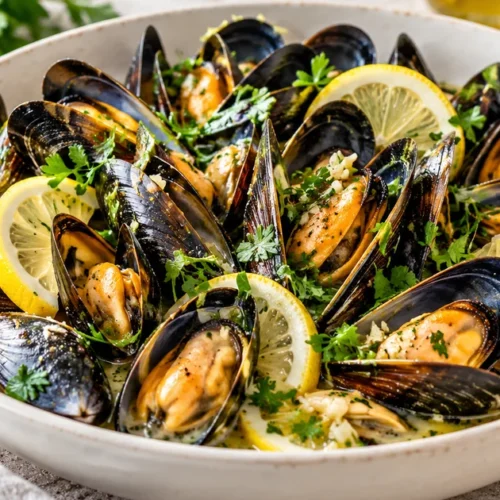
Steamed Mussels with Garlic, Lemon and Fresh Herbs
Ingredients
- 3 lb live mussels scrubbed and debearded; discard damaged or nonliving shells
- 2 tbsp extra-virgin olive oil
- 1 small shallot finely chopped
- 5 garlic cloves minced
- 3/4 cup low-sodium seafood or vegetable broth
- 2 tbsp unsalted butter optional silky finish
- 1 lemon zest half and juice; wedges optional
- 1/4 cup flat-leaf parsley chopped
- 1/4 tsp freshly ground black pepper
- 1/8 tsp red pepper flakes optional
Instructions
- Check every mussel. Discard broken shells and open mussels that will not close when tapped. Scrub in cool running water and remove beards shortly before cooking.
- Heat olive oil over medium in a broad lidded pot. Add shallot and cook for about 2 minutes. Stir in garlic and optional red pepper flakes for 30 seconds.
- Pour in low-sodium broth, lemon zest and black pepper and bring to a simmer.
- Add mussels, cover and cook around 5–7 minutes until shells open; gently shake the pot once or twice to distribute heat.
- Transfer opened mussels to a clean warm bowl. Briefly recheck stubborn shells, but discard any that remain closed after cooking.
- Remove pot from heat, stir butter, lemon juice and parsley into the pan juices and taste before adding salt. Spoon the hot broth over the opened mussels and serve immediately.
Notes
Frequently Asked Questions
How long does it take to steam mussels?
Most cleaned, live mussels open during roughly 5–7 minutes of covered steaming once the broth is simmering. Timing varies with pot size and mussel size. Discard any that remain closed after cooking.
Do mussels need to be submerged in broth?
No. A modest amount of simmering broth produces steam, and the mussels release their own liquid as they open. A tight-fitting lid and a pot that is not overcrowded are more important than deep liquid.
How do I know if a mussel is alive before cooking?
Reject broken shells. If a mussel is slightly open, tap it gently; live mussels should close. Discard any that stay open and any with a strong unpleasant odor.
Can I prepare this recipe with frozen mussels?
Only if the package specifies they are suitable for this method. Many frozen mussels are already cooked and need different reheating instructions; follow the package directions rather than treating them as live shellfish.
Should I eat mussels that do not open after steaming?
No. Discard shells that remain closed after cooking. Do not pry them open or assume extra seasoning makes them safe.
More Seafood Dinners
For an easy pan-cooked seafood dinner, explore our garlic lemon butter shrimp scampi. For broader seafood inspiration, browse our collection of shrimp recipes and other practical fish dishes.