
Poached Steelhead Trout with Lemon and Dill
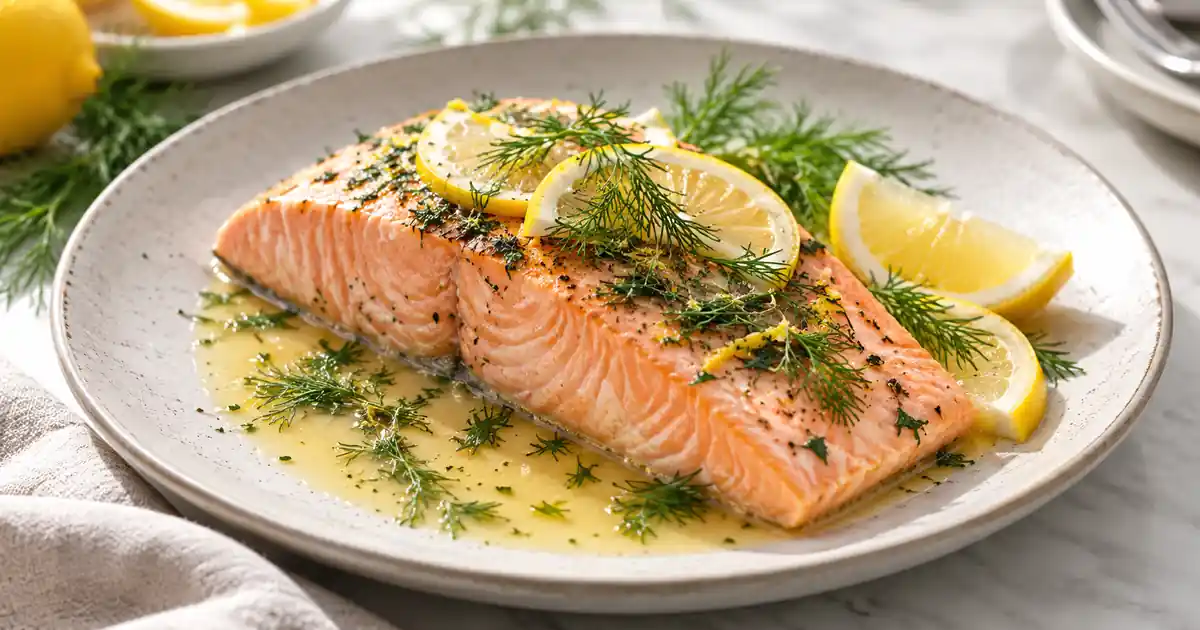
Table of Contents
Poached steelhead trout is a stovetop alternative to baking fish under a mustard coating. Two portions cook gently in water flavored with onion, lemon, and dill, then receive a small olive-oil finish on the plate. There is no crust to develop and no oven to preheat. The useful skills are choosing a pan that fits the fish, controlling the liquid, and checking the center with a thermometer before serving.
This recipe makes two servings from two six-ounce fillets. Allow an estimated ten minutes of preparation and fifteen minutes of cooking, including warming the aromatic liquid. Fish thickness and stove output affect those estimates. The endpoint is 145°F in the thickest part, not a promise that every piece will finish at a particular minute. Prepare accompaniments separately so the fish can be served when ready.
Poached Steelhead Trout: Select Evenly Sized Fillets
Choose two boneless steelhead trout portions weighing about six ounces each, with a reasonably even thickness of roughly one-half to three-quarters of an inch. Skin-on fillets are suitable. A thin tail portion and a thick center portion will not cook at the same speed merely because they weigh the same. Ask for similar cuts when practical, and check each portion separately during cooking.
Keep the raw fish refrigerated until the liquid is prepared. If using frozen portions, thaw them safely in the refrigerator before starting; this method and its time estimate are not written for a frozen center. Read any thawing and handling instructions on the package. Inspect for pin bones with clean fingers and remove those you find with suitable tweezers, without promising that inspection makes every serving completely bone-free.
Pat away excessive surface moisture with disposable paper towel, then clean hands and surfaces that contacted the raw fish. Do not rinse fish around the sink in an attempt to make it safer. A clean plate for the cooked portions should be ready before lifting them out, rather than reusing the tray that held the uncooked fillets.
Build a restrained aromatic liquid
Measure three cups of water into an approximately eight-inch deep sauté pan or similarly sized wide saucepan. The pan needs to hold both fillets in a single layer, without folding or overlapping them. If your portions will not fit, use a different suitable vessel and reassess the liquid depth. A broad skillet spreads the same measured water much more thinly, which changes how the fish cooks.
Add one-quarter cup of thinly sliced onion, one-half lemon cut into thin slices, two small sprigs of fresh dill, and one-eighth teaspoon of black pepper. An optional one-quarter teaspoon of salt seasons the liquid; omit it if that better suits your ingredients. This is a water-based preparation, so it does not depend on the seasoning or allergens in a purchased stock. Wash the lemon and herbs before preparing them.
The aromatics support the fish without becoming a heavy sauce. Their role is different from a concentrated dressing poured directly on the plate. Do not expect lightly flavored poaching water to taste like a buttery pan reduction. The finish is measured separately: two teaspoons of olive oil and one tablespoon of chopped fresh dill, divided between the cooked portions.
Warm the liquid before adding the trout
Bring the water and aromatics to a gentle simmer over medium heat. Let them simmer for about three minutes, then lower the heat before adding the fish. The surface should have small, occasional bubbles rather than a vigorous rolling boil. Pouring cold water over fish and turning the burner high gives less control over the beginning of the cooking stage.
Lower both portions into the pan skin-side down with a broad spatula. The liquid should reach around the sides and just cover the fish. If the pan shape leaves the upper flesh exposed, carefully add enough hot water to reach that level and note that your vessel required an adjustment. Do not press one fillet beneath the other to make an undersized pan appear to work.
Return the liquid to a very gentle simmer and cover the pan. Keep the burner low enough to avoid vigorous movement around the portions. You do not need to flip the fillets repeatedly or stir the pan. The objective is evenly cooked flesh that can be lifted intact, with no claim that a particular surface appearance alone proves safety.
Check the center and lift carefully
Begin checking after approximately six minutes, recognizing that some portions need longer. Insert an instant-read thermometer into the thickest part of each fillet, avoiding contact with the pan. A sideways approach can help place the tip in the center of a relatively thin portion. Continue cooking until both portions reach the official fish endpoint of 145°F.
Opaque flesh that separates with a fork is a useful additional observation, but color varies and is not a replacement for the measurement used here. Lemon does not cook the fish safely, and a brief soak in citrus is not an alternative method. If one portion reaches the endpoint before the other, remove it to the clean serving plate while the thicker portion finishes.
Slide a broad fish spatula beneath a fillet and let excess liquid drain back into the pan. A second utensil can steady the opposite end if needed. Avoid gripping the center with narrow tongs, which can break the cooked flesh. Serve skin-on, or gently leave the skin behind when lifting the flesh if that is your preference.
Divide the two teaspoons of olive oil across the servings and scatter on the tablespoon of chopped dill. Serve promptly. The onion and lemon from the pan are cooking aromatics; this recipe does not require pouring the whole poaching liquid over the plate. Removing excess liquid keeps the accompaniments from becoming unexpectedly wet.
Prevent common texture problems
A hard boil can push the fish around, break its edges, and make the outside finish well before a thick center. Reduce the burner when the liquid becomes turbulent. The pan does not need to look active to be cooking effectively. Keep the lid in place between checks rather than repeatedly uncovering it and then raising the heat to compensate.
Crowding is another practical problem. Portions that touch tightly or overlap are harder to check and lift, and they may heat unevenly. Select the vessel before warming the liquid, using the actual fillet shape as your guide. For a larger meal, cooking a second controlled batch can be more manageable than stacking additional fish in the same pan.
Do not extend the cooking simply to soften thick slices of onion. Those aromatics are not the main vegetable serving, and they enter the liquid before the fish. Cut them thinly so they release flavor during the short warm-up. Likewise, do not reduce the leftover liquid with the trout still sitting in it to create a sauce; that adds cooking the recipe does not require.
Substitutions and serving choices
A similarly sized salmon portion can be considered with the same thermometer endpoint, but thickness still determines the time. A whole fish or an unusually thick center cut needs a separately considered method. Replacing dill with parsley changes the herbal profile; use a small measured finish rather than adding several strong herbs and expecting the stated flavor balance to remain unchanged.
Serve the trout with cooked potatoes, a simple grain, or separately prepared vegetables. Make those accompaniments first or plan their cooking alongside the short fish stage. They are not included in the recipe’s twenty-five-minute estimate. A small side salad also suits a gently cooked fillet without turning the poaching pan into a complete one-pot dinner.
For a different technique, SABSEA’s Dijon mustard baked fish fillets use an oven coating rather than an aromatic-water method. That is a separate preparation, not a finishing step to add after poaching. Keeping the two methods distinct helps you choose according to the texture and equipment you want.
Refrigerate and reheat with care
Place leftovers in clean shallow containers and refrigerate promptly. The FDA’s safe handling guidance gives a two-hour limit for perishables outside refrigeration, reduced to one hour above 90°F, and a refrigerator temperature of 40°F or below. Follow shorter package instructions where relevant. Do not leave the fish sitting in the cooling pan while clearing the table.
Reheat only the portion you will eat, using a covered pan or a microwave-safe covered container with a little water to reduce drying. Check that previously cooked leftovers reach 165°F throughout. Initial fish cooking and leftover reheating have different endpoints; a reheated portion is not finished simply because it returns to 145°F. Handle a grain or potato accompaniment under its own storage requirements.
Properly cooked and safely chilled trout can also be served cold as part of a separately assembled salad. Cold serving is a way to avoid an additional heat cycle, not a way to excuse uncertain storage. Keep it refrigerated until preparing the portion and use clean utensils to separate flakes from any remaining skin or bones.

Poached Steelhead Trout with Lemon and Dill
Ingredients
- 2 6-oz fillets steelhead trout boneless, skin-on; thawed, about 1/2–3/4 inch thick
- 3 cups water plus additional hot water only if the pan shape requires it to just cover the fish
- 1/4 cup thinly sliced onion
- 1/2 lemon washed and thinly sliced
- 2 small sprigs fresh dill for poaching liquid
- 1/8 tsp black pepper
- 1/4 tsp salt optional
- 2 tsp olive oil for finishing
- 1 tbsp chopped fresh dill for finishing
Instructions
- Check thawed fillets for pin bones and keep chilled. Put water, onion, lemon slices, dill sprigs, pepper and optional salt in an approximately 8-inch deep pan that fits both fish portions in a single layer.
- Bring the aromatic liquid to a gentle simmer and simmer about 3 minutes, then lower the heat.
- Lower fillets skin-side down into the pan. Liquid should just cover the fish; carefully add hot water only if necessary for the vessel. Return to a very gentle simmer and cover.
- Begin checking after about 6 minutes. Continue gently cooking until the thickest part of each fillet reaches 145°F (63°C); timing varies with thickness.
- Lift onto clean plates, drain excess liquid and divide the olive oil and chopped dill between the two servings. Serve promptly.
Notes
Frequently asked questions
Will the skin become crisp?
No. Poaching cooks the fish in liquid and produces soft skin. If crisp skin is your main goal, choose a different cooking method rather than expecting this recipe to deliver a seared surface.
Can I start with frozen fillets?
Thaw the specified portions safely before following this method. A frozen center changes the cooking behavior and timing. Do not use the estimated minutes here as a frozen-fish instruction.
Do I need a special poaching pan?
A suitable deep sauté pan or wide saucepan is enough if both fillets fit in one layer and the liquid reaches the required depth. The fit and depth matter more than the name of the cookware.
Can I use the lemon as the cooking treatment?
No. Lemon flavors the liquid but does not replace heat or the 145°F fish endpoint. This is a fully cooked trout recipe, not a citrus-cured preparation.
Why is there no thick sauce?
The recipe is designed around gently cooked fish with an olive-oil and fresh-dill finish. Reducing the water into a sauce is not necessary. Drain each portion before plating so the finish and accompaniments remain distinct.
Let the thermometer guide the final minutes
Use evenly sized portions, a pan that holds them comfortably, and a gentle liquid rather than a rolling boil. Check each fillet’s center, lift it carefully, and finish it on the plate. Those decisions define the method more clearly than a fixed timer or an unsupported promise of perfect results.