
Crispy Noodle Cakes with Shrimp and Vegetables
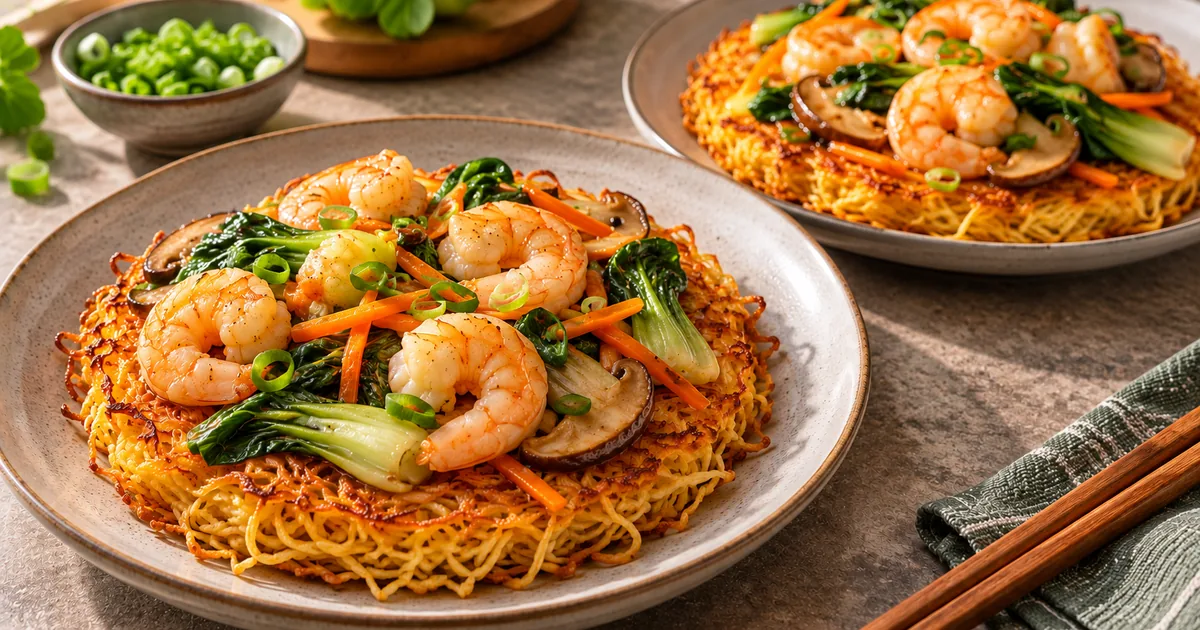
Crispy noodle cakes with shrimp turn a simple package of egg noodles into a dinner built around contrasting textures. The noodles form two thin, golden rounds in a skillet while the shrimp, vegetables and ginger-soy sauce cook separately. Just before serving, the hot topping goes over the center of each cake, leaving some crisp edges exposed. That final assembly is as important as the frying: coating every strand too early would soften the part of the dish you worked to crisp.
This version uses one seafood ingredient raw, peeled shrimp and a measured combination of bok choy, mushrooms and carrot. There is no ambiguous list of shrimp, scallops and fish that leaves the cook guessing how long each should stay in the pan. A vegetable-broth sauce supplies enough moisture to coat the topping without turning the noodles into soup. The sauce contains soy, ginger and garlic; optional toasted sesame oil and scallions finish the plates.
Plan for two servings and approximately 50 minutes, including 20 minutes to organize and dry the noodles and about 30 minutes for boiling, frying and finishing the topping. The clock is an estimate, not a promise: package cooking instructions, skillet size, noodle thickness and shrimp size will change the precise timing. Keep the noodles and topping separate until you are ready to eat, and follow the doneness checks below rather than relying only on a countdown.
Table of Contents
What goes into the noodle cakes
Use six ounces of dried thin egg noodles, prepared according to their own package instructions. Egg noodles are the single defined base for this recipe; they should not be replaced without checking the new noodle’s cooking and frying requirements. Thin strands spread more evenly than thick pasta shapes, but they still need space in the skillet. Once softened and drained, the noodles are divided into two portions and pressed into wide, shallow rounds rather than compact balls. A shallow cake is easier to crisp across both faces.
The noodles need two tablespoons of neutral cooking oil in total, about one tablespoon for each round. A further half tablespoon is reserved for the shrimp and vegetables. Do not pour all the oil over the noodles at the start; working in two batches is more predictable in a conventional large nonstick skillet. If your pan is smaller, adjust the thickness and allow more time rather than crowding both cakes together.
For the topping, use ten ounces of raw shrimp that have been peeled, deveined and fully thawed if previously frozen. This amount gives each serving a substantial amount of shrimp without forcing two different seafood cooking times into the same sauce. Keep the shrimp refrigerated while setting up the noodle station. Check its packaging for any additional handling directions, and use a separate clean board or thoroughly wash surfaces after handling raw seafood.
Mushrooms supply the earthy component, matchstick carrots add sweetness and texture, and baby bok choy adds a leafy green with crisp stems. The ingredient list specifies one cup of sliced mushrooms, half a cup of carrots and two cups of chopped baby bok choy. Keep the thick bok choy stems separate from the leaves: the stems go in early with the carrots, while the leaves need only a short time at the end. Two minced garlic cloves and two teaspoons of freshly grated ginger form the aromatic base.
The sauce is intentionally modest. Whisk three-quarters of a cup of unsalted vegetable broth with one tablespoon of reduced-sodium soy sauce. Separately, mix two teaspoons of cornstarch with two tablespoons of cold water until smooth. Using cold water for the slurry makes it easier to disperse the starch before it reaches the hot pan. You can combine the broth and soy sauce in one bowl and keep the slurry ready beside it; whisk the slurry again immediately before adding it, because cornstarch can settle.
Finish with up to one teaspoon of toasted sesame oil and two tablespoons of sliced scallions if desired. These are optional garnishes, not separate cooking steps that change the core noodle and shrimp method. Check packaging for wheat, egg, soy, crustacean shellfish and sesame if any of those ingredients are relevant to your household; the labels of noodles, broth and sauces can introduce additional allergens.
Pick the right noodles and prepare them once
Follow the package’s directions for dried thin egg noodles rather than copying a fixed one-minute or three-minute blanch from another type of noodle. Noodle brands and thicknesses differ, and some products are sold fresh while others are sold dried or already prepared for frying. This recipe is written for a dried product that needs a brief boil before frying. Stop when the noodles are pliable enough to form a cake without breaking them into tiny pieces, and avoid deliberately boiling them until mushy.
Drain thoroughly, shake the colander and spread the noodles in a relatively thin layer over a clean tray. Let excess steam escape while you prepare the sauce and vegetables. Gently blot surface moisture with clean kitchen paper if necessary. Wet noodles tend to steam in the pan, which delays browning and makes it harder for the cakes to release. Do not leave cooked noodles sitting at room temperature for an extended prep session; do the short drying step immediately before frying.
Divide the drained noodles into two equal mounds. They should be loose enough to spread in the skillet but cohesive enough to turn with a broad spatula. There is no need to add an egg binder or a batter, neither of which belongs to the measured ingredient list. The method depends on pan contact and the noodles’ existing starch, not on mixing a second unlisted preparation into the cake.
Build a crisp surface without burning the center
A wide nonstick or well-seasoned skillet makes the two-batch method practical. Heat one tablespoon of neutral oil over medium-high heat, then spread the first noodle portion into a thin round. Press it lightly with a spatula so more noodles touch the pan. Leave it undisturbed while the underside turns golden. Start checking after about three minutes, and allow roughly three to five minutes per side as a flexible guide. The useful cue is even golden color and a lightly rigid surface, not a deep brown crust.
Turn the cake carefully with a broad spatula, supporting it with a second utensil if needed. A round that breaks into several large pieces is still usable; do not keep pressing it into a dense mass just to preserve a perfect circle. When both faces have browned, transfer the cake to a clean rack or plate and leave it uncovered. Repeat with the second tablespoon of oil and the remaining noodles. If you cover the first cake tightly, steam will soften its surface while you cook the second.
Frying both cakes first is deliberate. Once the shrimp sauce is ready, it should go straight to the table rather than waiting for another noodle batch. The finished cakes can rest briefly, uncovered, while you use the same pan for vegetables and shrimp. If you want especially dry, crisp edges, put only part of the topping over the center and serve the remaining sauce alongside.
Cook the vegetables, shrimp and sauce
Use the remaining half tablespoon of neutral oil in the skillet. Start with carrot, mushrooms and the firmer bok choy stems. Stir-fry until the carrot begins to soften and the mushrooms release some moisture, usually a few minutes depending on how thinly they were cut. Add garlic and ginger and stir briefly so they become fragrant without scorching against the hot pan. Keep the delicate bok choy leaves for the last part of cooking.
Add the thawed raw shrimp in an even layer and stir as needed to cook both sides. The precise minutes depend on shrimp size, pan heat and how crowded the skillet is. Continue cooking until the flesh is firm, pearly and opaque throughout, in line with the FDA’s guidance on cooking seafood. Do not rely on the outside turning pink while the thickest part remains translucent. If the shrimp are still undercooked when the vegetables are ready, keep them in the pan until fully cooked before finishing the sauce.
Pour in the measured broth and soy sauce, add the bok choy leaves, and bring the mixture to a gentle simmer. Stir the cold-water cornstarch slurry again and pour it in while stirring. The liquid should thicken enough to cling lightly to the shrimp and vegetables, not become a heavy paste. Allow a short simmer so the starch is fully dispersed. If the broth reduces more than expected, add a small splash of water. Taste before considering extra seasoning because even reduced-sodium soy sauce varies by brand.
Turn off the heat and stir in the optional toasted sesame oil. The shrimp should still look opaque and firm, while the bok choy leaves should be wilted but recognizable. Put the two cakes on plates and spoon the hot topping over their centers. Scatter the optional scallions across the finished dishes. Serve promptly so that the sauced noodles soften in the middle while the exposed edges remain crisp.
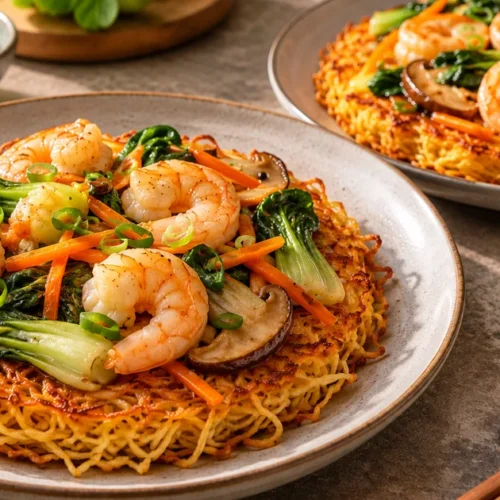
Crispy Noodle Cakes with Shrimp and Vegetables
Ingredients
- 6 oz dried thin egg noodles prepare according to package directions
- 2½ tbsp neutral cooking oil 1 tbsp per noodle cake; ½ tbsp for topping
- 10 oz raw shrimp, peeled and deveined thaw completely if frozen; keep chilled
- 1 cup sliced mushrooms cremini or shiitake
- ½ cup carrot matchsticks approximately 1 medium carrot
- 2 cups chopped baby bok choy keep stems separate from leaves
- 2 cloves garlic minced
- 2 tsp freshly grated ginger
- ¾ cup unsalted vegetable broth
- 1 tbsp reduced-sodium soy sauce
- 2 tsp cornstarch
- 2 tbsp cold water for cornstarch slurry
- 1 tsp toasted sesame oil optional
- 2 tbsp sliced scallions optional garnish
Instructions
- Cook the dried egg noodles to the package directions, drain very well and spread briefly on a clean tray so the surface moisture evaporates. Blot gently if needed, then divide into two equal, thin, loose mounds. While they drain, stir the broth and soy sauce together in one bowl; whisk the cornstarch with the cold water in another.
- Heat 1 tbsp neutral oil in a large nonstick skillet over medium-high heat. Spread one noodle mound into a thin cake; fry until golden, approximately 3–5 minutes per side depending on the noodles and pan. Transfer uncovered to a clean rack or plate. Repeat with the second tablespoon of oil and remaining noodles.
- Add the remaining ½ tbsp oil to the skillet. Sauté the carrot, mushrooms and bok choy stems until beginning to soften, roughly 2–3 minutes. Stir in the ginger and garlic briefly without scorching them.
- Add the raw shrimp and cook, turning as needed, until firm, pearly and opaque throughout. Add the bok choy leaves and the measured broth-soy mixture. Bring to a gentle simmer.
- Re-whisk and add the cornstarch slurry, stirring until the sauce coats the shrimp and vegetables, usually 1–2 minutes. Turn off the heat and add optional sesame oil. Divide the topping immediately over the centers of both crisp noodle cakes, garnish with optional scallions, and serve hot.
Notes
The sauce should coat rather than soak the noodles
Restaurant-style pan-fried noodle dishes sometimes use generous gravy, but this specific recipe is measured for a two-serving dinner with two individual cakes. Three-quarters of a cup of broth, vegetables that release some water, and a small slurry are sufficient for a light coating. The finished sauce should move easily around the shrimp when you lift a spoon. If it becomes too thick, loosen it with a little water before serving rather than piling a stiff layer on top of dry noodles.
The most reliable way to retain crunch is to keep some noodles out of direct contact with the liquid. Spoon the topping over the center and around, but not across, the entire upper surface. For anyone who prefers more tender noodles, serve additional sauce on the side and let each person add it at the table. Neither choice requires changing the measured recipe, and both avoid presenting the dish as if every bite stays crisp after sitting under sauce.
A single large platter is possible, but dividing the noodles before frying gives each diner a distinct portion and makes turning easier. Use wide plates with room for the topping, and put the skillet off the heat before assembling. The sauce is meant for immediate serving, not for baking the cakes again or leaving seafood in a warm pan until guests arrive.
Practical substitutions and their limits
The simplest permitted variation is the shape of the mushrooms: cremini or shiitake both work if sliced thinly, although their texture and flavor differ. Baby bok choy can be chopped with the stems separated from the leaves as written. If your market sells only full-size bok choy, weigh or measure approximately two cups of chopped pieces and cut thick stems more finely so they have time to soften.
Vegetable broth keeps the sauce centered on the shrimp while avoiding an extra fish ingredient. A seafood broth changes both flavor and potential allergen exposure; read the actual label before swapping it in. Likewise, different soy sauce brands vary in saltiness and gluten content. Do not assume a gluten-free substitution simply because a sauce looks similar; a complete noodle-and-sauce alternative would need its own ingredient checks.
This is not a mixed-seafood card. Scallops, squid or white fish require their own size and cooking checks, so replacing all the shrimp with an unspecified assortment would make the timing unreliable. If you want a future mixed-seafood version, develop and review it as a separate formulation instead of listing several incompatible proteins under one short cooking instruction.
For a different shrimp-and-noodle dinner on SABSEA, Shrimp with Penne and Squash takes a softer pasta approach rather than using a crisp noodle base. It is a related alternative, not a substitute for the pan-frying technique described here.
Prepare ahead and handle leftovers safely
For efficient preparation, slice the vegetables, grate ginger, mince garlic and mix the sauce ingredients before the noodles go into the water. Keep raw shrimp chilled in the refrigerator while you work. Drain and fry the noodles close to serving time rather than cooking a full batch hours ahead and expecting it to retain a crisp crust. If you need to pause, keep the raw seafood safely refrigerated and follow its package instructions.
Serve as soon as the shrimp are fully cooked and the topping is thickened. Seafood and cooked noodles should not remain at room temperature during a long meal or party. The FDA’s food-handling guidance calls for refrigerating perishable leftovers within two hours, or within one hour when the temperature is above 90°F (32°C). Transfer the food to shallow containers for quicker cooling and keep the refrigerator at or below 40°F (4°C). Observe any shorter shelf-life instruction on the shrimp or prepared ingredients.
Once sauced, the noodle cakes lose much of their original crunch. If leftovers are expected, store the noodle portions and seafood topping in separate covered containers after prompt chilling. Reheat the topping thoroughly and check that leftovers reach 165°F (74°C) where practical; then warm the noodles separately in a skillet to recover some surface texture. Do not promise that a reheated cake will be identical to a freshly fried one. Follow the shorter of relevant package guidance and general leftover storage recommendations.
Frequently asked questions
Can I use fresh noodles instead of dried egg noodles?
Fresh noodles can need a very different boiling time and may arrive with enough surface moisture to change the frying result. This measured version uses six ounces of dried thin egg noodles prepared according to the package. If you try fresh noodles, follow that product’s preparation instructions, drain well and adjust the skillet cooking as needed rather than assuming the quantities and times are interchangeable.
Why are my noodle cakes soft instead of crispy?
Common causes include noodles that are still wet after draining, a thick mound with little pan contact, a skillet that is too crowded, or sauce added too early. Let excess steam escape, spread each portion thinly, fry in batches and keep the cooked cakes uncovered. Add the sauce just before eating and leave some edges exposed.
Should I cook the shrimp before the vegetables?
In this version, the firm vegetables begin first and the raw shrimp goes in once they have started to soften. Shrimp size and pan heat vary, so the cooking cue is flesh that has become firm, pearly and opaque throughout. If the vegetables finish before the shrimp, continue cooking the shrimp rather than taking it out at a fixed minute mark.
Can I substitute oyster sauce for the soy sauce?
Oyster sauce has a different texture, sweetness, salt level and shellfish-allergen profile. A direct tablespoon-for-tablespoon replacement would change this measured sauce and could add another allergen. Keep the reduced-sodium soy sauce for the card as written; any oyster-sauce variation should be measured and checked separately.
How can I make both noodle portions crispy at serving time?
Use a broad skillet, make two relatively thin cakes, and keep the finished first cake uncovered while frying the second. Have the vegetables cut and sauce measured before the noodles are cooked. Finish the topping immediately after the cakes and spoon it over their centers only when both portions are on the plates. A tight lid or early sauce application traps moisture and softens the noodles.
One measured dinner, two distinct textures
These crispy noodle cakes with shrimp have one defined noodle type, one seafood ingredient and a controlled topping. The important checks are dry, thin noodles that turn golden in the skillet; shrimp cooked all the way through; and a sauce spooned over the centers at the last moment. Follow the package and food-safety directions, allow for differences in pans and products, and serve while the noodles retain their contrast with the vegetables and sauce.