
Shrimp and Crab Gumbo with Okra
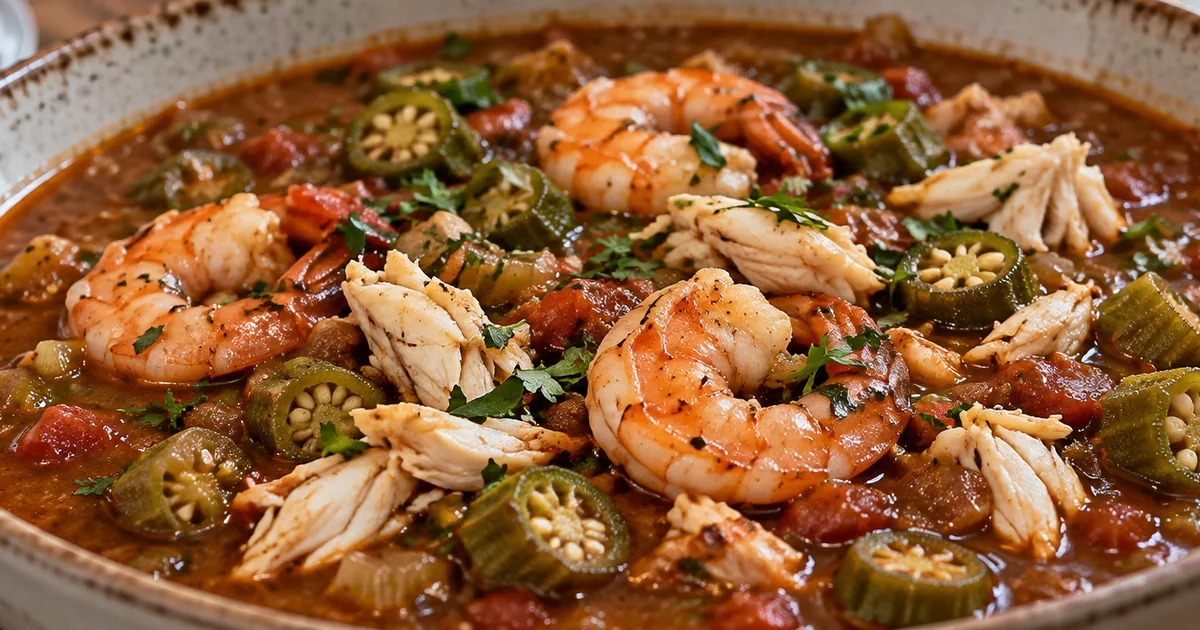
Shrimp and crab gumbo needs a clear sequence. The vegetables and roux must cook long enough to form the broth, raw shrimp should go in near the end, and already-cooked crabmeat needs only gentle heating. Putting all three stages into one vague instruction risks overcooked seafood and leaves the reader guessing whether the crab is raw or ready to eat. This version specifies cooked, refrigerated crabmeat, fully thawed raw shrimp and sliced okra, with quantities designed for four bowls.
This home seafood gumbo uses a defined shrimp-and-crab combination. It uses a medium-brown flour-and-oil roux, onion, celery and green pepper, unsalted seafood stock, tomatoes, okra and restrained dry seasonings. No sausage, ham, alcohol or unmeasured spice blend appears in the formula. That keeps the seafood prominent and makes allergen and storage advice more straightforward. A bowl of separately cooked rice can be offered, but rice is not hidden inside the gumbo’s stated cooking time or its ingredient list.
Table of Contents
Shrimp and Crab Gumbo Ingredients and What They Contribute
The roux starts with one-quarter cup neutral oil and one-quarter cup all-purpose flour. Equal volume is the starting point for this roux, but flour weight and heat affect the result. Stir constantly over medium or medium-low heat until the mixture takes on a medium-brown color without black flecks. A dark pan can make color harder to judge; lift a little on a spoon and compare it in good light. If it burns, discard and restart. There is no reliable way to hide scorched flour with extra seasoning.
Use one cup diced onion, one cup diced green bell pepper, three-quarter cup diced celery, and three minced garlic cloves. Cut the first three vegetables to similar sizes so they soften at a similar rate after they enter the roux. Have them ready before heating the oil; a roux can change color rapidly, and stopping to chop while it cooks invites scorching. Garlic goes in later so it does not spend the entire vegetable stage against the hot pan.
The liquid base is four cups prepared unsalted seafood stock and one 14.5-ounce can diced tomatoes with their juice. Use a stock whose ingredients and allergens you have read. Some seafood stocks include shellfish and some are primarily fish; both can change the allergen profile. An unsalted stock gives better control because the crabmeat and any packaged seafood may already contribute salt. The tomatoes are a deliberate choice in this formulation, not a definitive test of what qualifies as Creole or Cajun gumbo.
Add one and one-half cups sliced okra, fresh or frozen, with one teaspoon sweet paprika, one-half teaspoon dried thyme, one bay leaf, and one-quarter teaspoon ground black pepper. The okra cooks in the broth before seafood is added, giving it time to soften and add body. Frozen slices can go in without thawing if the package says they are suitable for cooking from frozen; expect the simmer to pause briefly. The seasonings are measured so a purchased spice blend is unnecessary. Salt is left to a final taste after the seafood heats through, not added blindly to stock of unknown salinity.
The seafood consists of one pound raw shrimp, peeled, deveined and fully thawed, and eight ounces cooked, pasteurized refrigerated crabmeat, picked over for shell fragments. These states matter. Do not substitute raw crab in the final warming step. A shelf-stable canned crab product may have different drainage and handling instructions; the card is specifically written for cooked refrigerated crabmeat. Keep both products cold until their respective additions, follow their use-by dates and check labels for crustacean shellfish and other allergens.
Set up the pot before making roux
Choose a heavy pot with enough room to stir the roux and later hold the stock. Measure the oil and flour, dice the vegetables, open the tomatoes, and have the stock close by. Keep seafood refrigerated while the base cooks. Use a separate board and clean utensils for raw shrimp, and wash hands and surfaces after handling it. Pick through the cooked crabmeat with clean utensils on another plate. Never return cooked or ready-to-eat crab to a surface contaminated by raw shrimp.
Heat the oil over medium heat, whisk in the flour, then switch to a heatproof spoon or spatula that can reach the pot’s corners. Stir continuously, scraping the bottom, until the roux is medium brown. This may take about 15 to 20 minutes depending on the pot and burner; treat that range as an estimate. The mixture can be extremely hot, so avoid splashing it. If it darkens unevenly, reduce heat and continue stirring. Watch the color closely and reduce the heat if it darkens too quickly.
Add the onion, pepper and celery carefully. The vegetables will sizzle and help slow the roux’s browning. Stir about five minutes until they begin to soften, then add garlic for roughly one minute. Slowly pour in some of the prepared stock while stirring to loosen the roux, then add the remaining stock and the canned tomatoes. Bring to a gentle simmer. Scrape the bottom to incorporate any browned flour and vegetables that are not burned. Do not dump cold liquid into a smoking hot pot in one violent pour.
Stir in sliced okra, paprika, thyme, bay leaf and pepper. Simmer uncovered or partly covered for approximately 20 minutes, stirring occasionally, until the vegetables are tender and the broth has enough body to coat a spoon lightly. The exact thickness will vary with how brown the roux became, the tomato product and the width of the pot. If the broth reduces too far, a small amount of water can loosen it, but adding a large unmeasured quantity would change the four-serving yield. Remove the bay leaf before serving.
Add the fully thawed raw shrimp to the simmering pot. Stir gently and cook until each piece is pearly and opaque throughout, roughly three to five minutes for a common medium-to-large shrimp size. The official shellfish doneness guidance describes shrimp as pearly or white and opaque when cooked. The clock alone is not enough; shrimp sizes differ. Once the shrimp are done, fold in the already-cooked refrigerated crabmeat and warm it through gently, without prolonged boiling that breaks up the pieces. Taste the finished gumbo with a clean spoon and add salt only if the specific stock and seafood require it.
Troubleshooting the roux and seafood
If the roux is pale after only a few minutes, allow more stirring time rather than claiming the gumbo will acquire the same flavor and color by adding paprika. If it smells acrid or contains black specks, start over; scorched roux permeates the pot. Avoid leaving the stove while making it. A spatula that reaches the pot’s edges helps prevent flour from sitting unnoticed in a hot corner. Once the vegetables go in, their moisture changes how the mixture moves and the danger of rapid browning decreases.
The broth can seem thin just after the stock enters, then gain body as okra simmers and liquid reduces. Do not add dry flour directly to the finished soup: it can form lumps and taste raw. If the pot becomes too thick, loosen it gently before the seafood goes in. The goal is spoonable gumbo, not a gravy that hides the shrimp and crab. The tomatoes should be incorporated as part of the broth, with no second tomato sauce or paste added by an unmeasured instruction.
Overcooking is the main seafood risk to quality. The vegetables need their simmer, but the shrimp do not. Keep the seafood out until the base is almost finished. Fold the cooked crab in last to preserve pieces and avoid treating it like raw shrimp. Check that the crab package truly says cooked/pasteurized and requires refrigeration; a different state of crab needs a different preparation. If you want a strongly spicy gumbo, add heat at the table or develop a measured chili variation instead of relying on the ambiguous heat of a commercial spice blend.
Serving choices and useful limits
Divide the gumbo among four bowls. Separately cooked plain rice is a familiar option, but it is an optional serving accompaniment outside the recipe’s ingredients and time estimates. If you serve rice, follow its own cooking and safe-storage directions. A piece of bread or a simple green salad can also sit alongside; the gumbo does not need a second seafood entrée. Serve the bowls while the seafood is hot, with any accompaniment on the side.
This recipe has flour, crustacean shellfish and likely fish or shellfish in the chosen seafood stock; read every packaged label. It is not gluten-free as written. A flour-free thickener would change both the roux method and the broth’s texture. Replacing crab with extra shrimp creates a different seafood balance. For a shrimp-focused approach, see our shrimp gumbo guide. Keep the crab in this version to preserve its two-seafood character.
This is a leisurely stovetop meal rather than a quick assembly recipe. Chopping vegetables, developing a medium-brown roux and simmering okra all take attention. The estimated 20-minute prep and 50-minute cook windows exclude thawing shrimp, preparation of seafood stock and optional rice. Pot size, stove heat and shrimp size can change the schedule, so judge the roux, vegetables and seafood at each stage rather than relying on the clock alone.
Cold storage and leftovers
Transfer leftover gumbo to shallow covered containers so it cools promptly. Refrigerate at 40°F (4°C) or below within two hours of cooking, or within one hour when the temperature around the food is above 90°F (32°C). The FDA’s safe-handling guidance recommends those limits for seafood and other perishables. General refrigerated leftover guidance is three to four days, subject to any shorter use-by or opened-product instruction on the crab or stock. The quality of shrimp and crab may decline before that maximum, so prepare only what you expect to use soon.
Reheat leftover gumbo thoroughly to 165°F (74°C). FDA also advises bringing soups, sauces and gravy to a boil when reheating; a gentle boil with stirring helps avoid a cold center, but do not repeatedly cycle the whole batch through warming and cooling. Heat just the portion being served. If separate cooked rice accompanies the gumbo, its storage guidance is stricter: the UK Food Standards Agency recommends cooling rice promptly, ideally within an hour, using it within 24 hours and reheating only once until steaming hot. Do not apply the soup’s general three-to-four-day window to a mixed rice bowl.
Any gumbo that sat out beyond the applicable room-temperature limit should be discarded rather than judged by its aroma. Do not freeze a pot while it is still hot and deep; divide it into shallow portions and chill promptly first. Freezing may change okra and seafood texture, so no promise about an identical reheated result is made. Always follow the package directions of the pasteurized crabmeat if they are stricter than the general rules.
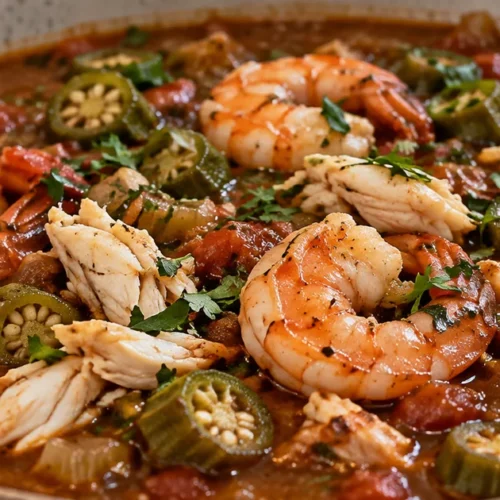
Shrimp and Crab Gumbo with Okra
Ingredients
- 1/4 cup neutral oil
- 1/4 cup all-purpose flour
- 1 cup diced onion
- 1 cup diced green bell pepper
- 3/4 cup diced celery
- 3 cloves garlic minced
- 4 cups unsalted seafood stock prepared
- 1 can diced tomatoes 14.5 oz, with juice
- 1 1/2 cups sliced okra
- 1 tsp sweet paprika
- 1/2 tsp dried thyme
- 1 bay leaf
- 1/4 tsp ground black pepper
- 1 lb raw shrimp peeled, deveined and fully thawed
- 8 oz cooked pasteurized refrigerated crabmeat picked over for shell
Instructions
- Prepare the vegetables and measure all ingredients. Keep the raw shrimp and already-cooked crab refrigerated and separate until needed.
- Heat the oil over medium or medium-low heat, stir in the flour, and stir constantly until medium brown, approximately 15–20 minutes. Discard and restart if the roux burns.
- Carefully add onion, bell pepper and celery. Stir about 5 minutes until beginning to soften, then add garlic for 1 minute. Gradually stir in stock, then tomatoes with their juice.
- Add okra, paprika, thyme, bay leaf and black pepper. Simmer gently about 20 minutes, stirring occasionally, until vegetables are tender and the broth slightly thickens.
- Add the raw shrimp and simmer until pearly and opaque throughout, approximately 3–5 minutes depending on size. Fold in the cooked crabmeat and heat through gently. Remove the bay leaf, taste before adding any table salt, and divide among four bowls.
Notes
Frequently asked questions
Can I use raw crabmeat?
Not in the final warming step of this formulation. The recipe specifically uses cooked pasteurized refrigerated crabmeat. Raw crab requires a different cooking method and cannot be warmed briefly as though it were ready to eat. Confirm the package’s state before buying.
Does the gumbo need sausage?
No sausage is included here. The defined seafood pair is shrimp and crab, and the measured vegetable and stock base supports them. Sausage would add salt, fat and another cooking step, so leave it out of this version.
How dark should the roux become?
Medium brown without black flecks is the target. Color is easier to observe on a spoon in good light. Stop and restart if it burns, and do not equate a darker roux with a guarantee of better taste. The exact time depends on the pot and heat.
Can I make the base ahead?
You can cook and promptly chill the vegetable, roux and okra base before adding seafood. Reheat that base thoroughly, then cook raw shrimp until pearly and opaque and fold in cooked crabmeat to heat through. This keeps the two kinds of seafood from sitting in a simmer for a long period. Follow the cold-storage and package limits for the components.
Is rice included in the recipe time?
No. The recipe makes four gumbo servings; rice is an optional separately cooked accompaniment. Plan its preparation and rice-specific cooling/storage separately. Allow extra time to cook rice if you want to serve it alongside.
Bring the bowls to the table
Build the vegetable-and-okra base first, cook the raw shrimp near the end, and fold in the cooked crab last. That sequence gives each ingredient the heat it needs while keeping the seafood from spending the whole simmer in the pot. Remove the bay leaf, portion into four bowls and serve promptly.